
Safety
General information, not medical advice
Your prescriber and the leaflet in your pack know your situation. This page does not.
- Follow your prescriber and the leaflet
- Don't start, stop, or change a dose on your own
- Doses and warnings differ by country and product
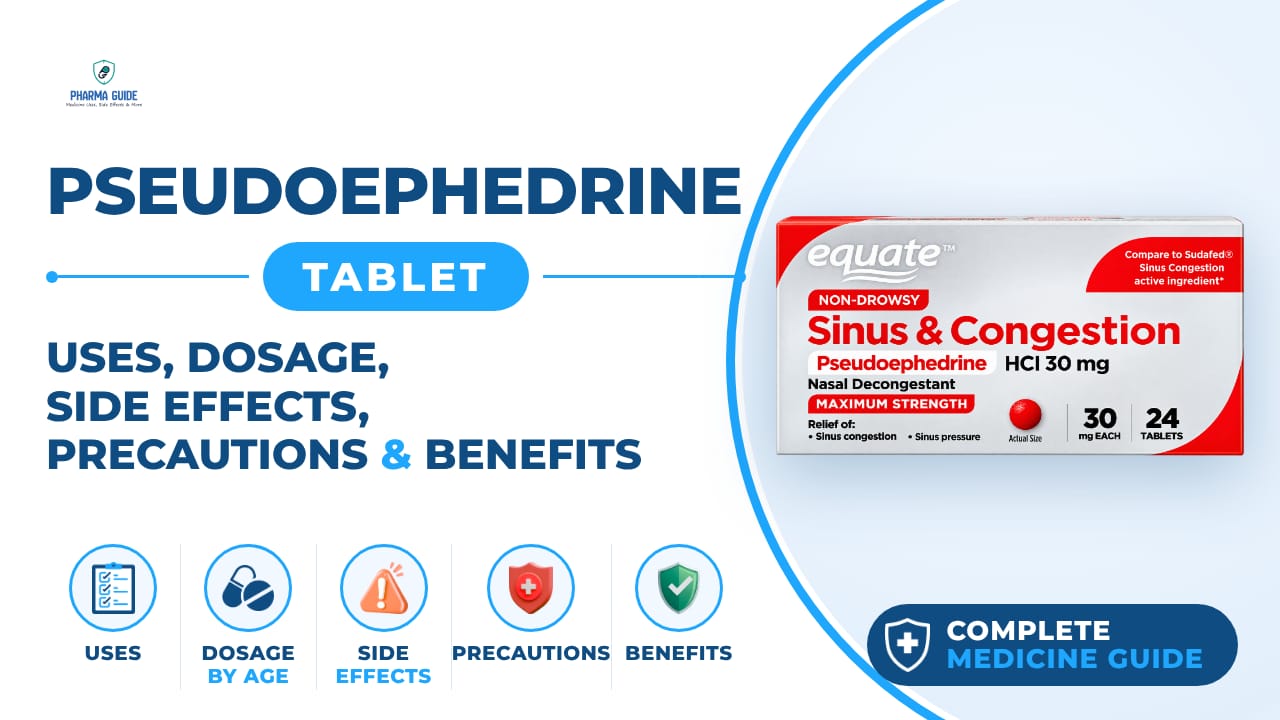
Pseudoephedrine Tablet: Uses, Dosage, Side Effects, Precautions and Alternates
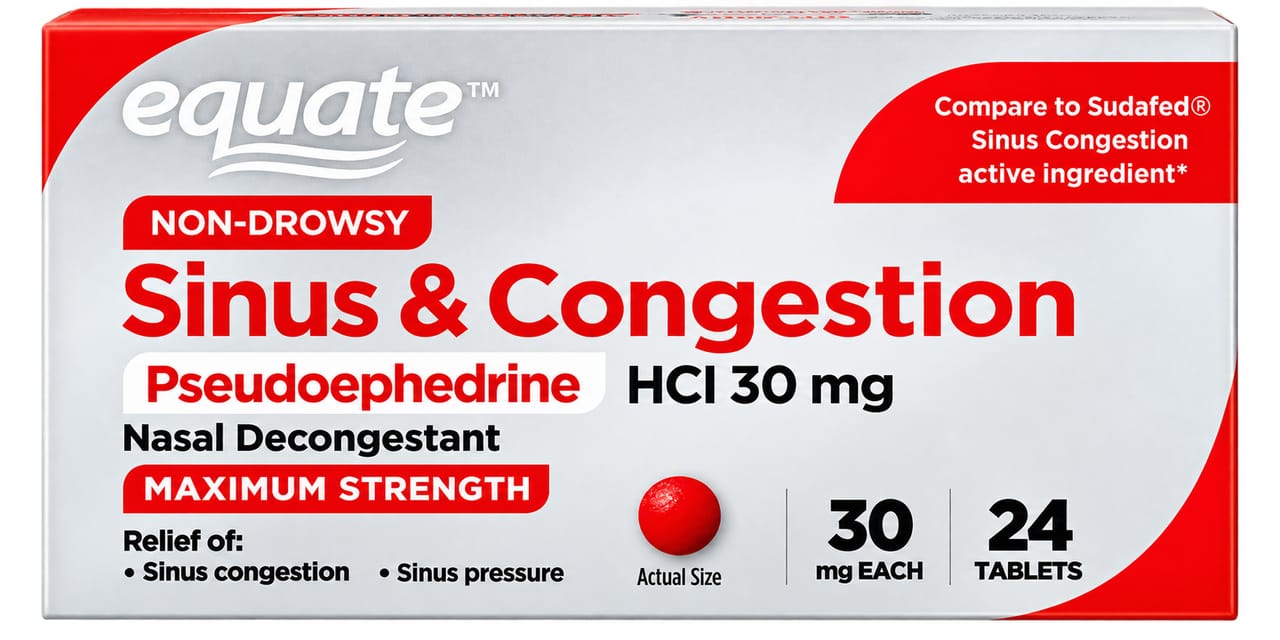
| Generic name | pseudoephedrine |
|---|---|
| Drug class | Decongestant |
| Forms | Tablet, Extended-release tablet, Liquid-filled capsule, Syrup, Solution, Oral suspension |
Quick overview
Pseudoephedrine Tablet is an oral nasal decongestant used to relieve a stuffy nose, sinus pressure, and ear congestion caused by colds, flu, or allergies. It works by narrowing blood vessels in the nose and sinuses to reduce swelling and make breathing easier. Dosage depends on age, and the medicine is generally used for short-term relief of up to 7 days.
What is Pseudoephedrine Tablet
Pseudoephedrine is an oral nasal decongestant used to treat a stuffy nose, sinus pressure, and ear congestion caused by colds, flu, or allergies. Its generic name is pseudoephedrine, and it belongs to the decongestant drug class.
Pseudoephedrine Tablet uses
- Relieves nasal or sinus congestion caused by the common cold, sinusitis, and hay fever and other respiratory allergies
- Relieves ear congestion caused by ear inflammation or infection
- Treats nose stuffiness
Benefits of Pseudoephedrine Tablet
- Relieves a blocked or stuffy nose
- Reduces nasal and sinus congestion
- Helps ease sinus pressure and fullness
- Improves breathing through the nose during colds, flu, or allergies
How Pseudoephedrine Tablet works
Pseudoephedrine works by narrowing the blood vessels in your nose and sinuses. This reduces swelling in the nasal passages and helps you breathe more easily through your nose.
Pseudoephedrine Tablet dosage
Take exactly as directed on the label or by your doctor; do not use more or for longer than recommended. Cold medicine is usually taken only for a short time until symptoms clear up, generally not longer than 7 days in a row. Do not give to a child younger than 4 years old; always ask a doctor before giving a cough or cold medicine to a child.
Take with a full glass of water, with or without food; taking with food may help if it upsets your stomach. Swallow tablets and extended-release tablets whole; do not crush, chew, or break them, since this can release too much medicine at once. If using a liquid form, shake the oral suspension well before measuring, and use a proper dose-measuring spoon or cup rather than a regular spoon.
To help prevent trouble sleeping, take your last dose of the day a few hours before bedtime. Talk with your doctor if your symptoms do not improve after 7 days, or if you develop a fever along with a headache, cough, or skin rash. Tell your surgeon ahead of time if you are using this medicine before any surgery, since you may need to stop it temporarily.
| Age group | Dose |
|---|---|
| Under 4 years | Do not use OTC |
| 4–5 years | Generally not recommended without medical advice |
| 6–11 years | 30 mg every 4–6 hours; max 120 mg/day |
| 12–64 years | 60 mg every 4–6 hours; max 240 mg/day |
| 65+ years | Use cautiously; medical/pharmacist assessment recommended |
Available forms and strengths
- Tablet
- Extended-release tablet
- Liquid-filled capsule
- Syrup
- Solution
- Oral suspension
Side effects of Pseudoephedrine Tablet
Common
- Sleep problems (insomnia)
- Heart palpitations
- Nervousness
- Restlessness
- Shakiness/trembling
- Elevated blood pressure
- Skin rash or itching
- Dizziness or light-headedness
- Headache
- Increased sweating
- Nausea or vomiting
- Unusual paleness
- Weakness
- Difficult or painful urination
Serious
- Signs of an allergic reaction: hives, rash, itching, swelling of face, lips, tongue, or throat, trouble breathing or swallowing, wheezing, tightness in chest or throat
- Fast, pounding, or uneven heartbeat
- Severe dizziness or anxiety
- Easy bruising or bleeding, unusual weakness, fever, chills, body aches, flu symptoms
- Signs of dangerously high blood pressure: severe headache, blurred vision, ringing in ears, anxiety, confusion, chest pain, trouble breathing, uneven heart rate, seizure
- Convulsions (seizures)
- Hallucinations (seeing, hearing, or feeling things that are not there)
- Irregular or slow heartbeat
- Shortness of breath or troubled breathing
Warnings and precautions
- Do not give pseudoephedrine to a child younger than 4 years old, since death can occur from misuse of cough and cold medicines in very young children. Always check with a doctor first.
- Check with a doctor or pharmacist before using any other cough or cold medicine, since many combination products also contain pseudoephedrine or other decongestants, and taking them together can cause you to get too much of a drug.
- Do not use pseudoephedrine if you have taken a MAO inhibitor medicine (such as certain drugs for depression or Parkinson's disease) in the last 14 days, as this can cause a dangerous interaction leading to very high blood pressure.
- Ask a doctor or pharmacist before use if you have heart disease, high blood pressure, diabetes, a thyroid disorder, glaucoma, an enlarged prostate, or liver or kidney problems.
- Avoid taking this medicine along with diet pills, caffeine pills, or other stimulants such as ADHD medications, since combining stimulants with a decongestant can increase the risk of unpleasant side effects.
- Limit caffeine (tea, coffee, cola) and chocolate while taking this medicine, since combining them can cause nervousness, shakiness, and a fast heartbeat.
- If you have phenylketonuria (PKU), check the label of artificially sweetened liquid cold medicine, as it may contain phenylalanine.
- It is not known whether pseudoephedrine will harm an unborn baby. Tell your doctor if you are pregnant or plan to become pregnant before using this medicine.
- Pseudoephedrine can pass into breast milk and may harm a nursing baby. Do not use it without telling your doctor if you are breastfeeding.
- People with severe kidney problems should use this medicine with caution, especially if they also have heart or blood vessel disease.
- People with severe liver problems should use this medicine with caution, especially if they also have heart or blood vessel disease.
Storage
- Store pseudoephedrine at room temperature away from moisture and heat
- Store in a closed container, away from heat, moisture, and direct light
- Keep from freezing
- Keep out of the reach of children
- Do not keep outdated medicine or medicine no longer needed
- Throw away unused or expired drugs; do not flush down a toilet or pour down a drain unless told to do so; check with your pharmacist about drug take-back programs
When to see a doctor
- Get emergency medical help right away if you notice signs of an allergic reaction, such as hives, difficulty breathing, or swelling of your face, lips, tongue, or throat.
- Stop using pseudoephedrine and call your doctor right away if you have a fast, pounding, or uneven heartbeat; severe dizziness or anxiety; easy bruising or bleeding; unusual weakness, fever, chills, body aches, or flu symptoms; or signs of dangerously high blood pressure such as severe headache, blurred vision, ringing in the ears, confusion, chest pain, trouble breathing, or seizure.
- Call your doctor as soon as possible if you have seizures, hallucinations, an irregular or slow heartbeat, or shortness of breath or troubled breathing.
- If you think there has been an overdose, seek emergency medical attention or contact your local poison control center right away.
- Talk with your doctor if your symptoms do not improve after 7 days of treatment, or if you have a fever along with a headache, cough, or skin rash.
Alternatives
- Saline Nasal Spray
- Xylometazoline Nasal Spray
- Oxymetazoline Nasal Spray
- Phenylephrine
Watch the video
FAQs
What is Pseudoephedrine Tablet used for?
It is used to relieve a stuffy nose, sinus pressure, and ear congestion caused by colds, flu, or allergies.
How does Pseudoephedrine Tablet work?
It works by narrowing the blood vessels in the nose and sinuses, which reduces swelling and makes breathing easier.
How long can I take Pseudoephedrine Tablet?
It is generally used for short-term relief and should not be taken for longer than 7 days in a row unless directed by a doctor.
What is the dosage of Pseudoephedrine Tablet for adults?
Adults aged 12–64 years typically take 60 mg every 4–6 hours, with a maximum of 240 mg per day.
Can children take Pseudoephedrine Tablet?
It should not be given to children younger than 4 years old, and use in children 4–5 years is generally not recommended without medical advice.
General information, not medical advice
Your prescriber and the leaflet in your pack know your situation. This page does not.
- Follow your prescriber and the leaflet
- Don't start, stop, or change a dose on your own
- Doses and warnings differ by country and product
Sources
Video
Related medicines

Injectafer Injection: Uses, Dosage, Side Effects, Precautions and Alternates
Iron products
Injectafer (ferric carboxymaltose) treats iron deficiency anemia and heart failure-related iron deficiency via IV. Learn uses, dosage, side effects, and

Gliclazide Tablet: Uses, Dosage, Side Effects, Precautions and Alternates
Sulfonylurea (hypoglycemic/antidiabetic agent)
Gliclazide Tablet is a sulfonylurea for type 2 diabetes that boosts insulin release. Learn about dosage, side effects, warnings, and precautions.