
Safety
General information, not medical advice
Your prescriber and the leaflet in your pack know your situation. This page does not.
- Follow your prescriber and the leaflet
- Don't start, stop, or change a dose on your own
- Doses and warnings differ by country and product
Pyrazinamide Tablet: Uses, Dosage, Side Effects, Precautions and Alternates
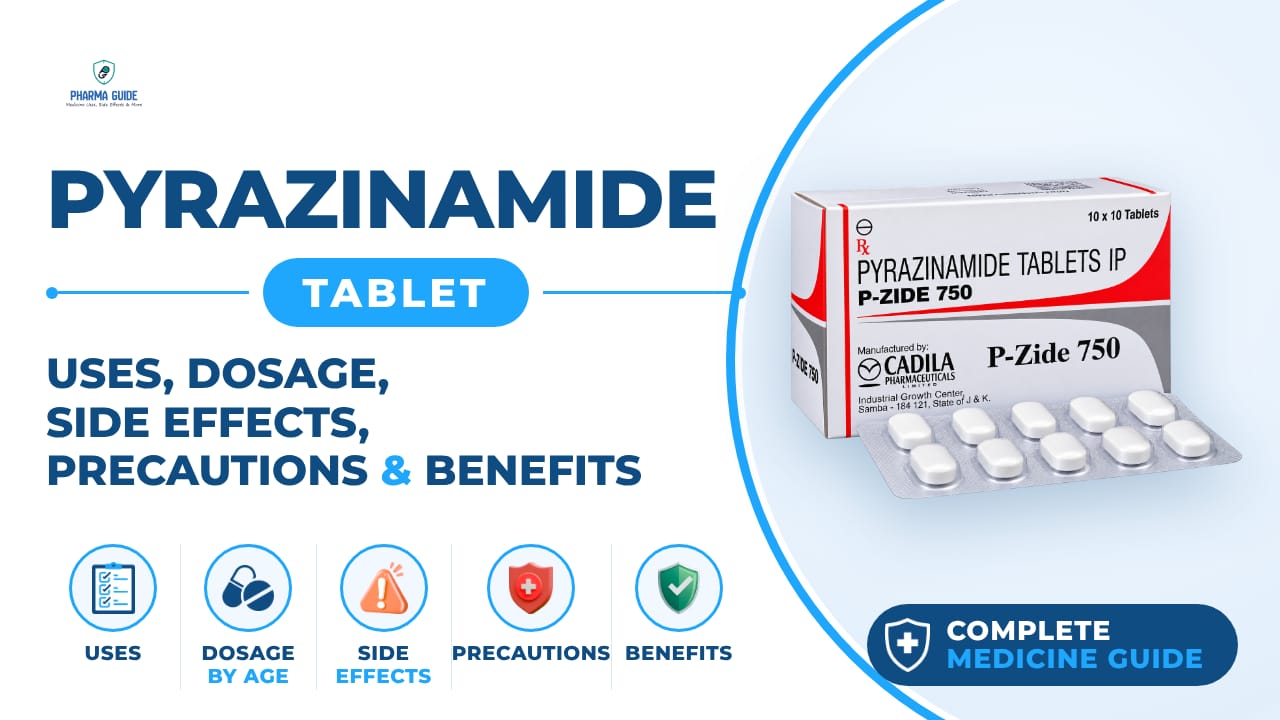
| Generic name | Pyrazinamide |
|---|---|
| Drug class | Antitubercular agent (anti-infective) |
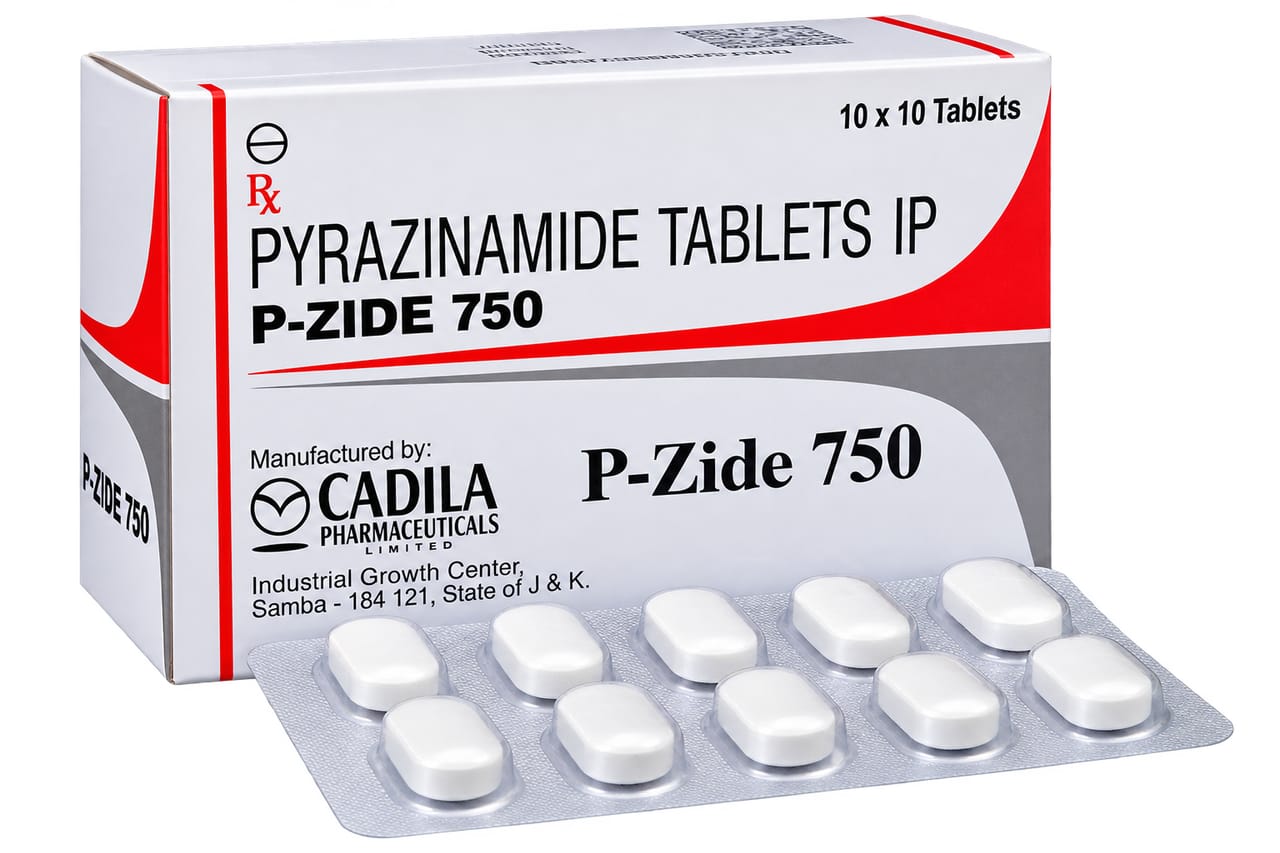
| Forms | Tablet (500 mg oral tablets) |
Quick overview
Pyrazinamide Tablet is an antitubercular anti-infective medicine used together with other tuberculosis medicines to treat TB. It works by slowing the growth of and killing tuberculosis bacteria, helping the body clear the infection. It is taken as part of a combination regimen for the full course prescribed by your doctor, and it carries a risk of liver-related side effects that should be monitored during treatment.
What is Pyrazinamide Tablet
Pyrazinamide belongs to the family of medicines called anti-infectives. It is used, along with other medicines, to treat tuberculosis (TB).
Pyrazinamide Tablet uses
- Treats tuberculosis (TB), used along with other tuberculosis medicines
- May be used for other conditions as determined by your health care provider
Benefits of Pyrazinamide Tablet
- Helps clear up tuberculosis infection when taken with other TB medicines for the full course of treatment
How Pyrazinamide Tablet works
Pyrazinamide is an antibiotic that slows the growth of tuberculosis bacteria, kills bacteria, and reduces the infection, making it easier for the body to fight it off.
Pyrazinamide Tablet dosage
Swallow the tablet with water. It is taken along with other antituberculosis drugs, not alone. Your doctor will decide how much to take, when to take it, and for how long. Keep taking this medicine for the full course of treatment, even if you begin to feel better after a few weeks, and do not miss any doses.
If you miss a dose, take it as soon as you remember. If it is almost time for your next dose, skip the missed dose and go back to your regular schedule; do not double up doses. Do not share this medicine with other people.
In children, this medicine has not been reported to cause different side effects than in adults. In older adults, this medicine is not expected to cause different side effects or problems than in younger adults.
| Age group | Dose |
|---|---|
| Children <15 years | 15–30 mg/kg once daily |
| 15–17 years | 15–30 mg/kg once daily, according to TB regimen |
| 18–64 years | 15–30 mg/kg once daily; commonly around 20–25 mg/kg/day |
| 65+ years | Weight-based dosing; assess liver and kidney function |
Available forms and strengths
- Tablet (500 mg oral tablets)
Side effects of Pyrazinamide Tablet
Common
- Increased uric acid levels
- Nausea
- Vomiting
- Loss of appetite
- Muscle and joint pain
- Acne
- Painful urination (dysuria)
- Unusual tiredness or weakness
Serious
- Liver damage (hepatotoxicity): nausea or vomiting, stomach or belly pain, fever, weakness or unusual tiredness, itching, loss of appetite, light-colored stools, dark-colored urine, yellowing of skin or eyes (jaundice)
- Increased uric acid levels leading to gout: sudden redness, swelling, or pain in joints, especially big toe, ankle, and knee
- Severe allergic reactions: breathing problems or wheezing, racing heart, fever or general ill feeling, swollen lymph nodes, swelling of face/lips/mouth/tongue/throat, trouble swallowing or throat tightness, itching, skin rash or hives, nausea or vomiting, dizziness or fainting, stomach cramps, joint pain
Warnings and precautions
- Pyrazinamide should not be used in people who are allergic to it, or who have severe liver damage or are currently having a gout flare. Combining pyrazinamide with rifampin for latent tuberculosis has been linked to high rates of hospitalization and death from liver injury. Liver injury is the most common serious side effect of pyrazinamide and can occur at any time during treatment, especially with higher doses. Not completing the full course of treatment increases the risk that future infections will be resistant to pyrazinamide or similar medicines.
- Tell your doctor if you have a history of taking TB medicine, kidney problems, diabetes, gout, porphyria or other blood disorders, or drink alcohol often or in large amounts, as these may affect treatment. This medicine may cause false test results with urine ketone tests, which is important for people with diabetes to know.
- Pregnancy: It is not known if or how pyrazinamide could affect pregnancy or harm an unborn baby. Tell your health care provider if you are pregnant or plan to become pregnant.
- Breastfeeding: Pyrazinamide passes into breast milk. Tell your health care provider if you are breastfeeding or plan to breastfeed.
- Kidney: Pyrazinamide should be used with caution in patients with reduced kidney function or other kidney problems.
- Liver: Pyrazinamide should not be used if your liver is not working well, and is not recommended if you have severe liver damage. Your doctor may test your liver before and during treatment.
- Alcohol: It is unknown if drinking alcohol will affect pyrazinamide, but the risk of liver damage may be increased if you drink alcohol while taking it. It is best to avoid alcohol during treatment.
Storage
- Store the medicine in a closed container at room temperature, away from heat, moisture, and direct light. Keep from freezing.
- Pyrazinamide should be stored at room temperature, between 68 F and 77 F (20 C and 25 C). It can be exposed to temperatures between 59 F and 86 F (15 C and 30 C) for shorter periods of time, such as when you're transporting it. Store it in a cool, dry place, and protect it from light.
- Store in a well-closed container at controlled room temperature (15-30°C). Keep out of reach and sight of children.
- Do not keep outdated medicine or medicine no longer needed.
When to see a doctor
- Call your health care provider right away if you have sudden redness, swelling, or pain in your joints, which could be a sign of gout.
- Call your health care provider right away if you notice signs of liver damage, such as nausea, vomiting, stomach pain, fever, weakness, itching, loss of appetite, light-colored stools, dark urine, or yellowing of the skin or eyes.
- Stop taking pyrazinamide and get help right away if you have symptoms of a serious allergic reaction, such as breathing problems, swelling of the face or throat, or hives.
- If you think you have taken too much of this medicine, contact your health care provider, hospital emergency department, or your local poison control center right away, even if you have no symptoms.
- If your symptoms do not improve within 2 to 3 weeks, or if they become worse, check with your doctor.
Alternatives
- Isoniazid
- Rifampicin (Rifampin)
- Ethambutol
- Rifabutin
- Rifapentine
- Levofloxacin
- Moxifloxacin
Watch the video
FAQs
What is Pyrazinamide Tablet used for?
It is an antitubercular anti-infective medicine used together with other TB medicines to treat tuberculosis.
How does Pyrazinamide Tablet work?
It slows the growth of and kills tuberculosis bacteria, reducing the infection and helping the body fight it off.
What should I do if I miss a dose of Pyrazinamide Tablet?
Take it as soon as you remember. If it is almost time for your next dose, skip the missed dose and continue your regular schedule; do not double up doses.
What are the serious side effects of Pyrazinamide Tablet?
Serious side effects include liver damage (hepatotoxicity), increased uric acid levels leading to gout, and severe allergic reactions such as swelling, breathing problems, or hives.
Can I drink alcohol while taking Pyrazinamide Tablet?
It is best to avoid alcohol during treatment, as it may increase the risk of liver damage.
General information, not medical advice
Your prescriber and the leaflet in your pack know your situation. This page does not.
- Follow your prescriber and the leaflet
- Don't start, stop, or change a dose on your own
- Doses and warnings differ by country and product
Sources
Video
Related medicines

Injectafer Injection: Uses, Dosage, Side Effects, Precautions and Alternates
Iron products
Injectafer (ferric carboxymaltose) treats iron deficiency anemia and heart failure-related iron deficiency via IV. Learn uses, dosage, side effects, and

Gliclazide Tablet: Uses, Dosage, Side Effects, Precautions and Alternates
Sulfonylurea (hypoglycemic/antidiabetic agent)
Gliclazide Tablet is a sulfonylurea for type 2 diabetes that boosts insulin release. Learn about dosage, side effects, warnings, and precautions.