
Safety
General information, not medical advice
Your prescriber and the leaflet in your pack know your situation. This page does not.
- Follow your prescriber and the leaflet
- Don't start, stop, or change a dose on your own
- Doses and warnings differ by country and product
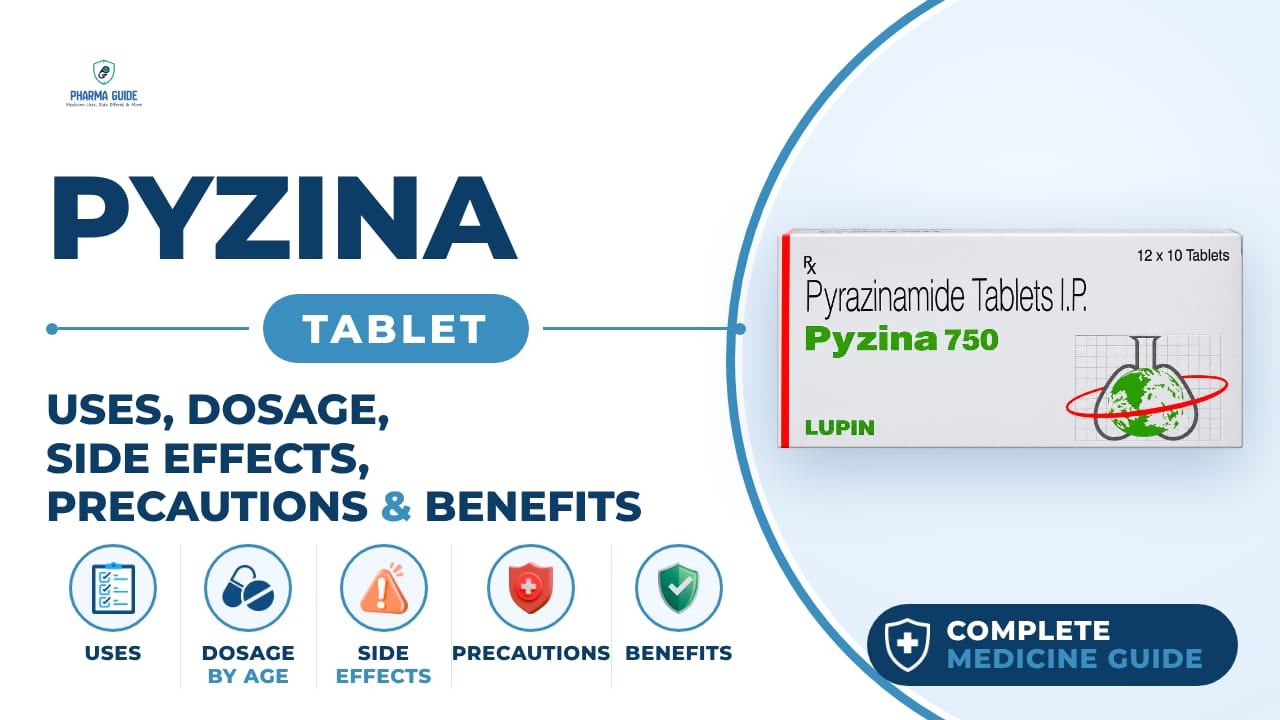
Pyzina Tablet: Uses, Dosage, Side Effects, Precautions and Alternates
| Generic name | Pyrazinamide |
|---|---|
| Drug class | Anti-tuberculosis drug (antibiotic) |
| Forms | Tablet |
Quick overview
Pyzina Tablet contains Pyrazinamide, an anti-tuberculosis antibiotic used to treat tuberculosis (TB) in combination with other anti-TB drugs. It is used during the initial phase of TB treatment to help eliminate TB bacteria and works against both drug-sensitive and drug-resistant forms of TB. It is taken once daily, with the dose depending on body weight and age, and must be used for the full prescribed duration.
What is Pyzina Tablet
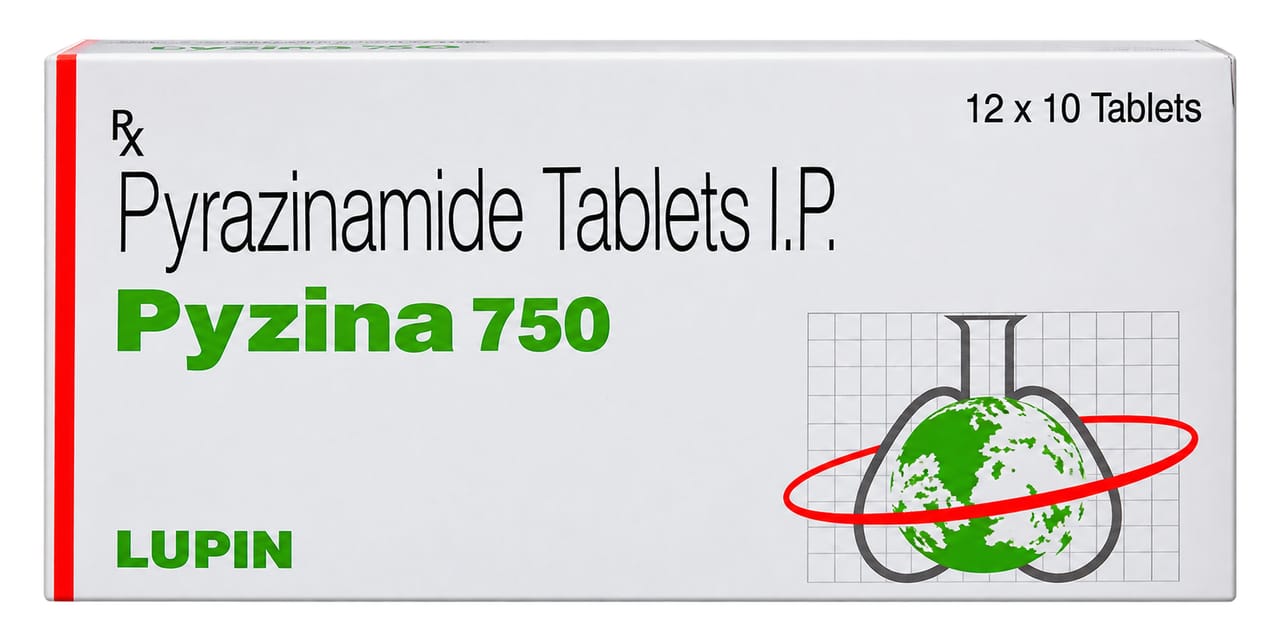
Pyzina 500 Tablet is an antibiotic that belongs to a class of medicines known as anti tuberculosis drugs. It is used in the treatment of tuberculosis, an infectious disease that mainly affects the lungs and in some cases other parts of the body.
Pyzina Tablet uses
- Tuberculosis (TB)
- Treats active tuberculosis (TB) in combination with other anti-TB drugs
- Used for the initial phase of TB treatment to eliminate the TB bacteria from the body
- Effective in treating both drug-sensitive and drug-resistant forms of TB
- Helps prevent the spread of tuberculosis to others when used with other TB drugs
Benefits of Pyzina Tablet
- Helps in the effective treatment of tuberculosis when combined with other anti-TB medications
- Reduces the risk of developing drug resistance by eliminating TB bacteria from the body
- Shortens the duration of TB treatment by effectively killing the bacteria during the initial phase
How Pyzina Tablet works
In the body, the medicine is converted into a substance called pyrazinoic acid. This substance blocks an enzyme the TB bacteria need to grow, which stops the bacteria from multiplying and helps kill them.
Pyzina Tablet dosage
Take this medicine in the dose and duration advised by your doctor. Swallow the tablet whole; do not chew, crush, or break it. This medicine may be taken with or without food, but it is better to take it at a fixed time every day to avoid a missed dose. It is usually given along with at least one other tuberculosis medicine.
Do not skip doses and finish the full course of treatment even if you feel better, since stopping early can cause treatment failure and worse side effects. Let your doctor know about any changes in your weight, since the dose depends on body weight.
If you miss a dose, take it as soon as you remember; if it is almost time for your next dose, skip the missed one and go back to your regular schedule—do not double up.
| Age group | Dose |
|---|---|
| Under 12 years | Not established |
| 12–18 years | 500–1500 mg, once daily |
| 18–60 years | 1500–2000 mg, once daily |
| 60+ years | 1500–2000 mg, once daily |
Available forms and strengths
- Tablet
Side effects of Pyzina Tablet
Common
- Joint pain
- Loss of appetite
- Unusual tiredness and weakness
- Yellow colored eyes or skin (jaundice)
- Itching
- Skin rash
- Photosensitivity
- Nausea and vomiting
- Acne
- Mild stomach upset
- Muscle discomfort
Serious
- Hepatitis (viral infection of liver)
- Increased liver enzymes
- Hyperuricemia
- Liver damage, which may show as jaundice, dark urine, or abdominal pain
- Allergic reactions, fever
Warnings and precautions
- This medicine is not recommended for use in patients with known allergy to pyrazinamide or any other ingredient in the tablet.
- This medicine is not recommended for people with severe liver impairment or acute liver disease, as it can increase the risk of worsening their condition.
- This medicine is not recommended for people with high uric acid levels or acute gout, as it can worsen the condition.
- This medicine may cause liver injury. Liver function should be tested before starting treatment, and any signs of elevated liver enzymes should be reported to the doctor.
- This medicine should be used carefully in people with diabetes, with close monitoring of blood sugar levels.
- Using this medicine without enough evidence of a bacterial infection should be avoided, as improper use may fail to help and could increase the risk of drug-resistant bacteria.
- Do not stop taking this medicine without consulting your doctor, even if you feel better, as stopping early can cause TB to come back.
- It is strongly recommended to avoid this medicine in people with liver disease unless a doctor advises otherwise.
- This medicine may be unsafe to use during pregnancy. Animal studies have shown harmful effects on the developing baby, though human studies are limited. Your doctor will weigh the benefits and risks before prescribing it.
- This medicine is probably safe to use during breastfeeding. Limited data suggests it does not pose a significant risk to the baby.
- This medicine should be used with caution in patients with severe kidney disease. A dose adjustment may be needed, and kidney function tests are advised before starting treatment.
- This medicine should be used with caution in patients with liver disease. A dose adjustment may be needed, and regular liver function tests are advised before and during treatment. It may cause liver injury, so stop and consult your doctor if you notice signs of liver problems.
- Caution is advised when drinking alcohol with this medicine, as it may have added harmful effects on the liver. Please consult your doctor.
- It is not known whether this medicine affects the ability to drive. Do not drive if you experience any symptoms that affect your ability to concentrate and react.
Storage
- Store below 25°C.
- Protect from moisture and direct sunlight.
- Keep in the original packaging.
- Keep out of reach of children.
When to see a doctor
- Contact your doctor right away if side effects continue for a long time instead of going away after treatment.
- If you notice signs of liver problems or unusual side effects, contact your doctor immediately.
- In case of an overdose, seek emergency medical treatment or contact your doctor right away.
Alternatives
- Antizide
- Macrozide
- Zypyra
Watch the video
FAQs
What is Pyzina Tablet used for?
Pyzina Tablet is used to treat active tuberculosis (TB) in combination with other anti-TB drugs, especially during the initial phase of treatment to eliminate TB bacteria. It works against both drug-sensitive and drug-resistant forms of TB.
How does Pyzina Tablet work?
In the body, the medicine is converted into pyrazinoic acid, which blocks an enzyme the TB bacteria need to grow, stopping them from multiplying and helping kill them.
How should Pyzina Tablet be taken?
Swallow the tablet whole without chewing, crushing, or breaking it. It may be taken with or without food, preferably at a fixed time daily, and is usually given with at least one other TB medicine.
What are the common side effects of Pyzina Tablet?
Common side effects include joint pain, loss of appetite, tiredness, jaundice, itching, skin rash, photosensitivity, nausea, vomiting, acne, mild stomach upset, and muscle discomfort.
Is Pyzina Tablet safe during pregnancy and breastfeeding?
Pyzina Tablet may be unsafe during pregnancy, as animal studies have shown harmful effects, though human data is limited. It is probably safe during breastfeeding based on limited data.
General information, not medical advice
Your prescriber and the leaflet in your pack know your situation. This page does not.
- Follow your prescriber and the leaflet
- Don't start, stop, or change a dose on your own
- Doses and warnings differ by country and product
Sources
- KD Tripathi. Seventh Edition. New Delhi, India: Jaypee Brothers Medical Publishers; 2013: Page No 768-769
- April Hazard Vallerand, Cynthia A. Sanoski. Sixteenth Edition. Philadelphia, China: F. A. Davis Company; 2019: Page No 1066-1067
Video
Related medicines

Injectafer Injection: Uses, Dosage, Side Effects, Precautions and Alternates
Iron products
Injectafer (ferric carboxymaltose) treats iron deficiency anemia and heart failure-related iron deficiency via IV. Learn uses, dosage, side effects, and

Gliclazide Tablet: Uses, Dosage, Side Effects, Precautions and Alternates
Sulfonylurea (hypoglycemic/antidiabetic agent)
Gliclazide Tablet is a sulfonylurea for type 2 diabetes that boosts insulin release. Learn about dosage, side effects, warnings, and precautions.