
Safety
General information, not medical advice
Your prescriber and the leaflet in your pack know your situation. This page does not.
- Follow your prescriber and the leaflet
- Don't start, stop, or change a dose on your own
- Doses and warnings differ by country and product
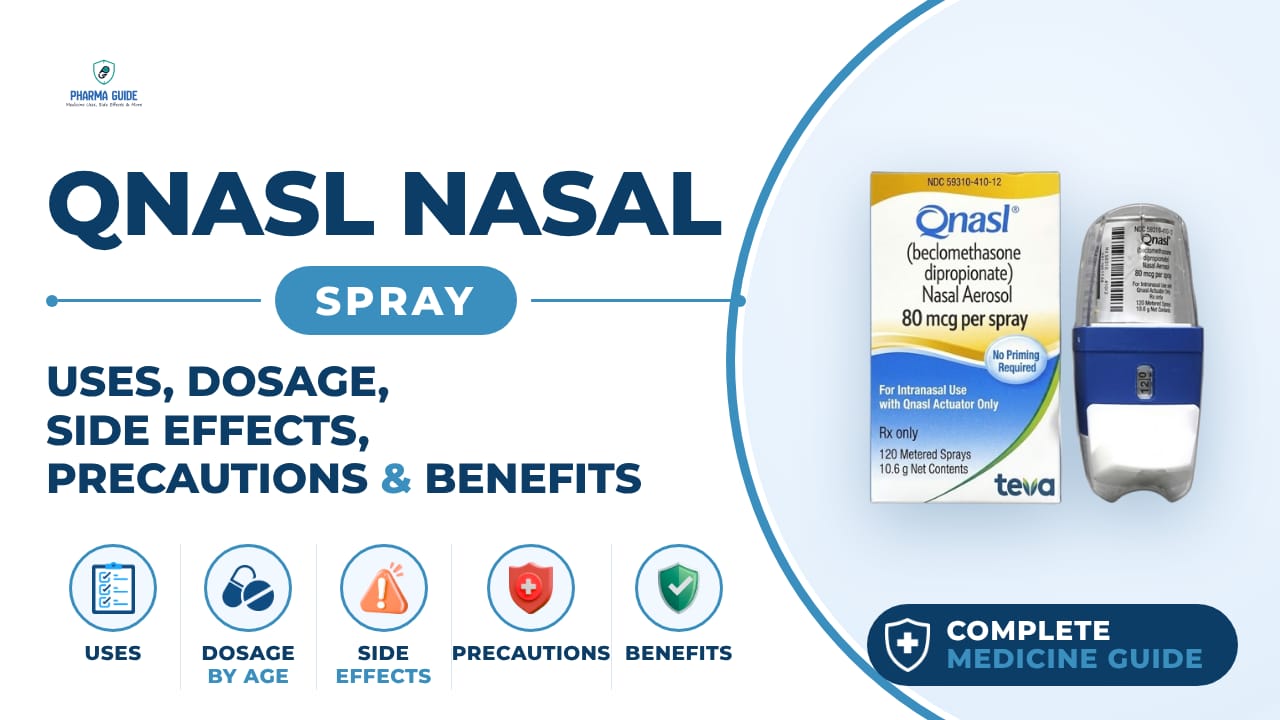
Qnasl Nasal Spray: Uses, Dosage, Side Effects, Precautions and Alternates
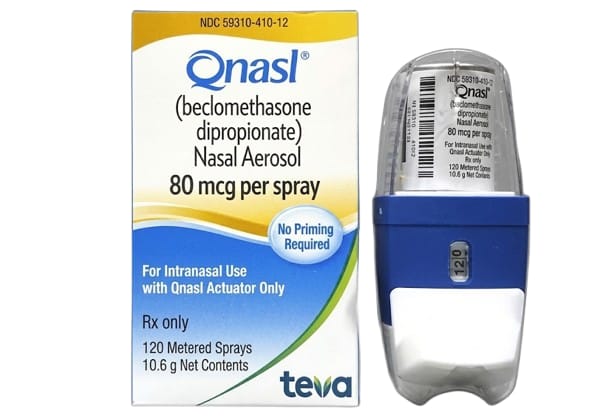
| Generic name | beclomethasone dipropionate |
|---|---|
| Drug class | Nasal steroid (corticosteroid) |
| Forms | Nasal Spray |
Quick overview
Qnasl Nasal Spray contains beclomethasone dipropionate, a nasal corticosteroid used only in the nose. It is prescribed to treat nasal symptoms of seasonal and year-round allergic rhinitis in people 4 years of age and older, including stuffy nose, runny nose, sneezing, and itching. It works by reducing inflammation in the nasal passages and is used once daily on a regular schedule.
What is Qnasl Nasal Spray
QNASL is a prescription corticosteroid nasal spray used in the nose only. It contains beclomethasone, a man-made steroid that helps reduce swelling and inflammation in the nose.
Qnasl Nasal Spray uses
- Treats nasal symptoms of seasonal and year-round (perennial) allergic rhinitis in people 4 years of age and older, such as stuffy nose, runny nose, sneezing, and itching.
Benefits of Qnasl Nasal Spray
- Reduces nasal congestion, runny nose, sneezing, and itching caused by allergic rhinitis when used regularly every day.
How Qnasl Nasal Spray works
QNASL contains a steroid that is converted in the body to an active form. It calms down inflammation in the nose by blocking certain immune cells and chemicals that cause allergy symptoms, though the exact way it relieves nasal symptoms isn't fully known.
Qnasl Nasal Spray dosage
For use in the nose only — do not spray into the eyes, mouth, or directly onto the wall between the nostrils. Blow your nose to clear your nostrils before using the spray. Point the spray slightly away from the center wall of the nose while holding the other nostril closed. Hold your breath while spraying, then continue holding it for about 5 seconds before breathing out slowly through the mouth. Avoid blowing your nose for about 15 minutes after using the spray.
Some versions of this product must be primed with test sprays into the air before first use and after it hasn't been used for 7 or more days in a row; check your specific product's instructions. Use it regularly, once a day, every day, for the best results — it may take up to two weeks to notice improvement. Do not use more often or in greater amounts than your doctor has prescribed.
Children using the 40 mcg strength should be supervised by a parent, guardian, or caregiver. Wipe the nasal tip with a clean, dry tissue or cloth after use; do not wash or put the canister or actuator in water.
| Age group | Dose |
|---|---|
| Under 18 years | Not recommended |
| 18–64 years | 320 mcg, once/day |
| 65+ years | 320 mcg, once/day |
Available forms and strengths
- Nasal Spray
Side effects of Qnasl Nasal Spray
Common
- Nasal discomfort
- Nosebleed (epistaxis)
- Headache
- Fever (in children)
- Upper respiratory tract infection (in children)
- Nasopharyngitis / sore throat or nose irritation (in children)
- Sneezing, runny or stuffy nose
- Unpleasant taste or smell
Serious
- Severe or ongoing nosebleeds, or nasal sores that won't heal
- Nasal ulceration, erosion, or septal perforation
- Fungal infection (thrush) in the nose, mouth, or throat
- Slowed wound healing after nasal surgery, injury, or sores
- Eye problems such as blurred vision, increased eye pressure, glaucoma, or cataracts
- Serious allergic reactions including hives, swelling of the face/lips/tongue, rash, or difficulty breathing
- Signs of weakened immune system or infection such as fever, chills, body aches, or feeling very tired
- Signs of adrenal gland problems (adrenal insufficiency) such as tiredness, weakness, dizziness, nausea, or vomiting
- Slowed growth in children
Warnings and precautions
- Do not use QNASL if you have recent nasal sores, nasal surgery, or a nasal injury that hasn't healed, as steroids can slow wound healing.
- This medicine can cause eye problems like increased eye pressure, blurred vision, glaucoma, or cataracts. People with a history of these conditions should have regular eye checks while using it.
- Serious allergic reactions, including swelling, hives, and rash, can occur. Stop using the medicine if this happens.
- This medicine can weaken the immune system, making infections like chickenpox or measles more serious, and it may make existing infections such as tuberculosis worse. Avoid contact with people who are sick if you haven't had these illnesses or been vaccinated.
- Using more than the recommended dose, or using it for a long time, can cause whole-body steroid effects such as adrenal gland suppression. If this happens, the medicine should be stopped gradually rather than suddenly.
- This medicine may slow a child's growth rate. Children's growth should be checked regularly during treatment.
- It isn't known for certain if this medicine can harm an unborn baby. Tell your doctor if you are pregnant or planning to become pregnant so they can weigh the benefits and risks.
- It isn't known if this medicine passes into breast milk. Talk to your doctor about the safest way to feed your baby if you are using QNASL.
- No routine renal dose adjustment is established. Significant liver disease should be medically assessed. No major direct alcohol interaction is established. Qnasl generally does not impair driving.
Storage
- Store at room temperature, away from moisture and heat.
- Do not puncture the canister.
- Do not store near heat or open flame, and do not expose to temperatures above 120°F (49°C), as this may cause the canister to burst.
- Never throw the canister into a fire or an incinerator.
- Keep out of reach of children.
- Discard the device when the spray counter reads 0, since the correct dose can no longer be ensured.
- Safely throw away medicine that is out of date or no longer needed.
When to see a doctor
- Get emergency help right away if you notice signs of a serious allergic reaction, such as hives, swelling of the lips, tongue, or face, or trouble breathing.
- Contact your doctor if you have ongoing or severe nosebleeds, or sores in the nose that won't heal.
- Tell your doctor if you notice redness or white patches in the mouth or throat, which could be a fungal infection.
- Tell your doctor right away if you notice any change in vision while using this medicine.
- Tell your doctor about signs of infection such as fever, chills, body aches, feeling tired, nausea, or vomiting.
- Contact your doctor if symptoms of adrenal gland problems occur, such as tiredness, weakness, dizziness, nausea, or vomiting.
- Call your doctor if your or your child's symptoms do not improve, or if they get worse, while using this medicine.
- If you think a child is not growing normally while using this medicine, talk to the doctor.
Alternatives
- Fluticasone nasal spray
- Mometasone nasal spray
- Azelastine nasal spray
- Ryaltris
Watch the video
FAQs
What is Qnasl Nasal Spray used for?
Qnasl is used to treat nasal symptoms of seasonal and year-round allergic rhinitis in people 4 years and older, including stuffy nose, runny nose, sneezing, and itching.
How often should Qnasl Nasal Spray be used?
It should be used once daily, every day, for best results. It may take up to two weeks to notice improvement, and it should not be used more often or in greater amounts than prescribed.
What is the dosage of Qnasl Nasal Spray for adults?
Adults aged 18-64 and those 65 and older use 320 mcg once a day. It is not recommended for use in people under 18 years of age.
What are the common side effects of Qnasl Nasal Spray?
Common side effects include nasal discomfort, nosebleed, headache, unpleasant taste or smell, and sneezing or stuffy/runny nose. In children, fever, upper respiratory infections, and nasopharyngitis may also occur.
Can Qnasl Nasal Spray affect a child's growth?
Yes, this medicine may slow a child's growth rate, so children's growth should be checked regularly during treatment.
General information, not medical advice
Your prescriber and the leaflet in your pack know your situation. This page does not.
- Follow your prescriber and the leaflet
- Don't start, stop, or change a dose on your own
- Doses and warnings differ by country and product
Sources
Video
Related medicines

Injectafer Injection: Uses, Dosage, Side Effects, Precautions and Alternates
Iron products
Injectafer (ferric carboxymaltose) treats iron deficiency anemia and heart failure-related iron deficiency via IV. Learn uses, dosage, side effects, and

Gliclazide Tablet: Uses, Dosage, Side Effects, Precautions and Alternates
Sulfonylurea (hypoglycemic/antidiabetic agent)
Gliclazide Tablet is a sulfonylurea for type 2 diabetes that boosts insulin release. Learn about dosage, side effects, warnings, and precautions.