
Safety
General information, not medical advice
Your prescriber and the leaflet in your pack know your situation. This page does not.
- Follow your prescriber and the leaflet
- Don't start, stop, or change a dose on your own
- Doses and warnings differ by country and product
Qtern Tablet: Uses, Dosage, Side Effects, Precautions and Alternates
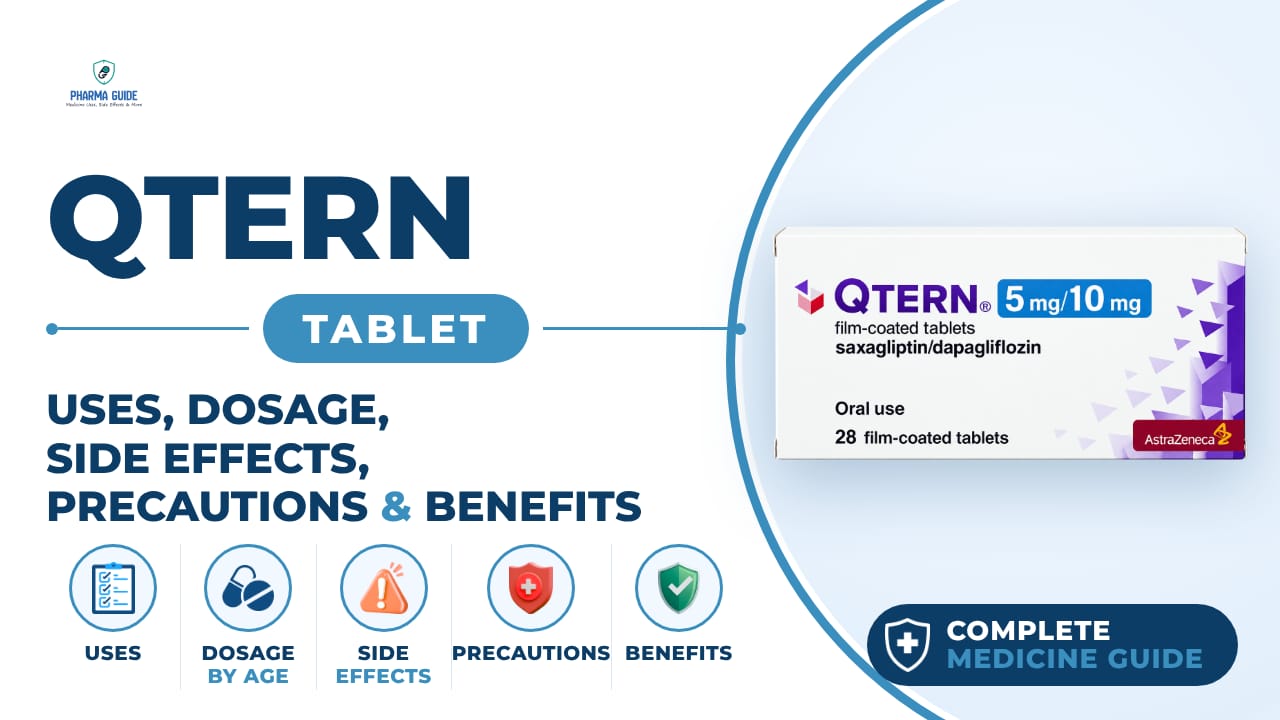
| Generic name | dapagliflozin and saxagliptin |
|---|---|
| Drug class | Antidiabetic combinations (SGLT2 inhibitor + DPP-4 inhibitor combination) |
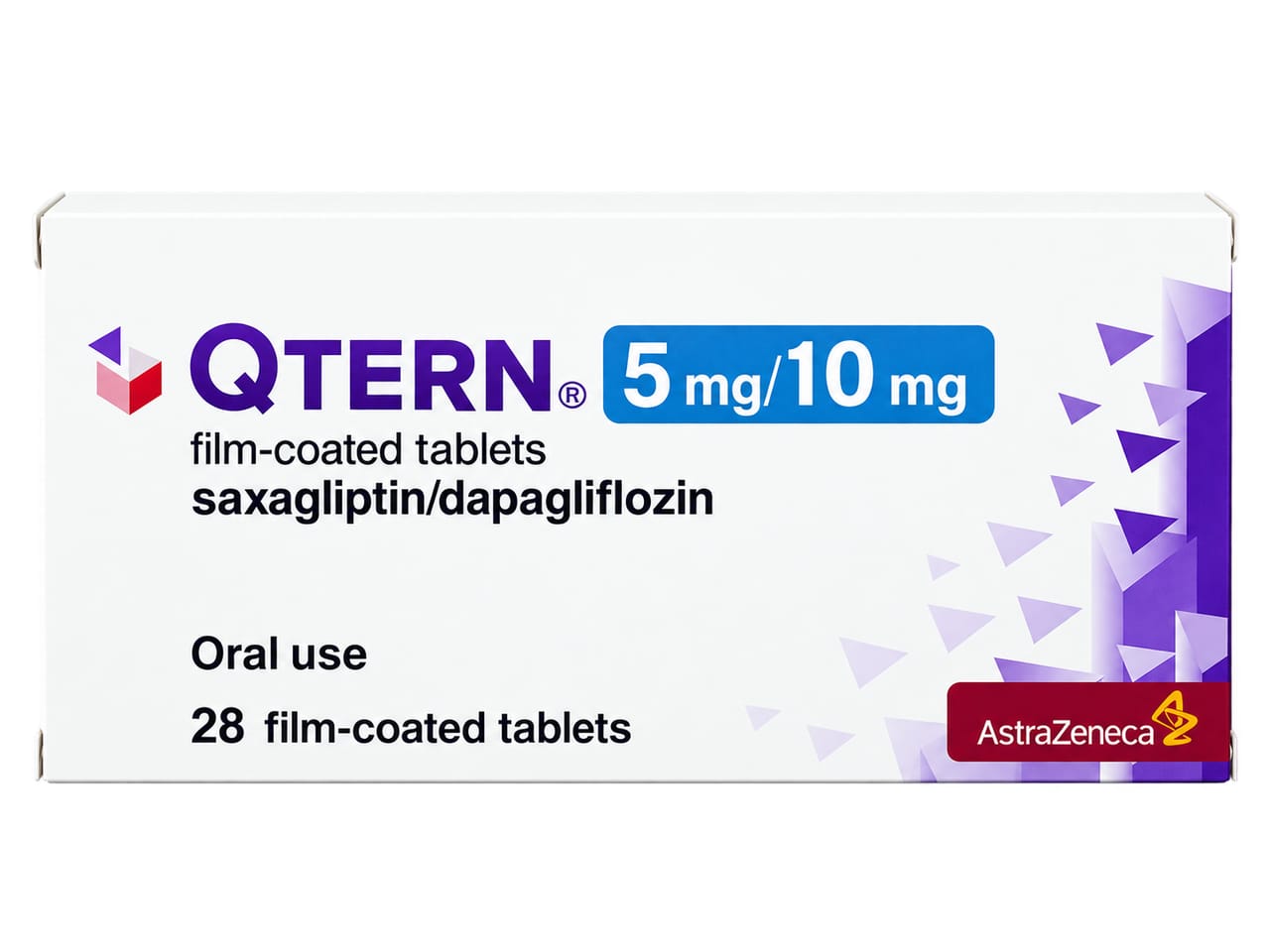
| Forms | Tablet (5 mg dapagliflozin/5 mg saxagliptin), Tablet (10 mg dapagliflozin/5 mg saxagliptin) |
Quick overview
Qtern Tablet combines dapagliflozin and saxagliptin, an SGLT2 inhibitor and DPP-4 inhibitor combination, used along with diet and exercise to improve blood sugar control in adults with type 2 diabetes. It is often used together with metformin when metformin plus diet and exercise are not enough. Qtern works by helping the kidneys remove extra sugar through urine and by increasing hormones that help the body release more insulin after eating.
What is Qtern Tablet
Qtern is a prescription medicine that combines two diabetes drugs, saxagliptin and dapagliflozin, used along with diet and exercise to improve blood sugar control in adults with type 2 diabetes.
Qtern Tablet uses
- Lowers blood sugar levels in adults with type 2 diabetes mellitus, used together with diet and exercise and in combination with metformin, when metformin plus diet and exercise do not give adequate blood sugar control.
Benefits of Qtern Tablet
- Helps control blood sugar levels, which may help prevent or delay diabetes complications such as heart disease, kidney disease, blindness and amputation.
- May lead to modest weight loss because glucose and its calories are lost in the urine.
How Qtern Tablet works
Qtern works in two ways: dapagliflozin helps the kidneys remove extra sugar from the blood through the urine, and saxagliptin increases hormones that help the body release more insulin after eating, which lowers blood sugar.
Qtern Tablet dosage
Swallow the tablet whole with a full glass of water; do not split, cut, crush or chew it. Take it at about the same time each day, with or without food, usually in the morning.
If you miss a dose, take it as soon as you remember; if it is almost time for your next dose, skip the missed dose and continue as normal. Do not take a double dose.
Continue taking it every day for as long as your doctor tells you, even though it controls but does not cure your condition. Keep tablets in the blister pack until it is time to take them, as they do not keep well once removed.
Talk to your doctor about stopping and restarting the medicine around surgery or procedures that require prolonged fasting.
| Age group | Dose |
|---|---|
| Under 18 years | Safety and effectiveness are not established; no standard pediatric dose |
| 18–64 years | Usually starts at dapagliflozin 5 mg + saxagliptin 5 mg once daily; may be increased to 10 mg + 5 mg once daily if additional glucose control is needed |
| 65–74 years | Same adult dosing may be used, but kidney function and hydration status require closer monitoring |
Available forms and strengths
- Tablet (5 mg dapagliflozin/5 mg saxagliptin)
- Tablet (10 mg dapagliflozin/5 mg saxagliptin)
Side effects of Qtern Tablet
Common
- Upper respiratory tract infection (runny nose, sore throat, cough)
- Urinary tract infection
- Abnormal blood levels of cholesterol or triglycerides (dyslipidemia)
- Headache
- Diarrhea, nausea, vomiting, or stomach pain
- Back pain
- Genital yeast infection
- Joint pain
- Loss of appetite or loss of taste
- Feeling depressed or anxious
- Signs of anaemia such as tiredness, headaches, shortness of breath, dizziness, looking pale
- Swelling of the hands, feet or ankles
- Rash
- Increased urination or discomfort when urinating
Serious
- Serious allergic reaction: swelling of face, lips, tongue or throat, difficulty breathing or swallowing, hives, skin rash, itching, flaking or peeling skin
- Diabetic ketoacidosis: nausea, vomiting, stomach pain, tiredness, confusion, unusual drowsiness, trouble breathing, sweet smell to breath
- Pancreatitis: severe upper stomach pain, often with nausea and vomiting, that does not go away
- Heart failure: increasing shortness of breath, rapid weight gain, swelling of feet/ankles/legs, unusual tiredness
- Necrotizing fasciitis of the perineum (Fournier's gangrene): pain, tenderness, redness or swelling of the genitals or area between genitals and rectum, with fever or feeling unwell
- Serious urinary tract infections including kidney infection or urosepsis: burning or pain when urinating, frequent or urgent need to urinate, fever, chills, blood in urine
- Dehydration/volume depletion: dry sticky mouth, severe thirst, severe diarrhoea or vomiting, dizziness, reduced urination
- Severe kidney problems or acute kidney injury
- Low blood sugar (hypoglycemia) that persists despite treatment
- Severe and disabling joint pain
- Bullous pemphigoid: blisters or breakdown (erosion) of the skin
- Bladder cancer signs: blood in urine, pain while urinating
Warnings and precautions
- Qtern can cause diabetic ketoacidosis, a serious life-threatening buildup of acid in the blood, which can occur even if blood sugar is not very high.
- Saxagliptin, part of Qtern, can cause inflammation of the pancreas (pancreatitis), which may be severe and lead to death.
- Qtern may increase the risk of hospitalization for heart failure, especially in people with existing heart or kidney problems.
- A rare but life-threatening bacterial infection of the tissue around the genitals and rectum (Fournier's gangrene) has occurred with medicines like Qtern.
- Qtern can cause dehydration and low blood pressure, which may lead to dizziness or fainting, especially in older adults or those on blood pressure medicines or diuretics.
- Qtern should not be used in people with moderate to severe kidney impairment, end-stage renal disease, or those on dialysis.
- Serious allergic reactions, including anaphylaxis and swelling of the face, lips, tongue or throat, have occurred, sometimes after the first dose.
- A skin condition called bullous pemphigoid, causing blisters or skin breakdown, has been reported with DPP-4 inhibitors like saxagliptin.
- Severe and disabling joint pain has been reported with DPP-4 inhibitors like saxagliptin.
- Qtern should not be used in people with active bladder cancer, and caution is needed in those with a history of bladder cancer.
- Do not take Qtern if you have had an allergic reaction to saxagliptin, dapagliflozin, any other DPP-4 inhibitor medicine, or any of its ingredients.
- Do not take Qtern if you are pregnant or plan to become pregnant, as it is not recommended during pregnancy and may harm the unborn baby; your doctor will likely switch you to insulin.
- Qtern is not recommended while breastfeeding because it is not known if it passes into breast milk.
- Qtern should not be used if you have poorly functioning kidneys, severe kidney disease, kidney failure, or are on dialysis, since the medicine needs good kidney function to work and can cause kidney injury.
- Tell your doctor before taking Qtern if you have or have had liver problems, including poor liver function or severe liver failure.
- Drinking a lot of alcohol, including binge drinking, may increase the risk of serious problems like ketoacidosis, so tell your doctor if you drink alcohol often or binge drink.
- Qtern may rarely cause dizziness, and low blood sugar can slow reaction time, so be careful driving or using machinery until you know how the medicine affects you.
Storage
- Keep your QTERN tablets in the blister until it is time to take them. If you take QTERN out of the blister, it will not keep well.
- Keep your tablets in a cool dry place where the temperature stays below 30 degrees Celsius.
- Store it in a cool dry place away from moisture, heat or sunlight; for example, do not store it in the bathroom or near a sink, or in the car or on window sills.
- Keep it where young children cannot reach it.
- If you no longer need to use this medicine or it is out of date, take it to any pharmacy for safe disposal.
- Do not use this medicine after the expiry date.
When to see a doctor
- Stop taking Qtern and get medical help right away if you have symptoms of ketoacidosis such as nausea, vomiting, stomach pain, tiredness, confusion or trouble breathing, even if your blood sugar is not very high.
- Stop taking Qtern and contact your doctor right away if you have severe stomach pain that won't go away, which may spread to your back and may occur with or without vomiting — these could be signs of pancreatitis.
- Contact your doctor right away if you notice increasing shortness of breath, swelling in your feet, ankles or legs, rapid weight gain, or unusual tiredness, as these may be signs of heart failure.
- Seek medical attention immediately if you have fever or feel very weak, tired or unwell, along with pain, tenderness, swelling or redness in the area around your genitals and rectum, as these may be signs of a rare life-threatening infection.
- Stop taking Qtern and get medical help right away if you notice signs of a serious allergic reaction, such as swelling of the face, lips, tongue or throat, difficulty swallowing or breathing, or hives.
- Call your doctor right away if you develop blisters or breakdown of your skin, as this could be a sign of a serious skin reaction needing hospital treatment.
- Call your doctor right away if you have symptoms of a urinary tract or kidney infection, such as burning or pain when urinating, frequent or urgent need to urinate, fever, chills, or blood in your urine.
- Call your healthcare provider right away or contact your doctor, or go to the Emergency Department, if you think you have taken too much Qtern, even if you feel fine.
- Call your doctor right away if you have severe joint pain, as this may be related to the saxagliptin component of Qtern.
Alternatives
- Farxiga / dapagliflozin
- Onglyza / saxagliptin
- Januvia / sitagliptin
Watch the video
FAQs
What is Qtern Tablet used for?
Qtern is used along with diet and exercise, often with metformin, to improve blood sugar control in adults with type 2 diabetes when metformin plus diet and exercise are not enough.
How does Qtern Tablet work?
Qtern works in two ways: dapagliflozin helps the kidneys remove extra sugar through urine, and saxagliptin increases hormones that help the body release more insulin after eating, lowering blood sugar.
What are the common side effects of Qtern Tablet?
Common side effects include upper respiratory tract infection, urinary tract infection, dyslipidemia, headache, diarrhea, nausea, vomiting, stomach pain, back pain, genital yeast infection, and joint pain.
Who should not take Qtern Tablet?
Qtern should not be used by people with moderate to severe kidney impairment, end-stage renal disease, those on dialysis, active bladder cancer, or an allergy to saxagliptin, dapagliflozin, or similar medicines. It is also not recommended during pregnancy or breastfeeding.
What serious risks are associated with Qtern Tablet?
Qtern can cause diabetic ketoacidosis, pancreatitis, heart failure risk, Fournier's gangrene, dehydration, kidney problems, serious allergic reactions, and bullous pemphigoid.
General information, not medical advice
Your prescriber and the leaflet in your pack know your situation. This page does not.
- Follow your prescriber and the leaflet
- Don't start, stop, or change a dose on your own
- Doses and warnings differ by country and product
Sources
Video
Related medicines

Injectafer Injection: Uses, Dosage, Side Effects, Precautions and Alternates
Iron products
Injectafer (ferric carboxymaltose) treats iron deficiency anemia and heart failure-related iron deficiency via IV. Learn uses, dosage, side effects, and

Gliclazide Tablet: Uses, Dosage, Side Effects, Precautions and Alternates
Sulfonylurea (hypoglycemic/antidiabetic agent)
Gliclazide Tablet is a sulfonylurea for type 2 diabetes that boosts insulin release. Learn about dosage, side effects, warnings, and precautions.