
Safety
General information, not medical advice
Your prescriber and the leaflet in your pack know your situation. This page does not.
- Follow your prescriber and the leaflet
- Don't start, stop, or change a dose on your own
- Doses and warnings differ by country and product
Questran Powder: Uses, Dosage, Side Effects, Precautions and Alternates
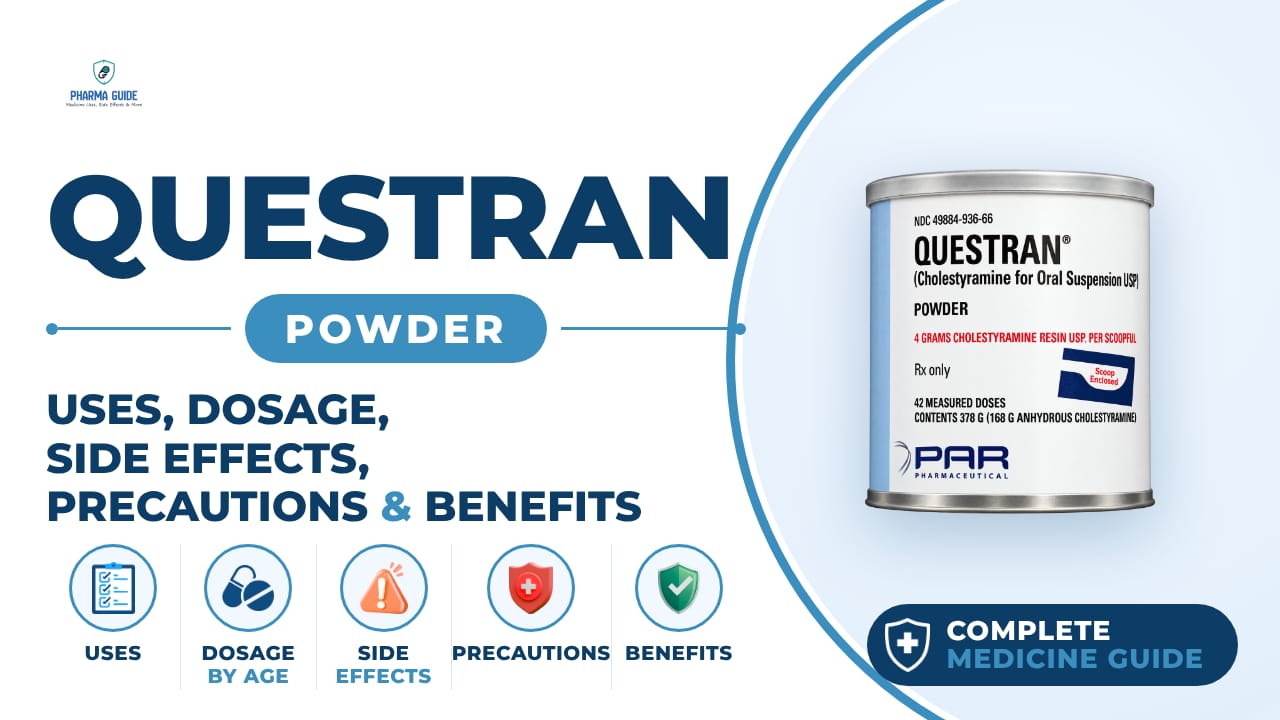
| Generic name | Cholestyramine (colestyramine) |
|---|---|
| Drug class | Bile acid sequestrant (bile acid binding resin) |
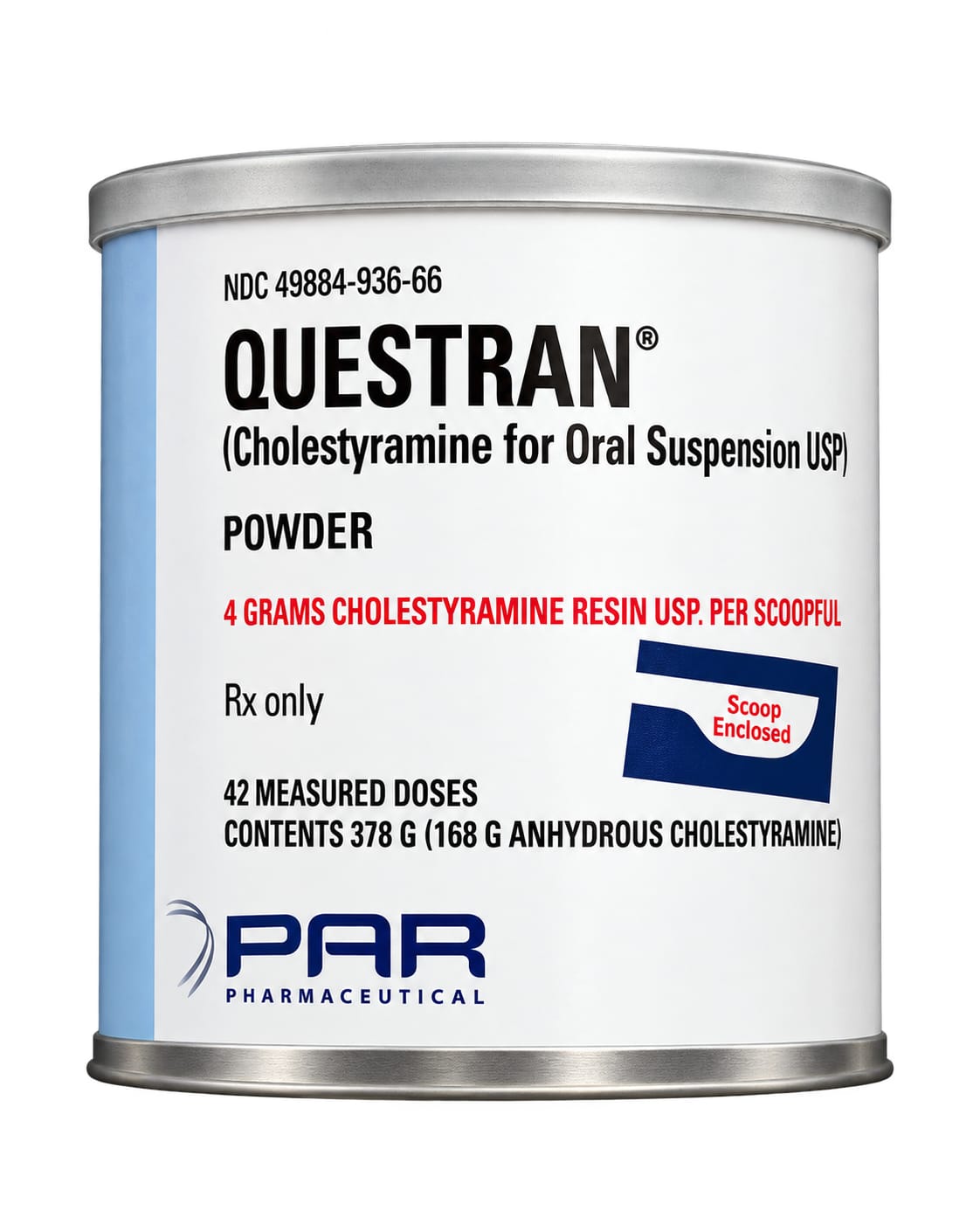
| Forms | Powder for oral suspension (sachets), Powder for oral suspension (can with measuring scoop) |
Quick overview
Questran Powder contains cholestyramine, a bile acid sequestrant that binds to bile acids in the gut. It is used to lower high cholesterol along with diet, to relieve itching caused by partial bile duct blockage, and to relieve diarrhea caused by surgery or disease of the small bowel. The powder must always be mixed with liquid before drinking, never taken dry.
What is Questran Powder
Questran is a powder medicine that contains cholestyramine, a resin that binds to bile acids in the gut. It is used to lower high cholesterol and to treat certain types of itching and diarrhea.
Questran Powder uses
- To lower high levels of cholesterol in the blood, along with diet, in people whose cholesterol doesn't respond enough to diet alone
- To relieve itching caused by partial blockage of bile flow (partial biliary obstruction)
- To relieve diarrhea caused by surgery or disease of the small bowel
Benefits of Questran Powder
- Helps lower LDL ('bad') cholesterol, which can help prevent blockages in heart blood vessels
- May reduce the risk of chest pain (angina) and heart attacks linked to high cholesterol
- Can relieve itching linked to bile flow problems
- Can help control diarrhea caused by bowel surgery or disease
How Questran Powder works
Questran binds to bile acids in the intestine, forming a complex that the body removes in the stool. This causes the liver to use more cholesterol to make new bile acids, which lowers the amount of cholesterol in the blood. In people with bile flow problems, removing more bile acids also reduces the itching they cause.
Questran Powder dosage
Never take the powder dry — always mix it with water, juice, or another fluid before drinking it. Sprinkle the powder evenly onto the liquid, let it stand for a minute or two, then stir or shake until well mixed before drinking. Drink the whole mixture right away, then rinse the glass with a little more liquid and drink that too, to make sure you get the full dose. You can also mix the powder into thin soups or pulpy fruits with high water content, such as applesauce or crushed pineapple; it can be mixed carefully with carbonated drinks as well.
Take it at about the same time each day, generally with meals, unless your doctor tells you otherwise. If you take other medicines, take them at least one hour before or four to six hours after Questran so they are absorbed properly. Avoid sipping the mixture slowly or holding it in your mouth for a long time, since this may harm your teeth; keep up good dental hygiene while taking this medicine.
Do not stop taking this medicine or change your dose without checking with your doctor first. If you miss a dose, skip it if it is almost time for the next one; do not double up doses. No specific dosing schedule has been established for children; doctors start children on small doses and adjust based on response.
| Age group | Dose |
|---|---|
| Under 12 years | 240 mg/kg/day |
| 12–17 years | weight-based rather than fixed-dose |
| 18–39 years | 4 g of cholestyramine resin once or twice daily |
| 40–64 years | 8–16 g/day |
Available forms and strengths
- Powder for oral suspension (sachets)
- Powder for oral suspension (can with measuring scoop)
Side effects of Questran Powder
Common
- Constipation
- Diarrhea
- Stomach pain, nausea, loss of appetite
- Bloating or gas (flatulence)
- Heartburn, indigestion
- Irritation of the tongue
- Itching or irritation around the rectal area
- Hemorrhoids
Serious
- Signs of a serious allergic reaction: hives, difficulty breathing, swelling of the face, lips, tongue, or throat
- Ongoing or worsening constipation, or complete inability to pass stool (possible bowel blockage)
- Severe stomach pain
- Blood in urine
- Black, bloody, or tarry stools
- Easy bruising or unusual bleeding
- Yellowing of the skin or eyes (jaundice)
- Fainting
- Chest pain
- Severe tiredness with rapid or deep breathing (possible sign of increased blood acidity)
- Pain under the right ribs that may signal gallstones (biliary colic)
- Night blindness (possible vitamin A deficiency)
Warnings and precautions
- Do not take this medicine if you have a complete blockage of your bile duct, since no bile reaches the intestine in that condition.
- Do not take this medicine dry — always mix it with water or another fluid first, as taking it dry may cause choking.
- This medicine may worsen or cause constipation, which can lead to bowel blockage if not managed.
- Do not stop taking this medicine suddenly if you are also taking a drug like digoxin that has been adjusted to work alongside it, as this could be dangerous.
- Long-term use may lower your levels of fat-soluble vitamins (A, D, E, K) and folate, so your doctor may suggest supplements.
- This medicine may contain phenylalanine (from aspartame), which can be harmful to people with phenylketonuria (PKU).
- Take other medicines at least one hour before or four to six hours after this medicine, since it can reduce how well other drugs are absorbed.
- Tell your doctor if you are pregnant or planning to become pregnant. This medicine can reduce absorption of certain vitamins, so your doctor may want to monitor you more closely or recommend supplements.
- Tell your doctor if you are breastfeeding. This medicine may reduce the absorption of important vitamins, which could affect your nursing baby.
- People with kidney problems should use this medicine carefully, as it may raise the risk of increased blood acidity.
- Tell your doctor if you have liver problems or jaundice before starting this medicine.
- Avoid drinking large amounts of alcohol, as it can worsen dizziness and may increase the risk of liver problems with this medicine.
- Be careful driving or using machinery until you know how this medicine affects you, since it can cause dizziness, light-headedness, drowsiness, or tiredness in some people.
Storage
- Keep the sachets or container in a cool, dry place below 30°C (or between 20–25°C/68–77°F with excursions permitted to 15–30°C/59–86°F, depending on product)
- Do not store in the bathroom, near a sink, on a window sill, or in the car
- Keep out of reach and sight of children; a locked cupboard at least one-and-a-half metres above the ground is a good storage spot
- If the medicine has expired or is no longer needed, return it to your pharmacist for proper disposal — do not throw it in household trash or flush it down the drain
When to see a doctor
- Get emergency help right away if you notice swelling of the hands, feet, ankles, face, lips, mouth, or throat, or have trouble swallowing or breathing — this could be a serious allergic reaction.
- Contact your doctor immediately or go to the hospital if you cannot pass stool, notice unusual bleeding, have signs of increased blood acidity, or have gallbladder-type pain.
- If you think you have taken too much of this medicine, get medical help right away, even if you feel fine, by contacting your doctor, going to an emergency department, or calling your local poison control center.
- Call your doctor right away if you have ongoing or worsening constipation, severe stomach pain, blood in your urine, black or bloody stools, or easy bruising and unusual bleeding.
Alternatives
- Colestipol
- Colesevelam
- Ezetimibe
Watch the video
FAQs
What is Questran Powder used for?
It is used to lower high cholesterol along with diet, relieve itching caused by partial bile duct blockage, and relieve diarrhea caused by surgery or disease of the small bowel.
How should Questran Powder be taken?
Never take it dry. Always mix the powder with water, juice, or another fluid, let it stand a minute or two, stir or shake well, then drink the whole mixture right away and rinse the glass with more liquid to get the full dose.
Can Questran Powder affect other medicines?
Yes, it can reduce how well other drugs are absorbed, so other medicines should be taken at least one hour before or four to six hours after Questran.
What are the serious side effects of Questran Powder?
Serious effects include signs of allergic reaction, ongoing or worsening constipation or bowel blockage, severe stomach pain, blood in urine, black or bloody stools, easy bruising, jaundice, fainting, chest pain, and night blindness from possible vitamin A deficiency.
Does Questran Powder affect vitamin levels?
Long-term use may lower levels of fat-soluble vitamins A, D, E, K and folate, so a doctor may suggest supplements.
General information, not medical advice
Your prescriber and the leaflet in your pack know your situation. This page does not.
- Follow your prescriber and the leaflet
- Don't start, stop, or change a dose on your own
- Doses and warnings differ by country and product
Sources
Video
Related medicines

Injectafer Injection: Uses, Dosage, Side Effects, Precautions and Alternates
Iron products
Injectafer (ferric carboxymaltose) treats iron deficiency anemia and heart failure-related iron deficiency via IV. Learn uses, dosage, side effects, and

Gliclazide Tablet: Uses, Dosage, Side Effects, Precautions and Alternates
Sulfonylurea (hypoglycemic/antidiabetic agent)
Gliclazide Tablet is a sulfonylurea for type 2 diabetes that boosts insulin release. Learn about dosage, side effects, warnings, and precautions.