
Safety
General information, not medical advice
Your prescriber and the leaflet in your pack know your situation. This page does not.
- Follow your prescriber and the leaflet
- Don't start, stop, or change a dose on your own
- Doses and warnings differ by country and product
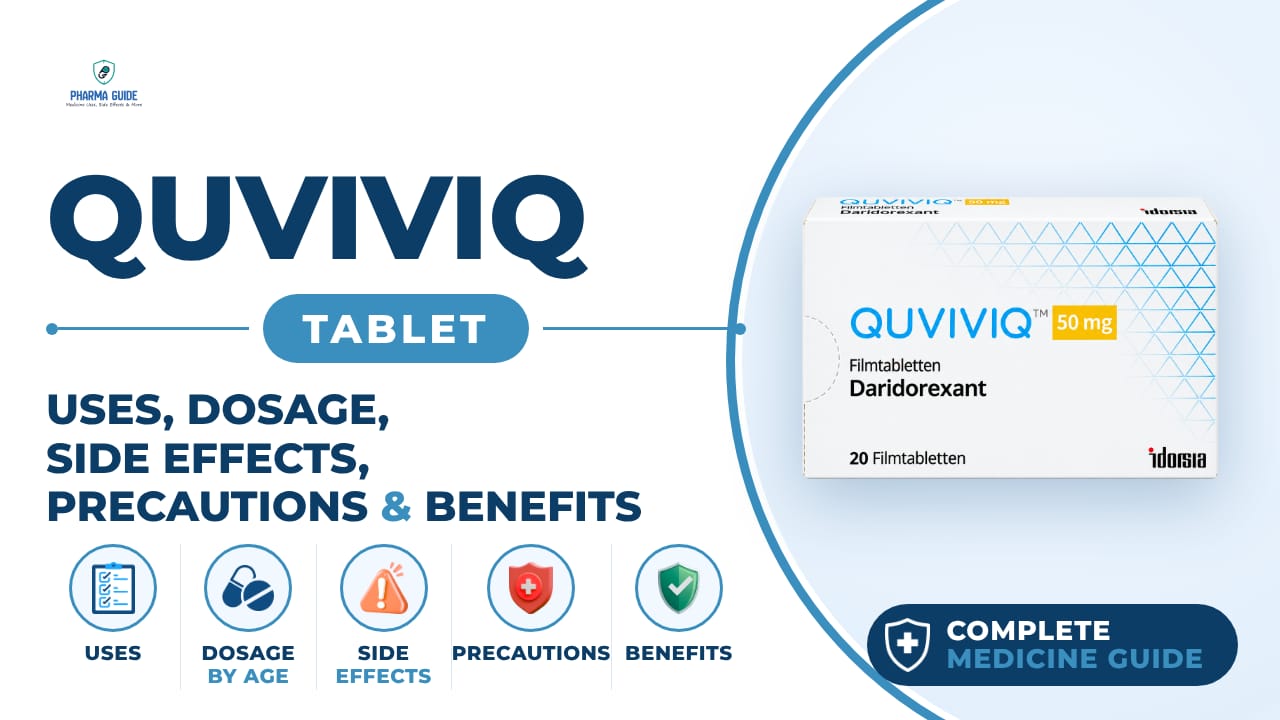
Quviviq Tablet: Uses, Dosage, Side Effects, Precautions and Alternates
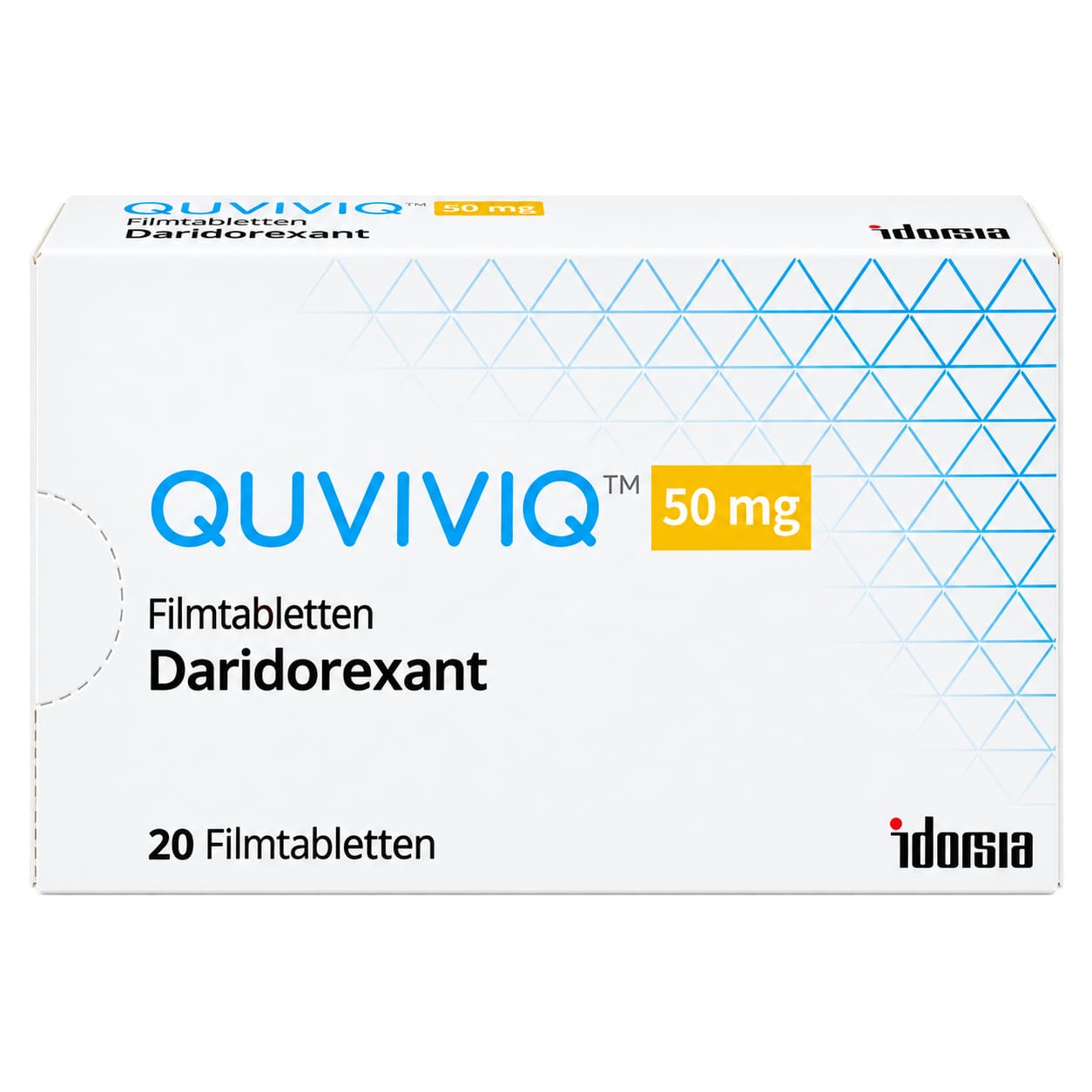
| Generic name | daridorexant |
|---|---|
| Drug class | Orexin receptor antagonist (also described as a miscellaneous anxiolytic, sedative and hypnotic) |
| Forms | Oral tablet (25 mg and 50 mg) |
Quick overview
Quviviq (daridorexant) is a prescription oral tablet belonging to the orexin receptor antagonist class, also described as a miscellaneous anxiolytic, sedative and hypnotic. It is used by adults who have trouble falling asleep or staying asleep due to chronic insomnia. It is taken once nightly and works by blocking a brain chemical called orexin to help the brain settle down for sleep.
What is Quviviq Tablet
Quviviq is a prescription oral tablet used by adults who have trouble falling asleep or staying asleep (insomnia).
Quviviq Tablet uses
- Treats chronic insomnia in adults who have trouble falling asleep or staying asleep
- Treats insomnia
- Helps with difficulty falling asleep
- Helps reduce difficulty staying asleep
- May improve overall sleep duration
Benefits of Quviviq Tablet
- Helps you fall asleep faster and stay asleep longer through the night
- Does not typically cause heavy next-day grogginess, rebound insomnia, or physical withdrawal symptoms when stopped
- Has not been linked to weight gain in studies
How Quviviq Tablet works
Quviviq blocks a brain chemical called orexin that keeps you awake and alert. By stopping orexin from attaching to its receptors, it helps your brain calm down and get ready for sleep, instead of forcing sedation.
Quviviq Tablet dosage
Take it once each night, within 30 minutes before going to bed. Only take it when you can stay in bed for a full night, at least 7 hours, before you need to be active again. It may take longer to start working if you take it with or soon after food. Do not change your dose without talking to your healthcare provider first. Tell your healthcare provider if you still can't sleep properly after taking it for 7 to 10 days, since this may mean another condition is causing your sleep problem. If you miss a dose, do not take it unless you still have time for a full night's sleep of at least 7 hours afterward.
| Age group | Dose |
|---|---|
| Under 18 years | Safety and effectiveness are not established; no standard pediatric dose |
| 18–64 years | 25 mg or 50 mg once nightly, taken within about 30 minutes before bedtime |
| 65–74 years | Usually 25 mg or 50 mg once nightly; no routine age-based dose adjustment |
Available forms and strengths
- Oral tablet (25 mg and 50 mg)
Side effects of Quviviq Tablet
Common
- Headache
- Drowsiness or sleepiness
- Daytime tiredness or fatigue
- Dizziness
- Nausea
- Vomiting
- Decreased mental alertness the day after taking it
Serious
- Worsening depression or suicidal thoughts
- Excessive daytime sleepiness that can affect driving and clear thinking, and increase fall risk
- Complex sleep behaviors such as sleepwalking, sleep-driving, preparing and eating food, making phone calls, or having sex while not fully awake, without remembering it the next day
- Temporary inability to move or talk (sleep paralysis) when falling asleep or waking up
- Hallucinations when falling asleep or waking up
- Temporary weakness in the legs during the day or at night
- Allergic reactions, which can be mild (such as rash) or severe (such as swelling or trouble breathing)
Warnings and precautions
- Quviviq can reduce your alertness and driving ability the morning after taking it, and may cause daytime sleepiness, which can increase your risk of falls.
- Do not take Quviviq unless you can stay in bed for a full night of at least 7 hours before you need to be active again.
- Quviviq may cause complex sleep behaviors like sleepwalking, sleep-driving, or preparing and eating food while not fully awake, which you may not remember afterward. Stop the medicine and call your healthcare provider right away if this happens.
- Quviviq may cause sleep paralysis (a temporary inability to move or talk) or hallucinations when falling asleep or waking up, and sometimes temporary leg weakness.
- Quviviq is a federally controlled substance because it can be misused or lead to dependence.
- Do not take Quviviq if you have narcolepsy or are allergic to it or any of its ingredients.
- Do not take Quviviq with other medicines that can make you sleepy unless your healthcare provider tells you to.
- Avoid grapefruit or grapefruit juice while taking this medication unless your doctor says it is safe, since it can increase the chance of side effects.
- It is not known if Quviviq can harm an unborn baby. There is a pregnancy registry to collect information about the health of mothers and babies exposed to Quviviq during pregnancy. Talk with your healthcare provider about the risks.
- Quviviq passes into breast milk. Talk to your healthcare provider about the best way to feed your baby during treatment.
- Quviviq can cause next-day sleepiness and impaired driving ability, particularly at the 50 mg dose or when insufficient sleep time is available. Do not drive, operate heavy machinery, or do other activities that need clear thinking if you don't feel fully awake, if you've had less than a full night's sleep of at least 7 hours, or if you've taken more than your prescribed dose.
- Tell your healthcare provider if you have liver problems before taking Quviviq.
- Do not drink alcohol while taking Quviviq, as it can increase the effects of alcohol or Quviviq, which can be dangerous.
Storage
- Store Quviviq at room temperature between 68°F to 77°F (20°C to 25°C)
- Keep out of the reach of children and pets
- Store at room temperature away from light and moisture
- Do not store in the bathroom
- Do not flush medications down the toilet or pour them into a drain unless instructed to do so
- Properly discard this product when it is expired or no longer needed; consult your pharmacist or local waste disposal company
When to see a doctor
- Call your healthcare provider right away if you have worsening depression or thoughts of suicide or dying while taking Quviviq.
- Talk to your healthcare provider immediately if you experience sleep paralysis, hallucinations, or temporary leg weakness.
- Stop taking Quviviq and call your healthcare provider right away if you experience a complex sleep behavior, such as sleepwalking or sleep-driving.
- If you take too much Quviviq, call your healthcare provider immediately, contact poison control, or go to the nearest hospital emergency room right away.
- For mild allergic reaction symptoms, such as a mild rash, call your doctor right away.
- For severe allergic reaction symptoms, such as swelling or trouble breathing, get emergency medical help right away, as these can become life threatening.
Alternatives
- Lemborexant
- Suvorexant
- Rozerem
- Ramelteon
Watch the video
FAQs
What is Quviviq Tablet used for?
Quviviq is a prescription oral tablet used by adults who have trouble falling asleep or staying asleep due to chronic insomnia.
How should I take Quviviq Tablet?
Take it once each night within 30 minutes before bed, only when you can stay in bed for a full night of at least 7 hours. Taking it with or soon after food may delay how quickly it works.
What are the common side effects of Quviviq Tablet?
Common side effects include headache, drowsiness or sleepiness, daytime tiredness or fatigue, dizziness, nausea, vomiting, and decreased mental alertness the day after taking it.
What are the serious risks of Quviviq Tablet?
Serious risks include worsening depression or suicidal thoughts, excessive daytime sleepiness affecting driving and increasing fall risk, complex sleep behaviors like sleepwalking or sleep-driving, sleep paralysis, hallucinations, temporary leg weakness, and allergic reactions.
What should I avoid while taking Quviviq Tablet?
Avoid alcohol, grapefruit or grapefruit juice, and other medicines that can make you sleepy unless your healthcare provider says it's safe, since these can increase side effects.
General information, not medical advice
Your prescriber and the leaflet in your pack know your situation. This page does not.
- Follow your prescriber and the leaflet
- Don't start, stop, or change a dose on your own
- Doses and warnings differ by country and product
Sources
Video
Related medicines

Injectafer Injection: Uses, Dosage, Side Effects, Precautions and Alternates
Iron products
Injectafer (ferric carboxymaltose) treats iron deficiency anemia and heart failure-related iron deficiency via IV. Learn uses, dosage, side effects, and

Gliclazide Tablet: Uses, Dosage, Side Effects, Precautions and Alternates
Sulfonylurea (hypoglycemic/antidiabetic agent)
Gliclazide Tablet is a sulfonylurea for type 2 diabetes that boosts insulin release. Learn about dosage, side effects, warnings, and precautions.