
Safety
General information, not medical advice
Your prescriber and the leaflet in your pack know your situation. This page does not.
- Follow your prescriber and the leaflet
- Don't start, stop, or change a dose on your own
- Doses and warnings differ by country and product
Rabeprazole Tablet: Uses, Dosage, Side Effects, Precautions and Alternates
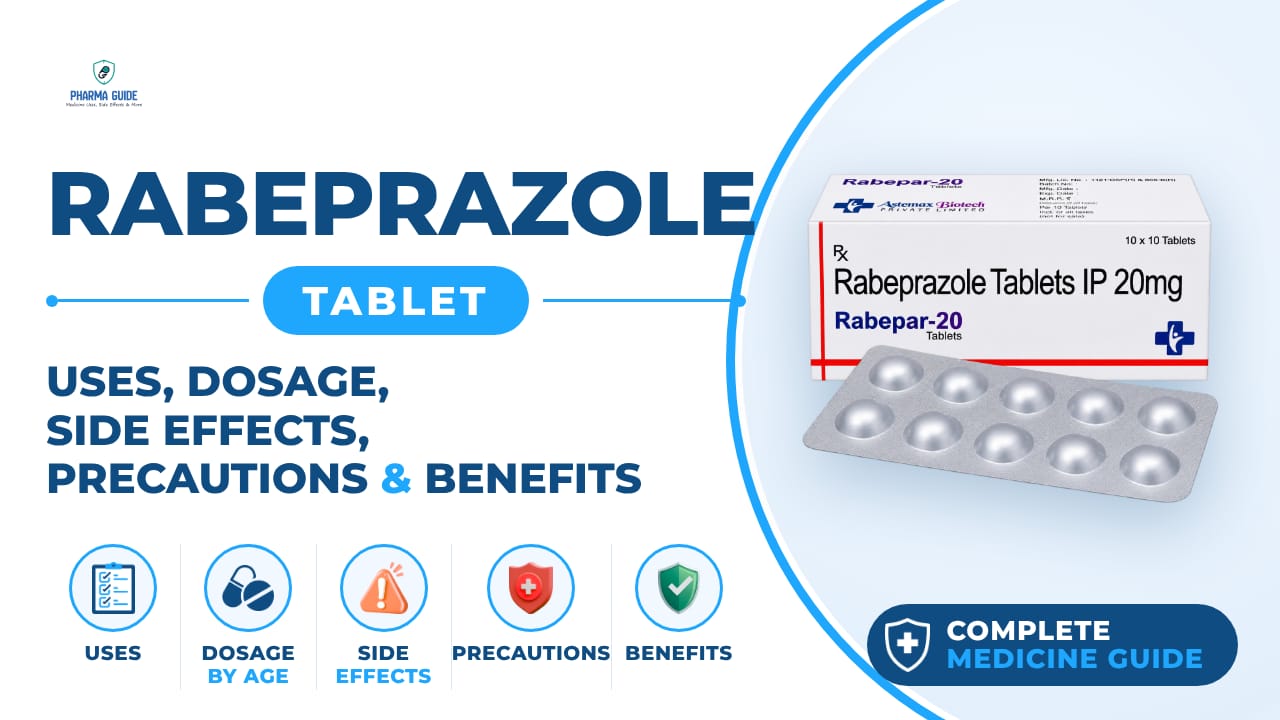
| Generic name | Rabeprazole sodium |
|---|---|
| Drug class | Proton pump inhibitor (PPI); H+, K+-ATPase inhibitor |
| Forms | Enteric-coated tablets, Capsule, Injection, Sachet |
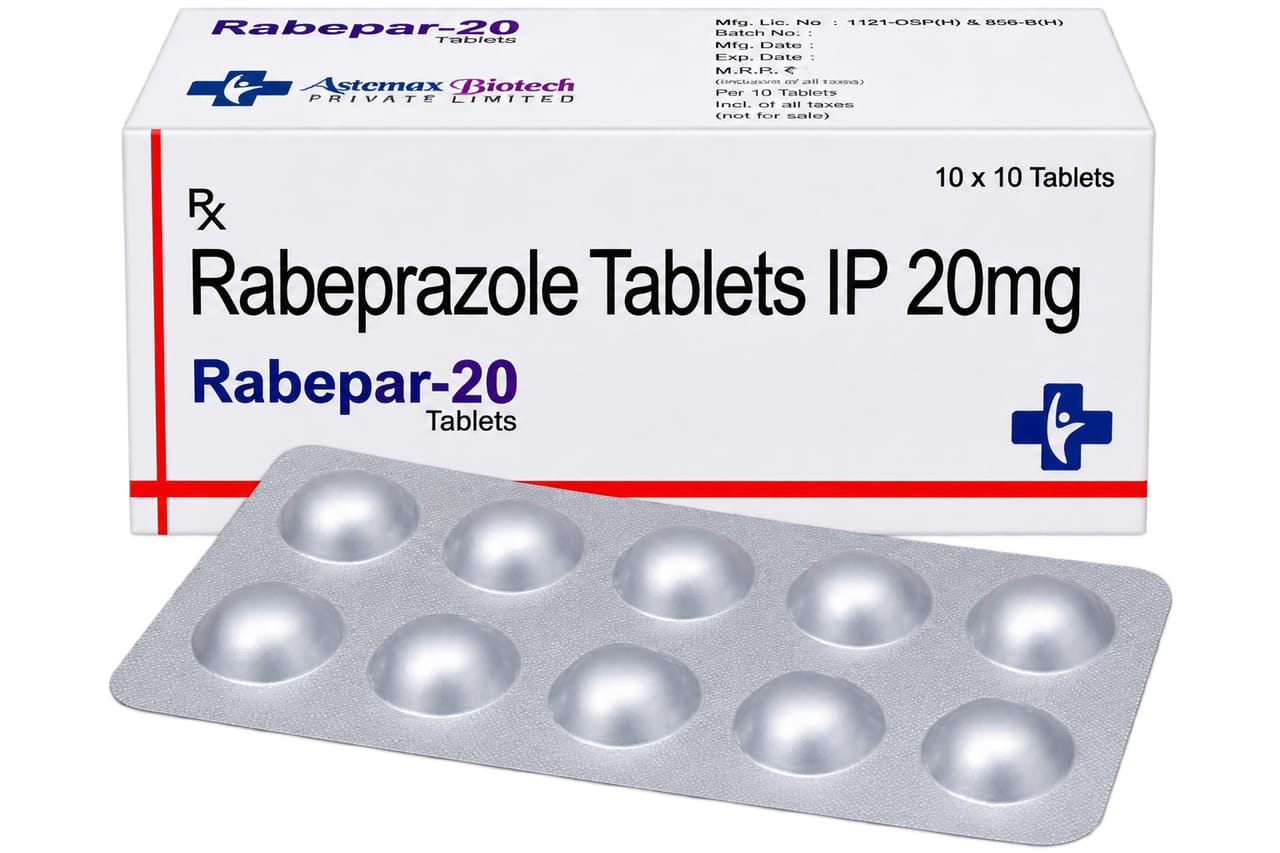
Quick overview
Rabeprazole Tablet is a proton pump inhibitor that reduces the amount of acid the stomach produces. It is used to heal and relieve symptoms of acid-related conditions such as GERD, ulcers, and conditions where the stomach makes too much acid, and it can also be used with antibiotics to treat H. pylori infection. It comes as an enteric-coated tablet that should be swallowed whole, usually taken once daily as directed by a doctor.
What is Rabeprazole Tablet
Rabeprazole is a medicine that reduces the amount of acid your stomach makes. It belongs to a group of medicines called proton pump inhibitors (PPIs) and comes as enteric-coated tablets that are swallowed whole. Its generic name is rabeprazole sodium.
Rabeprazole Tablet uses
- Healing and symptom relief of erosive or ulcerative gastroesophageal reflux disease (GERD)
- Long-term maintenance of healing of erosive or ulcerative GERD
- Treatment of symptoms such as heartburn and regurgitation in non-erosive reflux disease (NERD) or symptomatic GERD
- Healing and symptom relief of duodenal ulcers
- Healing and symptom relief of gastric (stomach) ulcers
- Long-term treatment of conditions where the stomach makes too much acid, including Zollinger-Ellison syndrome
- Eradication of H. pylori infection associated with duodenal ulcer disease, used together with antibiotics
- Treatment of symptomatic GERD in adolescents 12 years of age and older
Benefits of Rabeprazole Tablet
- Relieves heartburn and regurgitation symptoms
- Heals acid-related damage in the esophagus, stomach, and duodenum
- Reduces stomach acid production to help ulcers heal
- Helps eradicate H. pylori bacteria when combined with antibiotics
How Rabeprazole Tablet works
Rabeprazole blocks the enzyme in stomach cells that produces acid, known as the proton pump, which lowers the amount of acid released into the stomach.
Rabeprazole Tablet dosage
Take this medicine exactly as prescribed by your doctor, usually for a specific number of weeks, using the lowest dose and shortest time determined by your doctor. Do not stop taking the medicine even when you start to feel better, as symptoms may return if stopped too soon. It can be taken with or without meals. Swallow tablets whole with a liquid; do not chew or crush the tablets. When taken with antibiotics for H. pylori infection, take all medications at the correct time, preferably with the morning and evening meals, for the full treatment period. For treatment of duodenal ulcers, some formulations recommend taking the dose after a meal. If you miss a dose, take it as soon as you remember unless it is almost time for your next dose; do not double up doses.
| Age group | Dose |
|---|---|
| Under 12 years | Not generally recommended; doctor's advice required |
| 12–17 years | 20 mg once daily for certain GERD indications |
| 18 years & older | 20 mg once daily for many acid-related conditions |
| Adults | 20 mg once daily |
Available forms and strengths
- Enteric-coated tablets
- Capsule
- Injection
- Sachet
Side effects of Rabeprazole Tablet
Common
- Headache
- Diarrhea
- Rash
- Itchiness
- Dizziness
- Sore throat
- Nausea and vomiting
- Excessive gas or flatulence
- Constipation
- Stomach-area (abdomen) pain
Serious
- Severe diarrhea (bloody or watery) with or without fever, abdominal pain, or tenderness, which may signal Clostridium difficile colitis
- Seizures
- Abnormal or fast heart beat
- Jitteriness
- Jerking movements or shaking (tremors)
- Muscle weakness
- Spasms of the hands and feet
- Cramps or muscle aches
- Spasm of the voice box
- A fracture (broken bone)
- New or worsening joint pain
- Rash on cheeks or arms that gets worse in the sun
- Blood in stool
- Kidney problems (acute tubulointerstitial nephritis) with decreased urination or blood in urine
- Severe skin reactions with blistering, peeling, or bleeding of the skin, possibly with fever, chills, body aches, shortness of breath, or enlarged lymph nodes
- Signs of bleeding while taking warfarin together with this medicine, such as unusual bruising, nosebleeds, bleeding gums, pink or brown urine, red or black stools, or vomiting blood
Warnings and precautions
- This medicine may hide signs of stomach cancer, so your doctor should rule out cancer before you start treatment if a stomach ulcer is suspected.
- Taking this medicine with warfarin can increase bleeding risk, so blood clotting levels may need to be monitored.
- Using this medicine increases the chance of getting a severe bowel infection, especially in people who don't improve with treatment.
- Taking this medicine for a long time may raise the risk of bone fractures of the hip, wrist, or spine.
- Long-term use may lower vitamin B12 levels in the body.
- Long-term use may cause low magnesium levels in the blood, which can lead to serious heart and muscle problems.
- Long-term use may cause stomach growths called fundic gland polyps, which can occasionally cause bleeding or blockage.
- This medicine may cause or worsen a skin and joint condition called lupus erythematosus.
- Taking this medicine with certain HIV medicines is not allowed or not recommended because it can reduce how well those medicines work.
- Stopping this medicine suddenly after long-term use may cause your original symptoms to come back or worsen for a period of time.
- This medicine may cause rare but serious kidney inflammation that can happen at any time during treatment.
- Rare but serious skin reactions have been reported with this type of medicine, which can be life-threatening.
- The safety of this medicine during pregnancy has not been established. It should only be used in pregnancy if the benefits outweigh the possible risks to the baby.
- It is not known if this medicine passes into breast milk, so it should only be used while breastfeeding if the benefits outweigh possible risks to the baby.
- No dose change is generally needed for kidney problems, but caution is advised because the medicine may build up in the body.
- People with severe liver disease may need a lower dose, and the medicine should be used carefully in anyone with liver problems.
- It isn't clearly known how this medicine interacts with alcohol, so check with your doctor before drinking.
- This medicine may occasionally cause drowsiness, so avoid driving or operating machinery until you know how it affects you.
Storage
- Store in original container between 15°C and 25°C, protected from moisture and heat.
- Keep out of the sight and reach of children.
When to see a doctor
- Get medical help right away if you notice signs of an allergic reaction like rash, itching, swelling of your face, tongue or throat, or trouble breathing.
- Call your doctor right away if you have severe or watery diarrhea with stomach pain, with or without fever, since this could be a serious bowel infection.
- Tell your doctor right away if you notice seizures, dizziness, irregular heartbeat, jitteriness, muscle weakness, spasms, or cramps, as these can be signs of low magnesium in your blood.
- Contact your doctor if you develop a new bone fracture, especially of the hip, wrist, or spine.
- Tell your doctor if you have new or worsening joint pain, or a rash on your cheeks or arms that gets worse in sunlight, as these may be signs of lupus.
- Seek medical care if you notice blood in your stool.
- If you think you have taken too much of this medicine, contact your healthcare professional, hospital emergency department, or your local poison control center right away, even if you have no symptoms.
- Call your doctor immediately if you develop a skin rash with blistering, peeling, or bleeding, especially with fever, chills, body aches, or shortness of breath, as this could be a serious skin reaction.
- Call your doctor right away if you have a decrease in how much you urinate or notice blood in your urine, as this could be a kidney problem.
Alternatives
- Pariet
- Amoxicillin and clarithromycin (used together with rabeprazole as triple therapy for H. pylori infection)
Watch the video
FAQs
What is Rabeprazole Tablet used for?
It is used to heal and relieve symptoms of GERD, duodenal and gastric ulcers, conditions causing excess stomach acid like Zollinger-Ellison syndrome, and to eradicate H. pylori infection when combined with antibiotics.
How should I take Rabeprazole Tablet?
Swallow the enteric-coated tablet whole with liquid, without chewing or crushing it. It can be taken with or without meals, usually once daily as prescribed, and should not be stopped early even if you feel better.
What is the usual dose of Rabeprazole Tablet?
Adults and adolescents 12 years and older typically take 20 mg once daily for many acid-related conditions, while use in children under 12 is not generally recommended without a doctor's advice.
What are the common side effects of Rabeprazole Tablet?
Common side effects include headache, diarrhea, rash, itchiness, dizziness, sore throat, nausea and vomiting, gas, constipation, and abdominal pain.
What precautions should I know before taking Rabeprazole Tablet?
Your doctor should rule out stomach cancer before starting treatment, and long-term use may increase risks of bone fractures, low magnesium, low vitamin B12, bowel infections, and kidney problems, so report any unusual symptoms promptly.
General information, not medical advice
Your prescriber and the leaflet in your pack know your situation. This page does not.
- Follow your prescriber and the leaflet
- Don't start, stop, or change a dose on your own
- Doses and warnings differ by country and product
Sources
Video
Related medicines

Injectafer Injection: Uses, Dosage, Side Effects, Precautions and Alternates
Iron products
Injectafer (ferric carboxymaltose) treats iron deficiency anemia and heart failure-related iron deficiency via IV. Learn uses, dosage, side effects, and

Gliclazide Tablet: Uses, Dosage, Side Effects, Precautions and Alternates
Sulfonylurea (hypoglycemic/antidiabetic agent)
Gliclazide Tablet is a sulfonylurea for type 2 diabetes that boosts insulin release. Learn about dosage, side effects, warnings, and precautions.