
Safety
General information, not medical advice
Your prescriber and the leaflet in your pack know your situation. This page does not.
- Follow your prescriber and the leaflet
- Don't start, stop, or change a dose on your own
- Doses and warnings differ by country and product
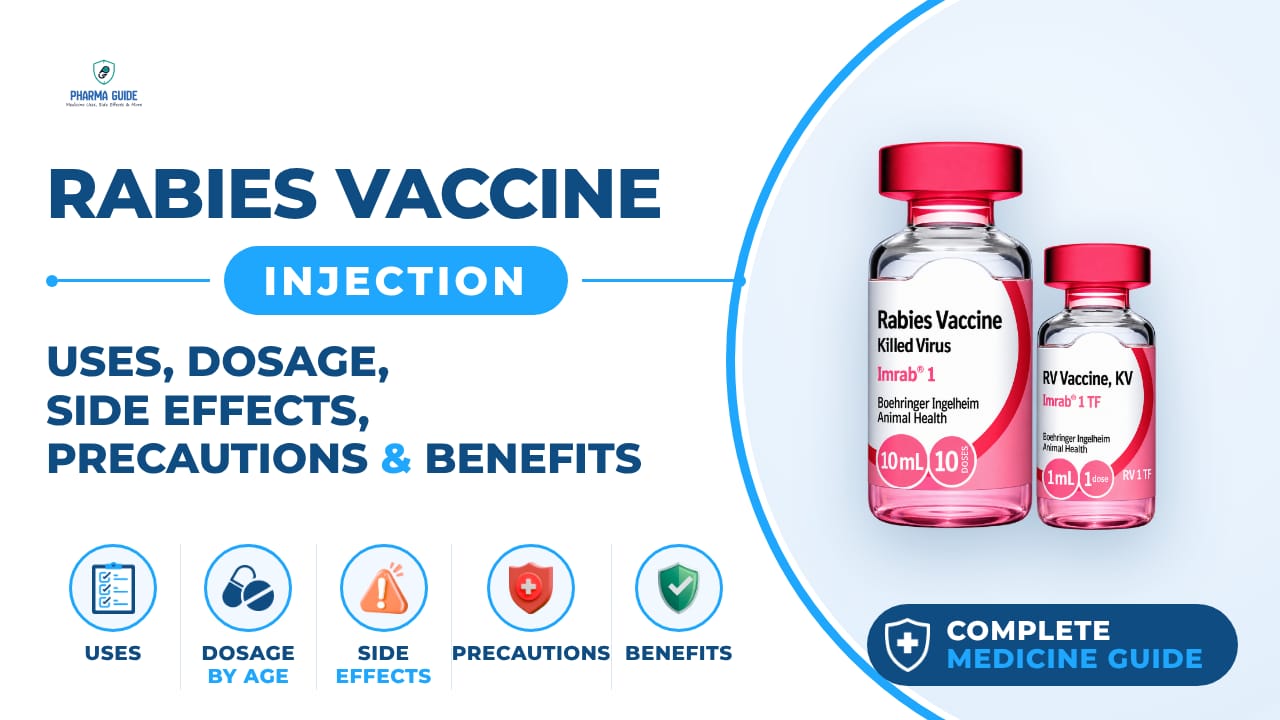
Rabies Vaccine Injection: Uses, Dosage, Side Effects, Precautions and Alternates
| Generic name | Rabies Vaccine, Human I.P. |
|---|---|
| Drug class | Active immunizing agent (vaccine) |
| Forms | Lyophilized (freeze-dried) powder for reconstitution, given as an intramuscular or intradermal injection |
Quick overview
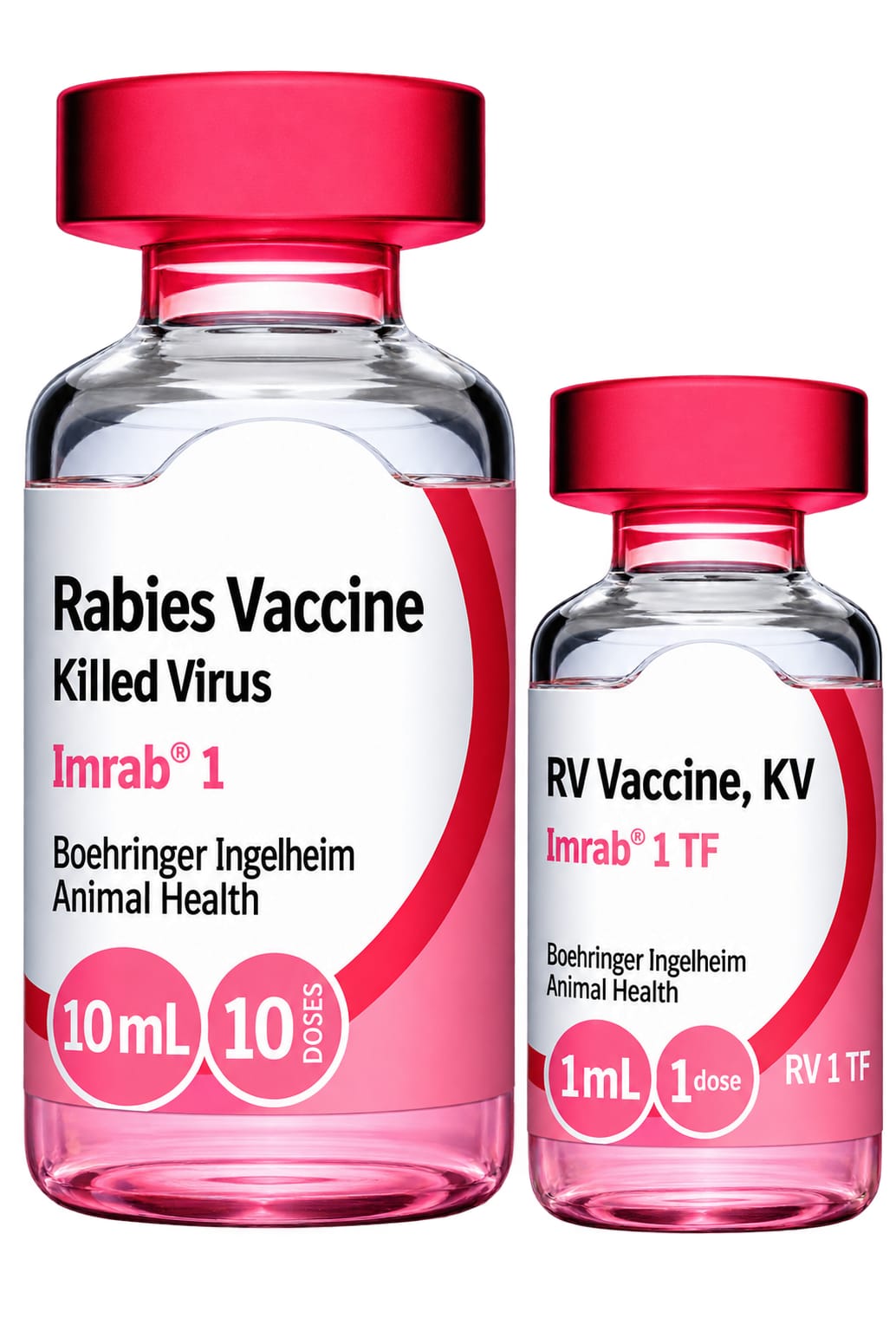
Rabies Vaccine Injection (Rabies Vaccine, Human I.P.) is an active immunizing agent made from inactivated rabies virus. It is used both before possible exposure in high-risk individuals and after a bite or scratch from an animal that may have rabies. The vaccine works by stimulating the immune system to produce protective antibodies against the rabies virus.
What is Rabies Vaccine Injection
This is a vaccine made from inactivated (killed) rabies virus. It helps your body build protection against rabies, a very serious infection of the brain and nerves that is almost always fatal once symptoms start.
Rabies Vaccine Injection uses
- Pre-exposure prevention for people at high risk of rabies, such as vets, animal handlers, lab workers, and travelers to areas where rabies is common
- Post-exposure treatment after contact with an animal that has or might have rabies, such as a bite or scratch
Benefits of Rabies Vaccine Injection
- Rabies Prevention: Helps prevent rabies after potential exposure to an infected animal
- Post-Exposure Protection: Forms an important part of treatment after bites, scratches, or other possible exposures
- Pre-Exposure Protection: Can provide protection for people with increased occupational or travel-related exposure risk
- Immune Response: Stimulates the body to develop protective antibodies against rabies virus
- Life-Saving Prevention: When administered appropriately after exposure, it can prevent rabies from developing
How Rabies Vaccine Injection works
The vaccine contains killed rabies virus. Immune cells take up this virus and carry it to lymph tissue, where they trigger your immune system to make antibodies that can neutralize the real rabies virus.
Rabies Vaccine Injection dosage
This vaccine is given as an injection into the muscle, usually in the upper arm (deltoid); in young children it is given into the outer thigh, never into the buttock. Some post-exposure regimens use small injections into the skin (intradermal) at two sites per visit; this must only be done by trained medical staff. The vaccine can be given at the same time as other vaccines, but at a different injection site.
If you are having post-exposure treatment and have not been vaccinated before, you will also usually need a separate injection called rabies immunoglobulin, given on the day of your first vaccine dose or shortly after. Tell your provider if you have had rabies vaccine before, as your schedule will be shorter.
If you have a high temperature or feel very unwell, routine (pre-exposure) vaccination should be postponed until you feel better, but this does not apply after a possible rabies exposure. Wounds from an animal bite or scratch should be washed thoroughly with soap and water as soon as possible, before or alongside vaccination.
| Age group | Dose |
|---|---|
| Children & Adolescents | 1 mL per dose, according to the post-exposure or pre-exposure schedule |
| Adults (18–64 Years) | 1 mL per dose according to the recommended schedule |
| Older Adults (65+ years) | 1 mL per dose; schedule based on exposure and vaccination history |
| Previously Vaccinated | Usually 2 doses on days 0 and 3 after exposure |
Available forms and strengths
- Lyophilized (freeze-dried) powder for reconstitution, given as an intramuscular or intradermal injection
Side effects of Rabies Vaccine Injection
Common
- Pain, swelling, or redness where the injection was given
- Headache
- High temperature (fever)
- Feeling sick or vomiting
- Itchy raised rash (hives)
- Tiredness and general feeling of being unwell
- Dizziness
- Swollen lymph nodes
- Muscle aches and joint pain
- Decreased appetite
Serious
- Severe allergic reaction (anaphylaxis), including swelling of the face and throat, difficulty breathing, fast heartbeat, dizziness, or weakness
- Fainting after the injection
- Guillain-Barré syndrome (a condition causing weakness, tingling, or paralysis)
- Nerve or brain conditions such as encephalitis, transient paralysis, meningitis, or myelitis
- Erythema multiforme (a skin reaction with unusual lesions)
Warnings and precautions
- This vaccine does not protect everyone completely, so seek medical care right away if you think you've been exposed to rabies, even if you have already been vaccinated
- Never inject this vaccine into a vein, as this can cause severe reactions including shock
- People with a severe egg allergy or antibiotic allergy should tell their provider, since the vaccine may contain traces of egg protein or antibiotics
- Serious allergic reactions, nerve problems, and other rare but serious conditions have been reported as linked in time to this vaccine, though a direct cause has not always been proven
- Certain drugs, including chloroquine (used for malaria prevention), corticosteroids, and other medicines that weaken the immune system, can reduce how well the vaccine works
- Once rabies symptoms begin, the vaccine can no longer help prevent the disease
- There isn't enough research on this vaccine in pregnant women, but it can still be given if there's a real chance you've been exposed to rabies, because the risk of untreated rabies is far greater than any theoretical risk from the vaccine.
- This vaccine has not been shown to cause harm to breastfed babies and can be given while breastfeeding if needed.
- It isn't known whether this vaccine affects your ability to drive or use machines.
Storage
- Store at 2°C to 8°C
- Do not freeze
- Protect from light
- Use the reconstituted vaccine immediately, or it can be stored for up to 6 hours at 2-8°C
- Discard any unused vaccine after 6 hours
- Dispose of used vials and syringes according to local biomedical waste disposal rules
When to see a doctor
- Get emergency medical help right away if you notice signs of a severe allergic reaction after vaccination, such as hives, swelling of the face and throat, trouble breathing, fast heartbeat, dizziness, or weakness
- Seek medical help as soon as possible if you think you have been bitten or scratched by an animal that might have rabies, even if you have been vaccinated before
- Tell your provider right away if you feel dizzy, have vision changes, or hear ringing in your ears after the injection, as these can be early signs of fainting or a reaction
Alternatives
- Rabipur
- Imovax Rabies
- Human Rabies Immunoglobulin (HRIG)
Watch the video
FAQs
What is Rabies Vaccine Injection used for?
It is used for pre-exposure prevention in high-risk individuals like vets and travelers, and for post-exposure treatment after a bite or scratch from an animal that may have rabies.
How is Rabies Vaccine Injection given?
It is given as an injection into the muscle, usually in the upper arm, or in young children into the outer thigh, never the buttock. Some post-exposure regimens use intradermal injections given by trained medical staff.
What are the common side effects of Rabies Vaccine Injection?
Common side effects include pain, swelling, or redness at the injection site, headache, fever, nausea or vomiting, hives, tiredness, dizziness, swollen lymph nodes, muscle and joint aches, and decreased appetite.
Can Rabies Vaccine Injection be given during pregnancy?
There isn't enough research on this vaccine in pregnant women, but it can still be given if there's a real chance of rabies exposure, since untreated rabies is far more dangerous than any theoretical vaccine risk.
What should I do if I think I've been exposed to rabies after vaccination?
Seek medical care right away even if you have already been vaccinated, since the vaccine does not protect everyone completely.
General information, not medical advice
Your prescriber and the leaflet in your pack know your situation. This page does not.
- Follow your prescriber and the leaflet
- Don't start, stop, or change a dose on your own
- Doses and warnings differ by country and product
Sources
- https://www.nhs.uk/conditions/rabies/vaccination/
- https://www.chop.edu/vaccine-education-center/vaccine-details/rabies-vaccine
- https://synapse.patsnap.com/article/what-are-the-side-effects-of-rabies-vaccine-adsorbed
- VaxiRab N Summary of Product Characteristics, Zydus Lifesciences Limited
- RABAVERT Product Monograph, Bavarian Nordic A/S
- RabAvert Prescribing Information, Bavarian Nordic Inc.
Video
Related medicines

Injectafer Injection: Uses, Dosage, Side Effects, Precautions and Alternates
Iron products
Injectafer (ferric carboxymaltose) treats iron deficiency anemia and heart failure-related iron deficiency via IV. Learn uses, dosage, side effects, and

Gliclazide Tablet: Uses, Dosage, Side Effects, Precautions and Alternates
Sulfonylurea (hypoglycemic/antidiabetic agent)
Gliclazide Tablet is a sulfonylurea for type 2 diabetes that boosts insulin release. Learn about dosage, side effects, warnings, and precautions.