
Safety
General information, not medical advice
Your prescriber and the leaflet in your pack know your situation. This page does not.
- Follow your prescriber and the leaflet
- Don't start, stop, or change a dose on your own
- Doses and warnings differ by country and product
Rablet Tablet: Uses, Dosage, Side Effects, Precautions and Alternates
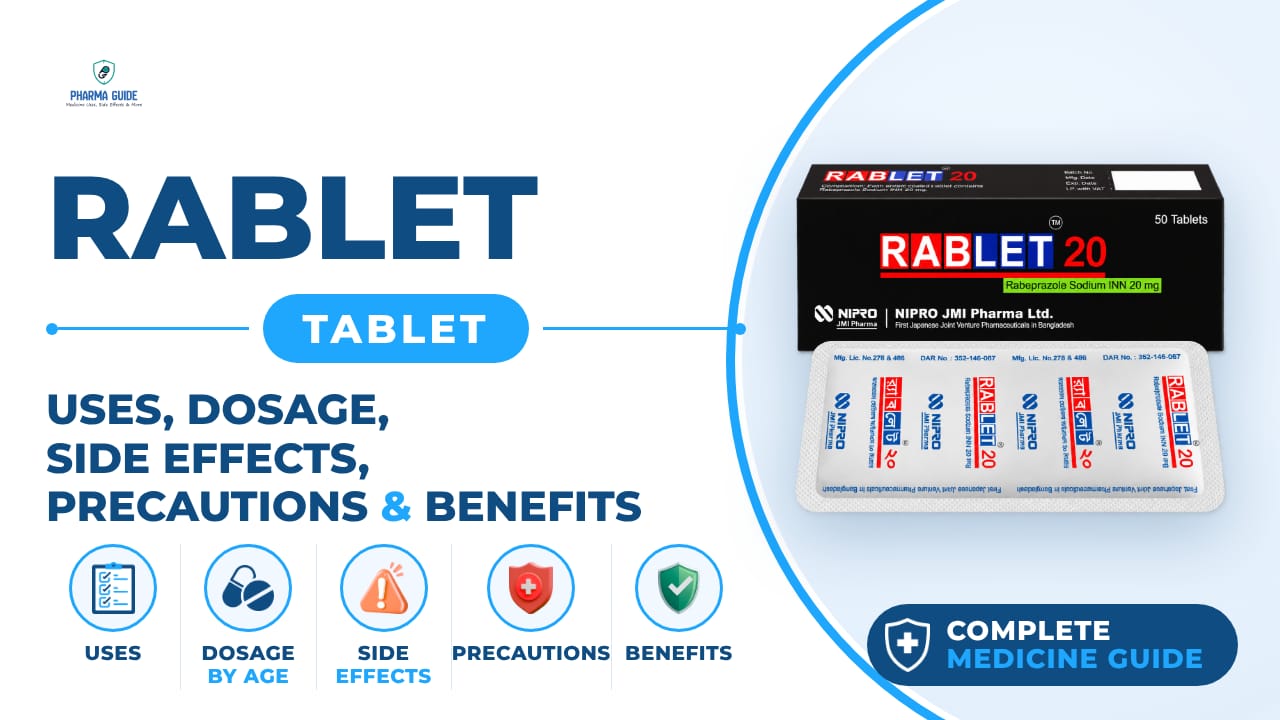
| Generic name | Rabeprazole |
|---|---|
| Drug class | Proton pump inhibitor (PPI) |
| Forms | Tablet, Capsule (sustained release, combination) |
Quick overview
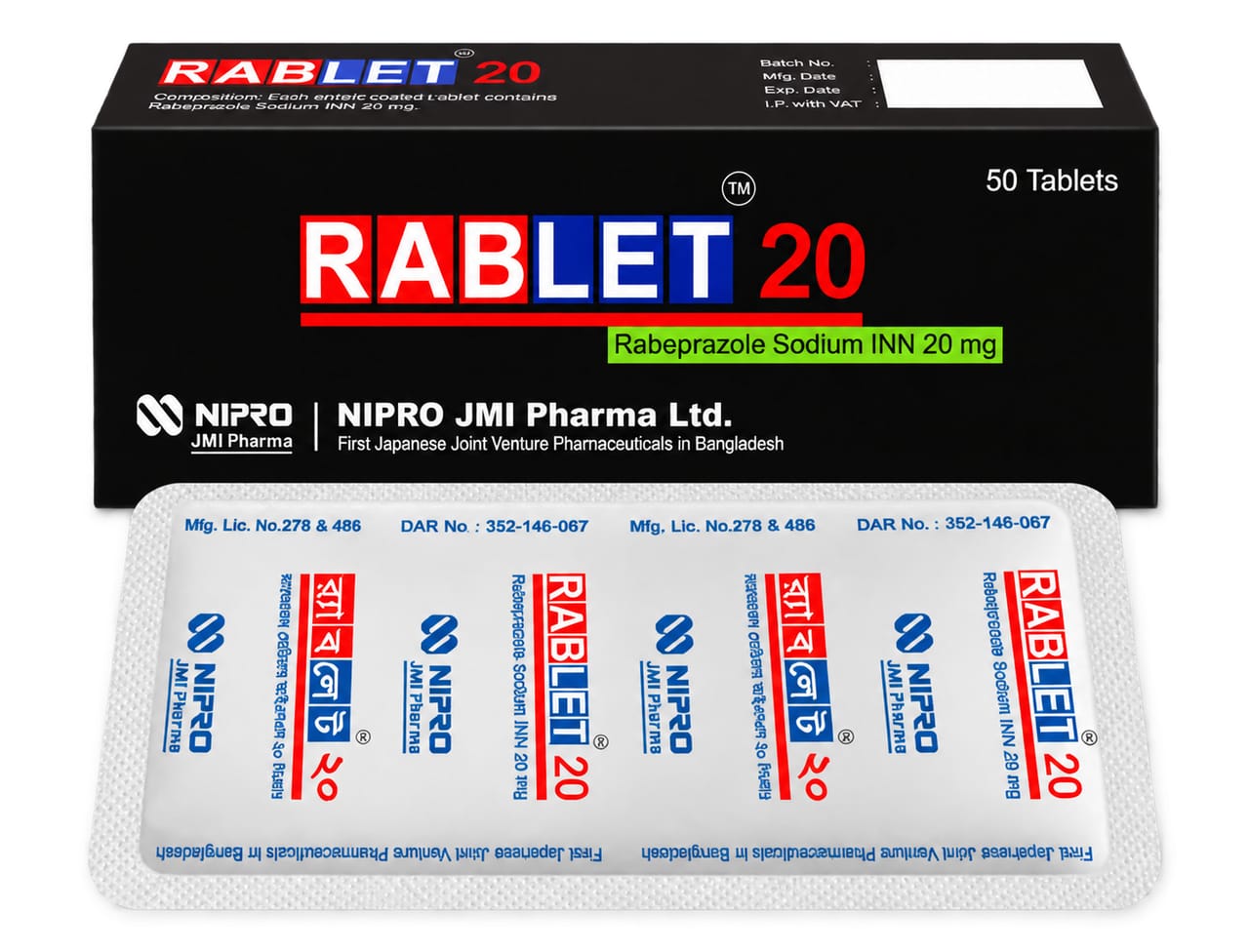
Rablet Tablet contains Rabeprazole, a proton pump inhibitor used to treat conditions related to excessive stomach acid, such as GERD, stomach ulcers, and other acid-related disorders. It works by blocking the enzyme in the stomach wall that produces acid, helping to relieve symptoms and heal the digestive tract lining. It is generally taken once daily as prescribed by a doctor.
What is Rablet Tablet
Rablet is a medication primarily used to treat conditions related to excessive stomach acid, such as GERD, stomach ulcers, and other acid-related disorders. Its active ingredient is Rabeprazole, a proton pump inhibitor that blocks the enzyme in the stomach wall that produces acid.
Rablet Tablet uses
- Treats gastroesophageal reflux disease (GERD)
- Heals stomach ulcers
- Manages Zollinger-Ellison syndrome, a condition with excessive stomach acid
- Treats infections caused by Helicobacter pylori bacteria
- Heals esophagitis, damage to the esophagus from stomach acid
- Prevents ulcers caused by nonsteroidal anti-inflammatory drugs (NSAIDs)
Benefits of Rablet Tablet
- Reduces stomach acid to relieve symptoms like heartburn and indigestion
- Helps heal the digestive tract lining damaged by acid
- Provides relief from GERD and ulcer symptoms, often noticeable within a day or two
How Rablet Tablet works
Rablet blocks the proton pump in the stomach lining, which lowers how much acid the stomach makes. This is similar to turning down the volume on a radio. With less acid, symptoms like heartburn ease and the stomach lining can heal.
Rablet Tablet dosage
Take it as prescribed by your doctor, usually once a day, generally in the morning before a meal. Swallow the tablet whole with a full glass of water. Do not crush or chew the tablet. It can be taken with or without food.
If you miss a dose, take it as soon as you remember, unless it is almost time for your next dose — in that case, skip the missed dose and continue your regular schedule. Do not take two doses at once.
Follow the treatment duration your doctor advises, even if your symptoms improve early. Do not stop taking it suddenly without talking to your doctor, as your symptoms may return or worsen.
| Age group | Dose |
|---|---|
| Under 12 Years | Use only if prescribed by a doctor |
| 12 Years and Above | 20 mg once daily (as directed) |
| Adults (18–64 Years) | 20 mg once daily; may vary depending on medical condition |
| Older Adults (65+ Years) | 20 mg once daily; dose adjustment may be needed based on health condition |
Available forms and strengths
- Tablet
- Capsule (sustained release, combination)
Side effects of Rablet Tablet
Common
- Headache
- Diarrhea
- Nausea
- Abdominal pain
- Dizziness
- Flatulence
- Rash
Serious
- Allergic reactions
- Liver problems
- Increased risk of bone fractures with long-term use
- Vitamin B12 deficiency with prolonged use
- Increased risk of gastrointestinal infections
- Low magnesium levels, which might lead to muscle spasms or irregular heartbeats
Warnings and precautions
- The safety of Rablet during pregnancy is not well-established. It should only be used if the benefits outweigh the risks. Talk with your doctor if you are pregnant or planning to become pregnant.
- It is not clear if Rablet is safe while breastfeeding, since it is unclear if it passes into breast milk. Talk with your doctor if you are breastfeeding and need this medicine.
- If you have kidney problems, talk to your doctor before taking this medicine, so they can make sure it won't harm your kidney health.
- Use with caution if you have liver disease, as this medicine may affect liver function. It is not recommended for people with severe liver problems.
- It's best to avoid alcohol while taking this medicine, since alcohol can irritate the stomach lining, increase acid production, and may reduce the medicine's effectiveness.
- This medicine doesn't typically affect your ability to drive, but if you feel dizzy or unusual after starting it, avoid driving until you know how it affects you.
- Do not use Rablet to self-treat serious stomach symptoms without medical evaluation.
- Long-term use may affect absorption of nutrients such as vitamin B12 and minerals.
- May interact with some medicines; inform your doctor about current treatments.
- Seek immediate medical help if severe allergic reactions or unusual symptoms occur.
- Keep tablets away from children and store them properly.
Storage
- Store Rablet at room temperature, between 68°F to 77°F, in a tightly closed container.
- Protect it from moisture and light, which can damage the medication.
- Avoid storing it in humid places like bathrooms.
- If your pills came in packaging that isn't child-resistant, transfer them to a container that children can't easily open.
- Always keep Rablet out of children's reach to prevent accidental swallowing.
- Check the expiration date regularly and dispose of any unused or expired medication properly.
- To dispose of it, take it to a drug take-back program or collection site at a pharmacy or hospital. If you can't find one, remove it from its original container, mix it with something undesirable like used coffee grounds, seal the mixture in a plastic bag, and throw it away.
When to see a doctor
- Seek medical help if you notice dizziness, seizures, or muscle cramps, which could be signs of low magnesium levels.
- Severe allergic reaction (face/lip swelling, breathing difficulty, severe rash)
- Severe or persistent abdominal pain
- Yellowing of skin or eyes (possible liver-related symptoms)
- Severe watery diarrhea or signs of dehydration
Alternatives
- Omeprazole
- Lansoprazole
- Famotidine
- Dexlansoprazole
Watch the video
FAQs
What is Rablet Tablet used for?
Rablet Tablet is used to treat GERD, heal stomach ulcers, manage Zollinger-Ellison syndrome, treat H. pylori infections, heal esophagitis, and prevent NSAID-induced ulcers.
How does Rablet Tablet work?
Rablet blocks the proton pump in the stomach lining, lowering acid production, which eases symptoms like heartburn and allows the stomach lining to heal.
What is the usual dose of Rablet Tablet?
For adults and those 12 years and above, the usual dose is 20 mg once daily, generally taken in the morning before a meal, as directed by a doctor.
What are the common side effects of Rablet Tablet?
Common side effects include headache, diarrhea, nausea, abdominal pain, dizziness, flatulence, and rash.
Can Rablet Tablet be taken during pregnancy?
The safety of Rablet during pregnancy is not well-established, so it should only be used if the benefits outweigh the risks, after talking with a doctor.
General information, not medical advice
Your prescriber and the leaflet in your pack know your situation. This page does not.
- Follow your prescriber and the leaflet
- Don't start, stop, or change a dose on your own
- Doses and warnings differ by country and product
Sources
Video
Related medicines
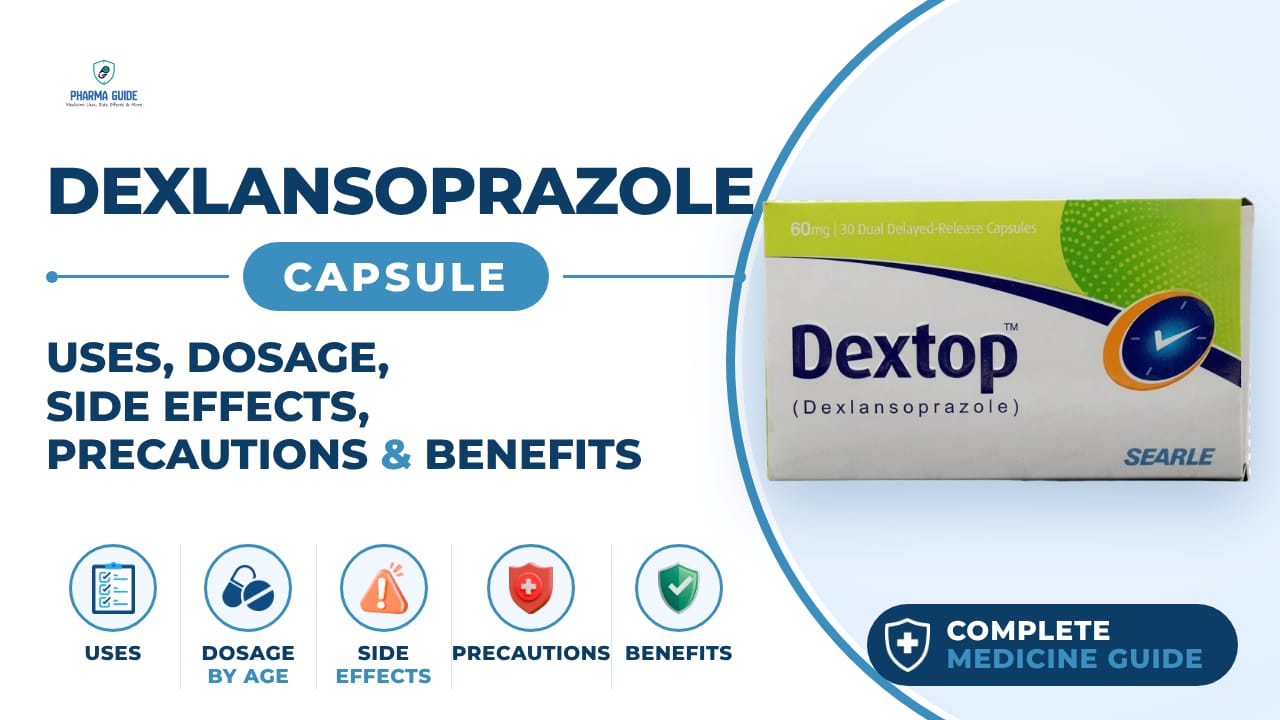
Dexlansoprazole Capsule: Uses, Dosage, Side Effects, Precautions and Alternates
Proton pump inhibitor (PPI)
Dexlansoprazole Capsule is a PPI that reduces stomach acid to treat heartburn, GERD, and erosive esophagitis. Learn dosage, side effects, and warnings.
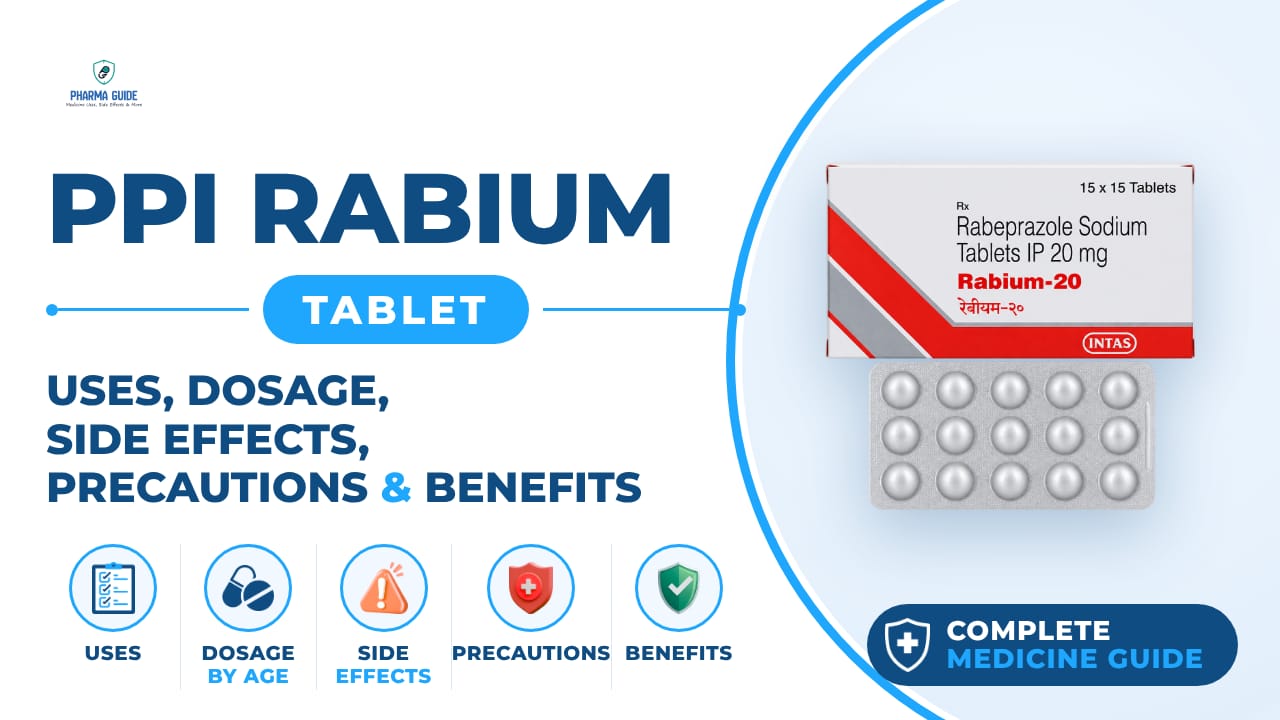
Ppi Rabium Tablet: Uses, Dosage, Side Effects, Precautions and Alternates
Proton pump inhibitor (PPI)
Ppi Rabium Tablet (rabeprazole) reduces stomach acid to treat GERD, ulcers, H. pylori infections, and heartburn. Learn uses, dosage, and side effects.