
Safety
General information, not medical advice
Your prescriber and the leaflet in your pack know your situation. This page does not.
- Follow your prescriber and the leaflet
- Don't start, stop, or change a dose on your own
- Doses and warnings differ by country and product
Racecadotril Sachet: Uses, Dosage, Side Effects, Precautions and Alternates
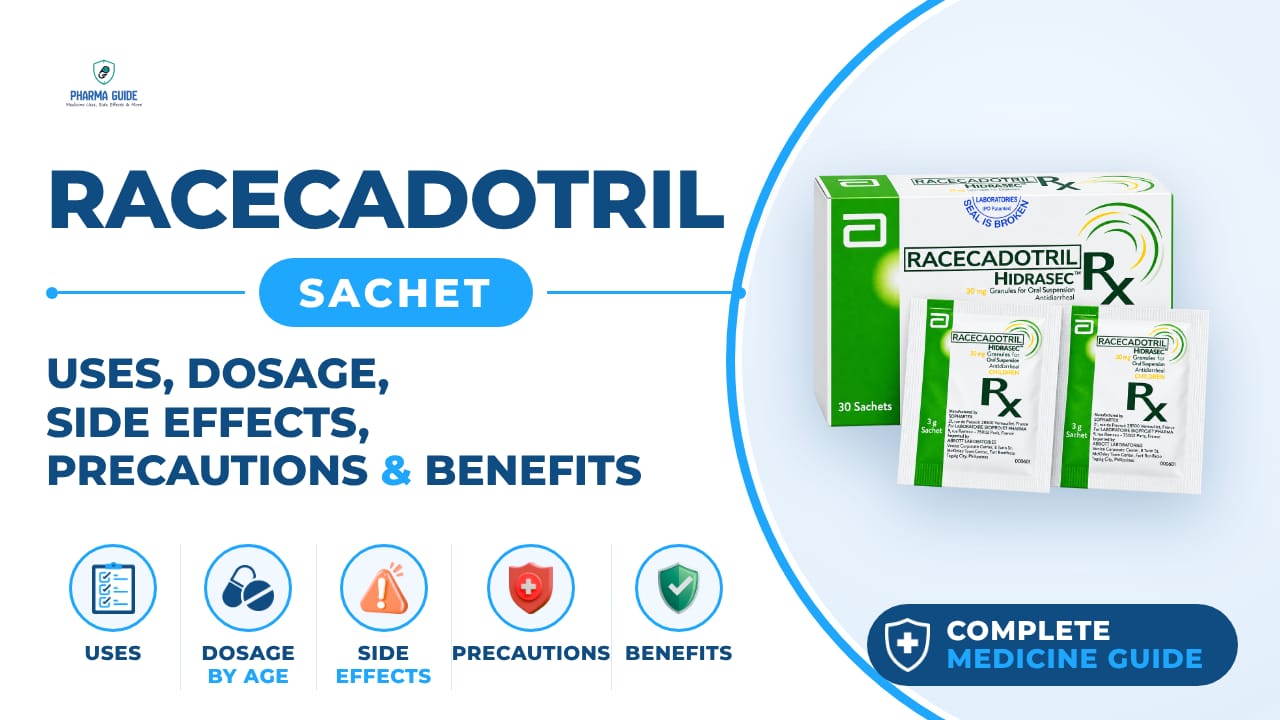
| Generic name | Racecadotril |
|---|---|
| Drug class | Antidiarrhoeal medicine (enkephalinase inhibitor) |
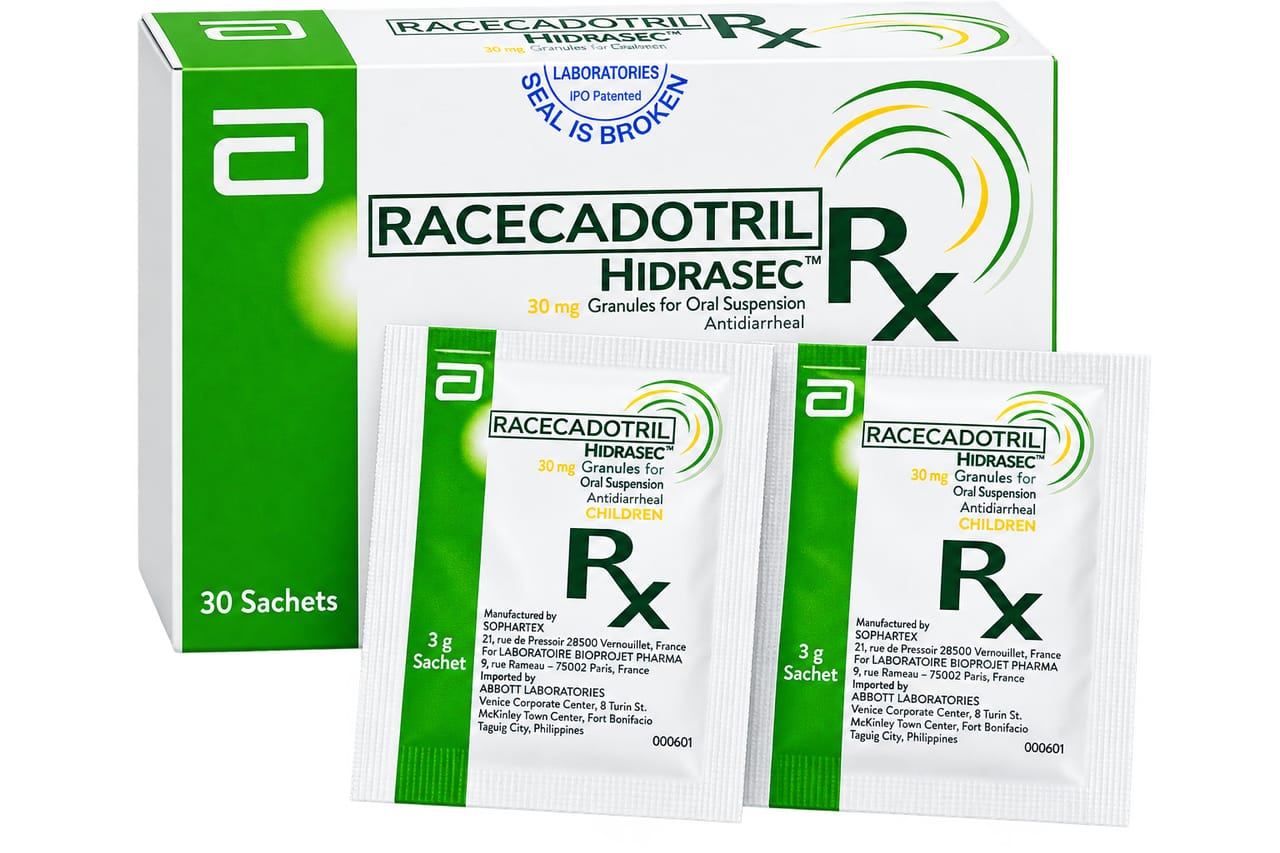
| Forms | Capsules, Sachets of granules for oral suspension, Tablets |
Quick overview
Racecadotril Sachet contains racecadotril, an antidiarrhoeal medicine that belongs to the enkephalinase inhibitor class. It is used to treat sudden (acute) diarrhoea in children over 3 months old, adolescents, and adults. It works by reducing the amount of fluid the intestines release, which helps lessen diarrhoea symptoms without slowing down gut movement.
What is Racecadotril Sachet
Racecadotril is a medicine used to treat sudden (acute) diarrhoea in children over 3 months old, adolescents, and adults. It works by reducing the amount of fluid the intestines release, which helps lessen diarrhoea symptoms without slowing down gut movement.
Racecadotril Sachet uses
- Acute (sudden) diarrhoea in children over 3 months of age, adolescents, and adults
- Diarrhoea
Benefits of Racecadotril Sachet
- Reduces the frequency and duration of acute diarrhoea
- Lowers the amount of fluid and stool loss during diarrhoea, helping reduce the risk of dehydration
- Improves how effective patients feel their treatment is because of fewer stools
- Causes less constipation and abdominal bloating compared with some other antidiarrhoeal medicines
How Racecadotril Sachet works
Racecadotril is broken down in the body into an active substance called thiorphan. Thiorphan blocks an enzyme that normally breaks down natural body chemicals (enkephalins) in the gut. This allows those chemicals to reduce the amount of water and salts released into the intestines, which cuts down fluid loss during diarrhoea without affecting normal gut movement.
Racecadotril Sachet dosage
Take the medicine three times daily at regular intervals until the diarrhoea stops, but not for longer than seven days in total. Give the first dose as soon as possible.
Mix the granules from the sachet with food, bottle feeds, or water; make sure they are mixed well and give the dose to your child straightaway. Continue treatment until the diarrhoea stops, usually meaning after two normal stools have been passed.
Your doctor will tell you whether to use one or two sachets for each dose depending on weight. Also give an oral rehydration solution as prescribed by your doctor, to replace lost water and salts. Avoid drinks with a lot of sugar, such as cola or soft drinks, as they can make diarrhoea worse.
If diarrhoea continues after seven days of treatment, see a doctor again.
| Age group | Dose |
|---|---|
| Under 3 months | Not recommended / insufficient data |
| 3 months–11 years | 1.5 mg/kg per dose, 3 times daily |
| 12–17 years | 1.5 mg/kg per dose, 3 times daily when pediatric sachets are appropriate |
| 18–64 years | Adult formulation usually 100 mg 3 times daily |
| 65+ years | Adult dosing may be used cautiously; clinical assessment recommended |
Available forms and strengths
- Capsules
- Sachets of granules for oral suspension
- Tablets
Side effects of Racecadotril Sachet
Common
- Headache
- Skin reactions such as redness, swelling, hives, or itching
- Constipation (less common than with other antidiarrhoeal medicines)
Serious
- Swollen face, tongue, or throat
- Difficulty swallowing
- Hives and difficulty breathing
- Severe skin reaction or rash
Warnings and precautions
- There is not enough information about whether this medicine is safe to use during pregnancy, so it should be used with care. Tell your doctor if you are pregnant.
- There is not enough information about whether this medicine is safe to use while breastfeeding, so it should be used with care. Tell your doctor if you are breastfeeding.
- There isn't much information on using this medicine in people with severe kidney problems, so it should be used carefully and only as directed by a doctor.
- There isn't much information on using this medicine in people with severe liver problems, so it should be used carefully and only as directed by a doctor.
- Tell your doctor before starting this medicine if the person has a high temperature along with blood or pus in their stools, has liver or kidney problems, has recently had antibiotics, is pregnant or breastfeeding (for adolescents), is taking any other medicines, or has ever had an allergic reaction to a medicine.
- If diarrhoea is severe or lasts a long time and is accompanied by significant vomiting or loss of appetite, fluids may need to be given directly into a vein instead of by mouth.
- If there is blood or pus in the stools along with fever, this may be a sign of a more serious infection or illness, and this medicine should not be used in that case. It should also not be used for diarrhoea caused by antibiotics.
- This medicine should not be given if there is prolonged or uncontrolled vomiting, because the body may not absorb it properly.
- Do not use this medicine if allergic to racecadotril or any of its ingredients. If there is a known intolerance to certain sugars, ask a doctor before use, because the product contains sucrose.
- In children under two years old, whose blood-brain barrier is not fully developed, this medicine can sometimes cause drowsiness or depression of the nervous system.
- Never give more than the prescribed dose.
Storage
- Keep all medicines out of the reach and sight of children.
- Store in a cool, dry place, away from direct heat and light.
- Store this medicine at room temperature, away from direct light and heat.
When to see a doctor
- Get medical advice quickly if your child shows signs of dehydration, such as passing little urine, a dry mouth, dry tongue and lips, fewer tears when crying, sunken eyes, or being irritable or lethargic.
- Stop giving the medicine and contact a doctor right away if a severe skin reaction or rash develops.
- See a doctor again if diarrhoea continues even after seven days of treatment.
- Get emergency help if there is swelling of the face, tongue, or throat, difficulty swallowing, hives, or difficulty breathing, as these can be signs of a serious allergic reaction.
- If someone may have taken too much of this medicine, get urgent medical help, such as from a hospital emergency department.
Alternatives
- Bismuth Subsalicylate
- Loperamide
- ORS (Oral Rehydration Solution)
Watch the video
FAQs
What is Racecadotril Sachet used for?
It is used to treat sudden (acute) diarrhoea in children over 3 months old, adolescents, and adults.
How does Racecadotril Sachet work?
It breaks down into thiorphan, which blocks an enzyme that breaks down natural gut chemicals, reducing water and salt released into the intestines without affecting normal gut movement.
How long can Racecadotril Sachet be taken?
It should be taken three times daily at regular intervals until diarrhoea stops, but not for longer than seven days in total. See a doctor if diarrhoea continues after seven days.
What are the common side effects of Racecadotril Sachet?
Common side effects include headache, skin reactions such as redness, swelling, hives, or itching, and constipation, though this is less common than with other antidiarrhoeal medicines.
Can Racecadotril Sachet be used during pregnancy?
There is not enough information about whether it is safe during pregnancy, so it should be used with care, and you should tell your doctor if you are pregnant.
General information, not medical advice
Your prescriber and the leaflet in your pack know your situation. This page does not.
- Follow your prescriber and the leaflet
- Don't start, stop, or change a dose on your own
- Doses and warnings differ by country and product
Sources
Video
Related medicines

Injectafer Injection: Uses, Dosage, Side Effects, Precautions and Alternates
Iron products
Injectafer (ferric carboxymaltose) treats iron deficiency anemia and heart failure-related iron deficiency via IV. Learn uses, dosage, side effects, and

Gliclazide Tablet: Uses, Dosage, Side Effects, Precautions and Alternates
Sulfonylurea (hypoglycemic/antidiabetic agent)
Gliclazide Tablet is a sulfonylurea for type 2 diabetes that boosts insulin release. Learn about dosage, side effects, warnings, and precautions.