
Safety
General information, not medical advice
Your prescriber and the leaflet in your pack know your situation. This page does not.
- Follow your prescriber and the leaflet
- Don't start, stop, or change a dose on your own
- Doses and warnings differ by country and product
Ranexa Tablet: Uses, Dosage, Side Effects, Precautions and Alternates
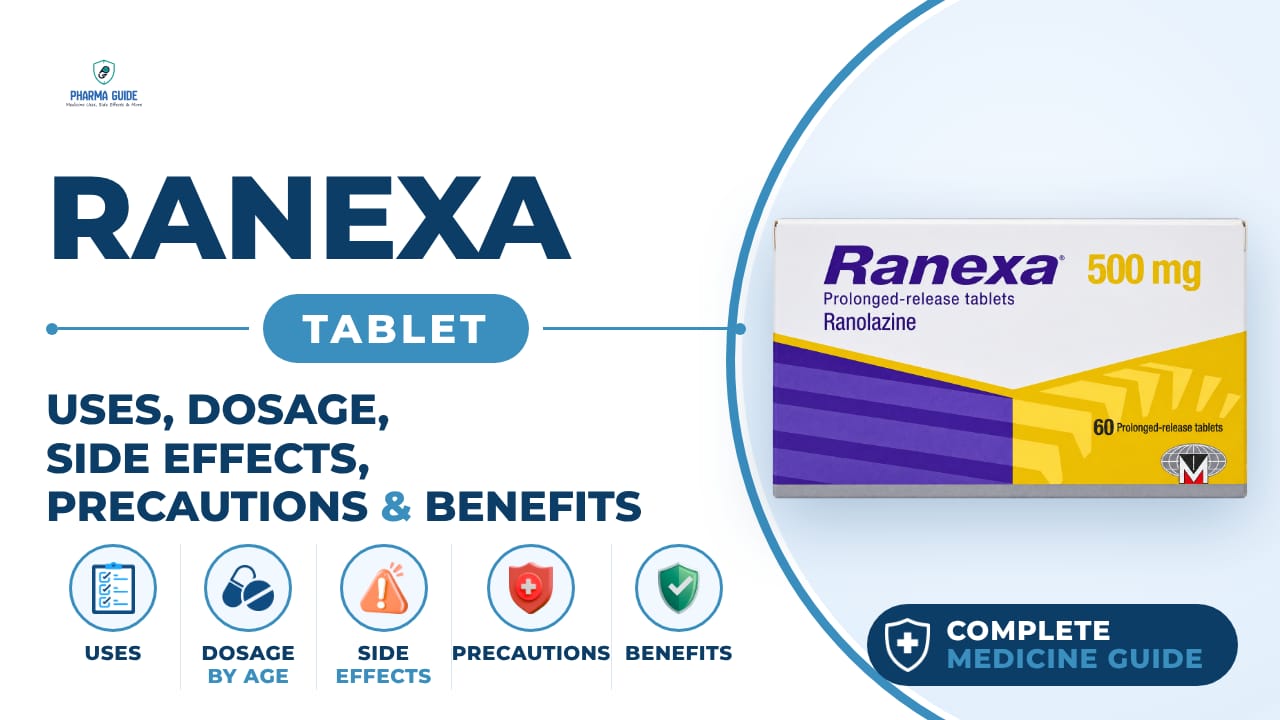
| Generic name | ranolazine |
|---|---|
| Drug class | Antianginal agents |
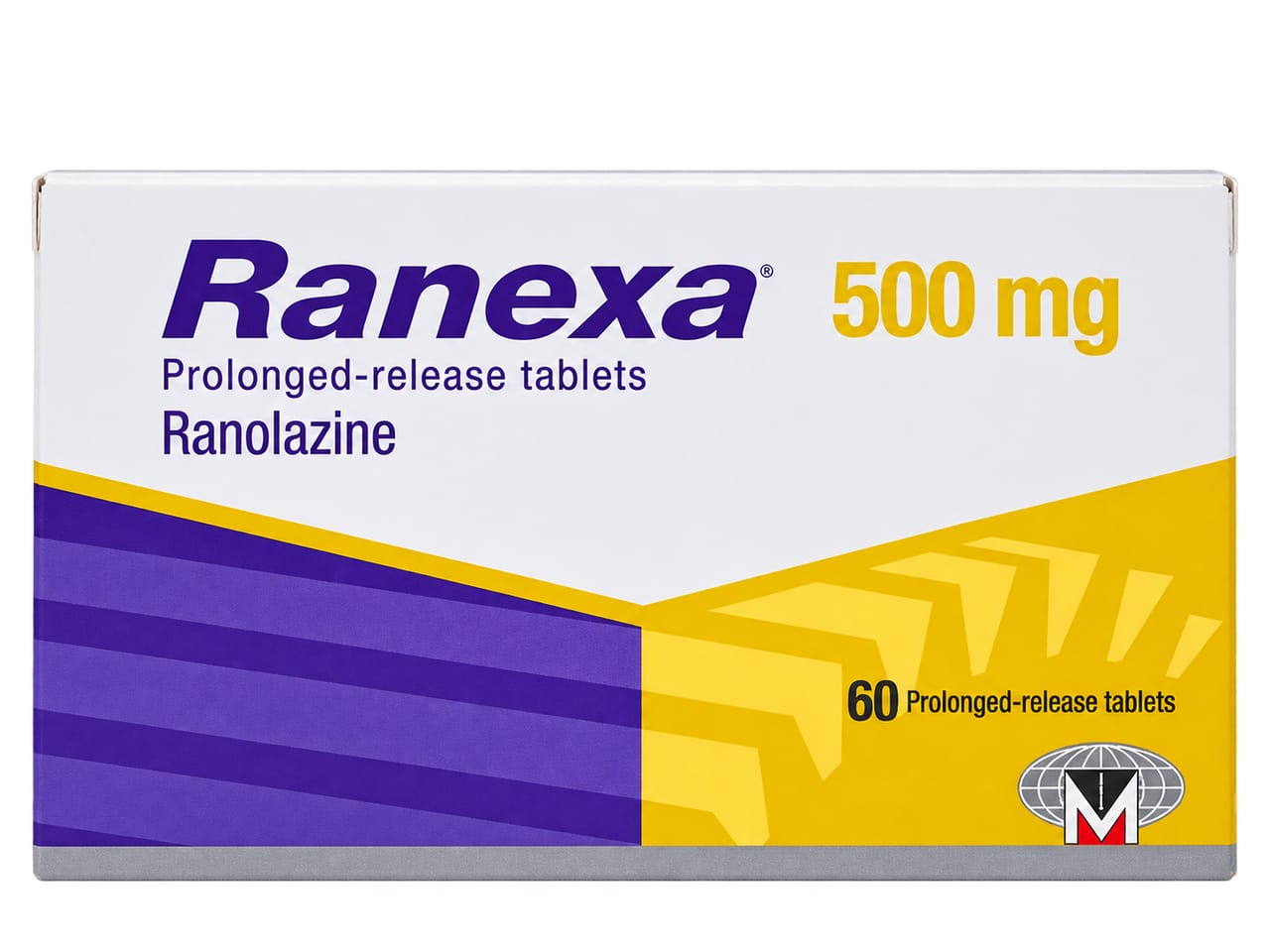
| Forms | Extended-release tablet, Extended-release granules (packet/sprinkle) |
Quick overview
Ranexa Tablet (ranolazine) is a prescription extended-release tablet belonging to the antianginal class of medicines. It is used in adults to treat chronic stable angina, either alone or together with other heart medicines. Ranexa is thought to help the heart use oxygen more efficiently and is not intended to treat a sudden angina attack.
What is Ranexa Tablet
Ranexa is a prescription extended-release tablet that treats chronic, ongoing chest pain called chronic stable angina. It is used in adults and can be taken alone or together with other heart medicines.
Ranexa Tablet uses
- Treats chronic angina (ongoing chest pain or pressure felt when the heart does not get enough oxygen)
- Used alone or combined with other heart medications such as beta-blockers, calcium channel blockers, or nitrates when standard treatments do not control chest pain well enough
- Not for use during a sudden, acute angina attack or sudden-onset chest pain
Benefits of Ranexa Tablet
- Decreases how often chest pain happens
- May help increase your ability to exercise
How Ranexa Tablet works
Ranexa is thought to work by helping the heart use oxygen more efficiently, so it can do more work using less oxygen. It does this partly by blocking a certain sodium current in heart cells, which reduces calcium buildup and helps the heart muscle relax.
Ranexa Tablet dosage
Take this medication by mouth with a glass of water as directed, at the same time every day. Swallow the tablet whole; do not cut, crush, chew, or split it. You may take it with or without food; if it upsets your stomach, take it with food. Do not take this medication with grapefruit juice or eat grapefruit.
Keep taking it unless your care team tells you to stop; it must be taken regularly to work. This medicine does not relieve a sudden angina attack — use another medicine such as sublingual nitroglycerin as directed by your doctor for that.
If you miss a dose, take it as soon as you can; if it is almost time for your next dose, just take that dose — do not double up. Special care may be needed in children; talk to your care team about use in children. Elderly patients may need dose adjustments because of age-related liver, kidney, or heart changes.
Use exactly as prescribed by your doctor or pharmacist.
Available forms and strengths
- Extended-release tablet
- Extended-release granules (packet/sprinkle)
Side effects of Ranexa Tablet
Common
- Dizziness or lightheadedness
- Headache
- Constipation
- Nausea or vomiting
- Weakness or lack of energy (asthenia)
- Dry mouth
- Stomach pain
Serious
- Fast, pounding, or irregular heartbeats (heart rhythm changes, QT prolongation)
- Swelling of the face, lips, tongue, or throat (allergic reaction)
- Hives, skin rash, itching, trouble breathing
- Kidney problems: swelling, urinating less, feeling tired or short of breath, blood in urine
- Fainting or feeling like you might pass out
- Chest tightness or chest pain with shortness of breath
Warnings and precautions
- This medicine cannot stop or treat a sudden heart attack or sudden chest pain — use another prescribed medicine like nitroglycerin for that.
- Do not take this medicine if you have liver cirrhosis.
- Avoid grapefruit and grapefruit juice while taking this medicine, as they can raise drug levels in your blood and increase side effects.
- Tell your doctor about any personal or family history of Long QT syndrome before starting this medicine, since it can affect heart rhythm.
- Do not combine this medicine with certain antibiotics, antifungals, HIV medicines, seizure medicines, or St. John's wort, since serious interactions can occur.
- Tell your doctor if you are pregnant or trying to become pregnant. There isn't enough human data, so your doctor will weigh the benefits against possible risks to the baby.
- Tell your doctor if you are breastfeeding. There isn't enough information to know if it's safe, so your doctor will weigh the benefits against the risks.
- This medicine should be used carefully if you have severe kidney disease, since it may make kidney problems worse. Tell your doctor about any kidney disease you have.
- This medicine should not be used if you have liver cirrhosis.
- Drinking alcohol with this medication can increase the risk of dizziness and fainting spells.
- This medicine may affect your coordination, reaction time, or judgment. Do not drive or operate machinery until you know how it affects you.
Storage
- Store at room temperature at 25 degrees C (77 degrees F)
- Store away from moisture and heat; do not store in the bathroom
- Keep from freezing
- Get rid of any unused medication after the expiration date
- Keep out of the reach of children and pets
- Take the medication to a medication take-back program; check with your pharmacy or law enforcement to find a location
- If you cannot return the medication, check the label or package insert to see if it should be thrown in the garbage or flushed; if unsure, ask your care team
- If safe to trash, mix the medication with cat litter, dirt, or coffee grounds, seal it in a bag, and put it in the trash
When to see a doctor
- Get emergency help right away if you have signs of a severe allergic reaction, such as hives, trouble breathing, or swelling of your face, lips, tongue, or throat.
- Call your doctor right away if you feel lightheaded, or if you have fast or pounding heartbeats, fluttering in your chest, shortness of breath, or sudden dizziness like you might pass out.
- Call your doctor right away if you notice signs of kidney problems, such as swelling, urinating less, or feeling tired or short of breath.
- If you think you've taken too much of this medicine, get emergency medical help right away or contact a poison control center.
Alternatives
- Diltiazem
- Amlodipine
- Nitroglycerin
- Isosorbide mononitrate
Watch the video
FAQs
What is Ranexa Tablet used for?
Ranexa is used to treat chronic stable angina (ongoing chest pain or pressure from reduced oxygen to the heart) in adults, either alone or combined with other heart medicines like beta-blockers, calcium channel blockers, or nitrates.
Can Ranexa Tablet be used for a sudden angina attack?
No, Ranexa is not for sudden, acute angina attacks. Another medicine such as sublingual nitroglycerin should be used as directed by your doctor for sudden chest pain.
How should I take Ranexa Tablet?
Take it by mouth with water at the same time every day, with or without food. Swallow the tablet whole without cutting, crushing, chewing, or splitting it, and avoid grapefruit or grapefruit juice.
What are the common side effects of Ranexa Tablet?
Common side effects include dizziness or lightheadedness, headache, constipation, nausea or vomiting, weakness, dry mouth, and stomach pain.
Who should not take Ranexa Tablet?
Ranexa should not be taken by people with liver cirrhosis, and it should be used carefully in those with severe kidney disease or a history of Long QT syndrome.
General information, not medical advice
Your prescriber and the leaflet in your pack know your situation. This page does not.
- Follow your prescriber and the leaflet
- Don't start, stop, or change a dose on your own
- Doses and warnings differ by country and product
Sources
Video
Related medicines

Injectafer Injection: Uses, Dosage, Side Effects, Precautions and Alternates
Iron products
Injectafer (ferric carboxymaltose) treats iron deficiency anemia and heart failure-related iron deficiency via IV. Learn uses, dosage, side effects, and

Gliclazide Tablet: Uses, Dosage, Side Effects, Precautions and Alternates
Sulfonylurea (hypoglycemic/antidiabetic agent)
Gliclazide Tablet is a sulfonylurea for type 2 diabetes that boosts insulin release. Learn about dosage, side effects, warnings, and precautions.