
Safety
General information, not medical advice
Your prescriber and the leaflet in your pack know your situation. This page does not.
- Follow your prescriber and the leaflet
- Don't start, stop, or change a dose on your own
- Doses and warnings differ by country and product
Ranitidine Tablet: Uses, Dosage, Side Effects, Precautions and Alternates
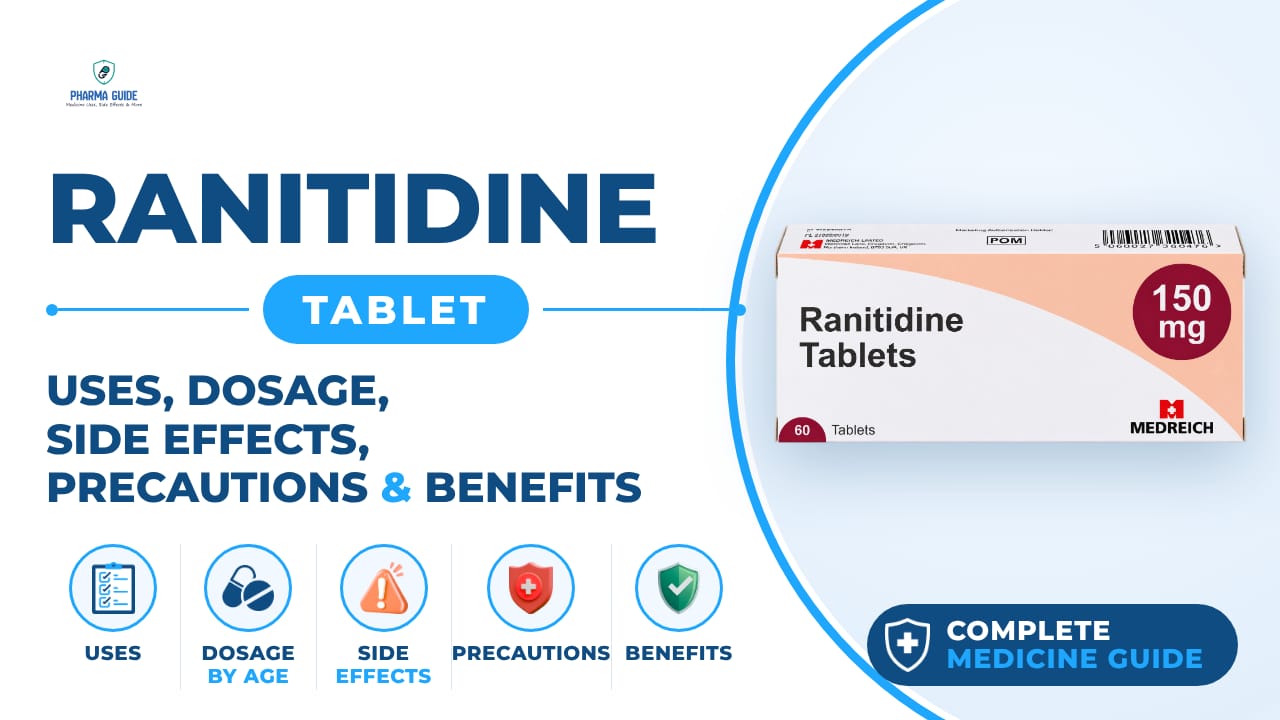
| Generic name | ranitidine |
|---|---|
| Drug class | H2 antagonists (histamine-2 blockers) |
| Forms | Tablet, Effervescent tablet, Effervescent granules, Syrup, Injection, Capsule |
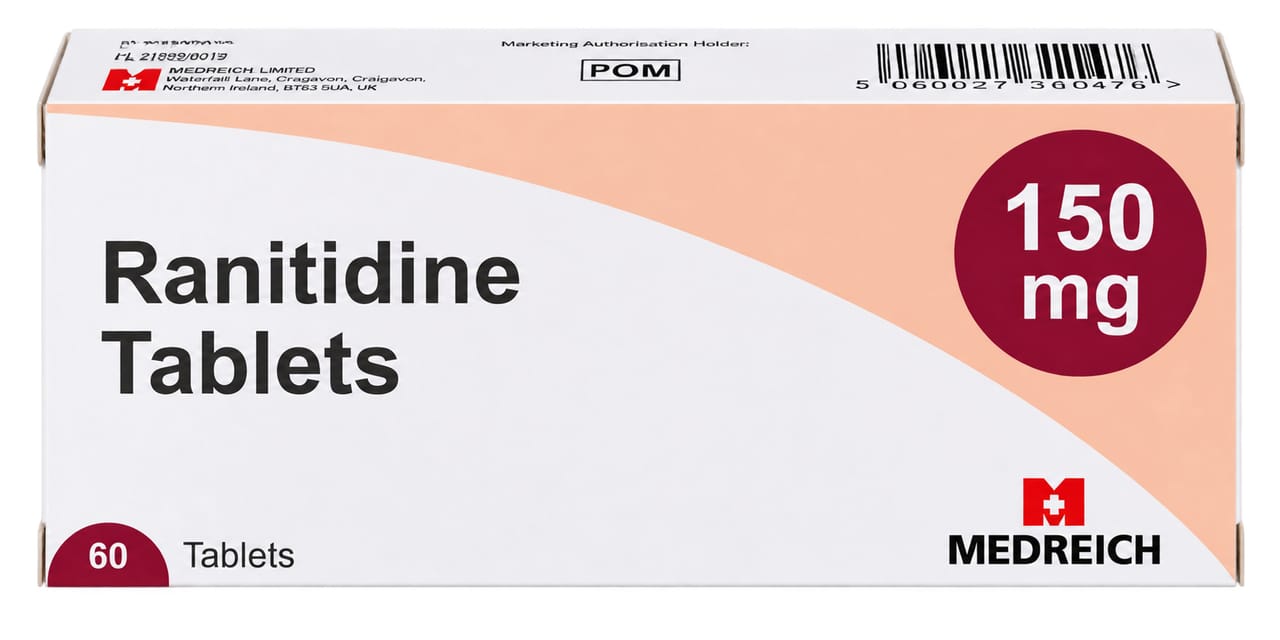
Quick overview
Ranitidine Tablet (generic name: ranitidine) belongs to the H2 antagonist (histamine-2 blocker) drug class. It works by reducing the amount of acid the stomach produces, which helps treat and prevent ulcers, GERD, erosive esophagitis, and heartburn from acid indigestion. It is available in several forms, including tablets, effervescent tablets, granules, syrup, injection, and capsules.
What is Ranitidine Tablet
Ranitidine belongs to a group of drugs called histamine-2 blockers. It works by reducing the amount of acid your stomach produces.
Ranitidine Tablet uses
- Treat and prevent ulcers in the stomach and intestines
- Treat conditions where the stomach produces too much acid, such as Zollinger-Ellison syndrome
- Treat gastroesophageal reflux disease (GERD) and other conditions where acid backs up into the esophagus, causing heartburn
- Prevent and treat symptoms of heartburn associated with acid indigestion and sour stomach (over-the-counter use)
- Treat erosive esophagitis
- Sometimes used to treat upper gastrointestinal bleeding and to prevent stress ulcers, stomach damage from NSAID use, and aspiration of stomach acid during anesthesia
Benefits of Ranitidine Tablet
- Reduces stomach acid production
- Relieves heartburn and pain from acid reflux
- Helps heal stomach and duodenal ulcers
- Provides relief of heartburn pain, often within 24 hours of starting therapy
How Ranitidine Tablet works
Ranitidine blocks histamine at receptors in the stomach lining, which reduces how much acid the stomach produces.
Ranitidine Tablet dosage
Take ranitidine exactly as directed on the label or as prescribed by your doctor. Do not take more or less of it, or take it more often than prescribed. Effervescent tablets and granules must be dissolved in a full glass of water before drinking.
Over-the-counter ranitidine is usually taken once or twice a day; to prevent symptoms it is taken shortly before eating or drinking foods that cause heartburn. Do not take over-the-counter ranitidine for longer than 2 weeks unless your doctor tells you to. If heartburn, acid indigestion, or sour stomach symptoms last longer than 2 weeks, stop taking it and call your doctor.
Continue your normal diet unless your doctor tells you otherwise. Your doctor may recommend an antacid to help relieve pain; follow their directions about the type and timing of the antacid.
It may take up to 8 weeks before an ulcer heals; keep taking the medicine as directed and talk to your doctor if symptoms do not improve after 6 weeks.
If you miss a dose, take it as soon as you remember, but skip it if it is almost time for your next dose; do not take two doses at once.
| Age group | Dose |
|---|---|
| Under 1 year | Doctor's advice required |
| 1–11 years | Dose should be determined by a doctor |
| 12 years & older | 150 mg once or twice daily |
| Adults | 150 mg once or twice daily |
Available forms and strengths
- Tablet
- Effervescent tablet
- Effervescent granules
- Syrup
- Injection
- Capsule
Side effects of Ranitidine Tablet
Common
- Headache
- Constipation
- Diarrhea
- Nausea or vomiting
- Stomach pain
- Dizziness
- Muscle pain
Serious
- Signs of an allergic reaction (hives, difficulty breathing, swelling of face, lips, tongue, or throat)
- Stomach pain or loss of appetite
- Dark urine or jaundice (yellowing of skin or eyes)
- Fever, chills, cough with mucus, chest pain, feeling short of breath (possible pneumonia)
- Fast or slow heart rate
- Easy bruising or bleeding
- Problems with skin or hair
- Mental confusion
- Difficulty breathing
- Gynecomastia (breast enlargement)
Warnings and precautions
- This medicine is not recommended for use in pregnant women unless necessary. Talk with your doctor about the risks and benefits before taking it.
- This medicine is not recommended for use in breastfeeding women unless necessary. Talk with your doctor about the risks and benefits before taking it.
- Ask a doctor or pharmacist if it is safe for you to take this medicine if you have kidney disease. It should be used with caution due to an increased risk of side effects.
- Ask a doctor or pharmacist if it is safe for you to take this medicine if you have liver disease. It should be used with caution due to an increased risk of side effects.
- Avoid drinking alcohol while taking this medicine, as it can increase the risk of damage to your stomach.
- Using ranitidine may increase your risk of developing pneumonia. Watch for chest pain, fever, feeling short of breath, and coughing up green or yellow mucus, and talk with your doctor about your risk.
- Do not use this medicine if you are allergic to ranitidine.
- Ask a doctor or pharmacist before use if you have kidney disease, liver disease, or porphyria.
- Heartburn can feel like the first signs of a heart attack, so get emergency help if you have chest pain or heaviness, pain spreading to the arm or shoulder, nausea, sweating, or a general ill feeling.
- Improving symptoms do not mean a more serious condition, such as stomach cancer, isn't present. Talk to your doctor if symptoms don't improve or get worse.
- This medicine should not be used in patients with gastrointestinal bleeding, as it may worsen the condition.
- Long-term use of this medicine can interfere with the body's absorption of Vitamin B12.
- This medicine should be avoided in patients with a history of a blood disorder called porphyria, as it may trigger an attack.
Storage
- Store at room temperature away from moisture, heat, and light.
- Keep this medication in the container it came in, tightly closed, and out of reach of children. Store it at room temperature and away from excess heat and moisture (not in the bathroom).
- Dispose of unneeded medications in a way so that pets, children, and other people cannot take them. Do not flush this medication down the toilet. Use a medicine take-back program.
- Store at 20° to 25°C (68° to 77°F); excursions permitted to 15° to 30°C (59° to 86°F). Protect from light. Replace cap securely after each opening.
When to see a doctor
- Get emergency medical help if you have signs of an allergic reaction: hives, difficult breathing, or swelling of your face, lips, tongue, or throat.
- Stop using this medicine and call your doctor right away if you have stomach pain, loss of appetite, dark urine, yellowing of skin or eyes, fever, chills, cough with mucus, chest pain, shortness of breath, a fast or slow heart rate, easy bruising or bleeding, or problems with your skin or hair.
- Seek emergency medical help if you have chest pain or heaviness that spreads to your arm, jaw, or shoulder along with nausea, sweating, anxiety, or feeling light-headed, as this can mimic a heart attack.
- Seek emergency medical attention if you suspect an overdose. Overdose symptoms may include lack of coordination, feeling light-headed, or fainting.
- If you have chronic heartburn lasting more than 3 months, or your heartburn continues or worsens, contact your doctor right away since this could signal a more serious condition.
Alternatives
- Zantac
- Zantac 75
- Zantac EFFERdose
- Zantac Syrup
- Tritec
- Famotidine
- Omeprazole
- Pantoprazole
Watch the video
FAQs
What is Ranitidine Tablet used for?
It is used to treat and prevent ulcers, conditions with excess stomach acid like Zollinger-Ellison syndrome, GERD, erosive esophagitis, and heartburn from acid indigestion.
How does Ranitidine Tablet work?
Ranitidine blocks histamine at receptors in the stomach lining, which reduces how much acid the stomach produces.
What is the dosage of Ranitidine Tablet for adults?
Adults and those 12 years and older typically take 150 mg once or twice daily, as directed by a doctor or the product label.
How long can I take over-the-counter Ranitidine?
Do not take over-the-counter ranitidine for longer than 2 weeks unless your doctor tells you to; if symptoms last longer, stop and call your doctor.
What are the common side effects of Ranitidine Tablet?
Common side effects include headache, constipation, diarrhea, nausea or vomiting, stomach pain, dizziness, and muscle pain.
General information, not medical advice
Your prescriber and the leaflet in your pack know your situation. This page does not.
- Follow your prescriber and the leaflet
- Don't start, stop, or change a dose on your own
- Doses and warnings differ by country and product
Sources
Video
Related medicines

Injectafer Injection: Uses, Dosage, Side Effects, Precautions and Alternates
Iron products
Injectafer (ferric carboxymaltose) treats iron deficiency anemia and heart failure-related iron deficiency via IV. Learn uses, dosage, side effects, and

Gliclazide Tablet: Uses, Dosage, Side Effects, Precautions and Alternates
Sulfonylurea (hypoglycemic/antidiabetic agent)
Gliclazide Tablet is a sulfonylurea for type 2 diabetes that boosts insulin release. Learn about dosage, side effects, warnings, and precautions.