
Safety
General information, not medical advice
Your prescriber and the leaflet in your pack know your situation. This page does not.
- Follow your prescriber and the leaflet
- Don't start, stop, or change a dose on your own
- Doses and warnings differ by country and product
Rapivab Injection: Uses, Dosage, Side Effects, Precautions and Alternates
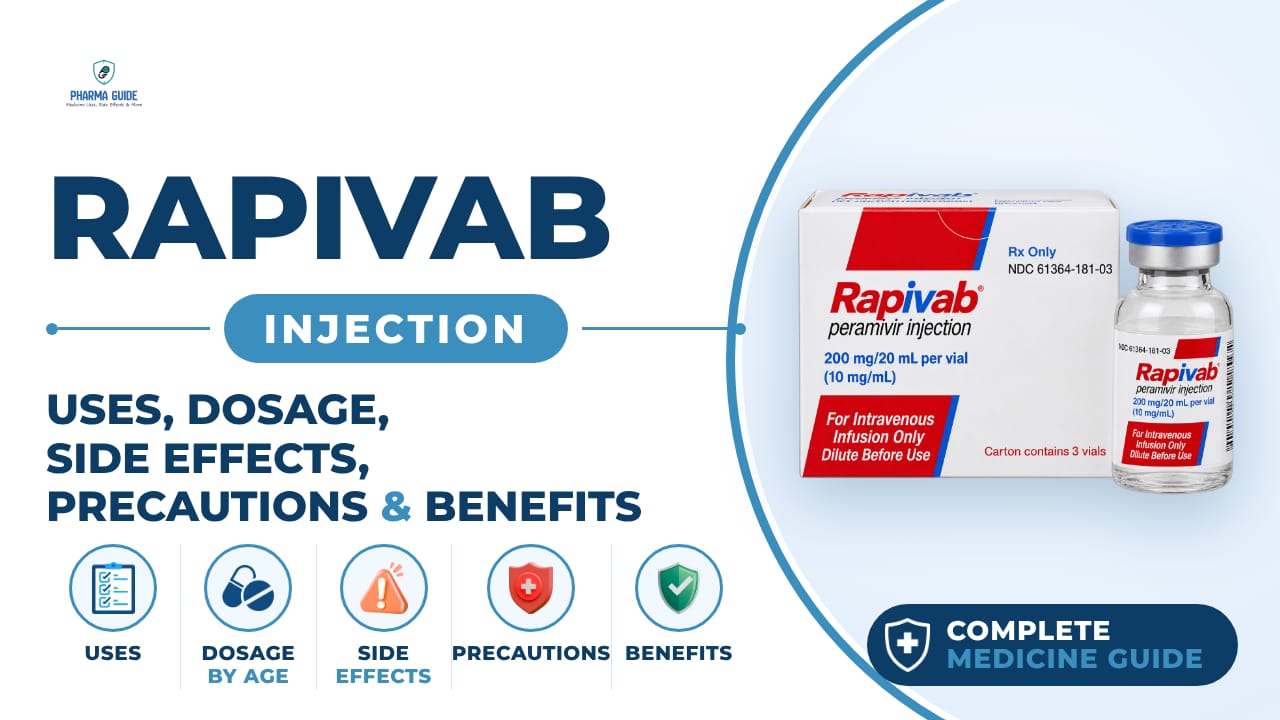
| Generic name | peramivir |
|---|---|
| Drug class | Neuraminidase inhibitor |
| Forms | Injection |
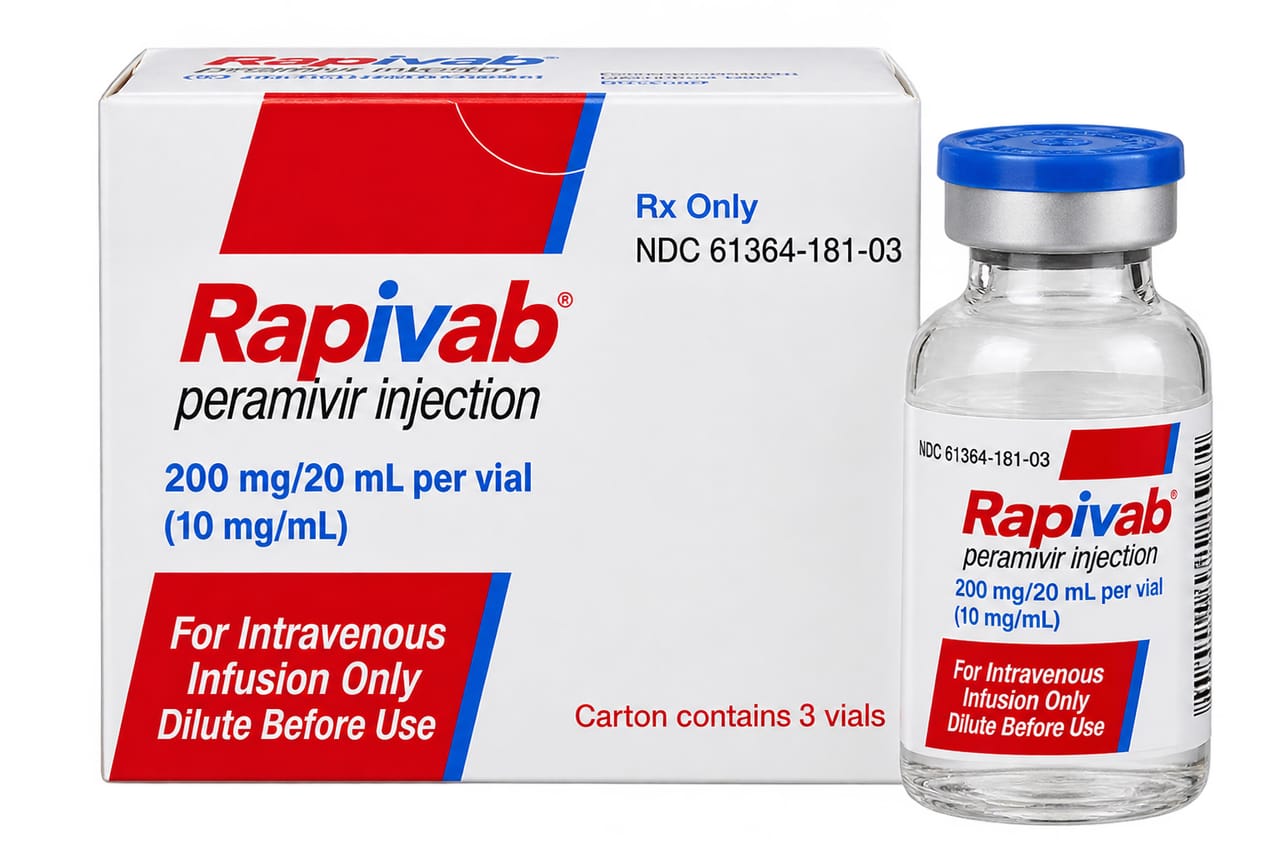
Quick overview
Rapivab Injection (peramivir) is a prescription antiviral medicine given as an IV infusion to treat the flu in adults and children ages 2 years and older (some sources state 6 months and older) who have had flu symptoms for no more than 2 days. It belongs to the neuraminidase inhibitor drug class and works by blocking a flu virus enzyme needed for the virus to multiply and spread. It is typically given as a single IV dose and is not intended for flu severe enough to require hospitalization.
What is Rapivab Injection
Rapivab is a prescription antiviral medicine given as an IV infusion. It is used to treat the flu in adults and children ages 2 years and older (some sources state 6 months and older) who have had flu symptoms for no more than 2 days.
Rapivab Injection uses
- Treatment of acute uncomplicated influenza (flu) in people who have had symptoms for no more than 2 days
- Not for use in flu that is severe enough to require hospital stay
Benefits of Rapivab Injection
- Treats influenza (flu) infection.
- Helps stop flu virus replication.
- May help reduce flu symptoms when given early.
- Provides an IV treatment option for eligible patients.
- Helps treat acute uncomplicated influenza.
How Rapivab Injection works
Rapivab contains peramivir, which attaches to the flu virus and blocks an enzyme called neuraminidase. This enzyme normally helps the flu virus multiply and spread in the body, so blocking it helps the body fight off the infection.
Rapivab Injection dosage
Rapivab is given by a doctor or nurse as a slow injection into a vein (IV infusion), usually lasting 15 to 30 minutes. Treatment should start as soon as possible, but no later than 48 hours after flu symptoms begin. It is usually given as a single, one-time dose; it is not a long-term or daily treatment. Avoid getting a live nasal flu vaccine (such as FluMist) within 2 weeks before or 48 hours after receiving this medicine, unless your doctor says otherwise. You may still be able to spread the flu to others for several days even after receiving this medicine.
| Age group | Dose |
|---|---|
| Under 18 years | Not recommended |
| 18–64 years | 600 mg, once/day |
| 65+ years | 600 mg, once/day |
Available forms and strengths
- Injection
Side effects of Rapivab Injection
Common
- Diarrhea
- Vomiting (reported mainly in children)
- Constipation
- Insomnia (sleep problems)
- High blood pressure
- Earache
- Hearing loss
- Fever, nausea
- Headaches, fatigue, vision problems, chest pain
Serious
- Allergic reaction (hives, swelling of face, lips, tongue, or throat, trouble breathing)
- Severe skin reactions (blistering, peeling, red or purple rash that spreads), including Stevens-Johnson syndrome and erythema multiforme
- Behavioral changes such as confusion, delirium, hallucinations, or unusual behavior
- New or worsening flu symptoms
- Proteinuria (higher than normal protein in urine) in children
- Serious eye symptoms such as sudden vision loss, blurred vision, eye pain or swelling
- Serious heart symptoms such as fast or irregular heartbeat, fluttering in chest, shortness of breath, dizziness, or passing out
Warnings and precautions
- This medicine can cause severe allergic reactions (including anaphylaxis) or serious skin reactions. Treatment should be stopped right away if these occur.
- People with the flu, especially children, may have an increased risk of hallucinations, confusion, or unusual behavior early in the illness. This should be watched for closely.
- This medicine does not treat infections caused by bacteria or fungus, and does not prevent bacterial infections that can occur along with the flu.
- This medicine has not been shown to work better than no treatment in people with serious flu severe enough to need hospitalization.
- Avoid getting a live nasal flu vaccine within 2 weeks before or 48 hours after this medicine, as it may make the vaccine less effective.
- It is not known if this medicine is safe to use during pregnancy. There isn't enough information about its use in pregnant people, and animal studies have shown mixed results including some pregnancy problems at high doses.
- It isn't known whether this medicine is safe to use while breastfeeding, since studies in humans haven't been done.
- People with kidney disease or reduced kidney function may need a lower dose, since the drug is removed from the body mainly through the kidneys.
- There are no known interactions between this medicine and alcohol, but it's best to avoid alcohol while you have the flu since it can weaken your immune system and may make it take longer to recover.
Storage
- Store vials in original cartons at room temperature (20°C to 25°C / 68°F to 77°F); brief excursions to 15°C–30°C (59°F–86°F) are permitted
- Do not use if the seal over the bottle opening is broken or missing
- Do not use after the expiry date on the packaging
- Once diluted for infusion, use immediately or store refrigerated (2° to 8°C or 36° to 46°F) for up to 24 hours; if refrigerated, let it reach room temperature before giving
- Discard any unused diluted solution after 24 hours
When to see a doctor
- Get emergency medical help right away if you have signs of an allergic reaction, such as hives, trouble breathing, or swelling of your face, lips, tongue, or throat.
- Call your doctor right away if you notice confusion, hallucinations, or unusual thoughts or behavior, or if your flu symptoms are new or getting worse.
- Seek emergency care if you have severe skin reactions, such as red or purple rash that spreads and causes blistering and peeling, especially with fever and fatigue.
- Seek medical help immediately for serious eye symptoms (sudden vision loss, blurred vision, eye pain) or serious heart symptoms (fast or irregular heartbeat, shortness of breath, sudden dizziness or passing out).
Alternatives
- Amantadine
- Zanamivir
- Oseltamivir
Watch the video
FAQs
What is Rapivab Injection used for?
Rapivab is used to treat acute uncomplicated influenza (flu) in people who have had symptoms for no more than 2 days. It is not for flu severe enough to require hospitalization.
How is Rapivab Injection given?
Rapivab is given by a doctor or nurse as a slow IV infusion, usually lasting 15 to 30 minutes. It is usually given as a single, one-time dose and should start as soon as possible, but no later than 48 hours after flu symptoms begin.
What is the dosage of Rapivab for adults?
For adults ages 18 to 64 years and those 65 and older, the dose is 600 mg given once as a single IV infusion.
What are the common side effects of Rapivab Injection?
Common side effects include diarrhea, vomiting (mainly in children), constipation, insomnia, high blood pressure, earache, hearing loss, fever, nausea, headaches, fatigue, vision problems, and chest pain.
Can I get a flu vaccine after receiving Rapivab?
You should avoid getting a live nasal flu vaccine, such as FluMist, within 2 weeks before or 48 hours after receiving Rapivab, unless your doctor says otherwise, as it may make the vaccine less effective.
General information, not medical advice
Your prescriber and the leaflet in your pack know your situation. This page does not.
- Follow your prescriber and the leaflet
- Don't start, stop, or change a dose on your own
- Doses and warnings differ by country and product
Sources
Video
Related medicines

Injectafer Injection: Uses, Dosage, Side Effects, Precautions and Alternates
Iron products
Injectafer (ferric carboxymaltose) treats iron deficiency anemia and heart failure-related iron deficiency via IV. Learn uses, dosage, side effects, and

Gliclazide Tablet: Uses, Dosage, Side Effects, Precautions and Alternates
Sulfonylurea (hypoglycemic/antidiabetic agent)
Gliclazide Tablet is a sulfonylurea for type 2 diabetes that boosts insulin release. Learn about dosage, side effects, warnings, and precautions.