
Safety
General information, not medical advice
Your prescriber and the leaflet in your pack know your situation. This page does not.
- Follow your prescriber and the leaflet
- Don't start, stop, or change a dose on your own
- Doses and warnings differ by country and product
Rebif Injection: Uses, Dosage, Side Effects, Precautions and Alternates
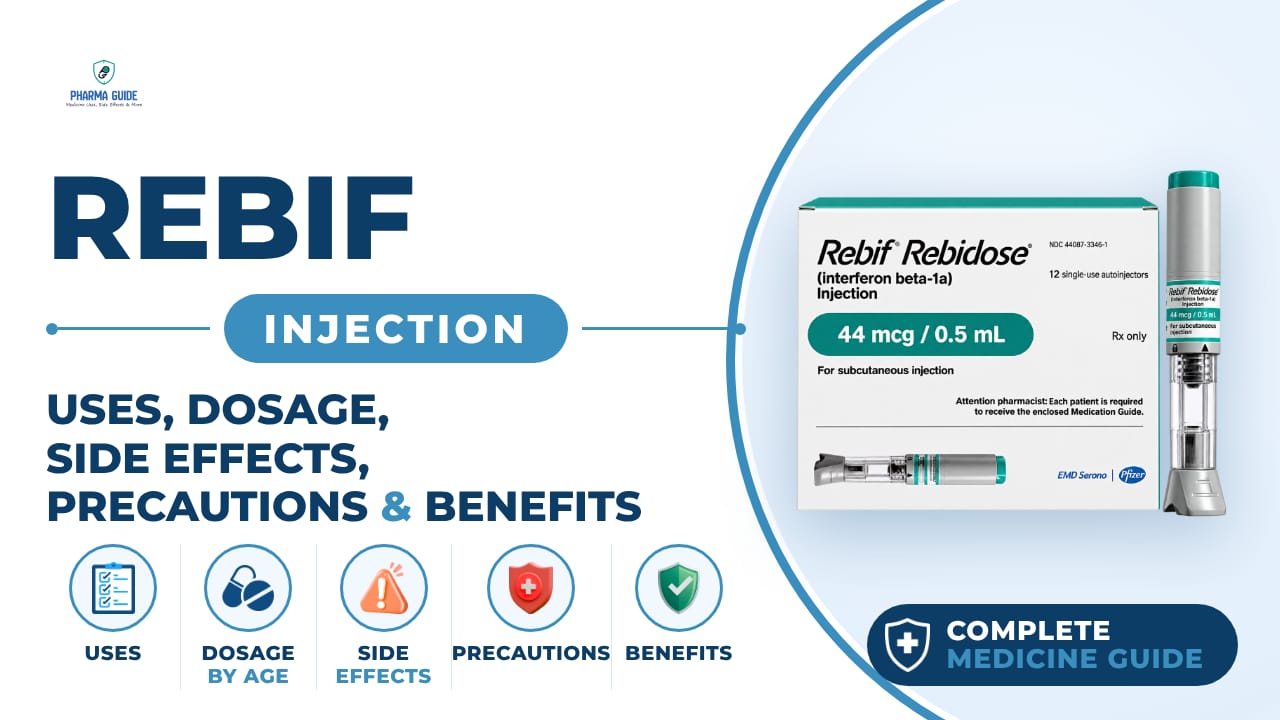
| Generic name | interferon beta-1a |
|---|---|
| Drug class | Interferons |
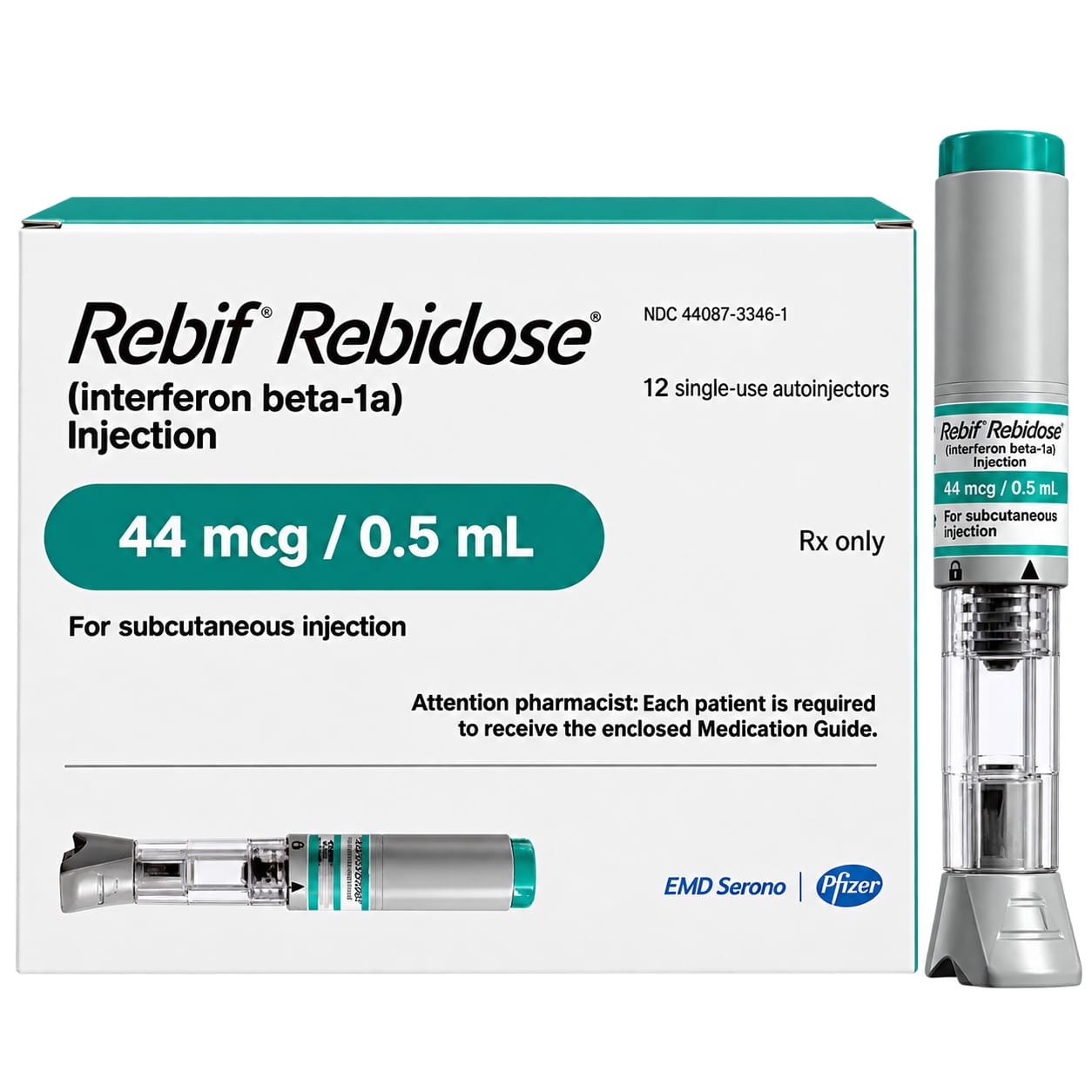
| Forms | Prefilled syringe, Rebidose autoinjector |
Quick overview
Rebif Injection is a brand-name medicine containing interferon beta-1a, used to treat relapsing forms of multiple sclerosis and clinically isolated syndrome. It is given by injection under the skin three times a week and works by calming the immune system to reduce inflammation in the brain and spinal cord. Common side effects include flu-like symptoms and injection site reactions, while more serious risks involve the liver, blood counts, and mood changes.
What is Rebif Injection
Rebif is a brand-name injectable medicine used to treat multiple sclerosis (MS). It contains interferon beta-1a, a man-made version of a protein your immune system naturally makes. It's classed as a biologic drug and an immunomodulator, meaning it helps regulate the immune system rather than shutting it down.
Rebif Injection uses
- Relapsing-remitting multiple sclerosis (MS)
- Active secondary progressive MS
- Clinically isolated syndrome (CIS), an episode of MS-like symptoms lasting at least 24 hours
Benefits of Rebif Injection
- Reduces the number of MS symptom relapses
- Delays disability caused by MS, such as difficulty walking
- May reduce the number or severity of brain and spinal cord lesions seen on MRI scans
- May delay accumulation of physical disability
- Helps reduce inflammatory MS disease activity
- Provides established interferon-based disease-modifying therapy
How Rebif Injection works
Rebif is a lab-made version of a protein your body makes naturally. It attaches to receptors on cells and calms down the immune cells that attack the protective coating around nerves, which helps reduce inflammation in the brain and spinal cord. Doctors don't fully understand the exact way it controls MS, but it has been shown to reduce flare-ups and slow disability.
Rebif Injection dosage
Rebif is given as an injection under the skin, three times a week, on the same three days each week (for example, Monday, Wednesday, and Friday). Space your injections at least 48 hours apart, and try to inject at the same time of day, ideally in the late afternoon or evening. A doctor or nurse will show you how to give the injection before you do it yourself at home.
Rotate the injection site each time (abdomen, buttocks, thighs, or upper outer arm) to help prevent skin irritation or scarring. If you have a low body weight, the thigh or upper arm may be a better injection site because there is more fat there. Do not inject into skin that is discolored, bruised, infected, or irritated.
Doctors usually start with a lower dose and gradually increase it over several weeks to reduce flu-like side effects. If you miss a dose, give yourself the missed dose as soon as you remember, then wait 48 hours before the next one — never give two doses within 48 hours.
Letting the syringe warm to room temperature before injecting (but never in a microwave or boiling water) may help reduce irritation. Clean the injection site with an alcohol swab and let it dry before injecting. This is a long-term treatment that is usually continued if it's working well for you.
| Age group | Dose |
|---|---|
| Under 18 years | Safety and effectiveness have not been established for routine pediatric use |
| 18–64 years | 22 mcg or 44 mcg subcutaneously 3 times per week |
Available forms and strengths
- Prefilled syringe
- Rebidose autoinjector
- Strengths: 22 mcg and 44 mcg
Side effects of Rebif Injection
Common
- Flu-like symptoms (muscle aches, headache, tiredness, fever, chills)
- Stomach/abdominal pain
- Changes in liver blood tests
- Injection site reactions
- Fatigue
Serious
- Changes in blood cell counts (low white blood cells, red blood cells, or platelets)
- Seizures
- Thrombotic microangiopathy (a rare, life-threatening blood clotting condition)
- Pulmonary arterial hypertension (high blood pressure in the lung arteries)
- Allergic reactions and serious skin reactions
- Severe injection site reactions, including skin damage (necrosis)
- Liver problems, including liver damage or failure
- Depression or thoughts of suicide
Warnings and precautions
- Rebif can cause mood changes including depression and thoughts of self-harm or suicide. Tell your healthcare provider right away if this happens.
- Rebif can cause liver problems or liver failure. Watch for nausea, loss of appetite, tiredness, dark urine, pale stools, yellowing of skin or eyes, easy bleeding, confusion, or sleepiness, and contact your healthcare provider right away if these occur.
- Rebif may cause serious allergic reactions or skin reactions, such as itching, swelling of the face/lips/tongue/throat, trouble breathing, rash, hives, or blistering and peeling skin.
- Rebif can cause injection site problems, including infection or severe skin damage (necrosis). Call your healthcare provider right away if an injection site becomes swollen, painful, or looks infected.
- Rebif can lower red blood cell, white blood cell, and platelet counts, sometimes to dangerously low levels, raising the risk of infection, bleeding, and bruising. Regular blood tests are needed to monitor this.
- Rebif can cause pulmonary arterial hypertension (high blood pressure in the lung arteries). Watch for new or worsening fatigue or shortness of breath and contact your healthcare provider right away.
- Rebif can cause thrombotic microangiopathy (TMA), a rare and serious condition that damages small blood vessels and can sometimes be fatal. Your doctor may need to stop Rebif if this happens.
- Some people have had seizures while taking Rebif.
- Do not take Rebif if you are allergic to interferon beta, human albumin, or any of its ingredients.
- It isn't known for sure whether Rebif can harm an unborn baby. Tell your doctor if you are pregnant or planning to become pregnant, or if you become pregnant while on Rebif.
- Rebif may pass into breast milk. Talk with your doctor about the best way to feed your baby if you're taking Rebif.
- No routine renal dose adjustment is specified, but overall health and laboratory results should be monitored.
- Tell your doctor if you have or have had liver problems before starting Rebif, since the medicine can cause liver damage or worsen existing liver problems.
- Both Rebif and alcohol can harm the liver, and drinking alcohol while on Rebif can significantly raise your risk of liver problems. Tell your doctor if you drink alcohol.
- Flu-like symptoms, dizziness, or fatigue may make driving unsafe.
Storage
- Store Rebif in the refrigerator between 36°F and 46°F (2°C and 8°C).
- Do not freeze Rebif.
- If you cannot refrigerate your Rebif pen or autoinjector, you can store it at temperatures above 36°F and below 77°F (2°C to 25°C) for up to 30 days.
- Keep Rebif away from heat and light.
When to see a doctor
- Get medical help right away if you have thoughts of hurting yourself or suicide, or feel hopeless or very down.
- Contact your healthcare provider right away if you notice nausea, loss of appetite, tiredness, dark urine, pale stools, yellowing of your skin or eyes, easy bruising or bleeding, confusion, or unusual sleepiness — these can be signs of liver problems.
- Seek emergency medical attention if you develop itching, swelling of the face/eyes/lips/tongue/throat, trouble breathing, feeling faint, rash, hives, mouth sores, or skin blistering/peeling.
- Call your healthcare provider immediately if an injection site becomes swollen and painful or looks infected.
- Contact your healthcare provider right away if you develop new or worsening fatigue or shortness of breath.
Alternatives
- Avonex
- Plegridy
- Betaseron
Watch the video
FAQs
What is Rebif Injection used for?
Rebif is used to treat relapsing-remitting multiple sclerosis, active secondary progressive MS, and clinically isolated syndrome, an MS-like episode lasting at least 24 hours.
How is Rebif Injection given?
Rebif is injected under the skin three times a week on the same days each week, spaced at least 48 hours apart, rotating injection sites like the abdomen, buttocks, thighs, or upper outer arm.
What are the common side effects of Rebif Injection?
Common side effects include flu-like symptoms such as muscle aches, headache, tiredness, fever and chills, stomach pain, changes in liver blood tests, injection site reactions, and fatigue.
What serious warnings are associated with Rebif Injection?
Rebif can cause liver problems, low blood cell counts, depression or suicidal thoughts, serious allergic or skin reactions, severe injection site damage, seizures, pulmonary arterial hypertension, and thrombotic microangiopathy.
How should Rebif Injection be stored?
Store Rebif in the refrigerator between 36°F and 46°F, avoid freezing, and if needed it can be kept at 36°F to 77°F for up to 30 days, away from heat and light.
General information, not medical advice
Your prescriber and the leaflet in your pack know your situation. This page does not.
- Follow your prescriber and the leaflet
- Don't start, stop, or change a dose on your own
- Doses and warnings differ by country and product
Sources
Video
Related medicines

Injectafer Injection: Uses, Dosage, Side Effects, Precautions and Alternates
Iron products
Injectafer (ferric carboxymaltose) treats iron deficiency anemia and heart failure-related iron deficiency via IV. Learn uses, dosage, side effects, and

Gliclazide Tablet: Uses, Dosage, Side Effects, Precautions and Alternates
Sulfonylurea (hypoglycemic/antidiabetic agent)
Gliclazide Tablet is a sulfonylurea for type 2 diabetes that boosts insulin release. Learn about dosage, side effects, warnings, and precautions.