
Safety
General information, not medical advice
Your prescriber and the leaflet in your pack know your situation. This page does not.
- Follow your prescriber and the leaflet
- Don't start, stop, or change a dose on your own
- Doses and warnings differ by country and product
Recarbrio Injection: Uses, Dosage, Side Effects, Precautions and Alternates
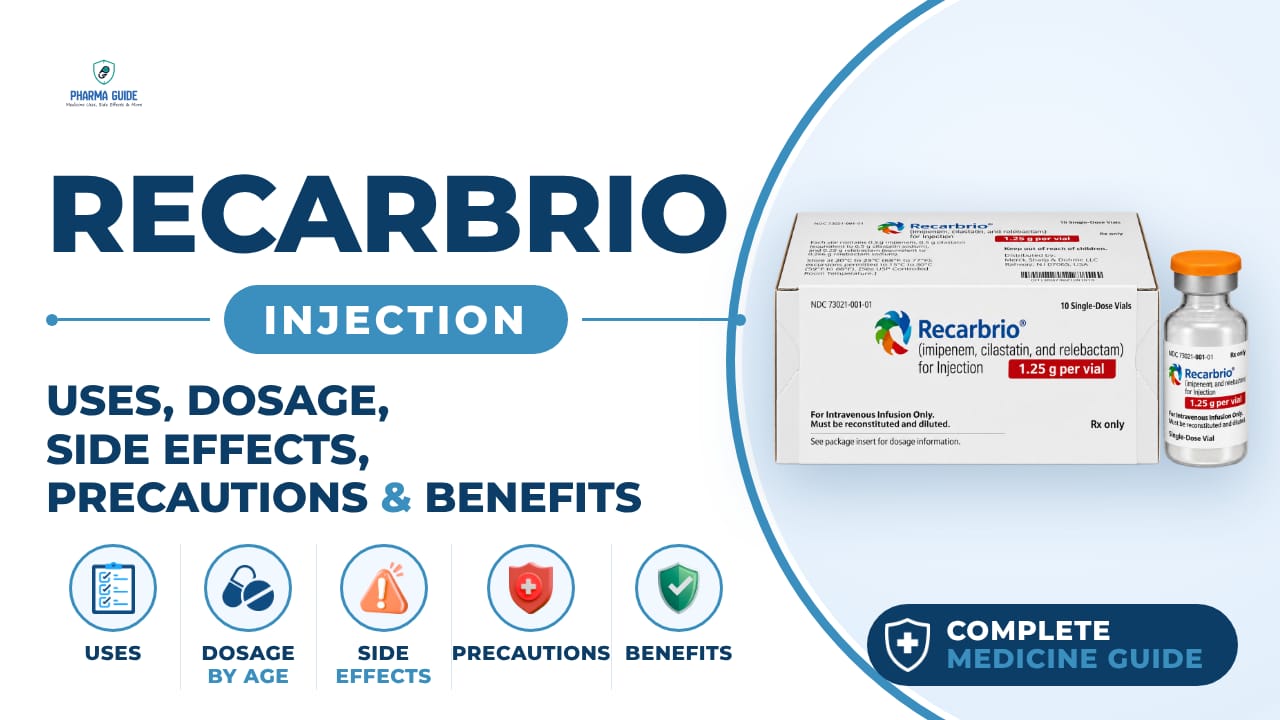
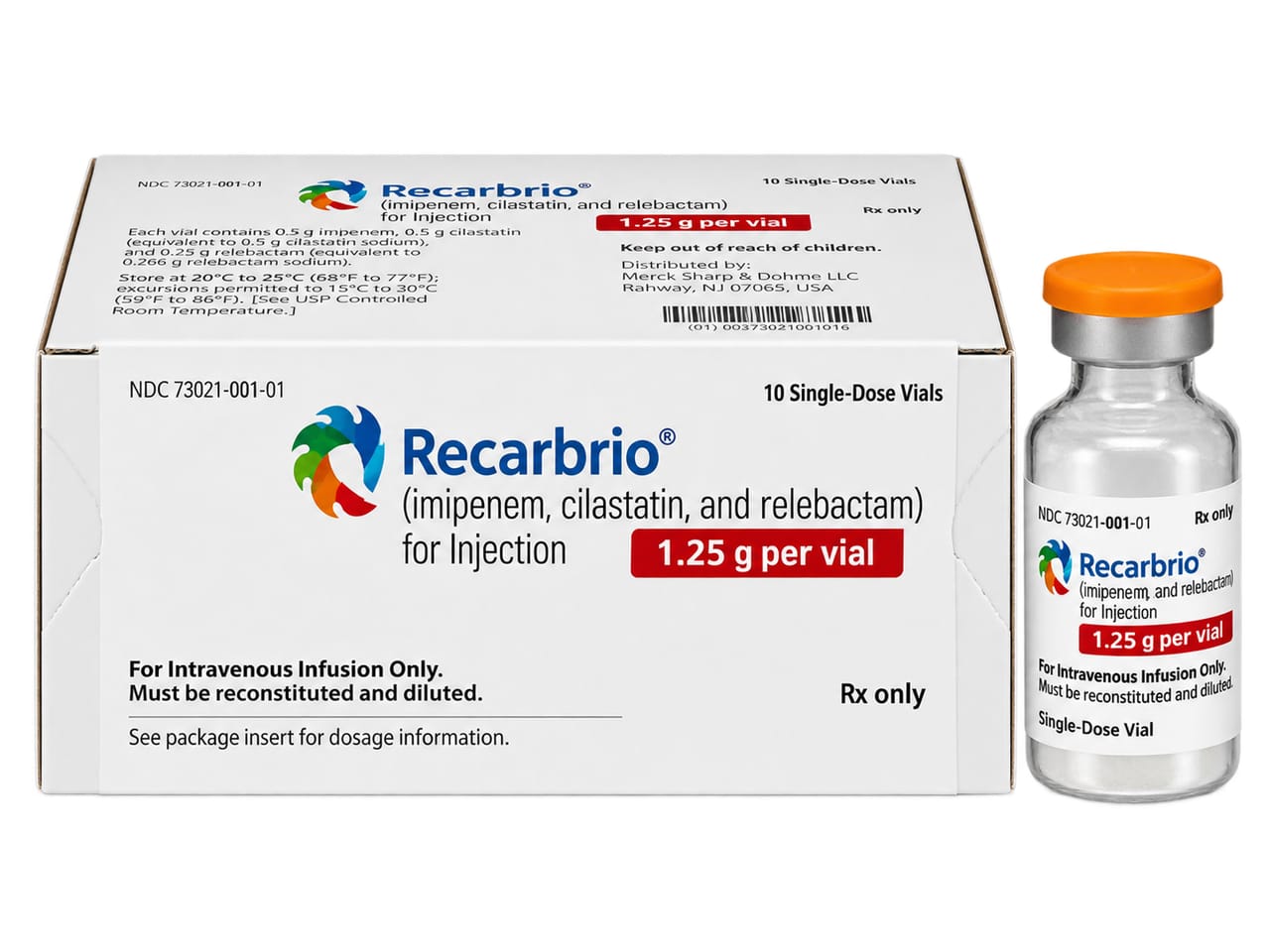
| Generic name | imipenem, cilastatin, and relebactam |
|---|---|
| Drug class | Carbapenem antibacterial combined with a renal dehydropeptidase inhibitor and a beta-lactamase inhibitor |
| Forms | Sterile powder for solution for intravenous infusion (single-dose vial containing imipenem, cilastatin, and relebactam) |
Quick overview
Recarbrio Injection contains imipenem, cilastatin, and relebactam, a combination antibiotic given by IV infusion to treat serious bacterial infections, including some caused by resistant bacteria. It is used for hospital-acquired and ventilator-associated pneumonia, complicated urinary tract infections, and complicated abdominal infections in adults with limited treatment options. The medicine is given only by a healthcare professional as an IV infusion, usually every 6 hours. Common side effects include nausea, diarrhea, and headache, while serious risks include severe allergic reactions and seizures.
What is Recarbrio Injection
Recarbrio is a combination antibiotic medicine given by IV infusion. It contains imipenem (a carbapenem antibiotic that kills bacteria), cilastatin (which stops the kidneys from breaking down imipenem too quickly), and relebactam (which protects imipenem from being destroyed by certain bacterial enzymes). Together these three ingredients treat serious bacterial infections, including some caused by bacteria that are resistant to many other antibiotics.
Recarbrio Injection uses
- Hospital-acquired bacterial pneumonia and ventilator-associated bacterial pneumonia in adults
- Complicated urinary tract infections, including kidney infection (pyelonephritis), in adults who have limited or no other treatment options
- Complicated abdominal (intra-abdominal) infections in adults who have limited or no other treatment options
- Treatment of infections due to aerobic Gram-negative bacteria in adults with limited treatment options
Benefits of Recarbrio Injection
- Can kill many strains of bacteria that are resistant to other carbapenem antibiotics
- Relebactam restores the ability of imipenem to kill bacteria that produce certain enzymes (beta-lactamases) that would otherwise destroy it
- Offers a treatment option for serious infections when other antibiotics are not suitable or have failed
How Recarbrio Injection works
Imipenem kills bacteria by blocking proteins they need to build their cell walls. Cilastatin stops the kidneys from breaking imipenem down too fast, so it stays active in the body. Relebactam blocks certain bacterial enzymes (beta-lactamases) that would otherwise destroy imipenem, helping it work against some tougher, drug-resistant bacteria.
Recarbrio Injection dosage
Recarbrio is given only by a healthcare professional as an IV infusion (drip) into a vein over 30 minutes, usually every 6 hours. Treatment length depends on the type and severity of infection and how well you respond, generally lasting several days to a few weeks. If a dose is missed, tell your healthcare professional right away so it can be given as soon as possible, with later doses adjusted accordingly. Take or receive the full course as directed, even if you start to feel better early, to help prevent the infection from coming back or becoming resistant to treatment.
| Age group | Dose |
|---|---|
| Under 18 years | Safety and effectiveness are not established for routine pediatric use |
| 18–64 years | 1.25 g IV every 6 hours, infused over about 30 minutes |
Available forms and strengths
- Sterile powder for solution for intravenous infusion (single-dose vial containing imipenem, cilastatin, and relebactam)
Side effects of Recarbrio Injection
Common
- Nausea
- Diarrhea
- Vomiting
- Headache
- Fever (pyrexia)
- Increased liver enzymes (ALT, AST)
- Pain, redness, swelling, or irritation at the injection/infusion site
- Increased blood pressure
Serious
- Serious allergic (anaphylactic) reactions - hives, difficulty breathing, swelling of face, lips, tongue, or throat
- Seizures, confusion, tremors, or other nervous system effects
- Clostridioides difficile-associated diarrhea (severe or bloody diarrhea, which can occur even months after treatment)
- Severe skin reactions such as skin peeling, blistering, or widespread rash (possible signs of severe cutaneous adverse reactions)
- Kidney problems (changes in urination, swelling, dark urine)
- Liver problems (yellowing of skin or eyes, dark urine, stomach pain)
Warnings and precautions
- Serious and occasionally fatal allergic reactions can occur with this type of antibiotic; tell your doctor about any past allergic reactions to similar antibiotics before starting treatment.
- This medicine can increase the risk of seizures and other nervous system problems, especially in people with brain disorders, a history of seizures, or kidney problems.
- Taking this medicine together with the seizure medicine valproic acid (or divalproex sodium) is not recommended because it can lower valproic acid levels and increase the risk of seizures.
- This medicine, like nearly all antibiotics, can cause a serious intestinal infection with diarrhea that may range from mild to life-threatening, sometimes occurring even after treatment has ended.
- Severe skin reactions have been reported with this type of antibiotic, including blistering or peeling skin reactions that can affect other organs.
- Recarbrio should only be used in pregnancy if the potential benefit outweighs the potential risk, as there isn't enough human data to know if it is completely safe for the baby.
- Small amounts of the medicine's ingredients can pass into breast milk, so your doctor will weigh the benefits of breastfeeding against your need for this medicine.
- Because this medicine is removed from the body mainly by the kidneys, your dose will be reduced if you have reduced kidney function, and your kidney function may be monitored during treatment.
- No dose adjustment is expected to be needed for liver problems, since the medicine is mainly cleared by the kidneys rather than the liver, but your liver function may still be monitored.
- No major direct interaction with alcohol is established, but alcohol is best avoided during a serious infection.
- Dizziness, confusion, or neurologic side effects can occur; avoid driving if affected.
Storage
- Store the unopened dry powder vials at room temperature (about 15-30°C)
- After the medicine is mixed and diluted for use, it can be stored for up to 4 hours at room temperature or up to 24 hours in a refrigerator (2-8°C)
- Do not freeze the mixed solution
- Keep vials in the outer carton to protect from light
- This medicine is prepared and given by healthcare professionals, so patients do not need to store or dispose of it themselves
When to see a doctor
- Get emergency help right away for signs of a severe allergic reaction, such as hives, trouble breathing, or swelling of the face, lips, tongue, or throat.
- Call your doctor immediately if you have tremors, a seizure, or severe/bloody or watery diarrhea, even if it happens months after your last dose.
- Seek medical help if you notice skin blistering, peeling, or a widespread painful rash, which could be a sign of a severe skin reaction.
- Contact a doctor, hospital, or poison control center right away if you think too much medicine was given, even if you feel fine.
Alternatives
- Ceftazidime/avibactam
- Ceftolozane/tazobactam
- Meropenem/vaborbactam
Watch the video
FAQs
What is Recarbrio Injection used for?
It treats serious bacterial infections in adults, including hospital-acquired and ventilator-associated pneumonia, complicated urinary tract infections, and complicated abdominal infections, especially when other treatment options are limited.
How is Recarbrio Injection given?
It is given only by a healthcare professional as an IV infusion into a vein over 30 minutes, usually every 6 hours, with treatment length depending on the infection's type and severity.
What are the common side effects of Recarbrio Injection?
Common side effects include nausea, diarrhea, vomiting, headache, fever, increased liver enzymes, infusion site reactions, and increased blood pressure.
What are the serious risks of Recarbrio Injection?
Serious risks include severe allergic reactions, seizures and other nervous system effects, Clostridioides difficile-associated diarrhea, severe skin reactions, and kidney or liver problems.
Can Recarbrio Injection be used with valproic acid?
No, taking Recarbrio with valproic acid or divalproex sodium is not recommended because it can lower valproic acid levels and increase the risk of seizures.
General information, not medical advice
Your prescriber and the leaflet in your pack know your situation. This page does not.
- Follow your prescriber and the leaflet
- Don't start, stop, or change a dose on your own
- Doses and warnings differ by country and product
Sources
Video
Related medicines

Injectafer Injection: Uses, Dosage, Side Effects, Precautions and Alternates
Iron products
Injectafer (ferric carboxymaltose) treats iron deficiency anemia and heart failure-related iron deficiency via IV. Learn uses, dosage, side effects, and

Gliclazide Tablet: Uses, Dosage, Side Effects, Precautions and Alternates
Sulfonylurea (hypoglycemic/antidiabetic agent)
Gliclazide Tablet is a sulfonylurea for type 2 diabetes that boosts insulin release. Learn about dosage, side effects, warnings, and precautions.