
Safety
General information, not medical advice
Your prescriber and the leaflet in your pack know your situation. This page does not.
- Follow your prescriber and the leaflet
- Don't start, stop, or change a dose on your own
- Doses and warnings differ by country and product
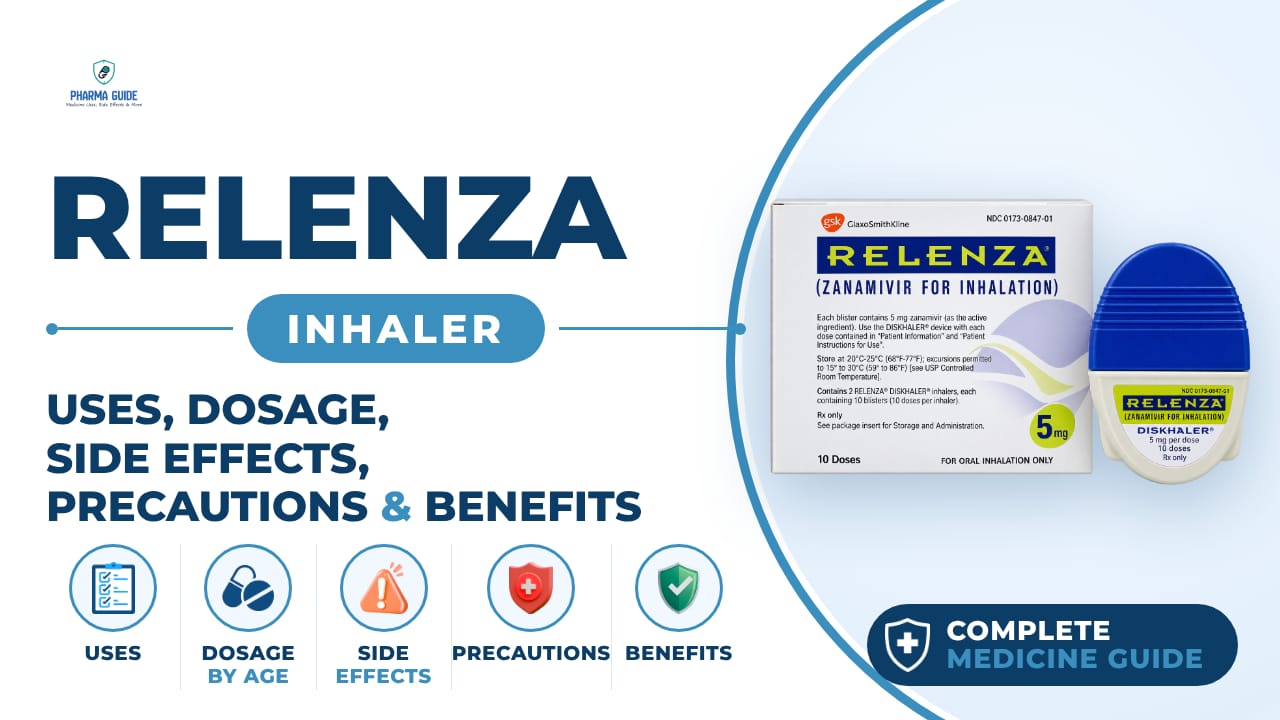
Relenza Inhaler: Uses, Dosage, Side Effects, Precautions and Alternates
| Generic name | zanamivir |
|---|---|
| Drug class | influenza antiviral, neuraminidase inhibitor |
| Forms | Inhaler |
Quick overview
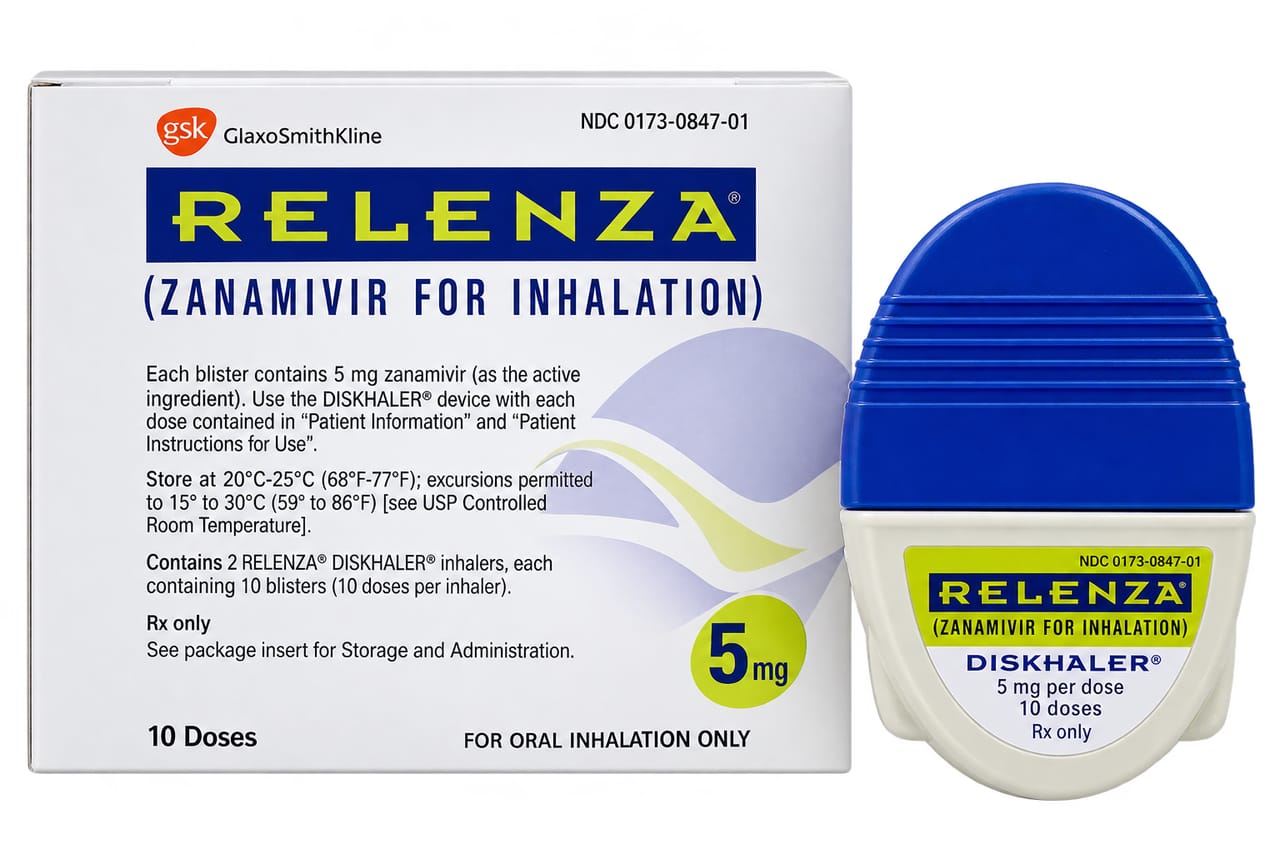
Relenza Inhaler contains zanamivir, an antiviral medicine in the neuraminidase inhibitor class. It is used to treat the flu (influenza A and B) in people whose symptoms started within the last 48 hours, and to help prevent the flu in certain people. It comes as a powder that is inhaled through a special device called a Diskhaler.
What is Relenza Inhaler
Relenza is a prescription medicine that contains zanamivir, an antiviral drug. It is approved to treat the flu (influenza A and B) in people who have had symptoms for no more than 2 days, and to help prevent the flu in certain people. It comes as a powder that you breathe in using a special inhaler called a Diskhaler.
Relenza Inhaler uses
- Treat the flu (influenza A and B virus) in adults and children ages 7 years and older, if flu symptoms started within the last 48 hours
- Help prevent the flu in adults and children ages 5 years and older
Benefits of Relenza Inhaler
- Helps reduce flu symptoms when started early
- May shorten the duration of influenza
- Helps control flu virus replication
- Can help prevent influenza after exposure in eligible people
How Relenza Inhaler works
Relenza works by blocking a protein on the surface of the flu virus called neuraminidase. This protein normally helps release new virus particles so they can spread to other cells. By blocking it, Relenza stops the virus from spreading further in your body.
Relenza Inhaler dosage
Relenza is taken by breathing in the powder through the mouth using the Diskhaler device that comes with the medicine. For treating the flu, doses are usually taken twice a day, about 12 hours apart, for 5 days. For preventing the flu, a dose is usually taken once a day, at the same time each day, for 10 or 28 days depending on the situation.
Try to take doses around the same time each day to keep a steady amount of medicine in your body. If you use an inhaled bronchodilator (like albuterol) at the same time as Relenza, use the bronchodilator first. Keep taking all prescribed doses even if you start feeling better, so the flu virus is fully cleared from your body. Treatment should be started within 48 hours of the first flu symptoms.
Check inside the mouthpiece before each use to make sure it is clear of any objects. Sit in a relaxed position when inhaling and don't hold your breath longer than is comfortable, since some people feel lightheaded or faint afterward; it helps to have someone with you when you take a dose. If prescribed for a child, an adult who has been shown how to use the Diskhaler by a healthcare professional should supervise its use.
| Age group | Dose |
|---|---|
| Under 18 years | 10 mg, twice/day |
| 18–64 years | 10 mg, twice/day |
| 65+ years | 10 mg, twice/day |
Available forms and strengths
- Inhaler
Side effects of Relenza Inhaler
Common
- Bronchitis (irritated airway)
- Cough
- Diarrhea
- Ear, nose, or throat infection
- Headache
- Nausea and vomiting
- Sinusitis (irritated sinuses)
- Dizziness
- Fever or chills
- Joint pain or muscle pain
Serious
- Bronchospasm (tightening of the airway muscles) causing breathing problems, shortness of breath, chest pain or tightness, and cough
- Severe allergic reaction, including swelling of the face, lips, tongue, or throat, trouble breathing, hives, or skin rash that blisters or peels
- Changes in behavior or mental state, such as confusion, hallucinations, delusions, unusual behavior, or seizures
Warnings and precautions
- Relenza can cause sudden, serious breathing problems (bronchospasm), including fatal cases, even in people without a history of breathing problems. It is not recommended for people with asthma or COPD. Stop using it and get emergency help right away if you have worsening breathing, shortness of breath, chest pain or tightness, or cough.
- People with influenza, especially children and teens, may be at higher risk of seizures, confusion, or unusual behavior early in the illness. These events can happen whether or not the flu is treated with Relenza, but should be reported to a doctor right away.
- Relenza can cause serious allergic reactions, including swelling of the face, mouth, or throat, serious skin reactions, and anaphylaxis. Stop the medicine and seek care immediately if this happens.
- Relenza should not be made into a liquid for use in a nebulizer or breathing machine; it must only be used with the Diskhaler device provided. Using it the wrong way has led to serious harm, including a death.
- Do not use Relenza if you've ever had an allergic reaction to it or to milk proteins, since the powder contains lactose that has milk proteins in it.
- Relenza does not replace a yearly flu vaccine, and using it to treat the flu has not been shown to stop you from spreading the virus to others.
- It isn't known for certain if Relenza is safe during pregnancy. Studies in people have not shown a clear increase in birth problems, but there isn't enough information to be fully sure. Talk with your doctor about the risks and benefits if you are pregnant or planning to become pregnant.
- It isn't known whether Relenza passes into breast milk in people. Talk with your doctor about the risks and benefits if you are breastfeeding or planning to breastfeed.
- People with kidney problems should tell their doctor, as this medicine may need extra caution, especially in cases of severe kidney problems.
- There are no known direct interactions between Relenza and alcohol. However, drinking alcohol while you have the flu can make some symptoms, like headache or nausea, worse, and can weaken your body's ability to fight the infection.
- Relenza can affect your alertness or coordination. Don't drive or do other activities that require alertness until you know how this medicine affects you.
Storage
- Store at room temperature below 77°F (25°C)
- May be stored at temperatures from 59°F to 86°F (15°C to 30°C) for short periods, such as while traveling
- Store in a cool, dry place away from moisture, heat, or sunlight; avoid storing in bathrooms or similarly damp areas
- Do not puncture the blister packages (Rotadisk) until you are ready to take a dose using the Diskhaler
- Keep out of the reach of children
- If you no longer need the medicine or it is out of date, take it to a pharmacy for safe disposal; do not use after the expiry date or if packaging looks tampered with
When to see a doctor
- Stop taking Relenza and get emergency medical help right away if you have worsening breathing, shortness of breath, chest pain or tightness, or cough.
- Stop taking Relenza and get emergency help right away if you notice signs of a serious allergic reaction, such as rash or hives, blistering or peeling skin, mouth sores, swelling of the face, eyes, lips, tongue or throat, or trouble breathing.
- Tell your healthcare provider right away if you or your child show confusion, speech problems, shaky movements, seizures, or start hearing voices or seeing things that are not there.
- Call your healthcare provider if you feel worse, develop new symptoms, or your flu symptoms do not start improving during or after treatment.
- If you think you've used too much Relenza, you may need urgent medical attention. Contact your doctor, call a poison control center, or go to the nearest emergency department right away, even if you don't feel unwell.
Alternatives
- Peramivir
- Baloxavir marboxil
- Oseltamivir
Watch the video
FAQs
What is Relenza Inhaler used for?
Relenza is used to treat the flu (influenza A and B) in adults and children ages 7 and older if symptoms started within the last 48 hours, and to help prevent the flu in adults and children ages 5 and older.
How is Relenza Inhaler taken?
Relenza is a powder breathed in through the mouth using a Diskhaler device. For treatment, it's usually taken twice a day about 12 hours apart for 5 days. For prevention, it's usually taken once a day for 10 or 28 days depending on the situation.
What are the serious side effects of Relenza Inhaler?
Serious side effects include bronchospasm causing breathing problems, chest pain, or cough; severe allergic reactions like facial swelling or blistering skin rash; and changes in behavior or mental state such as confusion, hallucinations, or seizures.
Who should not use Relenza Inhaler?
Relenza is not recommended for people with asthma or COPD due to risk of serious breathing problems, and should not be used by anyone allergic to zanamivir or milk proteins, since the powder contains lactose with milk proteins.
Can Relenza Inhaler be used with a nebulizer?
No, Relenza should not be made into a liquid for use in a nebulizer or breathing machine. It must only be used with the Diskhaler device provided, as using it incorrectly has led to serious harm, including a death.
General information, not medical advice
Your prescriber and the leaflet in your pack know your situation. This page does not.
- Follow your prescriber and the leaflet
- Don't start, stop, or change a dose on your own
- Doses and warnings differ by country and product
Sources
Video
Related medicines

Injectafer Injection: Uses, Dosage, Side Effects, Precautions and Alternates
Iron products
Injectafer (ferric carboxymaltose) treats iron deficiency anemia and heart failure-related iron deficiency via IV. Learn uses, dosage, side effects, and

Gliclazide Tablet: Uses, Dosage, Side Effects, Precautions and Alternates
Sulfonylurea (hypoglycemic/antidiabetic agent)
Gliclazide Tablet is a sulfonylurea for type 2 diabetes that boosts insulin release. Learn about dosage, side effects, warnings, and precautions.