
Safety
General information, not medical advice
Your prescriber and the leaflet in your pack know your situation. This page does not.
- Follow your prescriber and the leaflet
- Don't start, stop, or change a dose on your own
- Doses and warnings differ by country and product
Relistor Injection: Uses, Dosage, Side Effects, Precautions and Alternates
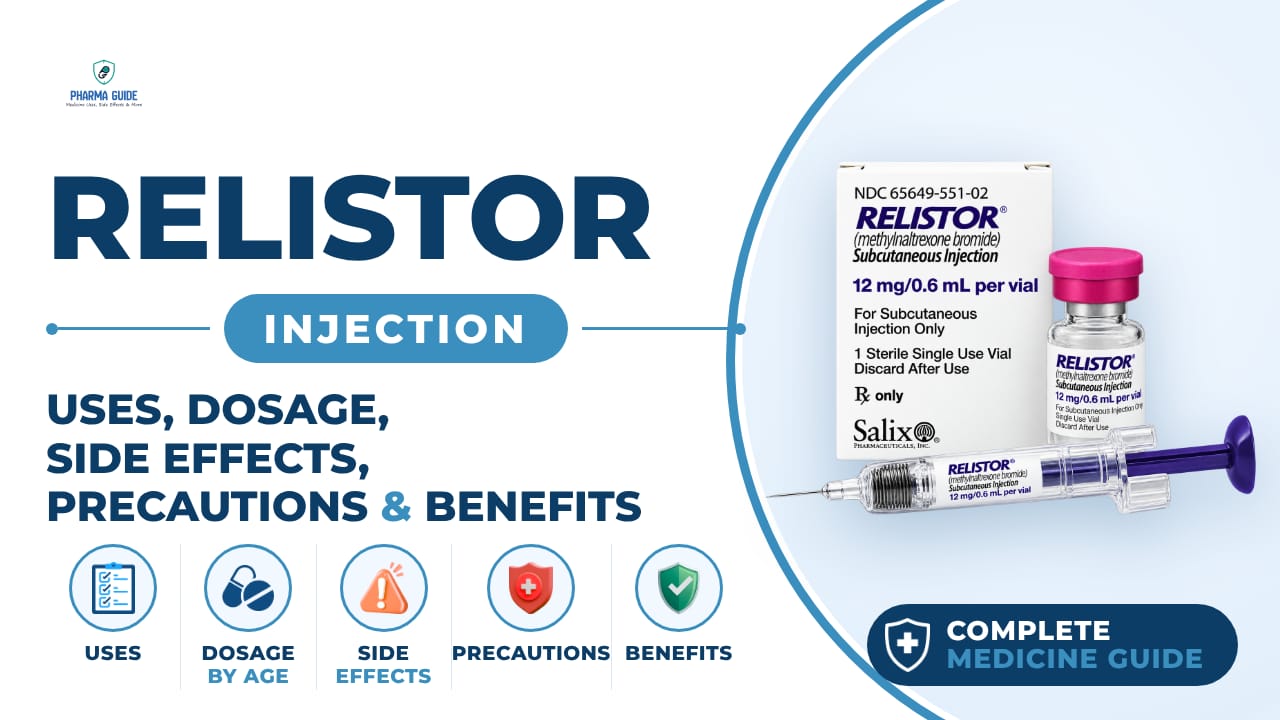
| Generic name | methylnaltrexone (methylnaltrexone bromide) |
|---|---|
| Drug class | Peripheral opioid receptor antagonist (peripherally acting mu-opioid receptor antagonist) |
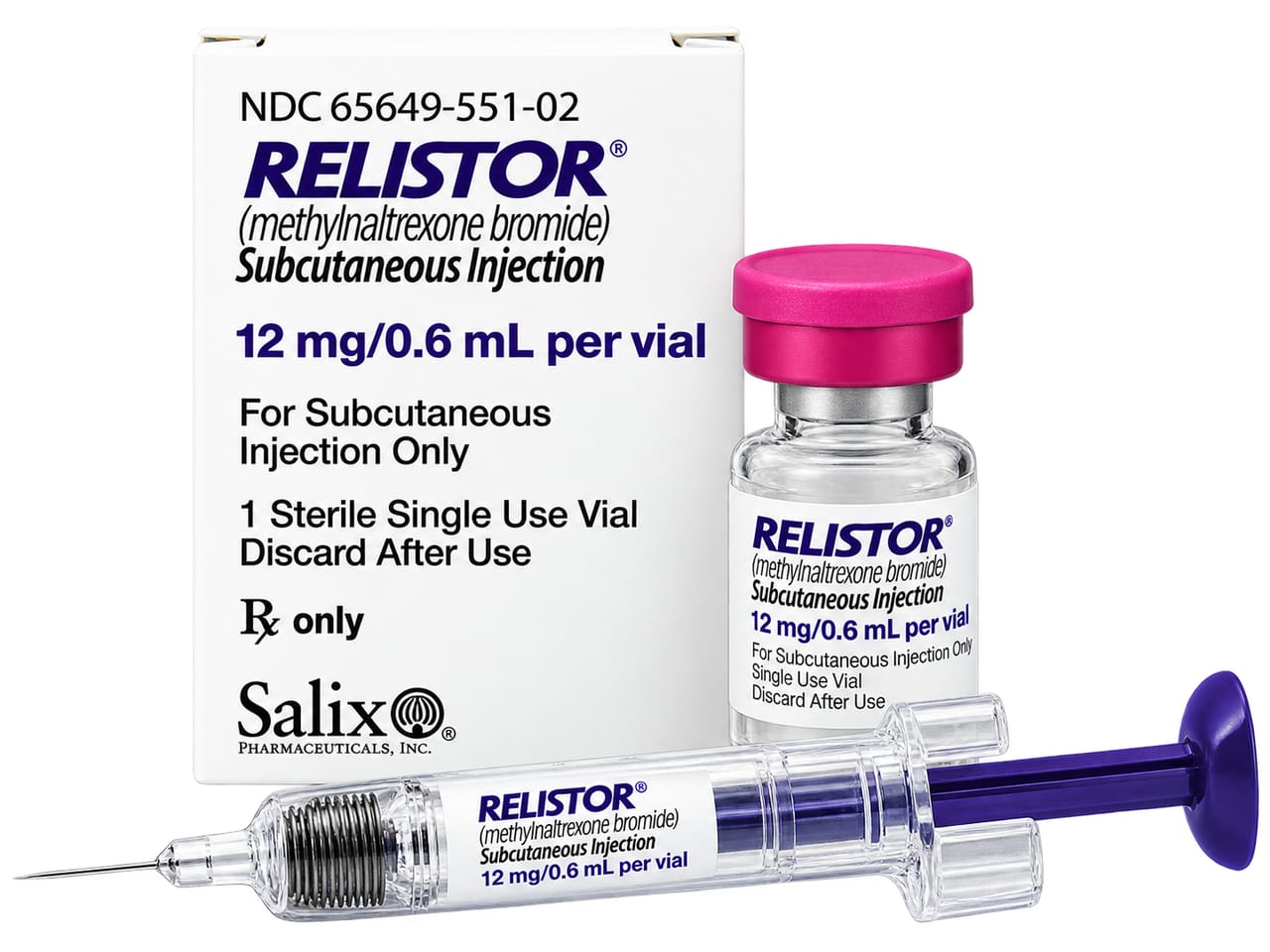
| Forms | Subcutaneous injection (pre-filled syringe or single-dose vial), Oral tablet |
Quick overview
Relistor Injection (methylnaltrexone) is a prescription medicine given as an injection under the skin to treat constipation caused by opioid pain medicines in adults, without reducing the pain-relieving effects of the opioid. It is used for adults with long-lasting pain not caused by cancer, as well as adults with advanced illness or active cancer receiving palliative care, usually after laxatives have not worked well enough. It belongs to a drug class called peripheral opioid receptor antagonists.
What is Relistor Injection
Relistor is a prescription medicine given as an injection under the skin (or as tablets) to treat constipation caused by opioid pain medicines, without reducing the pain-relieving effects of the opioid.
Relistor Injection uses
- Treats constipation caused by opioid pain medicines in adults
- Used in adults with long-lasting pain not caused by cancer
- Used in adults with advanced illness or active cancer who are receiving palliative (comfort) care
- Usually given after laxatives have been tried and have not worked well enough
Benefits of Relistor Injection
- Can produce a bowel movement quickly, often within 30 minutes to a few hours
- Relieves constipation without blocking the pain-relieving effects of opioids
- Specifically targets opioid-induced constipation
- May produce a bowel movement within a few hours in responsive patients
- Helps improve bowel movement frequency
How Relistor Injection works
Relistor blocks opioid medicine from attaching to certain receptors in the gut. Normally opioids attach there and slow down the intestines, making it hard to have a bowel movement. By blocking these receptors in the gut only, Relistor lets bowel movements happen more normally without reducing the pain relief the opioid gives elsewhere in the body.
Relistor Injection dosage
Use this medicine exactly as your doctor prescribes and follow all instructions on your prescription label. Most people should stop taking laxatives before starting this medicine; laxatives can be added back later if needed. Stay near a toilet after your dose, since a bowel movement can happen quickly, often within 30 minutes.
The injection is given under the skin of the upper arm, abdomen, or thigh (for self-injection, use the thigh or abdomen, not the upper arm) as a single dose, usually every other day. A healthcare provider will give the first dose and can teach you how to inject it yourself if needed.
Use a different injection site each time; do not inject into the same spot twice in a row, and avoid tender, bruised, red, or scarred skin or stretch marks. Do not use more than one dose in a 24-hour period.
Check the liquid before injecting; do not use it if it looks cloudy, discolored, or has particles in it. Each vial or pre-filled syringe is for one use only — throw it away after use even if medicine is left inside. If you draw a dose into a syringe but do not use it right away, keep it at room temperature and use it within the time period your healthcare provider recommends.
If you stop taking your opioid pain medicine, you should also stop using this medicine. People aged 65 and older may have a greater chance of some side effects and should talk with their healthcare provider about this.
| Age group | Dose |
|---|---|
| Under 18 years | Safety and effectiveness not established; no approved pediatric dosage |
| 18–64 years | 12 mg subcutaneously once daily for chronic non-cancer pain |
| 65–74 years | 12 mg subcutaneously once daily for chronic non-cancer pain |
| 75 years and older | 12 mg subcutaneously once daily for chronic non-cancer pain |
Available forms and strengths
- Subcutaneous injection (pre-filled syringe or single-dose vial)
- Oral tablet
Side effects of Relistor Injection
Common
- Stomach pain and cramping
- Nausea and vomiting
- Diarrhea
- Gas (flatulence) and bloating
- Dizziness, tremors, or feeling anxious
- Headache and muscle spasms
- Sweating, chills, or hot flashes
- Runny nose
Serious
- Signs of a tear (perforation) in the stomach or intestine wall — severe, persistent, or worsening stomach pain
- Severe or ongoing diarrhea
- Opioid withdrawal symptoms such as anxiety, sweating, chills, yawning, stomach pain, or diarrhea
- Allergic reaction — hives, trouble breathing, swelling of the face, lips, tongue, or throat
- Extreme dizziness or feeling like you might pass out
- Bloody or tarry stools, coughing up blood, or vomit that looks like coffee grounds
- New or worsening nausea or vomiting
Warnings and precautions
- This medicine may cause a tear (perforation) in the wall of the stomach or intestines. Stop using it and get medical help right away if you have severe stomach pain that is persistent or getting worse.
- Do not use this medicine if you have, or your doctor suspects you have, a blockage in your stomach or intestines.
- This medicine can trigger sudden opioid withdrawal symptoms such as anxiety, sweating, chills, yawning, stomach pain, or diarrhea.
- Taking certain other medicines together with this one, such as bevacizumab, NSAIDs, or steroids, may increase the risk of stomach-related side effects.
- Tell your doctor if you are pregnant. Using this medicine during pregnancy is not recommended, and a newborn baby could have withdrawal symptoms if the mother used it while pregnant.
- It is not known if this medicine passes into breast milk. Breastfeeding while using it is not recommended — talk to your doctor.
- Tell your doctor if you have severe kidney disease, since your dose may need to be reduced. Tell your doctor if you have severe liver disease.
- It is not known whether drinking alcohol affects this medicine.
- Be careful driving or using machinery until you know how this medicine affects you, since it may cause dizziness.
Storage
- Store at room temperature, away from moisture, heat, and light
- Do not freeze
- Keep tablets in their original container with the moisture-absorbing packets, if using tablets
- Store injection vials or pre-filled syringes below 30°C, protected from light
- Once drawn into a syringe, use right away or store at room temperature and discard after the time period recommended (do not keep indefinitely)
- Use a needle and syringe only once, then place them in a puncture-proof sharps container
- Follow your local rules for disposing of the sharps container, and keep it out of reach of children and pets
- If you no longer need the medicine or it is out of date, take it to a pharmacy for safe disposal
When to see a doctor
- Stop using this medicine and get medical help right away if you have severe stomach pain that is persistent or getting worse.
- Stop using this medicine and call your doctor if you have severe or ongoing diarrhea.
- Get emergency medical help right away if you have signs of a serious allergic reaction, such as hives, difficulty breathing, or swelling of the face, lips, tongue, or throat.
- If you think you have used too much, get urgent medical attention right away, even if you feel fine, and be careful when standing up since your blood pressure may be affected.
Alternatives
- Bisacodyl
- Senna
- Amitiza
- Movantik
Watch the video
FAQs
What is Relistor Injection used for?
It treats constipation caused by opioid pain medicines in adults, including those with long-lasting non-cancer pain and those with advanced illness or active cancer receiving palliative care, usually after laxatives have not worked well enough.
How fast does Relistor Injection work?
It can produce a bowel movement quickly, often within 30 minutes to a few hours, so you should stay near a toilet after your dose.
How is Relistor Injection given?
It is injected under the skin of the upper arm, abdomen, or thigh as a single dose, usually every other day, using a different injection site each time, and no more than one dose in 24 hours.
What are the serious side effects of Relistor Injection?
Serious side effects include signs of a stomach or intestinal tear such as severe worsening stomach pain, severe or ongoing diarrhea, opioid withdrawal symptoms, allergic reaction, extreme dizziness, and bloody or tarry stools.
Can I use Relistor Injection if I stop taking opioids?
No, if you stop taking your opioid pain medicine, you should also stop using Relistor.
General information, not medical advice
Your prescriber and the leaflet in your pack know your situation. This page does not.
- Follow your prescriber and the leaflet
- Don't start, stop, or change a dose on your own
- Doses and warnings differ by country and product
Sources
Video
Related medicines

Injectafer Injection: Uses, Dosage, Side Effects, Precautions and Alternates
Iron products
Injectafer (ferric carboxymaltose) treats iron deficiency anemia and heart failure-related iron deficiency via IV. Learn uses, dosage, side effects, and

Gliclazide Tablet: Uses, Dosage, Side Effects, Precautions and Alternates
Sulfonylurea (hypoglycemic/antidiabetic agent)
Gliclazide Tablet is a sulfonylurea for type 2 diabetes that boosts insulin release. Learn about dosage, side effects, warnings, and precautions.