
Safety
General information, not medical advice
Your prescriber and the leaflet in your pack know your situation. This page does not.
- Follow your prescriber and the leaflet
- Don't start, stop, or change a dose on your own
- Doses and warnings differ by country and product
Relpax Tablet: Uses, Dosage, Side Effects, Precautions and Alternates
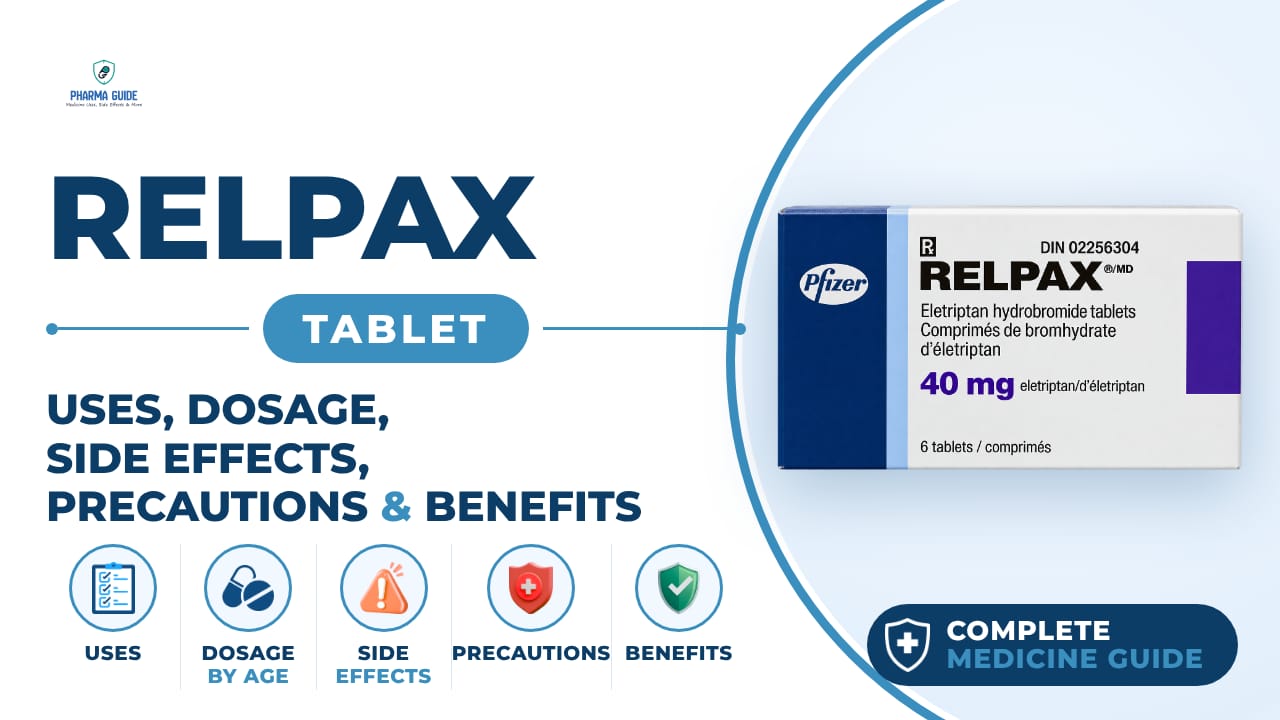
| Generic name | eletriptan |
|---|---|
| Drug class | triptan (serotonin receptor agonist) |
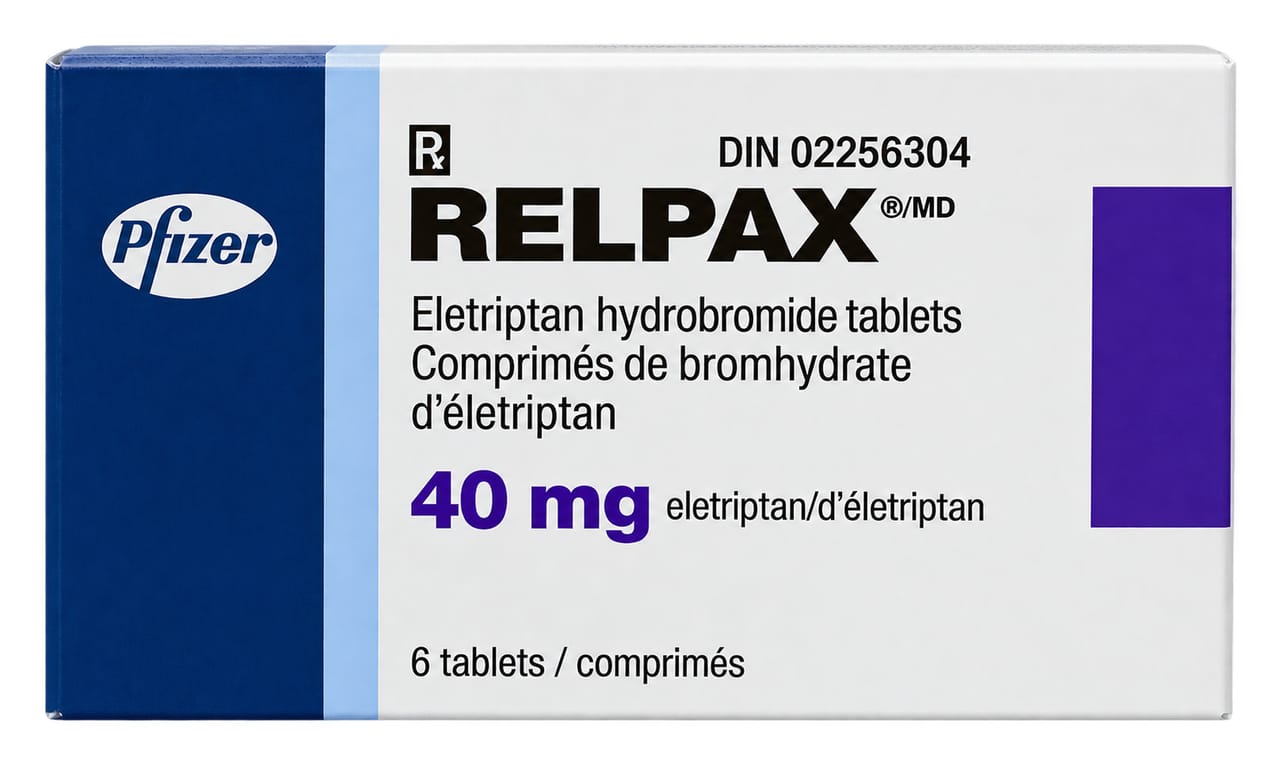
| Forms | Oral tablet (film-coated), 20 mg tablets, 40 mg tablets |
Quick overview
Relpax Tablet contains eletriptan, a medicine belonging to the triptan class, also known as serotonin receptor agonists. It is a prescription medicine used to treat acute migraine attacks, including the headache, nausea, and light and sound sensitivity that come with them. Relpax works by narrowing swollen blood vessels around the brain and blocking nerve signals responsible for migraine symptoms. It is available as 20 mg and 40 mg film-coated tablets.
What is Relpax Tablet
Relpax is a prescription medicine used to treat migraine attacks. It contains eletriptan and belongs to a group of medicines called triptans, or serotonin receptor agonists.
Relpax Tablet uses
- Acute migraine with aura
- Acute migraine without aura
- Migraine-related headache
- Migraine-related nausea
- Migraine-associated sensitivity to light and sound
Benefits of Relpax Tablet
- Relieves migraine pain
- Reduces headache severity
- Helps relieve nausea associated with migraine
- Helps reduce sensitivity to light and sound
- Improves ability to carry out daily activities
How Relpax Tablet works
Relpax works by narrowing blood vessels around the brain that become swollen during a migraine, which eases the pain. It also blocks nerve signals that cause symptoms like nausea and sensitivity to light and sound.
Relpax Tablet dosage
Take Relpax as soon as possible after the start of a migraine attack, but only during the headache phase, not to prevent an attack. Swallow the tablet whole with a drink of water, with or without food. If the first tablet does not relieve your migraine, do not take a second tablet for the same attack. If your migraine is relieved and then comes back, you may take a second tablet, but wait at least 2 hours between doses. Do not take a second dose within 2 hours of the first dose.
Relpax is not recommended for children and adolescents under 18 years or for patients over 65 years of age. People with kidney problems should not take more than one tablet per dose unless told otherwise by a doctor. Keep a journal or app to track migraine attacks and when you take the medicine.
| Age group | Dose |
|---|---|
| Under 18 years | Not recommended |
| 18–64 years | 20–40 mg, once/day |
| 65+ years | Not recommended |
Available forms and strengths
- Oral tablet (film-coated)
- 20 mg tablets
- 40 mg tablets
Side effects of Relpax Tablet
Common
- Dizziness
- Drowsiness/feeling sleepy
- Nausea
- Feeling weak or tired (asthenia)
- Headache
- Tingling or pins and needles sensation
- Dry mouth
- Indigestion or upset stomach
- Stomach or abdominal pain
- Chest tightness or pressure
- Flushing
- Sweating
- Chills
- Back pain
- Muscle pain or stiffness
- Sore or tight throat, trouble swallowing
- Palpitations or increased heart rate
Serious
- Severe allergic reaction (swelling of face, lips, tongue or throat, difficulty breathing, rash, hives, itching)
- Chest pain, pressure, or tightness that may spread to arm, neck, jaw, or back (possible heart attack)
- Stroke symptoms: sudden weakness on one side of the body, trouble speaking, confusion, severe headache
- Abnormal or irregular heartbeat
- Serotonin syndrome: agitation, confusion, hallucinations, fast heart rate, high blood pressure, sweating, fever, muscle twitching or stiffness, seizures
- Severely high blood pressure: sudden severe headache, chest pain, vision changes, nosebleed
- Reduced blood flow to hands, feet, legs, or gut: pain, numbness, or color changes in fingers or toes; cramping or pain in legs; sudden severe stomach pain or bloody diarrhea
- Medication overuse headache (headaches becoming more frequent or severe with overuse)
Warnings and precautions
- Do not take Relpax if you have severe liver or kidney disease, moderate to severe high blood pressure, or untreated mild high blood pressure.
- Do not take Relpax if you have ever had heart problems such as heart attack, angina, heart failure, or significant abnormal heart rhythm, poor circulation, or a stroke, even a mild one.
- Do not take Relpax if you have taken ergotamine or similar medicines within 24 hours before or after, or if you are taking another triptan medicine.
- Repeated use of Relpax or other migraine medicines over days or weeks can cause daily long-term headaches (medication overuse headache). Tell your doctor if this happens, as you may need to stop treatment for a while.
- Relpax should not be taken for certain migraine types, like hemiplegic or basilar migraine, due to a higher stroke risk, and should not be used if you have never been diagnosed with migraine by a doctor.
- Taking certain medicines such as antidepressants (SSRIs or SNRIs), St John's Wort, certain antifungals, certain antibiotics, or HIV medicines together with Relpax may cause serious side effects, including serotonin syndrome.
- It is not known if Relpax is safe during pregnancy. Tell your doctor if you are or plan to become pregnant before taking this medicine.
- Relpax can pass into breast milk. It is recommended to avoid breastfeeding for 24 hours after taking a dose.
- People with mild or moderate kidney problems can use this medicine, but should not take more than one tablet per dose unless a doctor advises otherwise. It should not be used by people with severe kidney disease.
- This medicine can be used in people with mild or moderate liver problems without a dose change, but should not be used by people with severe liver disease.
- Alcohol is not known to interact directly with Relpax, but it can trigger or worsen migraine attacks, so it's best to avoid alcohol, especially during a headache.
- Relpax or the migraine itself may make you sleepy or dizzy, so avoid driving or using machinery during a migraine attack or after taking this medicine until you know how it affects you.
Storage
- Store below 30°C
- Store in a cool dry place away from moisture, heat or sunlight, for example not in the bathroom, near a sink, in the car, or on window sills
- Keep the container tightly closed when not in use to protect from moisture (bottles)
- Keep out of the sight and reach of children
- Do not use after the expiry date
- Do not throw away medicine via wastewater or household waste; ask your pharmacist how to dispose of medicines you no longer use
- Take unwanted medicine to any pharmacy for safe disposal
When to see a doctor
- Get emergency help right away for signs of a severe allergic reaction, such as swelling of the face, lips, tongue, or throat, trouble breathing or swallowing, or widespread rash or itching.
- Seek emergency care for chest pain or tightness that may spread to the arm, neck, jaw or back, a fast or irregular heartbeat, trouble breathing, or sudden weakness, confusion, or trouble speaking, which could be signs of a heart attack or stroke.
- Get emergency help for signs of serotonin syndrome, including restlessness, hallucinations, loss of coordination, fast heartbeat, high body temperature, rapid blood pressure changes, and overactive reflexes.
- Call your doctor right away if you become pregnant, if your migraine headache lasts longer than 24 hours, if your symptom pattern changes, or if the headache feels different or worse than your usual migraine.
- Seek medical help for severe or sudden stomach pain, bloody diarrhea, or changes in color, temperature, or sensation in fingers or toes, which may mean reduced blood flow to the gut or limbs.
- If you think you or someone else has taken too much Relpax, get urgent medical attention right away, even if there are no signs of discomfort, since serious heart problems can occur after an overdose.
Alternatives
- Naratriptan
- Rizatriptan
- Sumatriptan
Watch the video
FAQs
What is Relpax Tablet used for?
Relpax is used to treat acute migraine attacks, including migraine with or without aura, headache, nausea, and sensitivity to light and sound.
How does Relpax Tablet work?
Relpax works by narrowing swollen blood vessels around the brain, which eases migraine pain, and blocks nerve signals that cause symptoms like nausea and sensitivity to light and sound.
How should I take Relpax Tablet?
Take Relpax as soon as possible after a migraine starts, swallowing the tablet whole with water, with or without food. If the first tablet doesn't help, do not take a second one for the same attack. If the migraine returns after improving, you may take a second dose, but wait at least 2 hours between doses.
What are the common side effects of Relpax Tablet?
Common side effects include dizziness, drowsiness, nausea, weakness, headache, tingling sensations, dry mouth, indigestion, stomach pain, chest tightness, flushing, sweating, and muscle pain.
Who should not take Relpax Tablet?
Relpax should not be taken by people with severe liver or kidney disease, moderate to severe high blood pressure, a history of heart problems or stroke, or those taking ergotamine or another triptan medicine. It is also not recommended for people under 18 or over 65 years old.
General information, not medical advice
Your prescriber and the leaflet in your pack know your situation. This page does not.
- Follow your prescriber and the leaflet
- Don't start, stop, or change a dose on your own
- Doses and warnings differ by country and product
Sources
Video
Related medicines

Injectafer Injection: Uses, Dosage, Side Effects, Precautions and Alternates
Iron products
Injectafer (ferric carboxymaltose) treats iron deficiency anemia and heart failure-related iron deficiency via IV. Learn uses, dosage, side effects, and

Gliclazide Tablet: Uses, Dosage, Side Effects, Precautions and Alternates
Sulfonylurea (hypoglycemic/antidiabetic agent)
Gliclazide Tablet is a sulfonylurea for type 2 diabetes that boosts insulin release. Learn about dosage, side effects, warnings, and precautions.