
Safety
General information, not medical advice
Your prescriber and the leaflet in your pack know your situation. This page does not.
- Follow your prescriber and the leaflet
- Don't start, stop, or change a dose on your own
- Doses and warnings differ by country and product
Remdesivir Injection: Uses, Dosage, Side Effects, Precautions and Alternates
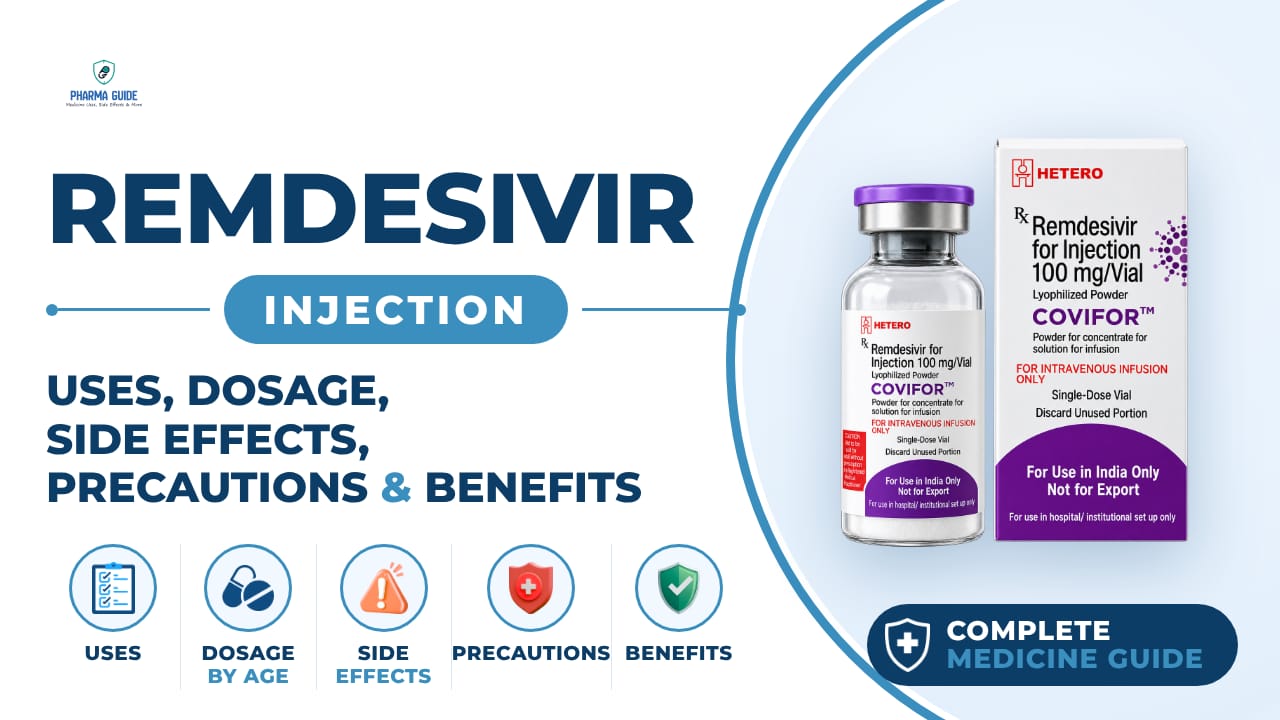
| Generic name | remdesivir |
|---|---|
| Drug class | Purine nucleosides; antivirals for systemic use, direct acting antivirals (ATC code: J05AB16) |
| Forms | Powder for concentrate for solution for infusion (intravenous), Intravenous solution (5 mg/mL) |
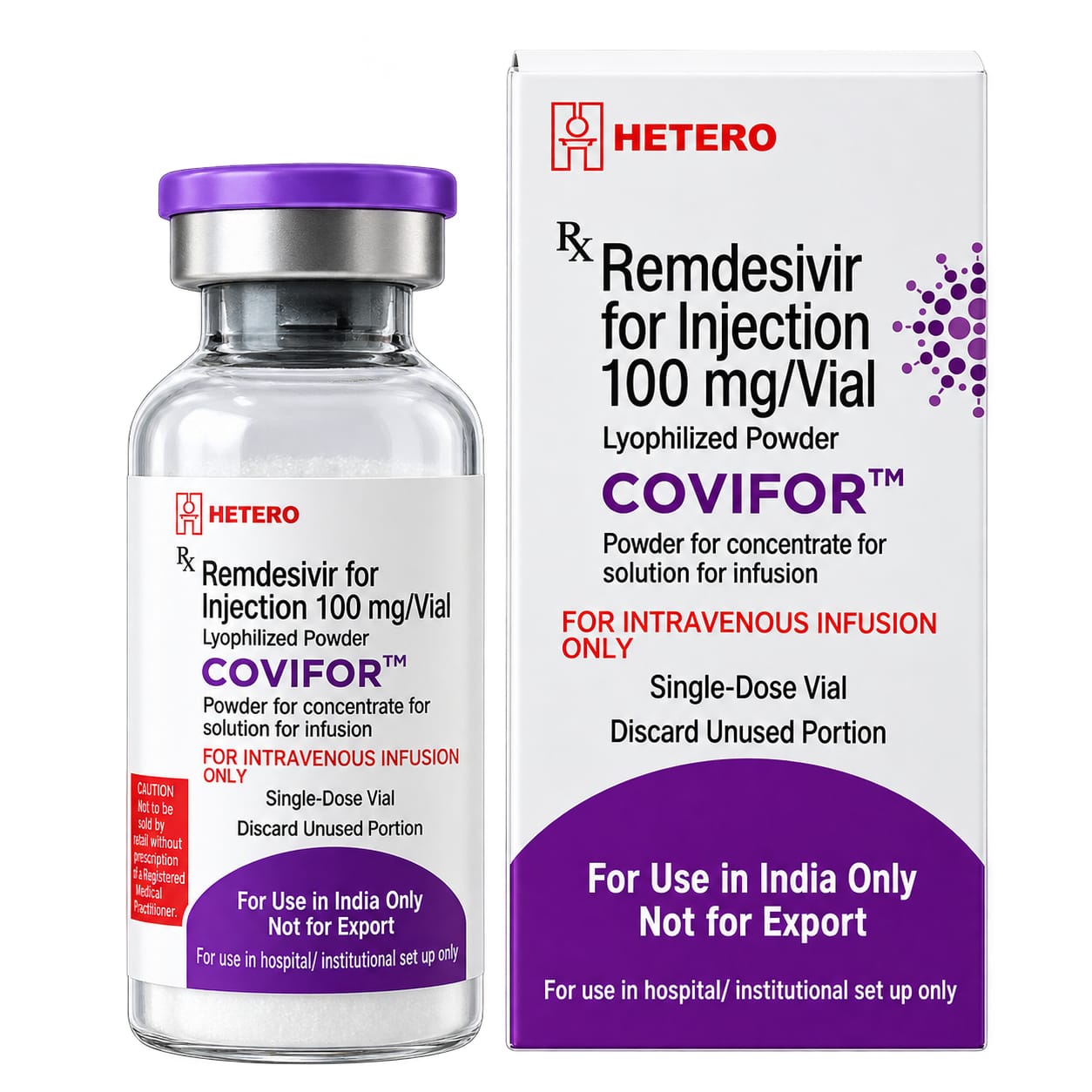
Quick overview
Remdesivir Injection (Veklury) is an antiviral medicine given by IV infusion to treat COVID-19. It works by stopping the coronavirus from multiplying in the body. It is used in eligible adults and children with COVID-19 pneumonia who need extra oxygen, as well as in certain non-hospitalized patients at increased risk of severe disease. It is given once daily by a healthcare professional, with monitoring for allergic reactions and regular blood tests.
What is Remdesivir Injection
Remdesivir Injection, also known as Veklury, is an antiviral medicine containing remdesivir. It belongs to the drug class of purine nucleosides and direct-acting antivirals for systemic use. It is given by IV infusion to treat COVID-19 and works by stopping the coronavirus from multiplying in the body.
Remdesivir Injection uses
- Treating COVID-19 in adults and children at least 4 weeks old and weighing at least 3 kg who have pneumonia and need extra oxygen to help them breathe, but are not on invasive mechanical ventilation at the start of treatment
- Treating COVID-19 in adults and children weighing at least 40 kg who do not need extra oxygen but are at increased risk of their COVID-19 becoming severe
Benefits of Remdesivir Injection
- Treats COVID-19
- Helps reduce progression to severe disease in eligible patients
- Can be used in hospitalized and selected non-hospitalized patients
- Approved for eligible pediatric and adult patients
- Useful when some oral antivirals are unsuitable
How Remdesivir Injection works
Remdesivir is changed inside the body's cells into an active form that blocks the enzyme the coronavirus uses to copy its genetic material (RNA), which stops the virus from multiplying.
Remdesivir Injection dosage
This medicine is given by a doctor or nurse as a drip into a vein (intravenous infusion) lasting 30 to 120 minutes, once a day. You will be closely monitored during and after your treatment for allergic reactions. Slower infusion rates, with a maximum infusion time of up to 120 minutes, can be used to help prevent infusion reactions. It must not be given as a muscle injection.
Blood tests to check liver and kidney function, and how quickly your blood clots, will be done before and during treatment. No dose adjustment is needed for people over 65 years of age or for people with kidney problems, including those on dialysis. Treatment length depends on whether you are hospitalized and how severe your illness is, and may be extended if there is no improvement.
| Age group | Dose |
|---|---|
| Birth–17 years, 1.5 kg to <40 kg | 5 mg/kg on Day 1, then 2.5 mg/kg once daily from Day 2 |
| Children/adolescents ≥40 kg | 200 mg on Day 1, then 100 mg once daily from Day 2 |
| Adults 18–64 years | 200 mg on Day 1, then 100 mg once daily from Day 2 |
Available forms and strengths
- Powder for concentrate for solution for infusion (intravenous)
- Intravenous solution (5 mg/mL)
Side effects of Remdesivir Injection
Common
- Headache
- Nausea (feeling sick)
- Rash
- Increased liver enzymes (transaminases) shown on blood tests
- Blood tests may show it takes longer for blood to clot (prolonged prothrombin time)
Serious
- Allergic reactions during or after the infusion, including changes in blood pressure or heart rate, low oxygen levels, high temperature, shortness of breath or wheezing, swelling of the face, lips, tongue or throat, sweating, and shivering
- Anaphylactic reactions or anaphylactic shock (sudden life-threatening allergic reaction)
- Liver problems, including loss of appetite, nausea, vomiting, stomach pain, tiredness, itching, dark urine, clay-colored stools, and jaundice
- Sinus bradycardia (heart beating more slowly than normal)
Warnings and precautions
- Do not take chloroquine or hydroxychloroquine at the same time as remdesivir, since this may make remdesivir less effective against the virus.
- This medicine should only be used where severe allergic reactions, including anaphylaxis, can be treated if they occur.
- Remdesivir should not be started in patients whose liver enzyme (ALT) levels are already very high, and should be stopped if ALT rises too much or if there are signs of liver inflammation during treatment.
- It isn't known if children under 4 weeks old or weighing less than 3 kg can safely receive this medicine, so it isn't given to them.
- This medicine contains a notable amount of sodium, which may be relevant for people on a controlled sodium diet.
- There isn't enough information to be sure remdesivir is safe in pregnancy. It will only be given if the possible benefits outweigh the possible risks to the mother and unborn baby, and effective contraception should be used during treatment.
- It isn't known whether remdesivir passes into human breast milk or what effect it could have on a breastfeeding baby or on milk production. Your doctor will help you weigh the benefits of breastfeeding against the benefits of treatment.
- No dose change is needed for people with kidney problems, including those on dialysis, but safety data for people with severe kidney problems or kidney failure are limited, so these patients will be closely watched for side effects.
- Your liver function will be checked before starting and during treatment. Remdesivir may be used in people with liver problems only if the benefits are thought to outweigh the risks, since it hasn't been specifically studied in this group.
- No major direct interaction with alcohol is established; avoiding alcohol while acutely ill is generally advisable.
- Remdesivir is not expected to affect your ability to drive or use machines.
Storage
- Before use, this medicine does not require any special storage conditions
- Keep out of the sight and reach of children
- Do not use after the expiry date shown on the label and carton
- Once reconstituted, the medicine should be diluted immediately
- Once diluted, the solution should be used immediately; if needed, it can be stored for up to 24 hours below 25°C, or up to 48 hours in a refrigerator (2°C–8°C)
- Do not allow more than 48 hours between dilution and administration
- Do not throw away medicines via wastewater or household waste; ask your pharmacist how to dispose of medicines no longer used
When to see a doctor
- Tell your doctor or nurse straight away if you notice signs of an allergic reaction during or after the infusion, such as changes in blood pressure or heart rate, low oxygen levels, high temperature, shortness of breath, wheezing, swelling of the face, lips, tongue or throat, rash, nausea, vomiting, sweating, or shivering.
- Get emergency medical help if you have signs of a serious allergic reaction, such as hives, difficulty breathing, or swelling of your face, lips, tongue, or throat.
- Call your doctor right away if you notice signs of liver problems, such as loss of appetite, nausea, vomiting, stomach pain, tiredness, itching, dark urine, clay-colored stools, or yellowing of the skin or eyes.
Alternatives
- Paxlovid (nirmatrelvir + ritonavir)
- Molnupiravir for eligible adults
- Other clinician-selected COVID-19 antiviral treatment
Watch the video
FAQs
What is Remdesivir Injection used for?
It treats COVID-19 in eligible adults and children with pneumonia who need extra oxygen (but are not on invasive mechanical ventilation), and in certain non-hospitalized patients at increased risk of severe disease who do not need extra oxygen.
How is Remdesivir Injection given?
It is given by a doctor or nurse as an IV infusion into a vein, lasting 30 to 120 minutes, once a day, with close monitoring for allergic reactions during and after treatment.
What are the common side effects of Remdesivir Injection?
Common side effects include headache, nausea, rash, increased liver enzymes, and blood tests showing it takes longer for blood to clot.
Can Remdesivir Injection be taken with chloroquine or hydroxychloroquine?
No, chloroquine or hydroxychloroquine should not be taken at the same time as remdesivir, since this may make remdesivir less effective against the virus.
Is Remdesivir Injection safe during pregnancy?
There isn't enough information to be sure it is safe in pregnancy. It will only be given if the possible benefits outweigh the possible risks, and effective contraception should be used during treatment.
General information, not medical advice
Your prescriber and the leaflet in your pack know your situation. This page does not.
- Follow your prescriber and the leaflet
- Don't start, stop, or change a dose on your own
- Doses and warnings differ by country and product
Sources
Video
Related medicines

Injectafer Injection: Uses, Dosage, Side Effects, Precautions and Alternates
Iron products
Injectafer (ferric carboxymaltose) treats iron deficiency anemia and heart failure-related iron deficiency via IV. Learn uses, dosage, side effects, and

Gliclazide Tablet: Uses, Dosage, Side Effects, Precautions and Alternates
Sulfonylurea (hypoglycemic/antidiabetic agent)
Gliclazide Tablet is a sulfonylurea for type 2 diabetes that boosts insulin release. Learn about dosage, side effects, warnings, and precautions.