
Safety
General information, not medical advice
Your prescriber and the leaflet in your pack know your situation. This page does not.
- Follow your prescriber and the leaflet
- Don't start, stop, or change a dose on your own
- Doses and warnings differ by country and product
Remeron Tablet: Uses, Dosage, Side Effects, Precautions and Alternates
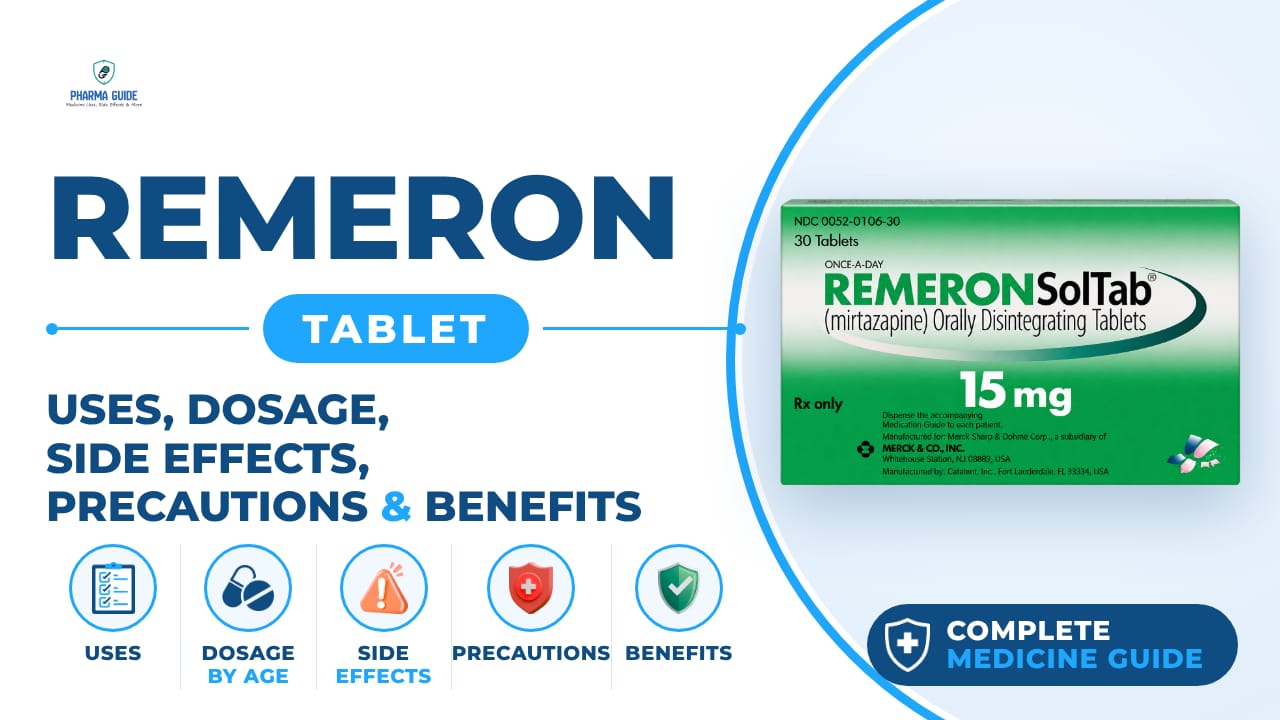
| Generic name | mirtazapine |
|---|---|
| Drug class | tetracyclic antidepressant |
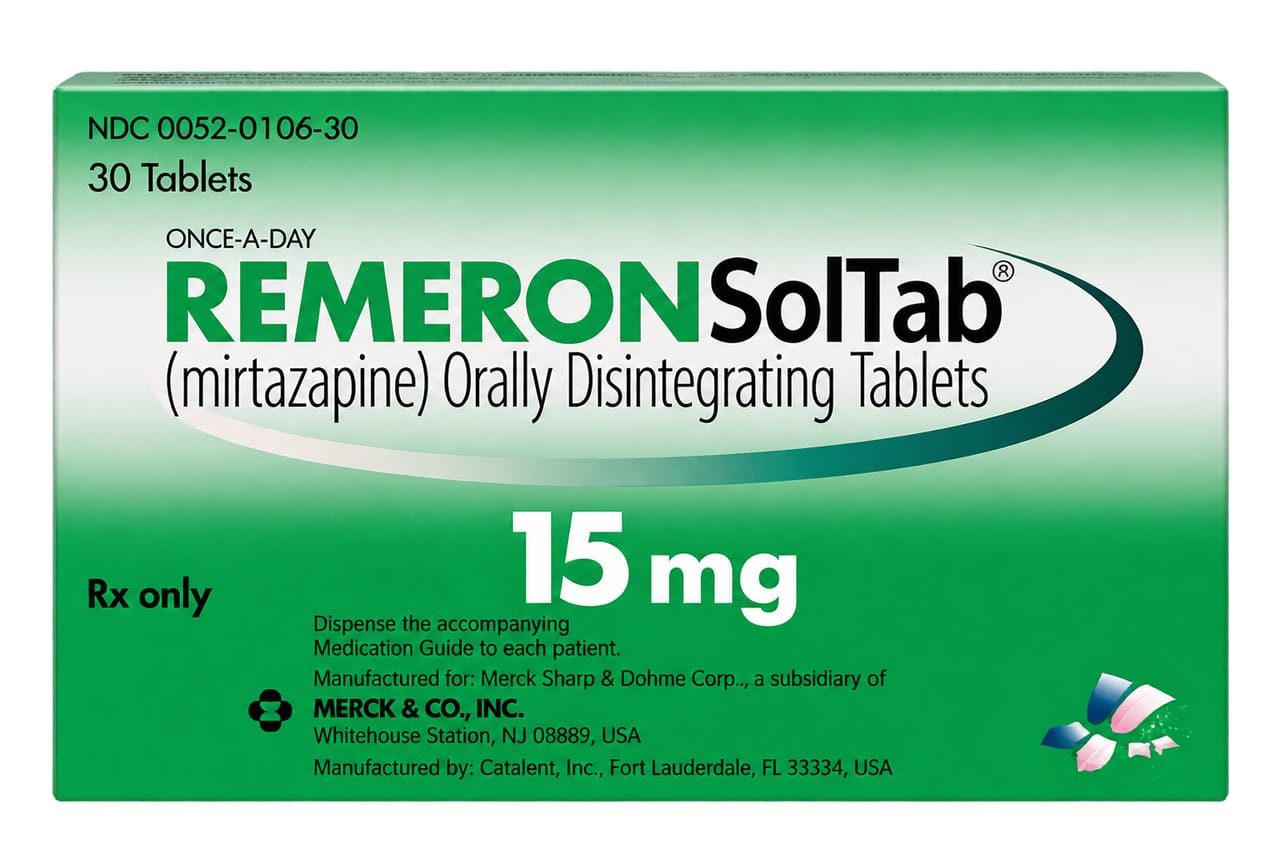
| Forms | Tablets (15 mg, 30 mg, 45 mg), Orally disintegrating tablets (15 mg, 30 mg, 45 mg) |
Quick overview
Remeron Tablet (mirtazapine) is a tetracyclic antidepressant used to treat major depressive disorder in adults. It works by affecting brain chemicals called serotonin and norepinephrine. It may help improve sleep and appetite and may carry a lower likelihood of sexual side effects than some other antidepressants. Common side effects include drowsiness, dry mouth, and weight gain, while serious risks include serotonin syndrome and low white blood cell count.
What is Remeron Tablet
Remeron belongs to a group of medicines known as antidepressants. It is used to relieve symptoms of depression. It works differently from many other antidepressants by affecting brain chemicals called serotonin and norepinephrine.
Remeron Tablet uses
- Treatment of major depressive disorder (MDD) in adults
Benefits of Remeron Tablet
- May improve sleep and appetite
- May have a lower likelihood of sexual side effects than some other antidepressants
How Remeron Tablet works
The way Remeron works is not fully known, but it is thought to increase the activity of certain brain chemicals, serotonin and norepinephrine, which may help relieve depression.
Remeron Tablet dosage
Take REMERON as a single dose each day, preferably in the evening before sleep. Take at the same time each day. It can be taken with or without food. Swallow the tablet with water; do not chew it.
REMERONSolTab (orally disintegrating tablet) should be removed from the blister pack right before use, placed on the tongue, and allowed to dissolve without chewing or crushing; do not try to split it.
It may take one to four weeks to notice improvement in symptoms; keep taking the medicine even if you feel well unless your doctor tells you to stop. Do not increase or decrease your dose without talking to your doctor.
If you miss a dose, take it as soon as you remember unless it is close to your next scheduled dose, in which case skip the missed dose; never take a double dose.
Do not stop taking this medicine suddenly; your doctor will usually lower your dose gradually over time. Elderly patients and those with liver or kidney problems may be started on lower doses with careful monitoring.
| Age group | Dose |
|---|---|
| Under 18 Years | Not recommended unless prescribed by a doctor |
| 18–64 Years (Adults) | Usually 15 mg once daily; may increase to 30–45 mg/day |
| 65+ Years (Older Adults) | Usually 15 mg once daily; dose adjusted based on response and health condition |
Available forms and strengths
- Tablets (15 mg, 30 mg, 45 mg)
- Orally disintegrating tablets (15 mg, 30 mg, 45 mg)
Side effects of Remeron Tablet
Common
- Drowsiness/sleepiness
- Dry mouth
- Increased appetite
- Weight gain
- Constipation
- Dizziness
- Asthenia (weakness)
- Abnormal dreams
- Tremor
- Confusion
- Urinary frequency
Serious
- Severe allergic reactions such as rash, swelling, or difficulty breathing
- Signs of serotonin syndrome, including agitation, rapid heart rate, high fever, or muscle stiffness
- Unusual bleeding or bruising
- Seizures (convulsions)
- Thoughts of self-harm or worsening depression
- Agranulocytosis or low white blood cell count (signs include fever, chills, sore throat, mouth sores)
- Abnormal heart rhythm, QT prolongation, or Torsade de Pointes (may cause fainting or palpitations)
- Severe skin reactions such as Stevens-Johnson syndrome, toxic epidermal necrolysis, or erythema multiforme
- Low sodium levels in the blood (hyponatremia)
- Activation of mania or hypomania
- Liver problems, including jaundice
- Angle-closure glaucoma (eye pain, vision changes, eye redness or swelling)
- Rhabdomyolysis (severe muscle breakdown)
Warnings and precautions
- Antidepressants can increase the risk of suicidal thoughts and behavior in children, teenagers, and young adults, especially in the first few months of treatment or after a dose change. Watch closely for new or worsening depression, unusual behavior changes, or thoughts of suicide.
- Do not take this medicine together with, or within 14 days of stopping, a monoamine oxidase inhibitor (MAOI), as this combination can cause a serious and sometimes fatal reaction.
- This medicine can rarely cause a serious drop in white blood cells (agranulocytosis). Contact your doctor right away if you develop fever, chills, sore throat, or mouth sores.
- This medicine can cause a potentially life-threatening condition called serotonin syndrome, especially when combined with other medicines that affect serotonin.
- Do not stop taking this medicine suddenly, as this can cause withdrawal-like symptoms such as dizziness, nausea, headache, and anxiety.
- This medicine may cause an eye problem called angle-closure glaucoma in people with certain eye anatomy.
- This medicine may cause an abnormal heart rhythm (QT prolongation) which can be serious, especially in people with heart conditions or those taking other medicines that affect heart rhythm.
- Before starting this medicine, tell your doctor if you or your family have a history of bipolar disorder, mania, or hypomania, as antidepressants can trigger manic episodes.
- REMERONSolTab (the dissolving tablet form) contains phenylalanine and should be avoided by people with phenylketonuria (PKU).
- Safe use of Remeron during pregnancy has not been established. Talk to your doctor about the risks and benefits if you are pregnant or planning to become pregnant. Use late in pregnancy may cause temporary complications in the newborn.
- Mirtazapine passes into breast milk in small amounts. Talk to your doctor about the risks and benefits of breastfeeding while taking this medicine.
- People with moderate to severe kidney problems may need a lower dose because the drug is not cleared from the body as quickly.
- People with liver problems may need a lower dose and should be monitored carefully, as the drug can build up more in the body.
- Do not drink alcohol while taking this medicine, as it can worsen drowsiness and impair thinking and coordination.
- This medicine can cause drowsiness. Do not drive or operate machinery until you know how it affects you.
Storage
- Store at controlled room temperature, 15°C to 30°C (59°F to 86°F).
- Protect from light and moisture.
- Dispense in a tight, light-resistant container.
- Keep out of the reach and sight of children.
- Do not use after the expiry date on the package.
- Do not flush medications down the toilet or pour them into a drain unless instructed to do so; properly discard when expired or no longer needed.
When to see a doctor
- Get emergency help right away if you have symptoms of a severe allergic reaction, such as rash, hives, swelling, or trouble breathing.
- Seek emergency care if you have signs of serotonin syndrome, such as agitation, hallucinations, confusion, fast heart rate, high fever, muscle stiffness or twitching, loss of coordination, or severe nausea, vomiting, or diarrhea.
- Contact your doctor right away if you notice signs of infection such as fever, chills, sore throat, or mouth or nose sores, since this medicine can rarely cause a drop in white blood cells.
- Get medical help right away if you feel faint, lose consciousness, or have heart palpitations, as these could be signs of a serious heart rhythm problem.
- Call your doctor immediately if you or a family member notices new or worsening depression, anxiety, agitation, irritability, aggressive or violent behavior, or thoughts of suicide or self-harm.
- Seek medical care if you experience symptoms of low sodium in the blood, such as headache, confusion, memory problems, weakness, or unsteadiness, which could lead to falls, seizures, or fainting.
- If you suspect an overdose, seek emergency medical help immediately, even if you do not have symptoms yet.
- Contact your doctor if you have eye pain, vision changes, or swelling or redness in or around the eye.
Alternatives
- Trazodone
- Escitalopram
- Venlafaxine
Watch the video
FAQs
What is Remeron Tablet used for?
Remeron Tablet is used for the treatment of major depressive disorder (MDD) in adults.
How should I take Remeron Tablet?
Take it as a single dose each day, preferably in the evening before sleep, at the same time daily. It can be taken with or without food; swallow the tablet with water without chewing it.
What are the common side effects of Remeron Tablet?
Common side effects include drowsiness, dry mouth, increased appetite, weight gain, constipation, dizziness, weakness, abnormal dreams, tremor, confusion, and urinary frequency.
Can I stop taking Remeron Tablet suddenly?
No, you should not stop suddenly, as this can cause withdrawal-like symptoms such as dizziness, nausea, headache, and anxiety. Your doctor will usually lower your dose gradually.
What are alternatives to Remeron Tablet?
Alternatives mentioned include trazodone, escitalopram, and venlafaxine.
General information, not medical advice
Your prescriber and the leaflet in your pack know your situation. This page does not.
- Follow your prescriber and the leaflet
- Don't start, stop, or change a dose on your own
- Doses and warnings differ by country and product
Sources
- Talkspace: Remeron (Mirtazapine): Uses for Depression, Sleep, and Anxiety
- REMERON® (mirtazapine) Product Monograph, Merck Canada Inc., Date of Revision: May 14, 2020
- Healio Drug Lookup: Remeron
- U.S. FDA Prescribing Information for REMERON/REMERONSolTab, Revised 3/2020
- MotherToBaby Fact Sheet: Mirtazapine (Remeron®), May 2025
Video
Related medicines
Mirtazapine Tablet: Uses, Dosage, Side Effects, Precautions and Alternates
Tetracyclic antidepressant
Mirtazapine Tablet treats major depressive disorder and may improve sleep and anxiety linked to depression. Learn dosage, side effects, and precautions.

Injectafer Injection: Uses, Dosage, Side Effects, Precautions and Alternates
Iron products
Injectafer (ferric carboxymaltose) treats iron deficiency anemia and heart failure-related iron deficiency via IV. Learn uses, dosage, side effects, and