
Safety
General information, not medical advice
Your prescriber and the leaflet in your pack know your situation. This page does not.
- Follow your prescriber and the leaflet
- Don't start, stop, or change a dose on your own
- Doses and warnings differ by country and product
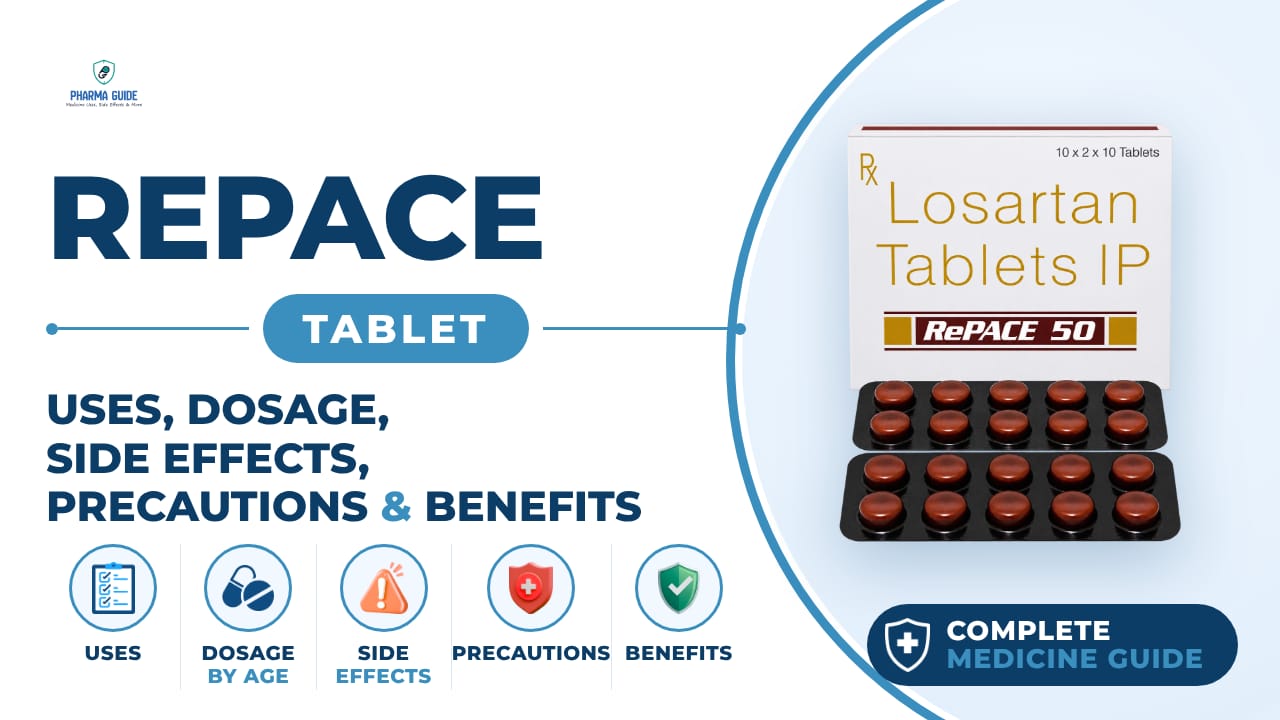
Repace Tablet: Uses, Dosage, Side Effects, Precautions and Alternates
| Generic name | Losartan |
|---|---|
| Drug class | Angiotensin receptor blocker (ARB) |
| Forms | Tablet |
Quick overview
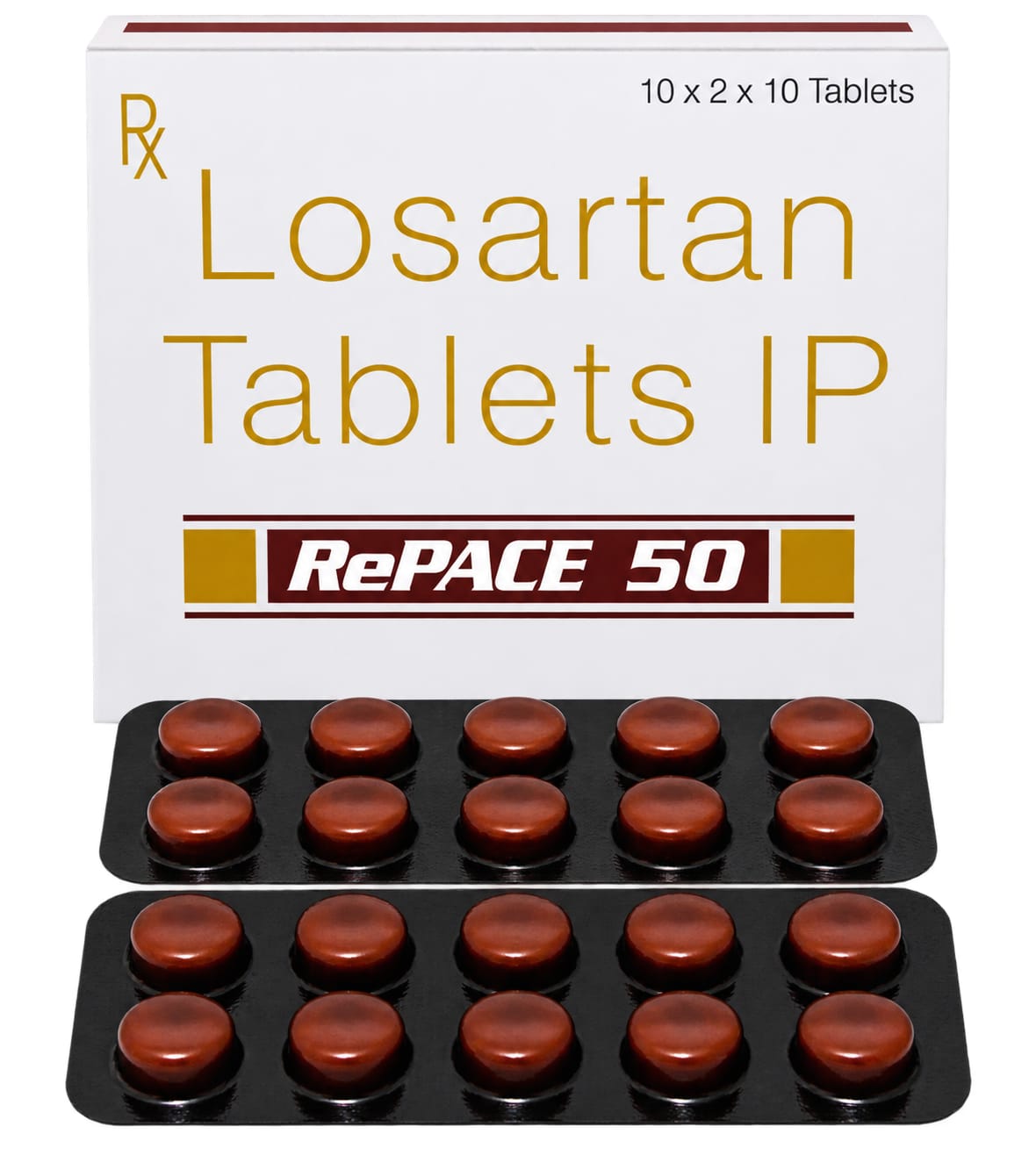
Repace Tablet contains Losartan, a medicine from the angiotensin receptor blocker (ARB) class. It is used to treat high blood pressure and offers kidney and heart protection in certain patients. It works by relaxing and widening blood vessels, and it is available as a tablet.
What is Repace Tablet
Repace Tablet contains Losartan, a medicine used to treat high blood pressure. It belongs to a class of medicines called angiotensin receptor blockers (ARBs), which work by relaxing blood vessels.
Repace Tablet uses
- High blood pressure (hypertension)
- Kidney protection in people with diabetes
- Reducing stroke risk in people with high blood pressure and an enlarged heart
- Managing hypertensive patients with left ventricular hypertrophy
- Managing nephropathy in type 2 diabetic patients
Benefits of Repace Tablet
- Blood Pressure Control: Helps lower high blood pressure.
- Heart Protection: Helps reduce strain on the heart caused by hypertension.
- Kidney Protection: Helps protect kidney function in some patients with diabetes and high blood pressure.
- Blood Vessel Relaxation: Helps widen blood vessels for improved circulation.
How Repace Tablet works
This medicine blocks a substance in the body called angiotensin II, which normally causes blood vessels to narrow. By blocking it, the medicine relaxes and widens blood vessels so blood can flow more easily, lowering blood pressure.
Repace Tablet dosage
Swallow the tablet whole with water; do not crush or chew it. Take it at the same time every day to help you remember. It can be taken with or without food. Continue taking it even when you feel well; do not stop without talking to your doctor. It is not recommended for use in children under 6 years of age.
| Age group | Dose |
|---|---|
| Under 18 Years | Use only if prescribed by a healthcare professional |
| Adults (18–64 Years) | 50 mg once daily, may be adjusted to 25–100 mg/day based on response |
| Older Adults (65+ Years) | 25–50 mg once daily, adjusted according to blood pressure response |
Available forms and strengths
- Tablet
Side effects of Repace Tablet
Common
- Dizziness
- Low blood pressure
- High potassium
- General weakness, tiredness
- Headache
- Back pain
- Diarrhoea
- Nausea and vomiting
- Dry mouth
- Increased urination
- Abdominal pain
- Constipation
- Nasal congestion
Serious
- Rash, itching, or swelling of the face, lips, mouth or throat that may cause difficulty swallowing or breathing
- Severe fall in blood pressure with dizziness, fainting, or a fast or slow pulse (overdose)
- Signs of changes in kidney function such as decreased urine output, swelling, or shortness of breath
Warnings and precautions
- Do not take this medicine if you are allergic to it or any of its ingredients, if you are pregnant, if you have narrowing of the arteries to both kidneys, or if you have a history of swelling of the face and throat from this type of medicine.
- Tell your doctor if you have kidney disease or are taking potassium supplements before starting this medicine.
- Avoid potassium-rich foods like bananas and potatoes, as this medicine can raise potassium levels in the blood.
- This medicine should not be used together with aliskiren in people with diabetes and kidney problems, as this combination can cause serious side effects.
- Do not stop taking this medicine suddenly, as it can cause blood pressure to rise and increase the risk of heart attack and stroke.
- This medicine is unsafe during pregnancy and can seriously harm the developing baby, especially after the third month. Tell your doctor right away if you become pregnant while taking it.
- It is not known whether this medicine passes into breast milk, so it is generally not recommended while breastfeeding.
- Talk to your doctor first.
- People with kidney disease should talk to their doctor before using this medicine, especially those with severe kidney impairment or narrowing of the arteries to both kidneys.
- Regular monitoring of kidney function may be needed.
- This medicine should be used with caution in people with liver disease, and is not recommended for those with severe liver impairment.
- Drinking alcohol while taking this medicine can lower blood pressure too much and may cause dizziness, headache, or changes in heart rate.
- This medicine may cause dizziness or drowsiness. Do not drive or operate machinery until you know how it affects you.
Storage
- Store Repace 25 Tablet in a cool and dry place.
- Protect the medicine from light and moisture.
- Keep it out of reach of children.
- Remember to use the medicine before the expiry date.
- Store at room temperature.
- Store Below 30° C
When to see a doctor
- Stop the medicine and get help right away if you have a rash, swelling of the face or lips, wheezing, or difficulty breathing.
- If you think you have taken too much, do not wait for symptoms — go to the nearest emergency department immediately and take the medicine pack with you.
- Seek immediate medical attention if you notice symptoms of an allergic reaction such as skin rash, itching or swelling especially of the face, tongue or throat, severe dizziness, or breathing difficulties.
Alternatives
- Telmisartan
- Olmesartan
- Amlodipine
Watch the video
FAQs
What is Repace Tablet used for?
Repace Tablet is used to treat high blood pressure, protect kidney function in people with diabetes, reduce stroke risk in patients with high blood pressure and an enlarged heart, and manage left ventricular hypertrophy and diabetic nephropathy.
How does Repace Tablet work?
It blocks a substance called angiotensin II, which normally narrows blood vessels. By blocking it, the medicine relaxes and widens blood vessels so blood flows more easily, lowering blood pressure.
What is the dosage of Repace Tablet for adults?
Adults aged 18–64 years typically take 50 mg once daily, which may be adjusted between 25–100 mg/day based on response. Older adults (65+) usually take 25–50 mg once daily.
What are the common side effects of Repace Tablet?
Common side effects include dizziness, low blood pressure, high potassium, weakness, headache, back pain, diarrhoea, nausea, vomiting, dry mouth, increased urination, abdominal pain, constipation, and nasal congestion.
Can Repace Tablet be taken during pregnancy?
No, this medicine is unsafe during pregnancy and can seriously harm the developing baby, especially after the third month. Tell your doctor right away if you become pregnant while taking it.
General information, not medical advice
Your prescriber and the leaflet in your pack know your situation. This page does not.
- Follow your prescriber and the leaflet
- Don't start, stop, or change a dose on your own
- Doses and warnings differ by country and product
Sources
- PingMeDoc clinical monograph library — compiled from Indian package inserts, the Indian Pharmacopoeia
- Central Drugs Standard Control Organisation (CDSCO), Ministry of Health & Family Welfare, Government of India
- National List of Essential Medicines (NLEM) 2022, Government of India
- Manufacturer's package insert / prescribing information for Repace 25 Tablet
- World Health Organization, ATC/DDD classification and Model Formulary
- Medicines.org.uk, Cozaar-Comp Summary of Product Characteristics (SmPC)
- PubChem, Hydrochlorothiazide and Losartan compound data
- KD. Tripathi, Essentials of Medical Pharmacology, Seventh edition
- Sana Mulla; Waqas J. Siddiqui, Losartan, NIH National Library of Medicine
- MedlinePlus Drug Information, Losartan
- NHS, Pregnancy, breastfeeding and fertility while taking losartan
- Pitt, B. et al., Effect of losartan compared with captopril on mortality, The Lancet
Video
Related medicines

Injectafer Injection: Uses, Dosage, Side Effects, Precautions and Alternates
Iron products
Injectafer (ferric carboxymaltose) treats iron deficiency anemia and heart failure-related iron deficiency via IV. Learn uses, dosage, side effects, and

Gliclazide Tablet: Uses, Dosage, Side Effects, Precautions and Alternates
Sulfonylurea (hypoglycemic/antidiabetic agent)
Gliclazide Tablet is a sulfonylurea for type 2 diabetes that boosts insulin release. Learn about dosage, side effects, warnings, and precautions.