
Safety
General information, not medical advice
Your prescriber and the leaflet in your pack know your situation. This page does not.
- Follow your prescriber and the leaflet
- Don't start, stop, or change a dose on your own
- Doses and warnings differ by country and product
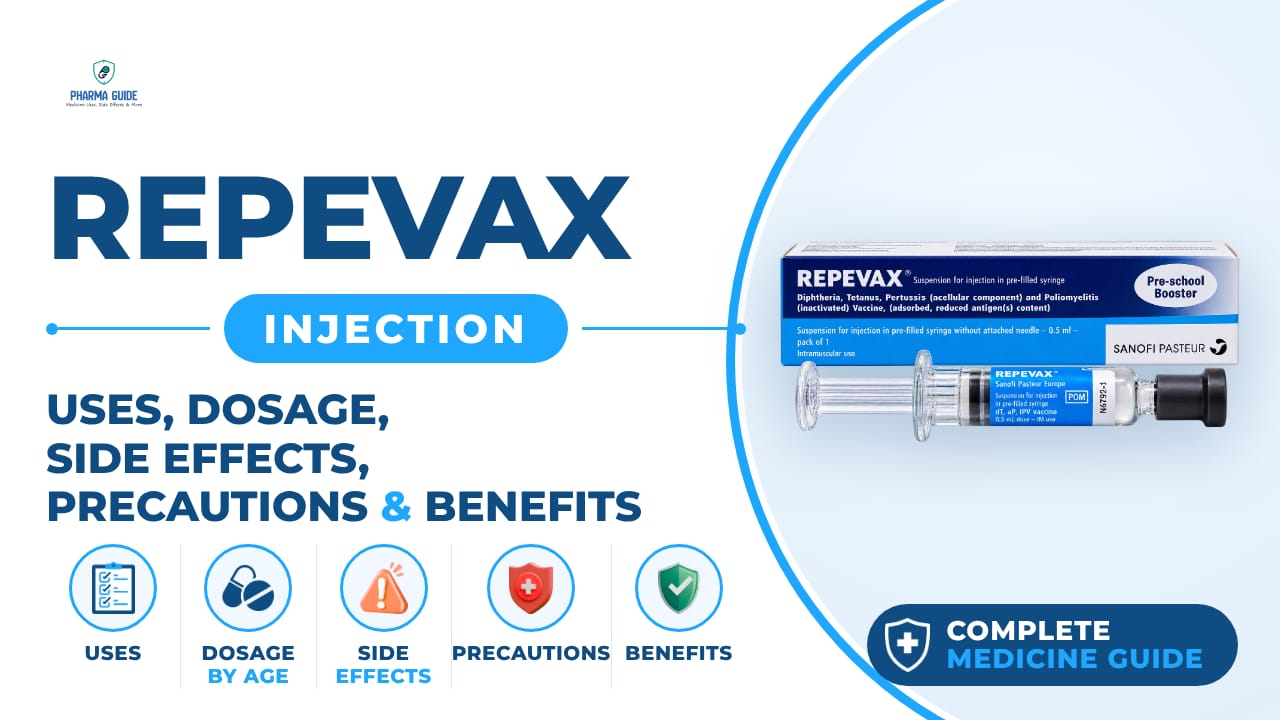
Repevax Injection: Uses, Dosage, Side Effects, Precautions and Alternates
| Drug class | Vaccine (diphtheria, tetanus, pertussis, and polio combination vaccine) |
|---|---|
| Forms | Injection |
Quick overview
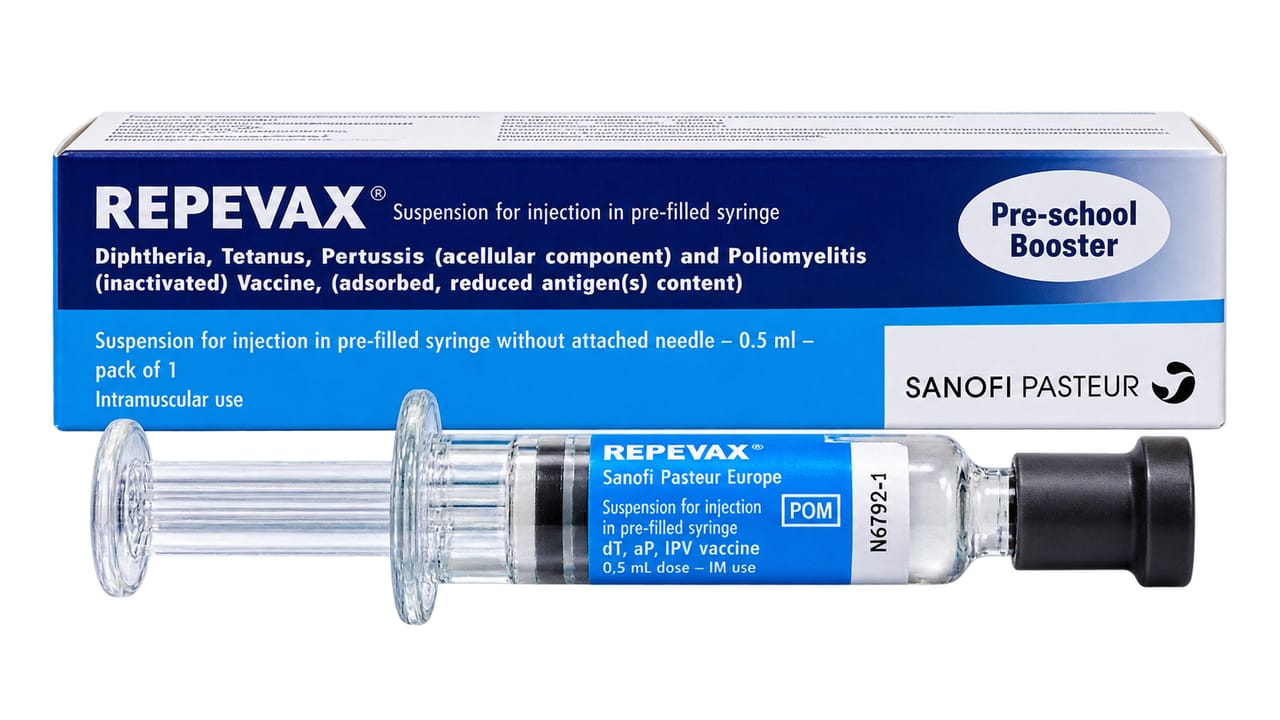
Repevax is a combination vaccine that helps protect against tetanus, diphtheria, whooping cough (pertussis), and polio. It is used as a catch-up vaccination for people who have not completed a full tetanus vaccination course, and may also be given after a tetanus-prone injury if the last tetanus vaccination was more than 10 years ago. It works by teaching the immune system to recognize and respond to these diseases.
What is Repevax Injection
Repevax is a vaccine used to protect against tetanus, and is one of several vaccines used in the UK for this purpose. It also helps protect against other diseases such as diphtheria, whooping cough (pertussis), and polio.
Repevax Injection uses
- Protecting against tetanus
- Used as a catch-up vaccination for people who have not had a complete course of tetanus vaccinations
- Given after a tetanus-prone injury, such as a deep puncture wound or animal bite, if the last tetanus vaccination was more than 10 years ago
Benefits of Repevax Injection
- Helps protect against tetanus.
- Helps protect against diphtheria.
- Helps protect against pertussis (whooping cough).
- Helps protect against poliomyelitis (polio).
- Boosts immunity in people who have previously received vaccines against these diseases.
- When given during pregnancy according to vaccination guidelines, it can help provide passive protection against pertussis to the newborn during the first months of life.
How Repevax Injection works
The vaccine works by teaching the immune system how to protect the body from the disease.
Repevax Injection dosage
If your child is uncomfortable or unwell with a fever after the vaccine, you can give a dose of infant paracetamol, following the instructions on the product packaging carefully. Never give medicines that contain aspirin to children under 16.
| Age group | Dose |
|---|---|
| Under 3 years | Generally not indicated; use depends on the national vaccination schedule |
| 3–17 years | 0.5 mL IM as a single booster dose when indicated |
| 18–64 years | 0.5 mL IM as a single booster dose when indicated |
| 65+ years | 0.5 mL IM when booster vaccination is indicated |
| Pregnancy | 0.5 mL IM when recommended for maternal pertussis vaccination according to the local program |
Available forms and strengths
- Injection
Side effects of Repevax Injection
Common
- Swelling, pain, redness or a hard lump where the injection was given
- Reduced appetite
- Being upset, irritable or restless
- Sleepiness
- Diarrhoea or vomiting
- Mild fever
- Sore or swollen joints
- Sore head
Serious
- Severe allergic reaction (anaphylaxis)
- Seizures
- Guillain-Barré syndrome
- Facial paralysis
- Inflammation of the spinal cord or nerves
- Extensive swelling of the vaccinated limb, sometimes with redness or blisters
Warnings and precautions
- If your child has a seizure after the vaccine, this is a medical emergency and needs urgent care.
- Tetanus vaccines, including this one, can be used in pregnancy. It may be offered during pregnancy if a person has not had a full course of tetanus vaccinations, or after a tetanus-prone injury such as a deep puncture wound or animal bite.
- Getting the vaccine in pregnancy does not mean extra monitoring of the baby is needed.
- Generally considered acceptable when breastfeeding, if needed. Because Repevax contains inactivated antigens and toxoids, no risk to the breastfed infant is expected, although benefits and risks should be assessed by a healthcare professional.
- No specific kidney-related dose adjustment is normally required. People with severe kidney disease or significant immune suppression should inform their healthcare provider before vaccination.
- No specific liver-related dose adjustment is normally required.
- No known clinically significant interaction with drinking alcohol. Repevax itself contains only 1.01 mg ethanol per 0.5 mL dose, an amount not expected to have noticeable effects.
- Has no or negligible influence on driving or operating machinery. If you feel unwell or dizzy after vaccination, avoid driving until recovered.
Storage
- Store refrigerated at 2–8°C (36–46°F).
- Keep in the original packaging to protect from light.
- Do not freeze; discard the vaccine if it has been frozen.
- Keep refrigerated until ready for administration.
- Do not use after the expiry date or if recommended storage conditions were not maintained.
- Keep securely stored and out of reach of children.
When to see a doctor
- Get urgent medical help if your child is having a seizure after the vaccine.
- Contact your GP right away if your child is under 3 months old with a temperature of 38C or above, or over 3 months old with a temperature of 39C or above, if the fever lasts more than 48 hours after vaccination, or if you are worried about your child's health at any time.
Alternatives
- Td Vaccine
- Revaxis (Td-IPV)
- Adacel (Tdap)
- Boostrix (Tdap)
- Boostrix-IPV
Watch the video
FAQs
What is Repevax Injection used for?
Repevax protects against tetanus, diphtheria, whooping cough (pertussis), and polio. It is used as a catch-up vaccination for people who have not completed a full tetanus vaccination course, and may be given after a tetanus-prone injury if the last tetanus vaccination was more than 10 years ago.
Can Repevax be given during pregnancy?
Yes, tetanus vaccines including Repevax can be used in pregnancy. It may be offered if a person has not had a full course of tetanus vaccinations or after a tetanus-prone injury. When given during pregnancy according to vaccination guidelines, it can help provide passive protection against pertussis to the newborn during the first months of life.
What is the dosage of Repevax?
The dose is 0.5 mL given by intramuscular injection as a single booster dose when indicated, for ages 3 years and above, including during pregnancy when recommended.
What are the common side effects of Repevax Injection?
Common side effects include swelling, pain, redness or a hard lump at the injection site, reduced appetite, irritability, sleepiness, diarrhoea or vomiting, mild fever, sore or swollen joints, and headache.
Is Repevax safe while breastfeeding?
Repevax is generally considered acceptable when breastfeeding if needed. Because it contains inactivated antigens and toxoids, no risk to the breastfed infant is expected, although benefits and risks should be assessed by a healthcare professional.
General information, not medical advice
Your prescriber and the leaflet in your pack know your situation. This page does not.
- Follow your prescriber and the leaflet
- Don't start, stop, or change a dose on your own
- Doses and warnings differ by country and product
Sources
Video
Related medicines

Injectafer Injection: Uses, Dosage, Side Effects, Precautions and Alternates
Iron products
Injectafer (ferric carboxymaltose) treats iron deficiency anemia and heart failure-related iron deficiency via IV. Learn uses, dosage, side effects, and

Gliclazide Tablet: Uses, Dosage, Side Effects, Precautions and Alternates
Sulfonylurea (hypoglycemic/antidiabetic agent)
Gliclazide Tablet is a sulfonylurea for type 2 diabetes that boosts insulin release. Learn about dosage, side effects, warnings, and precautions.