
Safety
General information, not medical advice
Your prescriber and the leaflet in your pack know your situation. This page does not.
- Follow your prescriber and the leaflet
- Don't start, stop, or change a dose on your own
- Doses and warnings differ by country and product
Requip Tablet: Uses, Dosage, Side Effects, Precautions and Alternates
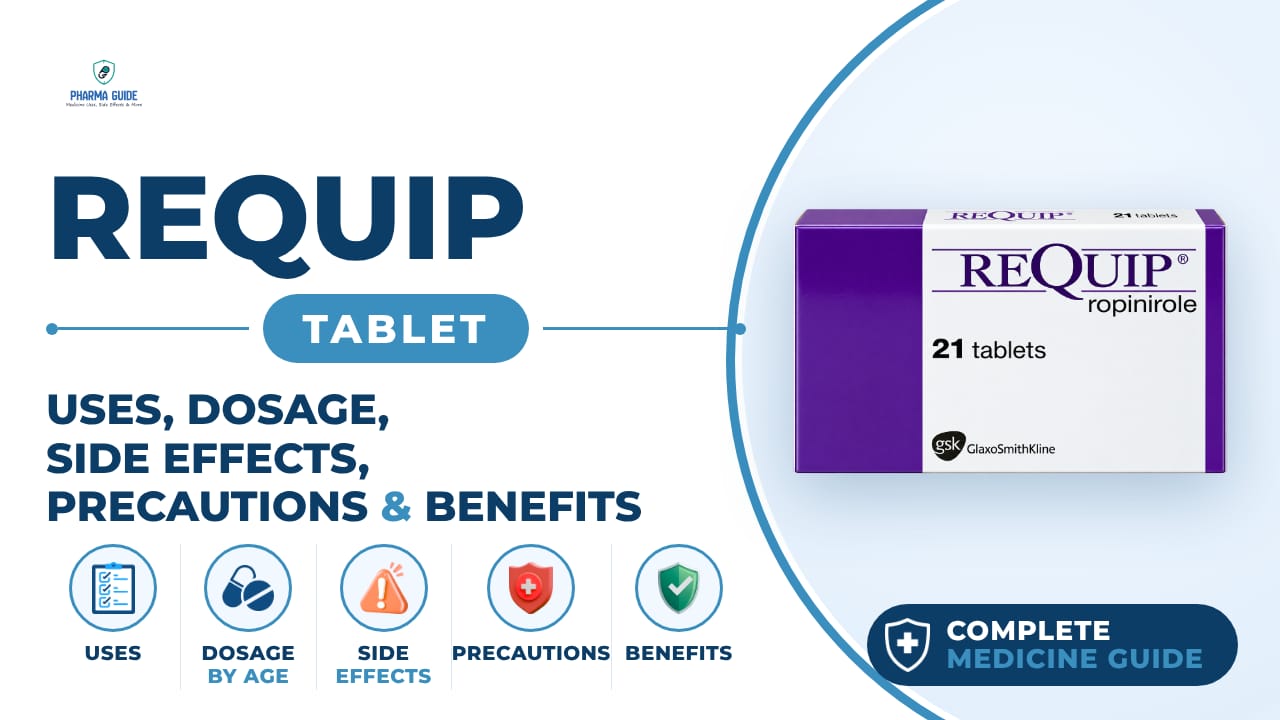
| Generic name | ropinirole |
|---|---|
| Drug class | non-ergoline dopamine agonist |
| Forms | Tablet |
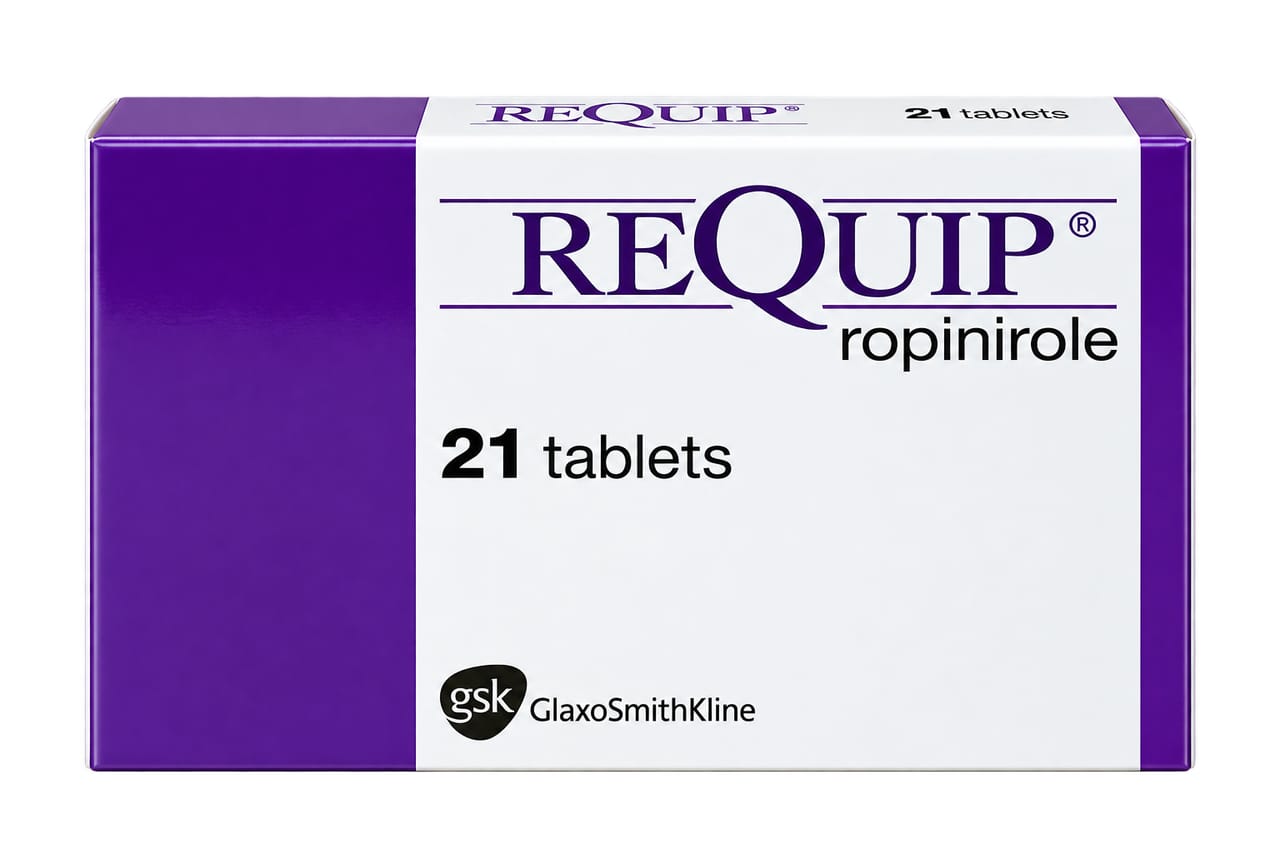
Quick overview
Requip Tablet contains ropinirole, a non-ergoline dopamine agonist. It acts like dopamine, a natural chemical in the body, and is used to treat Parkinson's disease and moderate-to-severe primary Restless Legs Syndrome (RLS). It works by stimulating dopamine receptors in the brain to help control movement symptoms. This medicine should be used exactly as prescribed, with gradual dose adjustments and caution around sudden stopping.
What is Requip Tablet
Requip is a medicine containing ropinirole, which acts like dopamine, a natural chemical in the body. It is used to treat Parkinson's disease and restless legs syndrome.
Requip Tablet uses
- Treatment of Parkinson's disease
- Treatment of moderate-to-severe primary Restless Legs Syndrome (RLS)
Benefits of Requip Tablet
- Parkinson's Symptom Support: Helps improve movement symptoms associated with Parkinson's disease.
- Muscle Stiffness Relief: May reduce rigidity and stiffness.
- Movement Support: Helps improve slowness of movement.
- Restless Legs Support: Can reduce uncomfortable sensations and urge to move the legs in suitable patients.
- Dopamine Activity: Mimics dopamine activity at dopamine receptors in the brain.
How Requip Tablet works
The exact way this medicine works is not fully known, but it is thought to work by stimulating dopamine receptors in the brain, which helps control movement in Parkinson's disease and may help with restless legs syndrome.
Requip Tablet dosage
This medicine can be taken with or without food. Take it at the same time each day. For Parkinson's disease, tablets are usually taken three times a day. For Restless Legs Syndrome, the medicine is usually taken once daily, 1 to 3 hours before bedtime.
Do not double your next dose if you miss one. Do not suddenly stop taking this medicine without talking to your healthcare provider, as this can cause fever, confusion, or severe muscle stiffness; your doctor may want to lower your dose gradually. If you stop taking this medicine for any reason, contact your healthcare provider before restarting. Retitration (restarting at a low dose and building up again) may be needed if you have a significant break in treatment. Taking this medicine with food may reduce nausea.
| Age group | Dose |
|---|---|
| Under 18 Years | Use only if prescribed by a specialist |
| 18–64 Years | 0.25 mg three times daily initially, gradually adjusted according to response |
| Older Adults (65+ Years) | 0.25 mg three times daily initially, adjusted carefully by a healthcare professional |
Available forms and strengths
Tablet
Side effects of Requip Tablet
Common
- Nausea, vomiting, or upset stomach
- Drowsiness, tiredness, or weakness
- Dizziness or lightheadedness, especially when standing up
- Headache
- Leg or foot swelling (edema)
- Increased sweating
- Confusion
- Constipation
Serious
- Falling asleep suddenly during daily activities such as driving, even without feeling drowsy beforehand
- Fainting (syncope)
- Significant drop in blood pressure, especially when standing up
- Hallucinations (seeing, hearing, or feeling things that are not real) and other psychotic-like behavior, more common in older adults
- Uncontrolled sudden muscle movements (dyskinesia)
- Intense urges such as gambling, increased sexual urges, compulsive shopping, or binge eating
- Severe withdrawal symptoms like high fever, confusion, and muscle stiffness if the medicine is stopped suddenly
- Allergic reaction: hives, rash, itching, swelling of the face, lips, mouth, tongue, or throat
- Increased risk of skin cancer (melanoma) in people with Parkinson's disease
Warnings and precautions
- This medicine can cause you to suddenly fall asleep during normal daily activities, including driving, sometimes without feeling drowsy beforehand.
- Fainting can happen, sometimes with a slowed heart rate, especially when starting the medicine or increasing the dose.
- This medicine can lower blood pressure, especially when standing up quickly, which may cause dizziness, nausea, fainting, or sweating.
- This medicine may cause hallucinations or other psychotic-like behavior such as confusion, unusual suspicion, or disorganized thinking.
- This medicine may cause or worsen uncontrolled, sudden body movements, especially in people also taking levodopa.
- Some people may develop intense urges they cannot control, such as gambling, increased sexual urges, spending money, or binge eating.
- Stopping this medicine suddenly or changing the dose quickly can cause fever, confusion, and severe muscle stiffness.
- People with Parkinson's disease taking this medicine may have a higher chance of developing a type of skin cancer called melanoma, so regular skin checks are recommended.
- In people being treated for restless legs syndrome, symptoms may return earlier in the day or worsen over time with continued use.
- Pregnancy: This medicine should only be used during pregnancy if clearly needed, since animal studies showed it may harm the unborn baby. Tell your doctor if you are pregnant or planning to become pregnant.
- Breastfeeding: It is not known if this medicine passes into human breast milk. It may also reduce breast milk production. Talk to your doctor about whether to breastfeed or take this medicine.
- Kidney: People with moderate kidney problems usually do not need a dose change, but those on dialysis for severe kidney disease need a lower maximum dose.
- Liver: This medicine has not been studied in people with liver problems. Since the liver breaks down this medicine, people with liver impairment may have higher levels of the drug in their blood and should be monitored carefully.
- Alcohol: Drinking alcohol while taking this medicine can increase drowsiness and sleepiness.
- Driving: This medicine can make you fall asleep suddenly during activities like driving, sometimes without any warning signs of drowsiness. Do not drive or do other potentially dangerous activities until you know how this medicine affects you.
Storage
- Store at room temperature between 68°F to 77°F (20°C to 25°C)
- Protect from light and moisture
- Keep container tightly closed after each use
- Keep out of the reach of children
When to see a doctor
- Get emergency help right away if you have signs of an allergic reaction, such as hives, rash, itching, or swelling of the face, lips, mouth, tongue, or throat, which may cause trouble swallowing or breathing.
- Contact your doctor right away if you suddenly fall asleep during normal activities or feel very sleepy during the day.
- Tell your doctor if you feel like you might faint, feel very dizzy or light-headed, especially when standing up.
- Tell your doctor if you notice unusual changes in mood or behavior, or new urges such as gambling, increased sexual urges, or compulsive eating.
- Tell your doctor if you have tremors, twitching, or uncontrollable muscle movements.
- Call your doctor if you experience hallucinations, such as seeing or hearing things that are not real.
- Call your doctor if your symptoms get worse or do not improve, or if restless legs symptoms occur earlier in the day than usual.
- If you think you have taken too much of this medicine, seek emergency medical attention or contact your local poison control center right away.
Alternatives
- Pramipexole
- Rotigotine
- Levodopa + Carbidopa
Watch the video
FAQs
What is Requip Tablet used for?
Requip Tablet is used to treat Parkinson's disease and moderate-to-severe primary Restless Legs Syndrome (RLS).
How should I take Requip Tablet?
It can be taken with or without food at the same time each day. For Parkinson's disease, it is usually taken three times a day. For Restless Legs Syndrome, it is usually taken once daily, 1 to 3 hours before bedtime. Taking it with food may reduce nausea.
Can I stop taking Requip Tablet suddenly?
No, you should not stop taking it suddenly without talking to your healthcare provider, as this can cause fever, confusion, or severe muscle stiffness. Your doctor may need to lower your dose gradually.
What are the serious side effects of Requip Tablet?
Serious side effects include suddenly falling asleep during daily activities, fainting, significant drop in blood pressure, hallucinations, uncontrolled sudden muscle movements, intense urges like gambling or compulsive shopping, and an increased risk of melanoma skin cancer.
Is it safe to drink alcohol while taking Requip Tablet?
Drinking alcohol while taking this medicine can increase drowsiness and sleepiness.
General information, not medical advice
Your prescriber and the leaflet in your pack know your situation. This page does not.
- Follow your prescriber and the leaflet
- Don't start, stop, or change a dose on your own
- Doses and warnings differ by country and product
Sources
Video
Related medicines

Injectafer Injection: Uses, Dosage, Side Effects, Precautions and Alternates
Iron products
Injectafer (ferric carboxymaltose) treats iron deficiency anemia and heart failure-related iron deficiency via IV. Learn uses, dosage, side effects, and

Gliclazide Tablet: Uses, Dosage, Side Effects, Precautions and Alternates
Sulfonylurea (hypoglycemic/antidiabetic agent)
Gliclazide Tablet is a sulfonylurea for type 2 diabetes that boosts insulin release. Learn about dosage, side effects, warnings, and precautions.