
Safety
General information, not medical advice
Your prescriber and the leaflet in your pack know your situation. This page does not.
- Follow your prescriber and the leaflet
- Don't start, stop, or change a dose on your own
- Doses and warnings differ by country and product
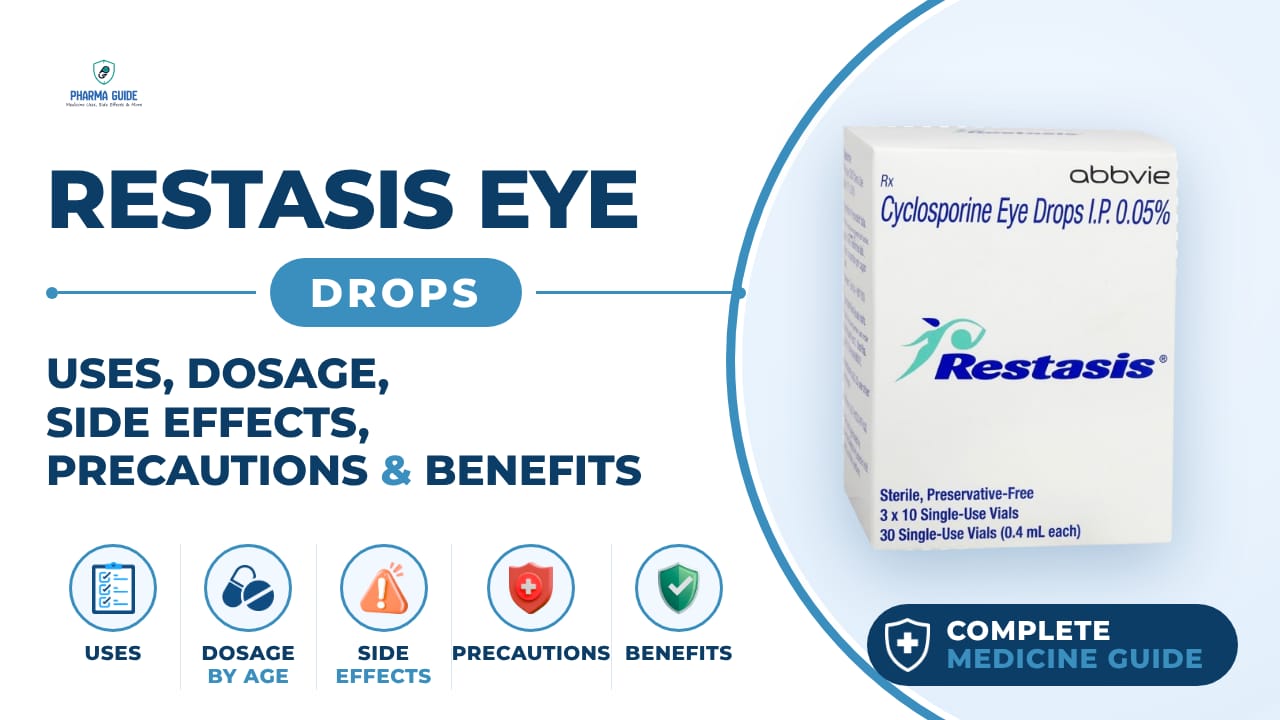
Restasis Eye Drops: Uses, Dosage, Side Effects, Precautions and Alternates
| Generic name | Cyclosporine (cyclosporine ophthalmic) |
|---|---|
| Drug class | Miscellaneous ophthalmic agents (topical immunomodulator) |
| Forms | Ophthalmic emulsion (eye drops) in single-use vials, Multidose bottle |
Quick overview
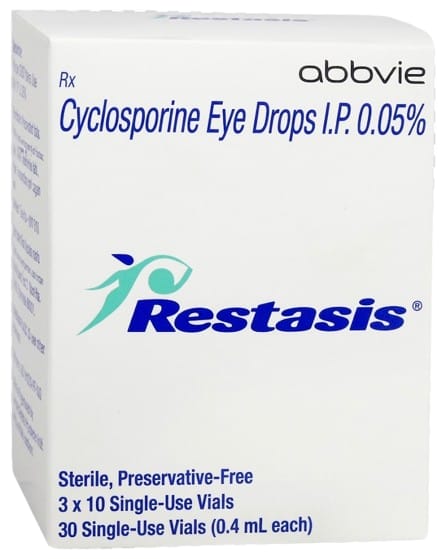
Restasis Eye Drops contain cyclosporine, a topical immunomodulator used to treat chronic dry eye disease caused by inflammation in the eyes. It helps reduce dryness, burning, and irritation while supporting the eye's natural tear production. Restasis is applied directly to the eyes and is typically used twice a day. It is available as single-use vials and as a multidose bottle.
What is Restasis Eye Drops
Restasis is a prescription eye drop that contains cyclosporine. It is used to treat chronic dry eye disease caused by inflammation in the eyes.
Restasis Eye Drops uses
- Treatment of chronic dry eye disease
- Eye dryness caused by reduced tear production
- Reducing burning, irritation, and discomfort in the eyes
- Long-term management of dry-eye symptoms
Benefits of Restasis Eye Drops
- Improves symptoms of dry eyes
- Helps increase the eyes' tear production
- Reduces eye dryness and irritation
- May reduce burning, stinging, and discomfort
- Helpful for long-term management of dry-eye symptoms
How Restasis Eye Drops works
Restasis works by calming down an overactive immune response in the eye. It reduces swelling and inflammation on the eye's surface, which helps the eye make more of its own tears over time.
Restasis Eye Drops dosage
Use this medicine only in the eyes, not anywhere else on the body. Wash your hands before using the eye drops. Turn the bottle or vial upside down a few times to mix the medicine before use; it should look white and cloudy.
Tilt your head back, pull down the lower eyelid to make a small pocket, and place the drop inside without letting the dropper tip touch your eye or any surface. Close your eyes for a couple of minutes after applying the drop and gently press a finger to the inner corner of the eye to keep the medicine from draining away.
If you wear contact lenses, take them out before using the drops and wait at least 15 minutes before putting them back in. Wait at least 15 minutes before using artificial tears or other eye drops.
Use the drops at about the same times each day, spaced roughly 12 hours apart. If using single-use vials, throw away the vial after one use even if some liquid remains. Do not stop using this medicine without talking to your doctor first. It may take several weeks to months of regular use before you notice improvement in your symptoms.
| Age group | Dose |
|---|---|
| Under 18 years | Not recommended |
| 18–60 years | 1 drop in each affected eye, twice/day |
| 60+ years | 1 drop in each affected eye, twice/day |
Available forms and strengths
- Ophthalmic emulsion (eye drops) in single-use vials
- Multidose bottle
Side effects of Restasis Eye Drops
Common
- Eye pain
- Eye redness
- Burning or stinging sensation in the eye
- Watery eyes
- Blurred vision
- Itching
- Feeling like something is in your eye
- Eye discharge
Serious
- Eye injury from the dropper tip touching the eye
- Eye infection
- Serious allergic reaction (swelling of face, lips, tongue, throat, hives, trouble breathing)
Warnings and precautions
- Do not use this medicine if you are allergic to cyclosporine or any of its ingredients.
- Be careful not to let the dropper tip touch your eye, your hand, or any other surface, since this could cause contamination or injury to the eye.
- Do not wear contact lenses while using this medicine. Remove lenses before using the drops and wait at least 15 minutes before putting them back in.
- This medicine is not recommended for use if you have cancer in or around the eye.
- This medicine is not recommended if you have an eye infection, as it may make the infection worse.
- This medicine is not recommended for children younger than 18 years because there isn't enough safety information for that age group (some brands may differ).
- Tell your doctor about any other eye drops you are using, since combining them could increase the risk of side effects.
- This medicine may raise the risk of eye infections, so regular eye check-ups (at least every six months) are recommended if you use it long term.
- Restasis is likely safe to use during pregnancy, but tell your doctor if you are pregnant or planning to become pregnant so they can advise you.
- It isn't known for certain whether Restasis passes into breast milk, but it is likely safe. Tell your doctor if you are breastfeeding.
- It isn't clearly known how alcohol interacts with this medicine. Ask your doctor before drinking alcohol while using it.
- This medicine may cause blurred vision or eye discomfort. If this happens, avoid driving or operating machinery until your vision is clear.
Storage
- Store at room temperature, between 15-25°C (59-77°F)
- Keep away from moisture and heat
- Do not freeze
- Keep the bottle tightly closed when not in use
- Keep the medicine out of reach of children and pets
- Make sure unused medicine is disposed of properly
When to see a doctor
- Get emergency medical help right away if you have signs of a serious allergic reaction, such as hives, trouble breathing, or swelling of the face, lips, tongue, or throat.
- Stop using the medicine and call your doctor right away if you have eye pain, or eye swelling, redness, severe discomfort, crusting, or drainage, as these can be signs of infection.
- If you notice signs of an allergic reaction such as a skin rash, redness, itching, sneezing, or trouble breathing after using this medicine, seek medical attention right away.
- If you think you may have used too much of this medicine or someone has accidentally swallowed it, seek emergency medical help.
Alternatives
- Tyrvaya Nasal Spray
- Xiidra Eye Drops
- Cequa Eye Drops
Watch the video
FAQs
What is Restasis Eye Drops used for?
Restasis is used to treat chronic dry eye disease caused by inflammation in the eyes, helping reduce dryness, burning, and irritation while supporting natural tear production.
How does Restasis Eye Drops work?
Restasis works by calming an overactive immune response in the eye, reducing swelling and inflammation on the eye's surface, which helps the eye make more of its own tears over time.
How long does it take for Restasis to work?
It may take several weeks to months of regular use before you notice improvement in your dry-eye symptoms.
Can I wear contact lenses while using Restasis Eye Drops?
No, you should not wear contact lenses while using Restasis. Remove lenses before using the drops and wait at least 15 minutes before putting them back in.
What are the common side effects of Restasis Eye Drops?
Common side effects include eye pain, eye redness, burning or stinging, watery eyes, blurred vision, itching, a feeling of something in the eye, and eye discharge.
General information, not medical advice
Your prescriber and the leaflet in your pack know your situation. This page does not.
- Follow your prescriber and the leaflet
- Don't start, stop, or change a dose on your own
- Doses and warnings differ by country and product
Sources
- https://www.practo.com/medicine-info/restasis-0-05-eye-drops-33511
- https://www.medicalnewstoday.com/articles/drugs-restasis-side-effects
- https://www.drugs.com/restasis.html
- FDA Prescribing Information, NDA 50-790/S-020
Video
Related medicines

Injectafer Injection: Uses, Dosage, Side Effects, Precautions and Alternates
Iron products
Injectafer (ferric carboxymaltose) treats iron deficiency anemia and heart failure-related iron deficiency via IV. Learn uses, dosage, side effects, and

Gliclazide Tablet: Uses, Dosage, Side Effects, Precautions and Alternates
Sulfonylurea (hypoglycemic/antidiabetic agent)
Gliclazide Tablet is a sulfonylurea for type 2 diabetes that boosts insulin release. Learn about dosage, side effects, warnings, and precautions.