
Safety
General information, not medical advice
Your prescriber and the leaflet in your pack know your situation. This page does not.
- Follow your prescriber and the leaflet
- Don't start, stop, or change a dose on your own
- Doses and warnings differ by country and product
Revefenacin Inhaler: Uses, Dosage, Side Effects, Precautions and Alternates
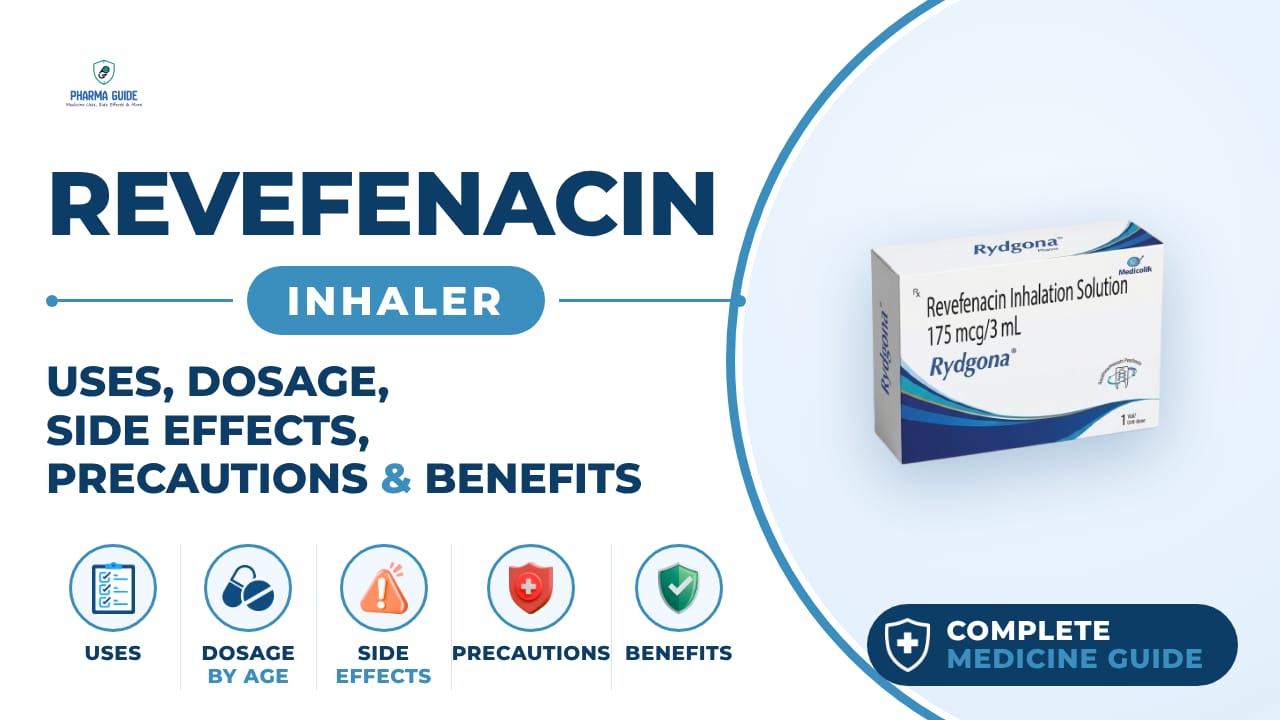
| Generic name | Revefenacin |
|---|---|
| Drug class | Anticholinergic (long-acting muscarinic antagonist) |
| Forms | Inhaler |
Quick overview
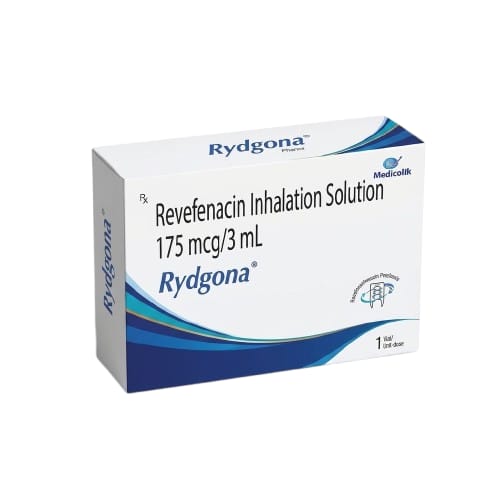
Revefenacin Inhaler (revefenacin) is a prescription anticholinergic medicine used for the long-term maintenance treatment of chronic obstructive pulmonary disease (COPD), including chronic bronchitis and emphysema. It is given once a day through a nebulizer and works by relaxing the muscles around the airways to make breathing easier. It is not a rescue treatment for sudden breathing attacks.
What is Revefenacin Inhaler
Revefenacin is a prescription inhaled medicine used for the long-term maintenance treatment of chronic obstructive pulmonary disease (COPD), including chronic bronchitis and emphysema. It is given once a day through a nebulizer.
Revefenacin Inhaler uses
- Chronic obstructive pulmonary disease (COPD).
- Chronic bronchitis associated with COPD.
- Emphysema associated with COPD.
- Long-term maintenance of open airways.
- Ongoing COPD-related breathing difficulties.
Benefits of Revefenacin Inhaler
- Helps relax airway muscles.
- Improves airflow.
- Helps reduce breathlessness.
- May ease wheezing.
- Supports long-term breathing control.
How Revefenacin Inhaler works
Revefenacin blocks certain receptors (called M3 muscarinic receptors) in the muscles around your airways. This stops a natural chemical in the body from tightening those muscles, so the airways relax and open up, making breathing easier.
Revefenacin Inhaler dosage
Use only with a standard jet nebulizer connected to an air compressor, with a mouthpiece. Use one vial once a day at the same time every day. Do not mix with other medicines in the nebulizer cup. Do not swallow or inject this medicine — it is for inhalation only. Do not use more than one vial per day.
This medicine is not a rescue treatment for sudden breathing attacks; keep a fast-acting inhaler on hand for sudden symptoms. Do not stop using this medicine suddenly without talking to your doctor, since symptoms may get worse. This medicine is not approved for use in children. No dose change is needed for older adults.
| Age group | Dose |
|---|---|
| Under 18 years | Not recommended |
| 18–64 years | 175 mcg, once/day |
| 65+ years | 175 mcg, once/day |
Available forms and strengths
- Inhaler
Side effects of Revefenacin Inhaler
Common
- Cough
- Runny or stuffy nose (nasopharyngitis)
- Upper respiratory tract infection
- Headache
- Back pain
- High blood pressure
- Dizziness
- Mouth or throat pain
- Bronchitis
Serious
- Hives
- Difficulty breathing
- Swelling of the face, lips, tongue, or throat
- Wheezing, choking, or other breathing problems after using this medicine
- Blurred vision, tunnel vision, eye pain or redness, or seeing halos around lights
- Painful or difficult urination
- Trouble emptying the bladder (weak urine stream)
Warnings and precautions
- Do not start this medicine during a sudden worsening or life-threatening episode of COPD — it is meant only for regular, ongoing maintenance treatment, not for quick relief.
- This medicine can sometimes cause sudden worsening of breathing right after use (called paradoxical bronchospasm), which can be life-threatening. If this happens, stop using it and get medical help right away.
- Use with caution if you have narrow-angle glaucoma, since this medicine may make it worse. Contact your doctor right away if you notice eye pain, blurred vision, seeing halos around lights, or red eyes.
- Use with caution if you have an enlarged prostate or bladder problems, since this medicine may make urinary retention worse.
- Sudden, severe allergic reactions can happen after using this medicine. If this occurs, stop the medicine right away and get medical help.
- Avoid taking this medicine together with other anticholinergic medicines, since this can increase side effects.
- There is not enough information from studies in pregnant women to know if this medicine is safe during pregnancy. Tell your doctor right away if you become pregnant while using it.
- It is not known if this medicine passes into human breast milk or if it could affect a nursing baby. Talk with your doctor about the benefits of breastfeeding versus your need for this medicine.
- No dose change is needed for kidney problems, but people with severe kidney impairment should be watched for side effects related to this type of medicine.
- This medicine is not recommended for people with any degree of liver problems.
Storage
- Store in the protective foil pouch
- Store at room temperature between 68°F to 77°F (20°C to 25°C)
- Keep away from light and heat
- Only open the foil pouch and vial right before you are ready to use a dose
- Throw away the vial and any leftover medicine after use
- Throw away the vial if the solution is not clear and colorless
- Do not use after the expiration date on the foil pouch and vial
- Keep out of the reach of children
When to see a doctor
- Get emergency medical help right away if you have signs of a serious allergic reaction, such as rash, hives, severe itching, swelling of the face, mouth, or tongue, or difficulty breathing or swallowing.
- Call your doctor right away if you have sudden breathing problems immediately after using this medicine.
- Call your doctor right away if you notice eye symptoms such as red eyes, blurred vision, seeing halos or bright colors around lights, eye pain or discomfort, or nausea and vomiting, as these can be signs of a serious eye problem.
- Call your doctor right away if you have trouble urinating, need to urinate frequently, have a weak urine stream, or have painful urination.
- Get medical care right away if your breathing problems get worse, if you need your rescue inhaler more often than usual, or if your rescue inhaler stops working as well as it used to.
Alternatives
- Tudorza Pressair
- Seebri Neohaler
- Lonhala Magnair
Watch the video
FAQs
What is Revefenacin Inhaler used for?
It is used for the long-term maintenance treatment of chronic obstructive pulmonary disease (COPD), including chronic bronchitis and emphysema.
How is Revefenacin Inhaler taken?
It is given once a day through a standard jet nebulizer connected to an air compressor with a mouthpiece, using one vial at the same time every day. It should not be mixed with other medicines or swallowed/injected.
Is Revefenacin Inhaler a rescue inhaler?
No, it is not a rescue treatment for sudden breathing attacks. A fast-acting inhaler should be kept on hand for sudden symptoms.
What are the common side effects of Revefenacin Inhaler?
Common side effects include cough, runny or stuffy nose, upper respiratory tract infection, headache, back pain, high blood pressure, dizziness, mouth or throat pain, and bronchitis.
Who should use Revefenacin Inhaler with caution?
People with narrow-angle glaucoma, enlarged prostate or bladder problems, or liver problems should use it with caution, as it is not recommended for those with any degree of liver impairment.
General information, not medical advice
Your prescriber and the leaflet in your pack know your situation. This page does not.
- Follow your prescriber and the leaflet
- Don't start, stop, or change a dose on your own
- Doses and warnings differ by country and product
Sources
Video
Related medicines

Injectafer Injection: Uses, Dosage, Side Effects, Precautions and Alternates
Iron products
Injectafer (ferric carboxymaltose) treats iron deficiency anemia and heart failure-related iron deficiency via IV. Learn uses, dosage, side effects, and

Gliclazide Tablet: Uses, Dosage, Side Effects, Precautions and Alternates
Sulfonylurea (hypoglycemic/antidiabetic agent)
Gliclazide Tablet is a sulfonylurea for type 2 diabetes that boosts insulin release. Learn about dosage, side effects, warnings, and precautions.