
Safety
General information, not medical advice
Your prescriber and the leaflet in your pack know your situation. This page does not.
- Follow your prescriber and the leaflet
- Don't start, stop, or change a dose on your own
- Doses and warnings differ by country and product
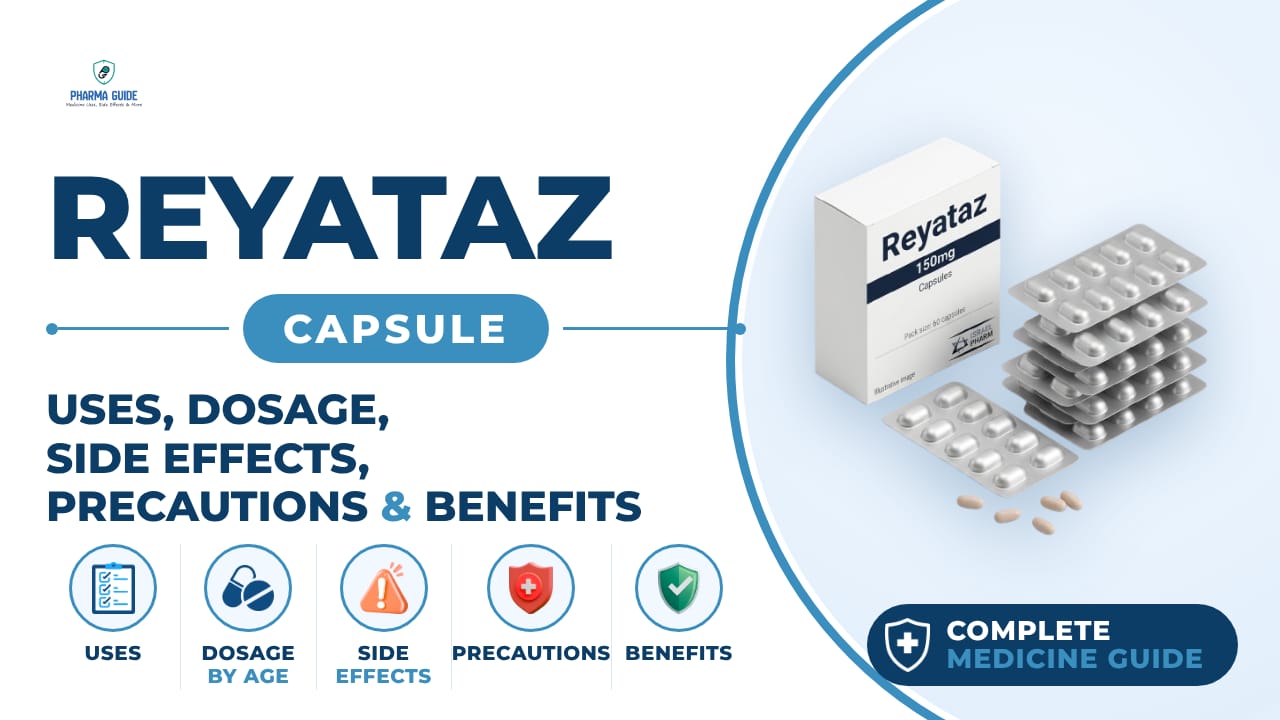
Reyataz Capsule: Uses, Dosage, Side Effects, Precautions and Alternates
| Generic name | atazanavir |
|---|---|
| Drug class | HIV-1 protease inhibitor (antiretroviral agent) |
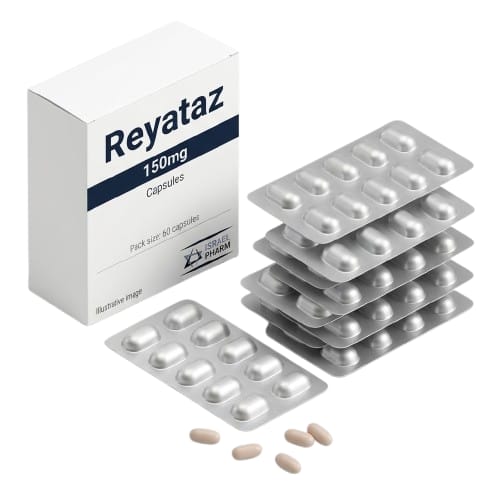
| Forms | Capsule |
Quick overview
Reyataz Capsule (atazanavir) is a prescription HIV-1 protease inhibitor used together with other antiretroviral medicines to treat HIV-1 infection. It does not cure HIV or AIDS, but it helps control the virus so the immune system can stay stronger. It is taken once daily with food, and dosing depends on age and body weight.
What is Reyataz Capsule
Reyataz is a prescription antiviral medicine that belongs to a group called protease inhibitors. It is used together with other HIV medicines to treat HIV-1 infection. It does not cure HIV or AIDS, but it helps control the virus so your immune system can stay stronger.
Reyataz Capsule uses
- Treatment of HIV-1 infection in combination with other antiretroviral agents, in adults and children 3 months of age and older weighing at least 5 kg (capsule use typically from 6 years and at least 20 kg depending on region)
Benefits of Reyataz Capsule
- Treats HIV-1 infection as part of combination therapy
- Helps lower HIV levels in the blood
- Supports immune system function by controlling HIV
- Helps reduce the risk of HIV-related complications
- Supports long-term viral suppression when taken consistently
How Reyataz Capsule works
Reyataz blocks an HIV enzyme called protease. HIV needs this enzyme to process certain viral proteins and build new, mature virus particles. By blocking protease, Reyataz stops the virus from maturing properly, which lowers the amount of HIV in the blood and helps protect CD4 (T) cells.
Reyataz Capsule dosage
Take Reyataz capsules and oral powder with food every day. Swallow the capsules whole; do not open them. Take Reyataz one time each day, at about the same time if possible. Oral powder must be mixed with food or a beverage and must be taken with ritonavir immediately afterward. If using water to mix the oral powder, food must also be taken at the same time. The entire mixed dose of oral powder should be taken within one hour of preparation.
If you miss a dose, take it as soon as you remember, then return to your normal schedule; do not take two doses at the same time. Children's capsule dose is based on body weight and should not exceed the adult dose. Pregnant women must take Reyataz together with ritonavir. Dose separation from certain medicines (like acid-reducing drugs) may be needed; follow your healthcare provider's instructions on timing.
| Age group | Dose |
|---|---|
| Under 18 years | Not recommended |
| 18–64 years | 300 mg, once/day |
| 65+ years | 300 mg, once/day |
Available forms and strengths
- Capsule
Side effects of Reyataz Capsule
Common
- Nausea
- Headache
- Abdominal pain
- Vomiting
- Diarrhea
- Trouble sleeping (insomnia)
- Numbness, tingling, or burning of hands or feet
- Dizziness
- Muscle pain
- Depression
- Fever
- Jaundice/yellowing of skin or eyes (scleral icterus)
- Rash
Serious
- Changes in heart rhythm (PR interval prolongation, AV block)
- Severe skin reactions (Stevens-Johnson syndrome, erythema multiforme, DRESS)
- Liver problems, including worsening of hepatitis B or C
- Kidney stones
- Gallbladder problems (gallstones, cholecystitis)
- New or worsening diabetes and high blood sugar
- Immune reconstitution inflammatory syndrome
- Changes in body fat distribution
- Increased bleeding in people with hemophilia
- Allergic reaction/angioedema
Warnings and precautions
- Reyataz can affect the heart's electrical rhythm, causing PR interval prolongation, which may require monitoring especially in people with existing heart conduction problems.
- Severe skin reactions such as Stevens-Johnson syndrome can occur and the drug should be stopped if severe rash develops.
- Most people taking Reyataz will have elevated bilirubin levels causing yellowing of skin or eyes; this is usually not dangerous but should be discussed with a doctor.
- People with phenylketonuria should be cautious with the oral powder because it contains phenylalanine.
- Reyataz can interact seriously with many other medicines, including certain heart drugs, statins, sedatives, and herbal products like St. John's wort, sometimes causing life-threatening effects.
- Kidney stones and gallstones have been reported and may require stopping the medicine.
- New-onset or worsening diabetes and high blood sugar have been reported with protease inhibitors like Reyataz.
- Reyataz should only be used in pregnancy if the potential benefit justifies the potential risk, and it must always be given together with ritonavir in pregnant women. There is a pregnancy registry to track outcomes.
- Breastfeeding is not recommended for mothers taking Reyataz, both because of the risk of passing HIV to the infant and potential drug effects.
- People with kidney problems, including those on dialysis, may need special consideration; Reyataz is not recommended for treatment-experienced patients with end-stage renal disease on hemodialysis.
- Reyataz should be used cautiously in people with liver problems; dose reduction may be needed for moderate impairment, and it should not be used in severe liver impairment or combined with ritonavir in anyone with liver impairment.
- Reyataz can cause dizziness in some people, so caution should be used when driving or operating machinery until you know how the medicine affects you.
Storage
- Store Reyataz capsules at room temperature, between 68°F to 77°F (20°C to 25°C)
- Keep capsules in a tightly closed container
- Store Reyataz oral powder below 86°F (30°C)
- Store Reyataz oral powder in the original packet; do not open until ready to use
- After Reyataz oral powder is mixed with food or liquid, it may be kept at room temperature 68°F to 86°F (20°C to 30°C) for up to 1 hour; take within 1 hour after mixing
- Keep Reyataz and all medicines out of the reach of children
When to see a doctor
- Get medical help right away if you have signs of a severe allergic reaction, such as swelling of the face, lips, tongue, or throat, or difficulty breathing.
- Seek medical help if you notice yellowing of your skin or the white part of your eyes, which could signal a liver or bilirubin problem.
- Contact your healthcare provider right away if you feel dizzy or lightheaded, as this could be a sign of a heart rhythm problem.
- Seek care if you develop a severe rash or a rash together with fever, mouth sores, blisters, or swelling of the face, as this can indicate a serious skin reaction.
- Call your doctor promptly if you have symptoms of kidney stones (back or lower belly pain, blood in urine, pain when urinating) or gallbladder problems (right upper belly pain, fever, nausea, vomiting, jaundice).
- Seek help if you experience signs of lactic acidosis such as persistent nausea, vomiting, unusual stomach discomfort, weakness, trouble breathing, or feeling unusually cold.
Alternatives
- Lopinavir
- Dolutegravir
- Darunavir
Watch the video
FAQs
What is Reyataz Capsule used for?
Reyataz Capsule is used together with other antiretroviral medicines to treat HIV-1 infection. It does not cure HIV or AIDS but helps control the virus so the immune system can stay stronger.
How should Reyataz Capsule be taken?
Reyataz capsules should be taken once daily with food, swallowed whole, at about the same time each day. If a dose is missed, take it as soon as remembered and then return to the normal schedule without doubling up.
What are the common side effects of Reyataz Capsule?
Common side effects include nausea, headache, abdominal pain, vomiting, diarrhea, trouble sleeping, numbness or tingling of hands or feet, dizziness, muscle pain, depression, fever, jaundice, and rash.
Can Reyataz Capsule be used during pregnancy?
Reyataz should only be used in pregnancy if the potential benefit justifies the risk, and it must always be given together with ritonavir in pregnant women. There is a pregnancy registry to track outcomes.
What are the alternatives to Reyataz Capsule?
Alternatives mentioned include Lopinavir, Dolutegravir, and Darunavir.
General information, not medical advice
Your prescriber and the leaflet in your pack know your situation. This page does not.
- Follow your prescriber and the leaflet
- Don't start, stop, or change a dose on your own
- Doses and warnings differ by country and product
Sources
Video
Related medicines

Injectafer Injection: Uses, Dosage, Side Effects, Precautions and Alternates
Iron products
Injectafer (ferric carboxymaltose) treats iron deficiency anemia and heart failure-related iron deficiency via IV. Learn uses, dosage, side effects, and

Gliclazide Tablet: Uses, Dosage, Side Effects, Precautions and Alternates
Sulfonylurea (hypoglycemic/antidiabetic agent)
Gliclazide Tablet is a sulfonylurea for type 2 diabetes that boosts insulin release. Learn about dosage, side effects, warnings, and precautions.