
Safety
General information, not medical advice
Your prescriber and the leaflet in your pack know your situation. This page does not.
- Follow your prescriber and the leaflet
- Don't start, stop, or change a dose on your own
- Doses and warnings differ by country and product
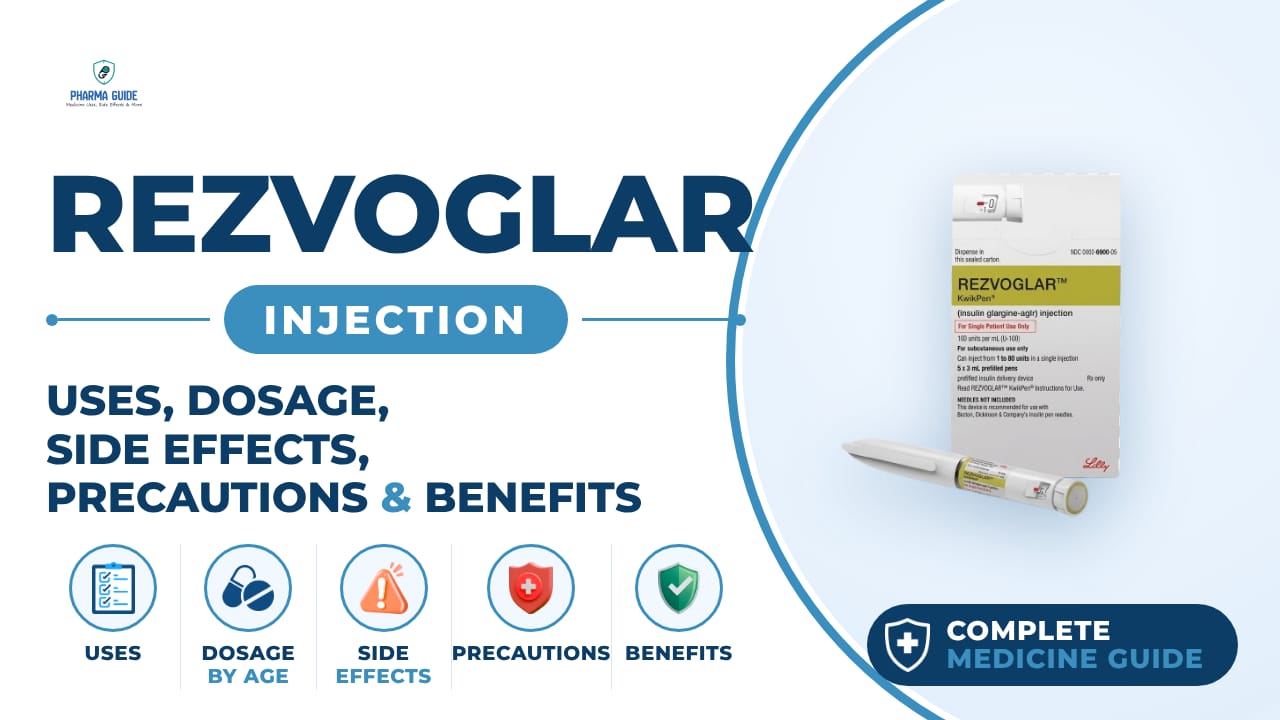
Rezvoglar Injection: Uses, Dosage, Side Effects, Precautions and Alternates
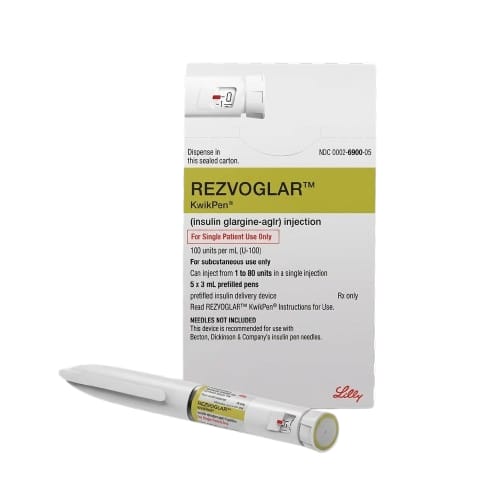
| Generic name | insulin glargine-aglr |
|---|---|
| Drug class | Long-Acting Insulin (Antidiabetics) |
| Forms | Injection |
Quick overview
Rezvoglar Injection (insulin glargine-aglr) is a long-acting man-made insulin used to control high blood sugar in people with diabetes. It works slowly over about 24 hours and is biosimilar to Lantus (insulin glargine), meaning it works essentially the same way as that medicine. It is not meant to treat diabetic ketoacidosis, a serious diabetes emergency.
What is Rezvoglar Injection
Rezvoglar is a long-acting man-made insulin used to control high blood sugar in people with diabetes. It works slowly over about 24 hours and is biosimilar to Lantus (insulin glargine), meaning it works essentially the same way as that medicine. It is not meant to treat diabetic ketoacidosis, a serious diabetes emergency.
Rezvoglar Injection uses
- Type 1 diabetes.
- Type 2 diabetes requiring insulin.
- Control of fasting blood sugar.
- Long-term blood sugar management.
- Basal insulin treatment alongside other prescribed diabetes medicines.
Benefits of Rezvoglar Injection
- Helps control blood sugar throughout the day.
- Helps lower fasting blood sugar.
- Provides long-acting insulin coverage.
- Supports stable glucose levels.
- Helps manage diabetes over the long term.
How Rezvoglar Injection works
Rezvoglar is a form of insulin. Insulin helps the body use sugar from food for energy and helps store extra energy for later. It lowers blood sugar by helping muscle and fat tissue take in glucose, and by stopping the liver from making more sugar. Because of how it's made, it releases slowly after injection, giving a steady effect over about 24 hours instead of a sharp peak.
Rezvoglar Injection dosage
Give the injection under the skin of the stomach area, thigh, or upper arm — not into a vein and not in an insulin pump. Take it at the same time every day, though the exact time of day can vary. Do not mix or dilute Rezvoglar with any other insulin or liquid.
Rotate (change) your injection site with each dose, and avoid injecting into the same spot or into skin with pits, lumps, thickening, bruising, scars, or tenderness. Always check the insulin label before each injection to make sure you have the right insulin, and always perform the safety test (priming) on the pen before each injection. Always use a new needle for each injection; never reuse needles.
In people with type 1 diabetes, this medicine must be used together with a short-acting insulin at mealtimes. People with type 1 or type 2 diabetes need their dose set individually by their doctor based on blood sugar levels. Elderly patients should start with a cautious, conservative dose to avoid low blood sugar reactions. Never share your prefilled pen with another person, even if you change the needle.
Use exactly as prescribed by your doctor or pharmacist.
Available forms and strengths
- Injection
Side effects of Rezvoglar Injection
Common
- Low blood sugar (hypoglycemia)
- Allergic reactions
- Injection site reactions (redness, pain, itching, hives, swelling, inflammation)
- Lipodystrophy (pits or thickening of skin at injection site)
- Itching
- Rash
- Fluid retention (swelling/edema)
- Weight gain
- Upper respiratory tract infection
- Headache
Serious
- Severe allergic reaction (hives, trouble breathing, swelling of face, lips, tongue, or throat)
- Severe low blood sugar (dizziness, confusion, seizures, loss of consciousness)
- Low potassium levels (hypokalemia)
- Heart failure, especially when combined with certain diabetes pills called TZDs (thiazolidinediones)
- Sudden vision loss, blurred vision, tunnel vision, eye pain, or seeing halos around lights
- Fast, irregular, or pounding heartbeat, fluttering in the chest, shortness of breath, sudden dizziness or passing out
- Severe headache, confusion, slurred speech, arm or leg weakness, trouble walking, loss of coordination, very stiff muscles, high fever, sweating, or tremors
Warnings and precautions
- Never share your prefilled pen with another person, even if you change the needle, because this can spread serious blood-borne infections.
- Changing your insulin regimen (type, strength, brand, injection site, or method) can affect your blood sugar control and lead to low or high blood sugar. Make any changes only under close medical supervision with more frequent blood sugar checks.
- This medicine can cause severe low blood sugar, which can be life-threatening, cause seizures, or even cause death.
- Mix-ups between this insulin and other insulins have happened. Always check the insulin label before each injection to avoid using the wrong insulin.
- Severe, life-threatening whole-body allergic reactions, including anaphylaxis, can occur with this medicine.
- This medicine can cause low potassium levels in the blood, which if untreated may cause serious breathing problems, abnormal heart rhythms, and death.
- Taking this medicine together with certain diabetes pills (TZDs/thiazolidinediones) can cause fluid retention that may lead to or worsen heart failure.
- Tell your doctor if you are pregnant or planning to become pregnant. It isn't known whether this medicine could affect your unborn baby, but poorly controlled diabetes itself carries risks to both mother and baby during pregnancy.
- It isn't known if this medicine passes into breast milk or affects a nursing baby. Talk with your doctor before breastfeeding while using this medicine.
- People with kidney problems may need more frequent blood sugar checks and dose adjustments, since kidney disease can change how the body clears insulin and may increase the risk of low blood sugar.
- People with liver problems may need more frequent blood sugar checks and dose adjustments, since liver disease can change how the body processes insulin and may increase the risk of low blood sugar.
- Drinking alcohol can cause severe low blood sugar when combined with this medicine. Talk to your healthcare team about safe alcohol use, and avoid over-the-counter medicines that contain alcohol.
- Low blood sugar can affect your ability to concentrate and react quickly, which can be dangerous while driving or operating machinery. Avoid these activities until you know how this medicine affects you, especially if you have frequent low blood sugar or reduced warning signs of it.
Storage
- Store unused (unopened) Rezvoglar in a refrigerator between 36°F and 46°F (2°C and 8°C)
- Do not freeze. Discard Rezvoglar if it has been frozen
- Protect from direct heat and light
- Unopened pens may also be kept at room temperature (up to 86°F/30°C) for up to 28 days
- Once opened (in use), store at room temperature only for up to 28 days; do not refrigerate an opened pen
- Throw away the pen after 28 days of use even if insulin remains inside
- Keep out of the reach of children
- Put used needles in a puncture-resistant sharps container right away; do not throw loose needles in household trash
- Dispose of a full sharps container according to your community guidelines
When to see a doctor
- Get emergency medical help right away if you have signs of a severe allergic reaction, such as a rash over your whole body, trouble breathing, swelling of the face, tongue or throat, a fast heartbeat, or sweating.
- Call your doctor or go to the hospital right away if symptoms of low blood sugar do not improve after treating them, and get emergency help immediately for seizures or loss of consciousness.
- Check with your doctor right away if you have new or worsening signs of heart failure, such as rapid weight gain, chest pain or discomfort, extreme tiredness, trouble breathing, uneven heartbeat, or swelling of the hands, wrists, ankles, or feet.
- Call your doctor right away if you develop a rash, itching, trouble breathing or swallowing, or swelling of your hands, face, or mouth while using this medicine.
Alternatives
- Toujeo
- Basaglar
- Lantus
Watch the video
FAQs
What is Rezvoglar Injection used for?
Rezvoglar is a long-acting man-made insulin used to control high blood sugar in people with type 1 or type 2 diabetes. It helps control fasting blood sugar and supports long-term blood sugar management as a basal insulin, often alongside other diabetes medicines.
How does Rezvoglar Injection work?
Rezvoglar helps muscle and fat tissue take in glucose and stops the liver from making more sugar. Because of how it's made, it releases slowly after injection, giving a steady effect over about 24 hours instead of a sharp peak.
How should Rezvoglar Injection be injected?
Give the injection under the skin of the stomach area, thigh, or upper arm—not into a vein and not in an insulin pump. Take it at the same time every day, rotate injection sites, never mix it with other insulins, and always use a new needle for each injection.
What are the serious side effects of Rezvoglar Injection?
Serious side effects include severe allergic reactions, severe low blood sugar, low potassium levels, heart failure (especially when combined with TZD diabetes pills), and sudden vision changes.
How should Rezvoglar Injection be stored?
Store unused pens in a refrigerator between 36°F and 46°F, protected from heat and light, or at room temperature up to 86°F for up to 28 days. Once opened, keep at room temperature only and discard after 28 days, even if insulin remains.
General information, not medical advice
Your prescriber and the leaflet in your pack know your situation. This page does not.
- Follow your prescriber and the leaflet
- Don't start, stop, or change a dose on your own
- Doses and warnings differ by country and product
Sources
Video
Related medicines

Injectafer Injection: Uses, Dosage, Side Effects, Precautions and Alternates
Iron products
Injectafer (ferric carboxymaltose) treats iron deficiency anemia and heart failure-related iron deficiency via IV. Learn uses, dosage, side effects, and

Gliclazide Tablet: Uses, Dosage, Side Effects, Precautions and Alternates
Sulfonylurea (hypoglycemic/antidiabetic agent)
Gliclazide Tablet is a sulfonylurea for type 2 diabetes that boosts insulin release. Learn about dosage, side effects, warnings, and precautions.