
Safety
General information, not medical advice
Your prescriber and the leaflet in your pack know your situation. This page does not.
- Follow your prescriber and the leaflet
- Don't start, stop, or change a dose on your own
- Doses and warnings differ by country and product
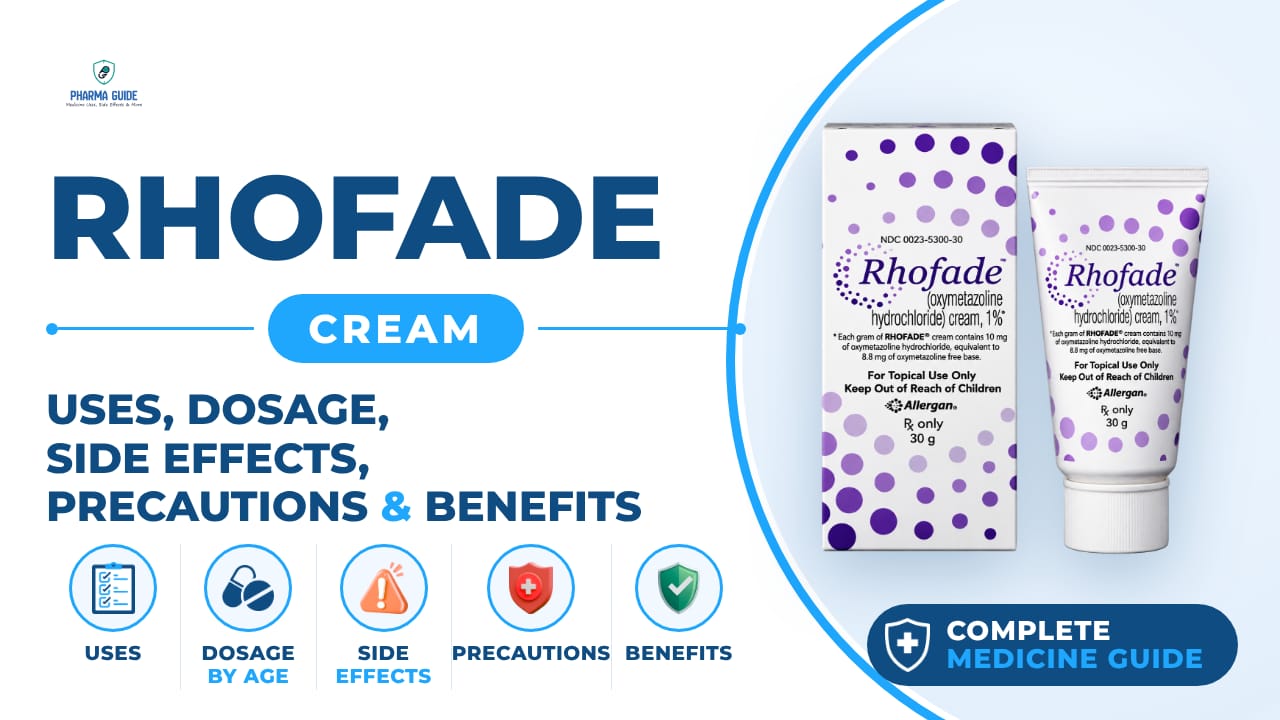
Rhofade Cream: Uses, Dosage, Side Effects, Precautions and Alternates
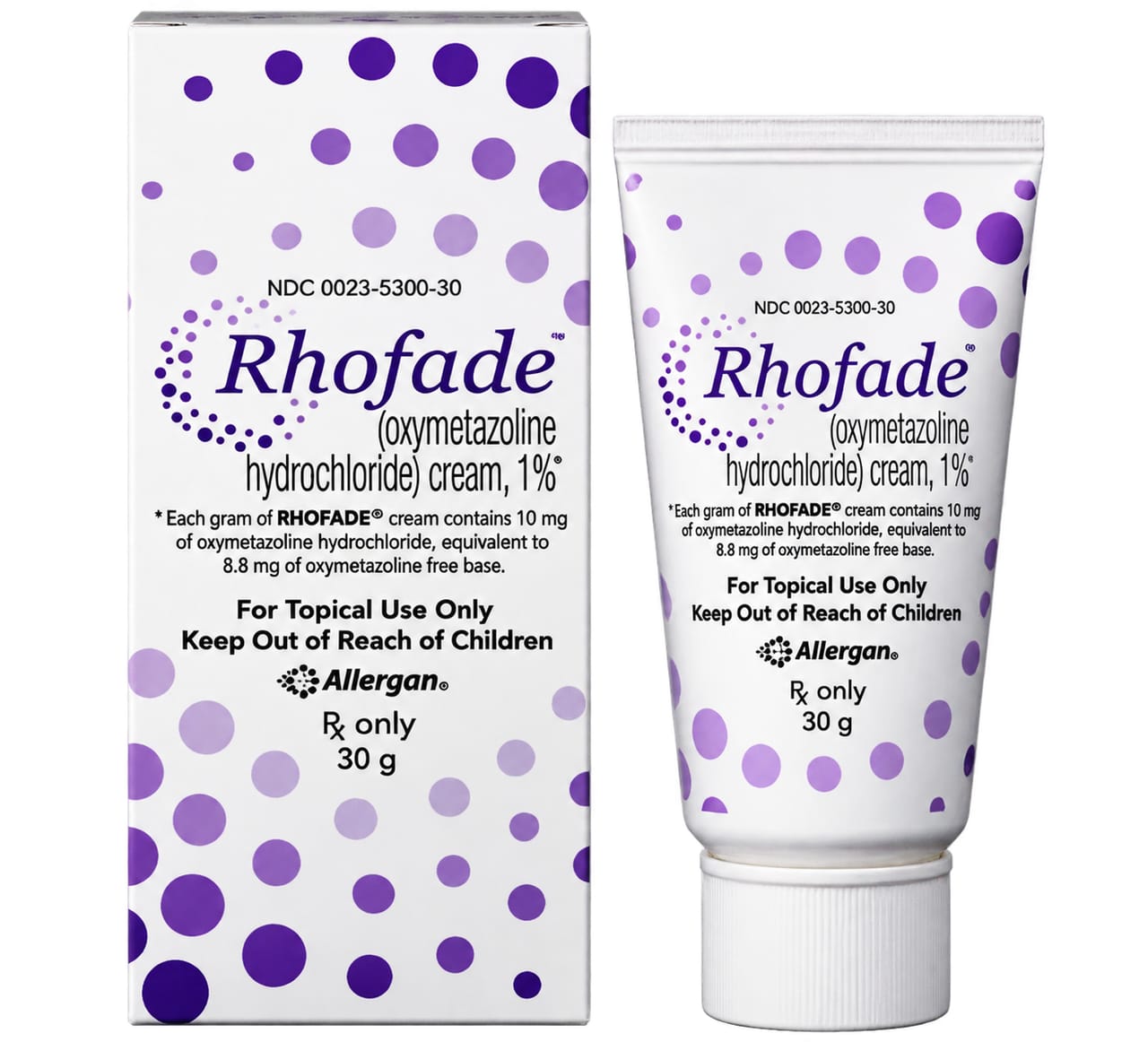
| Generic name | oxymetazoline topical |
|---|---|
| Drug class | Topical anti-rosacea agents (alpha-1 adrenergic receptor agonist) |
| Forms | Cream (topical), Tube, Pump |
Quick overview
Rhofade Cream (oxymetazoline topical) is a prescription topical anti-rosacea agent that belongs to the alpha-1 adrenergic receptor agonist class. It is used to treat persistent facial redness caused by rosacea in adults by narrowing blood vessels in the skin. It is applied once daily as a thin layer over the entire face.
What is Rhofade Cream
Rhofade is a prescription cream that helps reduce facial redness caused by rosacea in adults. It is a decongestant-type medicine that narrows blood vessels in the skin.
Rhofade Cream uses
- Treats facial redness (persistent facial erythema) caused by rosacea in adults
Benefits of Rhofade Cream
- May help decrease facial redness caused by rosacea
- Only needs to be applied once a day
- Some people notice improvement in redness after a single application
How Rhofade Cream works
Rhofade works by narrowing the blood vessels near the surface of the skin. When applied to the skin, it blocks certain receptors on blood vessels, causing them to become narrower and thinner, which makes the skin look less red.
Rhofade Cream dosage
Use exactly as prescribed by your doctor and follow the directions on your prescription label. Apply a thin layer to cover your entire face, including your forehead, nose, cheeks, and chin. Avoid applying near or in your eyes, mouth, lips, or vagina. Do not use on open wounds or irritated or broken skin. Wash your hands right away after applying.
If you are using the pump, prime it before first use by pressing it a few times into a tissue and throwing away the first few pumps; tubes do not need priming. Use it at the same time each day to help you remember. Do not use more than prescribed or for longer than prescribed, since this will not make your skin improve faster and can increase side effects.
If you accidentally get it in your eyes, rinse with plenty of cool water. If you miss a dose, apply it as soon as you remember, but skip it if it is almost time for your next dose — do not double up. This medicine is not approved for use in anyone younger than 18 years old. Tell your doctor if your symptoms do not improve or get worse.
| Age group | Dose |
|---|---|
| Under 18 years | Not established / not recommended |
| 18–64 years | Apply a pea-sized amount once daily in a thin layer over the entire face |
| 65+ years | Apply a pea-sized amount once daily in a thin layer over the entire face |
Available forms and strengths
- Cream (topical)
- Tube
- Pump
Side effects of Rhofade Cream
Common
- Skin redness or itching
- Pain at the application site
- Irritation or rash at the application site
- Worsening of rosacea pimples/bumps
- Dermatitis (skin inflammation)
- Other skin reactions
Serious
- Signs of an allergic reaction: hives, difficulty breathing, swelling of the face, lips, tongue, or throat
- Worsening of rosacea symptoms
- Numbness, tingling, or cold feeling in your hands or feet
- Pale or purple appearance in your fingers or toes
- Blurred vision, tunnel vision, eye pain, or seeing halos around lights
- Signs of worsening heart problems: severe headaches, nosebleeds, difficulty breathing, irregular heartbeat, dizziness, feeling faint, chest pain
- Signs of sudden glaucoma: severe eye or head pain, red eye, sudden loss of vision, blurry vision
Warnings and precautions
Do not swallow this medicine — it is for use on the skin only. Tell your doctor if you have heart disease, high or low blood pressure, blood circulation problems, glaucoma, or conditions like Raynaud's syndrome, Buerger's disease, scleroderma, or Sjögren's syndrome before using this medicine. This medicine can affect blood flow and may worsen conditions like poor blood flow to the brain or heart, or Sjögren's syndrome.
This medicine can increase the risk of a type of glaucoma (angle closure glaucoma) because of how it works in the eye. People with narrow-angle glaucoma should use it cautiously because it may increase the risk of acute angle-closure glaucoma. Seek urgent medical care for severe eye pain or sudden vision changes.
Tell your doctor about all medicines you take, since using blood pressure medications or certain antidepressants (MAOIs) with this cream may interact or cause serious side effects. Tell your doctor if you take beta-blockers, blood-pressure medicines, cardiac glycosides, alpha-1 blockers, or MAO inhibitors, as interactions may occur. This medicine may be harmful if swallowed, especially by children.
For external use on the face only. Do not use orally, in the eyes, mouth, or vagina. Avoid the eyes and lips and wash hands immediately after application. Do not apply to irritated skin, open wounds, or damaged skin.
Use cautiously if you have heart disease, uncontrolled high or low blood pressure, or orthostatic hypotension, because oxymetazoline may affect blood pressure. Use caution with Raynaud's phenomenon, cerebral/coronary circulation problems, thromboangiitis obliterans, scleroderma, or Sjögren's syndrome.
Alcohol can be a trigger that worsens rosacea symptoms, so it may be best to avoid it while using this medicine.
It is not known whether Rhofade will harm an unborn baby. Tell your doctor if you are pregnant or plan to become pregnant, since this medicine should be used only if clearly needed. It is also not known whether this medicine passes into breast milk or could affect a nursing baby. Talk to your doctor before breastfeeding.
Storage
- Store at room temperature away from moisture and heat.
- Keep all medications away from children and pets.
- Do not flush medications down the toilet or pour them into a drain unless instructed to do so.
- Properly discard this product when it is expired or no longer needed. Consult your pharmacist or local waste disposal company.
When to see a doctor
Get emergency medical help right away if you notice signs of a serious allergic reaction, such as rash, itching or swelling of the face, tongue, or throat, severe dizziness, or trouble breathing. Stop using the cream and call your doctor right away if your rosacea gets worse, or if you have numbness, tingling, or a cold feeling in your hands or feet, or pale or purple fingers or toes.
Get medical help right away if you have blurred vision, tunnel vision, eye pain, or see halos around lights, as these can be signs of a serious eye problem. Get medical attention right away if you have severe headaches, nosebleeds, difficulty breathing, an irregular heartbeat, dizziness, feeling faint, or chest pain, as these may mean your heart or blood pressure problems have worsened.
If someone swallows this medicine and has serious symptoms like passing out or trouble breathing, call for emergency help right away. Otherwise, contact a poison control center immediately.
Alternatives
- Mirvaso (brimonidine) 0.33% gel
- Azelaic acid 15% gel/foam
- Ivermectin 1% cream
Watch the video
FAQs
What is Rhofade Cream used for?
Rhofade Cream is used to treat persistent facial redness (erythema) caused by rosacea in adults.
How often should I apply Rhofade Cream?
Rhofade is applied once daily as a thin layer over the entire face, including the forehead, nose, cheeks, and chin.
How does Rhofade Cream work?
It works by narrowing blood vessels near the surface of the skin, which makes the skin look less red.
What are the common side effects of Rhofade Cream?
Common side effects include skin redness or itching, pain at the application site, irritation or rash, worsening of rosacea pimples or bumps, and dermatitis.
Can Rhofade Cream be used by children?
No, Rhofade is not approved for use in anyone younger than 18 years old.
General information, not medical advice
Your prescriber and the leaflet in your pack know your situation. This page does not.
- Follow your prescriber and the leaflet
- Don't start, stop, or change a dose on your own
- Doses and warnings differ by country and product
Sources
Video
Related medicines

Injectafer Injection: Uses, Dosage, Side Effects, Precautions and Alternates
Iron products
Injectafer (ferric carboxymaltose) treats iron deficiency anemia and heart failure-related iron deficiency via IV. Learn uses, dosage, side effects, and

Gliclazide Tablet: Uses, Dosage, Side Effects, Precautions and Alternates
Sulfonylurea (hypoglycemic/antidiabetic agent)
Gliclazide Tablet is a sulfonylurea for type 2 diabetes that boosts insulin release. Learn about dosage, side effects, warnings, and precautions.