
Safety
General information, not medical advice
Your prescriber and the leaflet in your pack know your situation. This page does not.
- Follow your prescriber and the leaflet
- Don't start, stop, or change a dose on your own
- Doses and warnings differ by country and product
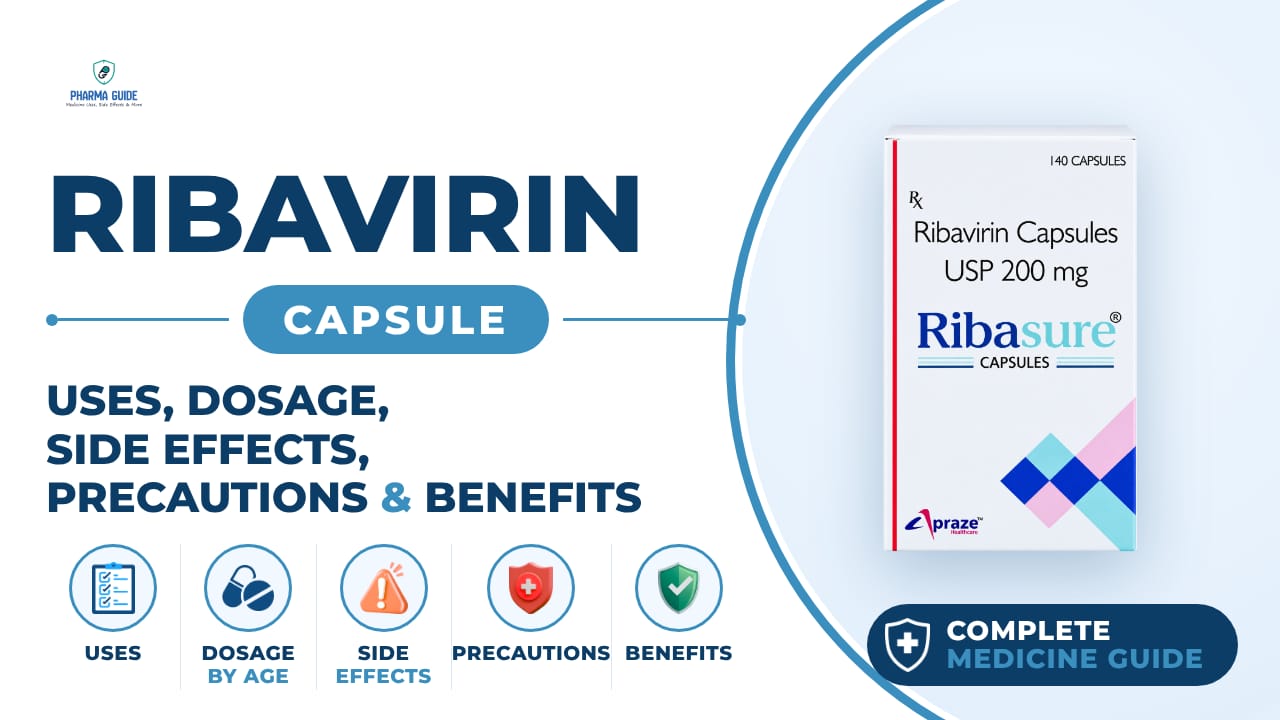
Ribavirin Capsule: Uses, Dosage, Side Effects, Precautions and Alternates
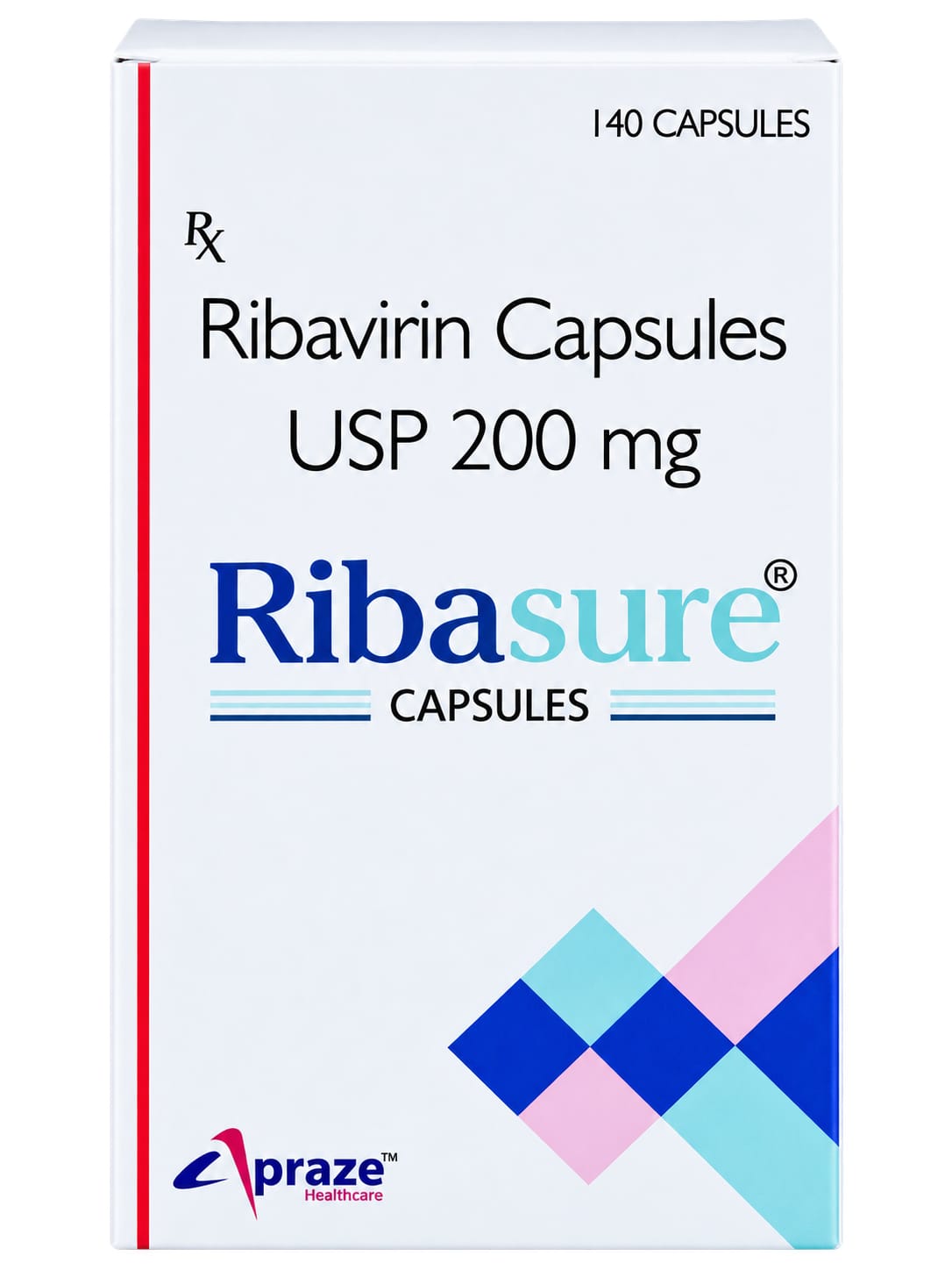
| Generic name | ribavirin |
|---|---|
| Drug class | Nucleoside analog (antiviral) |
| Forms | Capsules (200 mg), Oral solution (40 mg per mL) |
Quick overview
Ribavirin Capsule is an antiviral medicine used together with interferon alfa-2b to treat chronic hepatitis C infection in adults and some children. It does not work when taken alone. It carries important warnings, including risks of severe anemia and birth defects, and requires careful use as directed by a doctor.
What is Ribavirin Capsule
Ribavirin is an antiviral medicine used together with another medicine called interferon alfa-2b to treat long-term (chronic) hepatitis C infection in adults and some children. It does not work if taken by itself.
Ribavirin Capsule uses
- Treating chronic hepatitis C infection in adults 18 years and older with compensated liver disease, when given together with interferon alfa-2b (INTRON A)
- Treating chronic hepatitis C in patients who were previously untreated with alpha interferon
- Treating chronic hepatitis C in patients who relapsed after previous alpha interferon therapy
- In combination with pegylated or non-pegylated interferon alfa-2b for chronic hepatitis C in patients 3 years of age or older with compensated liver disease (per updated label)
Benefits of Ribavirin Capsule
- Used with interferon alfa-2b, can help some patients clear detectable hepatitis C virus from the blood
- Can lead to improvement in liver inflammation (histologic response) in some patients
- Used as part of certain hepatitis C treatment regimens
- Helps suppress viral replication
- Can improve treatment response in selected difficult-to-treat HCV cases
- Sometimes used with direct-acting antivirals in specific liver-disease situations
How Ribavirin Capsule works
Ribavirin is an antiviral drug, but exactly how it works together with interferon alfa-2b to fight the hepatitis C virus is not fully known.
Ribavirin Capsule dosage
Take ribavirin capsules with food. Take the medicine the same way every day, with or without food, but be consistent. Swallow capsules whole — do not open, crush, or break them. If you miss a dose, take it as soon as possible the same day; if a whole day has passed, check with your health care provider and do not double the next dose. Tell your health care provider about all other medicines, vitamins, minerals, and herbal products you take. Stay well hydrated, especially during the early part of treatment. Ribavirin must be used together with interferon alfa-2b, not alone, to treat hepatitis C.
| Age group | Dose |
|---|---|
| Under 3 years | Safety and effectiveness are not established for routine hepatitis C treatment |
| 3–17 years | Usually 15 mg/kg/day, divided into 2 doses, with the exact total based on body weight |
| 18–64 years, under 75 kg | Commonly 1,000 mg/day, divided into 2 doses |
Available forms and strengths
- Capsules (200 mg)
- Oral solution (40 mg per mL)
Side effects of Ribavirin Capsule
Common
- Headache
- Fatigue/tiredness
- Fever and chills (rigors)
- Muscle aches (myalgia)
- Joint pain (arthralgia)
- Nausea
- Loss of appetite
- Vomiting
- Dizziness
- Insomnia
- Irritability
- Depression
- Hair loss (alopecia)
- Rash and itching (pruritus)
- Dry mouth
- Taste changes
- Dry skin
Serious
- Severe drop in red blood cells (hemolytic anemia), which can worsen heart disease and cause heart attacks
- Severe depression, suicidal thoughts, or suicide attempts
- Suppression of bone marrow leading to low white blood cells or platelets
- Pancreatitis (severe stomach pain with nausea and vomiting)
- Serious lung problems, including pneumonia, pneumonitis, or worsening sarcoidosis
- Serious eye problems that can affect vision
- Severe allergic reactions (hives, swelling, trouble breathing)
- Dental and gum problems
- Autoimmune disorders getting worse
- Thyroid problems
- Worsening diabetes
- Birth defects or death of an unborn baby if used during pregnancy
Warnings and precautions
- Ribavirin must never be used alone to treat hepatitis C — it is only effective when combined with interferon alfa-2b.
- The main serious side effect of ribavirin is hemolytic anemia, which can worsen heart disease and has led to both fatal and nonfatal heart attacks. People with a history of serious or unstable heart disease should not take ribavirin.
- Animal studies show ribavirin causes serious birth defects and can kill the developing fetus; it stays in the body for a long time (up to 6 months), so pregnancy must be strictly avoided during and for 6 months after treatment, using two reliable forms of birth control.
- People with certain blood disorders, such as thalassemia or sickle-cell anemia, should not take ribavirin.
- People with autoimmune hepatitis should not take ribavirin with interferon, as it can make the liver disease worse.
- Taking ribavirin with didanosine is not recommended because it has been linked to fatal liver failure and other serious toxic effects.
- Ribavirin must not be used by women who are pregnant or by men whose female partners are pregnant, because it can cause birth defects or death of the unborn baby. A negative pregnancy test is required before starting, and two forms of birth control plus monthly pregnancy tests are needed during treatment and for 6 months after stopping.
- It is not known if ribavirin passes into breast milk, but because of the risk of serious side effects in nursing babies, you and your doctor should decide whether to stop breastfeeding or stop the medicine.
- Ribavirin should not be used in people with significant kidney problems (creatinine clearance below 50 mL/min), since the drug builds up in the body and increases the risk of side effects.
- Ribavirin levels in the blood can rise with worse liver function, though total drug exposure over time was similar; caution and monitoring are advised in people with liver problems other than hepatitis C.
- Avoid drinking alcohol while taking ribavirin, since it may make liver disease worse.
Storage
- Store ribavirin capsules at 25°C (77°F); brief changes between 15°-30°C (59°-86°F) are permitted
- Dispense in a tight container as defined in the USP
When to see a doctor
- Get emergency help right away if you have signs of a severe allergic reaction, such as trouble breathing, hives, or swelling of the face or throat.
- Call your health care provider right away if you feel unusually tired, have chest pain, or shortness of breath, as these may be signs of dangerously low red blood cell counts.
- Seek medical help immediately for severe stomach or lower back pain, which could signal pancreatitis.
- Get medical help right away if you notice bloody or black, tarry stools, unusual bruising, or other bleeding.
- Tell your health care provider right away if you have thoughts of hurting yourself or others, or symptoms like ongoing sadness, loss of interest, major sleep changes, or increased irritability.
- Contact your doctor if you or your partner becomes pregnant during treatment or within 6 months after stopping ribavirin.
Alternatives
- Sofosbuvir/velpatasvir
- Glecaprevir/pibrentasvir
- Ledipasvir/sofosbuvir
Watch the video
FAQs
Can Ribavirin Capsule be taken alone for hepatitis C?
No, Ribavirin does not work if taken by itself. It must be used together with interferon alfa-2b to treat chronic hepatitis C.
What is the main serious side effect of Ribavirin Capsule?
The main serious side effect is hemolytic anemia, a severe drop in red blood cells, which can worsen heart disease and has led to fatal and nonfatal heart attacks.
Is Ribavirin Capsule safe during pregnancy?
No, Ribavirin can cause birth defects or death of an unborn baby. Pregnancy must be strictly avoided during treatment and for 6 months after, using two reliable forms of birth control along with monthly pregnancy tests.
How should Ribavirin Capsule be taken?
Take the capsules with food, swallow them whole without opening, crushing, or breaking them, and take the medicine the same way every day. Stay well hydrated, especially early in treatment.
Who should not take Ribavirin Capsule?
People with serious or unstable heart disease, certain blood disorders like thalassemia or sickle-cell anemia, significant kidney problems, or autoimmune hepatitis should not take Ribavirin.
General information, not medical advice
Your prescriber and the leaflet in your pack know your situation. This page does not.
- Follow your prescriber and the leaflet
- Don't start, stop, or change a dose on your own
- Doses and warnings differ by country and product
Sources
Video
Related medicines

Injectafer Injection: Uses, Dosage, Side Effects, Precautions and Alternates
Iron products
Injectafer (ferric carboxymaltose) treats iron deficiency anemia and heart failure-related iron deficiency via IV. Learn uses, dosage, side effects, and

Gliclazide Tablet: Uses, Dosage, Side Effects, Precautions and Alternates
Sulfonylurea (hypoglycemic/antidiabetic agent)
Gliclazide Tablet is a sulfonylurea for type 2 diabetes that boosts insulin release. Learn about dosage, side effects, warnings, and precautions.