
Safety
General information, not medical advice
Your prescriber and the leaflet in your pack know your situation. This page does not.
- Follow your prescriber and the leaflet
- Don't start, stop, or change a dose on your own
- Doses and warnings differ by country and product
Rifapentine Tablet: Uses, Dosage, Side Effects, Precautions and Alternates
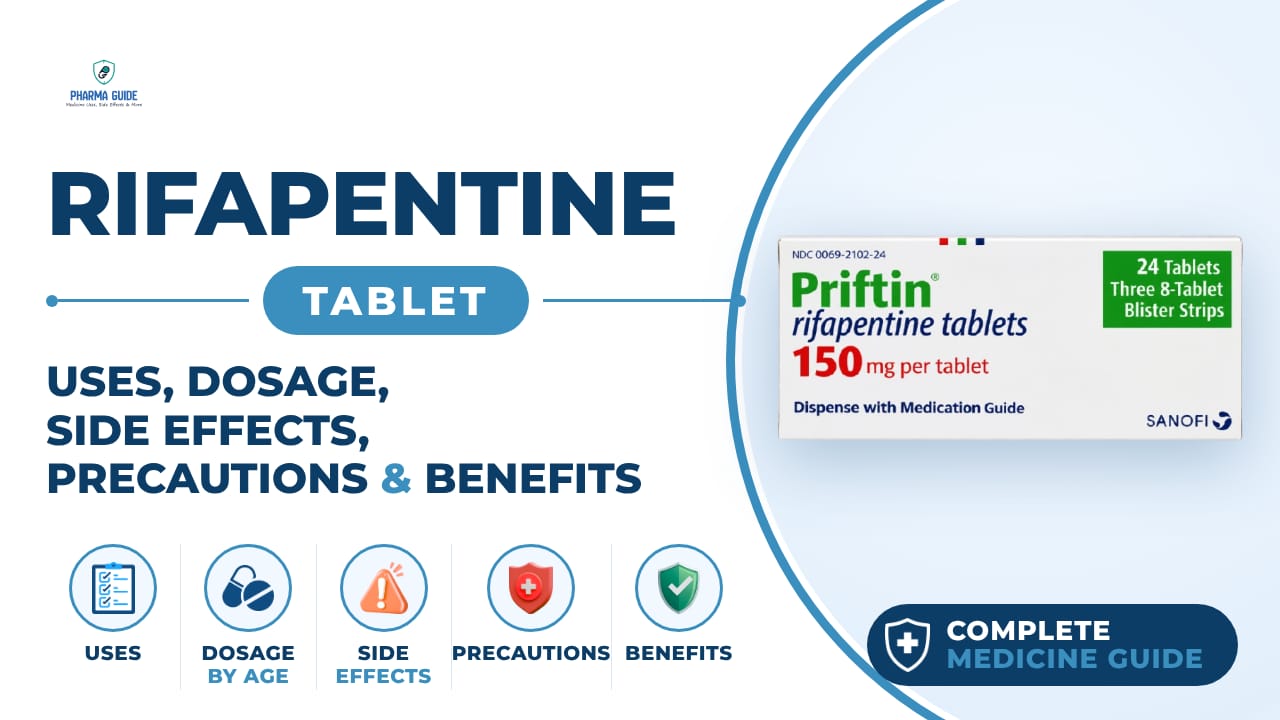
| Generic name | rifapentine |
|---|---|
| Drug class | Rifamycin antibiotic |
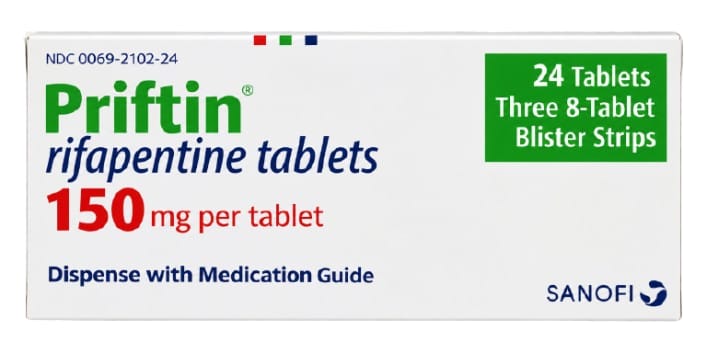
| Forms | Tablet (150 mg) |
Quick overview
Rifapentine Tablet is a prescription rifamycin antibiotic used to treat active tuberculosis (TB) in adults and children 12 and older, and latent TB in people 2 and older, always in combination with other TB medicines. It works by blocking a protein that TB bacteria need to grow, allowing the body's immune system to help clear the infection. It is typically taken once or twice a week with food, and it is never used alone to treat TB.
What is Rifapentine Tablet
Rifapentine is a prescription antibiotic that fights the bacteria that cause tuberculosis (TB). It belongs to a group of drugs called rifamycins and is always used together with other TB medicines.
Rifapentine Tablet uses
- Treating active tuberculosis (TB) in adults and children ages 12 and older, used together with other TB antibiotics
- Treating latent (inactive) TB in people ages 2 and older who are at high risk of the infection becoming active, used together with isoniazid
Benefits of Rifapentine Tablet
- Taken once or twice a week instead of every day
- Can be used in children as young as 2 years old for latent TB
- No dosage adjustments needed for people with liver or kidney problems
- Tablets can be crushed and mixed with soft food for people who have trouble swallowing
How Rifapentine Tablet works
Rifapentine blocks a protein that TB bacteria need to grow and spread. This stops the bacteria from multiplying so the body's immune system can help clear the infection.
Rifapentine Tablet dosage
Take with food, since this helps the medicine absorb better and can reduce stomach upset, nausea, and vomiting. Take at around the same time on your scheduled days.
If you or your child cannot swallow the tablets whole, they can be crushed and mixed into a small amount of soft food like applesauce or pudding, and the mixture should be eaten right away rather than saved for later.
Doses are usually given once or twice a week depending on whether you have active or latent TB and which phase of treatment you are in. Always take it together with other TB medicines as instructed by your prescriber, since it should not be used alone.
Finish the full course of treatment even if you start feeling better, and try not to miss doses, since this can let the infection come back and become harder to treat.
| Age group | Dose |
|---|---|
| Under 18 years | Not recommended |
| 18–64 years | 600 mg, once/day |
| 65+ years | 600 mg, once/day |
Available forms and strengths
- Tablet (150 mg)
Side effects of Rifapentine Tablet
Common
- Low blood cell counts
- Vomiting blood
- Coughing
- Sweating
- Elevated liver enzymes
- Low white blood cell count
- Nausea
- Vomiting
- Diarrhea
- Stomach upset or indigestion
- Headache
- Dizziness
- Rash
- Itching
- Loss of appetite
- Flu-like symptoms
- Joint pain
- Eye redness
- Abnormal liver function tests
Serious
- Liver problems: severe nausea, vomiting, right-sided stomach pain, fatigue, low or no appetite, yellowing of the skin or eyes
- Low blood cell counts: fever, chills, weakness, unusual bruising or bleeding, blood in urine or stools
- Severe allergic reaction: rash, trouble breathing, swelling of the face, lips, tongue, or throat
- Severe skin reaction: rash, painful blisters, skin reddening, skin peeling, mouth sores, sore throat, fever, fatigue
- Clostridioides difficile (C. diff) related diarrhea: rapid heart rate, fever, nausea, foul-smelling diarrhea, frequent bowel movements (even up to 15 times per day)
- Low red blood cells (anemia): pale skin, feeling light-headed or short of breath, rapid heart rate, trouble concentrating
Warnings and precautions
- This medicine can raise liver enzyme levels, a sign of possible liver injury. Avoid alcohol and other medicines that can harm the liver, and get medical help right away for symptoms like severe nausea, vomiting, right-sided stomach pain, fatigue, poor appetite, or yellowing of the skin or eyes.
- Serious, life-threatening allergic reactions are possible, including swelling of the face and closing of the throat. Stop the medicine and get medical help immediately if you notice rash, swelling of the face or lips, or trouble breathing.
- Serious and potentially life-threatening skin reactions, including Stevens-Johnson syndrome and DRESS syndrome, have been reported. Stop the medicine and seek medical attention right away if you notice rash, painful blisters, skin reddening, peeling skin, or mouth sores, or if you have sore throat, fever, or fatigue.
- It is normal for this medicine to turn body fluids such as urine, sweat, saliva, and tears a red-orange color. This is harmless to your body but can permanently stain contact lenses or dentures.
- Antibiotics, including this one, can cause a serious bowel infection called C. diff, which can lead to life-threatening diarrhea. This is considered a medical emergency with symptoms like fast heart rate, fever, nausea, and frequent, foul-smelling diarrhea.
- This medicine can make hormonal birth control (pills, patches, rings, implants, injections) less effective, raising the risk of unintended pregnancy. Talk to your care team about switching to a non-hormonal method of birth control.
- This medicine should not be used alone to treat TB; it must always be combined with other TB medicines, and missing doses can let the infection come back and become harder to treat.
- There is no well-controlled research on using rifapentine during pregnancy. In animal studies, it caused harm to the developing fetus, so it should only be used in pregnancy if the benefit outweighs the risk. Taking it late in pregnancy may increase bleeding risk for the mother and baby.
- It isn't known if rifapentine passes into breast milk. Because it could cause harm to a nursing baby, a decision should be made between continuing to breastfeed or taking the medicine, and it may turn breast milk a red-orange color.
- The effect of kidney problems on how this drug is processed by the body isn't well known, since only a small portion of the dose is removed through the kidneys.
- People with liver problems or abnormal liver tests should only take this medicine if truly necessary and under close medical supervision, with liver function tests done before and regularly during treatment.
- It's best to avoid alcohol while taking this medicine, since it raises the risk of liver damage, and heavy drinking can weaken the immune system and make it harder to recover from infection.
Storage
- Store at room temperature away from excess heat and moisture (not in the bathroom)
- Keep this medication in the container it came in, tightly closed, and out of reach of children
- Dispose of unneeded medications in a way so that pets, children, and other people cannot take them. Do not flush this medication down the toilet. Use a medicine take-back program.
When to see a doctor
- Get medical help right away if you have signs of a severe allergic reaction: hives, difficulty breathing, or swelling of your face, lips, tongue, or throat.
- Call your doctor right away if you have watery or bloody diarrhea, signs of liver problems (nausea, upper stomach pain, itching, tiredness, loss of appetite, dark urine, clay-colored stools, yellowing of skin or eyes), signs of anemia (pale skin, light-headedness, shortness of breath, rapid heart rate, trouble concentrating), or signs of low white blood cells (fever, swollen gums, painful mouth sores, pain swallowing, skin sores, cold or flu symptoms, cough, trouble breathing).
- If you think you've taken too much of this medicine, get emergency medical help or contact your local poison control center right away.
- Tell your doctor promptly if you notice fever, loss of appetite, feeling unwell, nausea and vomiting, darkened urine, yellowing of the skin or eyes, or joint pain or swelling.
Alternatives
- Rifamate
- Isoniazid
- Rifampin
Watch the video
FAQs
What is Rifapentine Tablet used for?
It treats active tuberculosis in adults and children 12 and older, and latent TB in people 2 and older, always combined with other TB medicines.
How often is Rifapentine Tablet taken?
It is typically taken once or twice a week with food, depending on whether you have active or latent TB and the treatment phase.
Can Rifapentine Tablet be used alone to treat TB?
No, it should never be used alone; it must always be combined with other TB medicines.
Does Rifapentine Tablet affect birth control?
Yes, it can make hormonal birth control like pills, patches, rings, implants, and injections less effective, raising the risk of unintended pregnancy, so a non-hormonal method may be recommended.
Does Rifapentine Tablet change the color of body fluids?
Yes, it can turn urine, sweat, saliva, and tears a red-orange color, which is harmless but can permanently stain contact lenses or dentures.
General information, not medical advice
Your prescriber and the leaflet in your pack know your situation. This page does not.
- Follow your prescriber and the leaflet
- Don't start, stop, or change a dose on your own
- Doses and warnings differ by country and product
Sources
Video
Related medicines

Injectafer Injection: Uses, Dosage, Side Effects, Precautions and Alternates
Iron products
Injectafer (ferric carboxymaltose) treats iron deficiency anemia and heart failure-related iron deficiency via IV. Learn uses, dosage, side effects, and

Gliclazide Tablet: Uses, Dosage, Side Effects, Precautions and Alternates
Sulfonylurea (hypoglycemic/antidiabetic agent)
Gliclazide Tablet is a sulfonylurea for type 2 diabetes that boosts insulin release. Learn about dosage, side effects, warnings, and precautions.