
Safety
General information, not medical advice
Your prescriber and the leaflet in your pack know your situation. This page does not.
- Follow your prescriber and the leaflet
- Don't start, stop, or change a dose on your own
- Doses and warnings differ by country and product
Rifater Tablet: Uses, Dosage, Side Effects, Precautions and Alternates
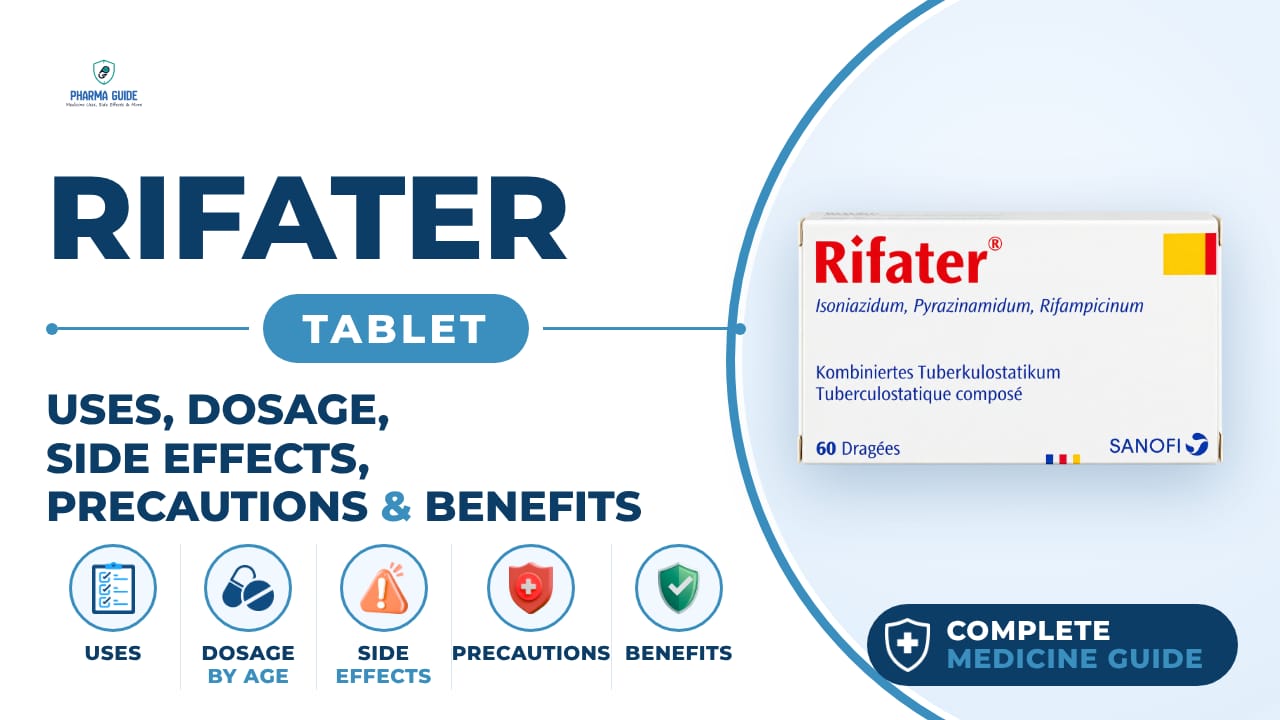
| Generic name | rifampin, isoniazid, and pyrazinamide |
|---|---|
| Drug class | Antitubercular agent (antituberculous antibiotic combination) |
| Forms | Tablets |
Quick overview
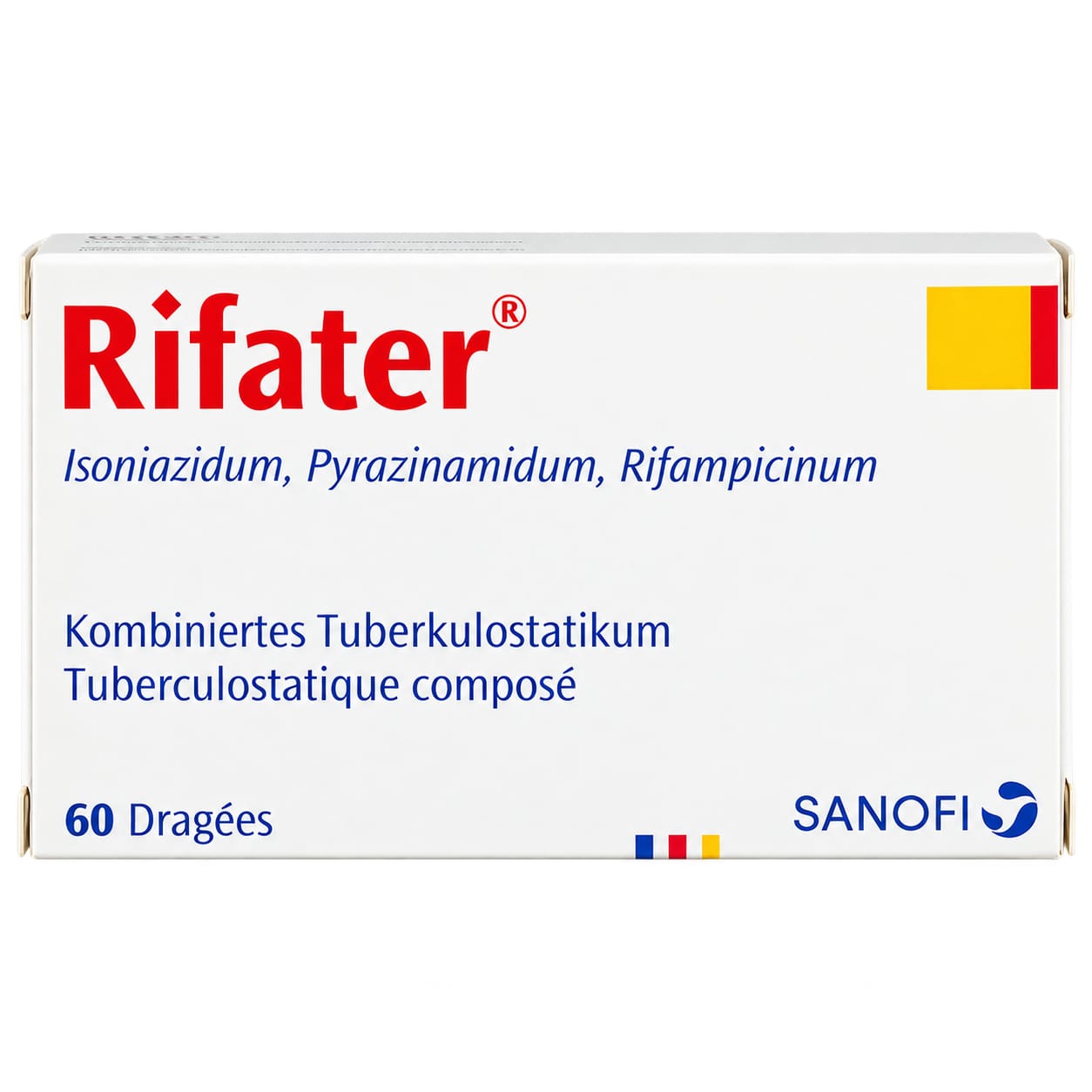
Rifater Tablet is a combination of rifampin, isoniazid, and pyrazinamide, an antitubercular antibiotic combination used to treat the initial phase of short-course therapy for pulmonary tuberculosis. It combines three TB medicines into one tablet for dosing convenience and works by attacking TB bacteria in different ways. It is no longer available in the United States and Canada, but this information is kept for reference.
What is Rifater Tablet
Rifater is a combination tablet containing three antibiotics—rifampin, isoniazid, and pyrazinamide—used together to treat tuberculosis (TB) infection of the lungs. It is no longer available in the United States and Canada but this information is kept for reference.
Rifater Tablet uses
- Treats the initial phase of short-course therapy for pulmonary (lung) tuberculosis, usually for the first 2 months of treatment
Benefits of Rifater Tablet
- Combines three TB medicines into one tablet for dosing convenience
- Kills the bacteria that cause tuberculosis
- Treats active tuberculosis (TB)
- Combines three anti-TB medicines in one tablet
- Simplifies the initial phase of multidrug TB therapy
- Helps reduce the development of drug resistance when used as part of an appropriate regimen
How Rifater Tablet works
The three medicines in Rifater attack TB bacteria in different ways. Rifampin blocks an enzyme the bacteria need to make RNA. Isoniazid stops the bacteria from making a substance needed for their cell wall. Pyrazinamide also fights the bacteria, though exactly how it works is not fully known.
Rifater Tablet dosage
Take Rifater as a single daily dose, either 1 hour before or 2 hours after a meal, with a full glass of water. Try to take it at the same time each day. Do not take it with antacids; if you need an antacid, take it at least 1 hour after Rifater.
Finish the entire course of treatment even if you start to feel better, to keep the infection from coming back and becoming harder to treat. If you miss a dose, take it as soon as you remember; if it is almost time for your next dose, skip the missed dose and go back to your regular schedule — do not double up.
This combination is not considered appropriate for children, since the proportions of the three drugs may not give children the right amount of each medicine. After the first part of treatment, your doctor will continue you on rifampin and isoniazid alone for at least 4 more months.
Avoid eating foods high in tyramine (such as cheese, red wine) or histamine (such as tuna and other tropical fish) while taking this medicine.
| Age group | Dose |
|---|---|
| 15+ years, ≤44 kg | 4 tablets once daily = rifampin 480 mg + isoniazid 200 mg + pyrazinamide 1,200 mg |
| 15+ years, 45–54 kg | 5 tablets once daily = rifampin 600 mg + isoniazid 250 mg + pyrazinamide 1,500 mg |
| 15+ years, ≥55 kg | 6 tablets once daily = rifampin 720 mg + isoniazid 300 mg + pyrazinamide 1,800 mg |
Available forms and strengths
- Tablets
Side effects of Rifater Tablet
Common
- Numbness or tingling in hands, feet, arms or legs
- Red or orange discoloration of teeth, sweat, urine, saliva, and tears
- Nausea, vomiting, stomach pain
- Mild rash or itching
- Joint or muscle pain
- Headache
- Dizziness, drowsiness, fatigue
- Loss of appetite
- Heartburn, gas
- Acne
- Blurred vision
- Flu-like symptoms (chills, body ache, fever)
- Increased blood sugar
Serious
- Signs of liver damage: nausea, vomiting, upper stomach pain, weakness, tiredness, loss of appetite, yellowing of skin or eyes, dark urine, light-colored stools
- Signs of an allergic reaction: hives, difficulty breathing, swelling of face or throat
- Severe skin reactions: fever, sore throat, burning eyes, skin pain, red or purple rash that spreads and causes blistering or peeling
- Serious whole-body drug reaction: skin rash, fever, swollen glands, muscle aches, severe weakness, unusual bruising, joint pain or stiffness
- Numbness, tingling, or burning pain in hands or feet (nerve damage)
- Vision problems or pain behind the eyes
- Wheezing or trouble breathing
- Severe or bloody, watery diarrhea
- Signs of bleeding: bleeding gums, unexplained nosebleeds, unusual bruising
- Signs of gout: joint pain, swelling and warmth of joints
- Confusion, hallucinations, or seizures
- Symptoms of pancreatitis: upper left abdominal pain, back pain, chills, fever, nausea, rapid heartbeat, swollen abdomen
Warnings and precautions
- Isoniazid, one of the three medicines in Rifater, can cause severe and sometimes fatal liver inflammation (hepatitis), which can develop even after many months of treatment. The risk is higher in older age groups and with daily alcohol use. Report right away any early warning signs of liver problems such as tiredness, weakness, feeling unwell, loss of appetite, nausea, or vomiting, since the medicine should be stopped promptly if these occur.
- Serious allergic (hypersensitivity) reactions can occur with all three components, with symptoms like fever, rash, hives, swelling, low blood pressure, sudden wheezing, pink eye, or flu-like illness. Severe skin reactions, including serious rash with blistering and peeling skin, have been reported and the medicine must be stopped immediately if these occur.
- Rifampin can affect blood clotting and cause bleeding problems, especially in people with poor nutrition, chronic liver disease, or who take certain other medicines. Lung problems, including serious and sometimes fatal inflammation of the lungs, have been linked to rifampin, and the medicine should be stopped immediately if breathing symptoms appear.
- This medicine should not be taken with certain other drugs, including some antiviral medicines and praziquantel, because of dangerous interactions. This medicine can cause eye problems, so eye exams are recommended before and during treatment, even if you do not notice vision changes. Do not skip doses or stop and restart the medicine on your own, since irregular use has been linked to rare but serious kidney reactions.
- The effect on an unborn baby is unclear. This medicine should only be used during pregnancy if the benefits outweigh the risks, and you should tell your doctor right away if you become pregnant while taking it.
- Rifampin, isoniazid, and pyrazinamide all pass into breast milk, so you and your doctor will need to decide whether to stop breastfeeding or stop the medicine.
- People with reduced kidney function should talk to their doctor, since this may affect how the medicine works or is dosed.
- This medicine can cause serious, sometimes fatal liver damage, and people with severe liver disease should not take it. Liver function will be checked regularly during treatment, and you should stop the medicine and call your doctor right away if you notice signs of liver damage.
- Avoid alcohol completely while taking this medicine, since daily drinking increases the risk of serious liver damage.
- Dizziness or visual disturbances may occur; avoid driving if affected.
Storage
- Store at room temperature (25°C/77°F, with excursions permitted to 15–30°C/59–86°F)
- Protect from excessive humidity
- Do not dispose of medications in wastewater or household garbage; ask your pharmacist how to dispose of medicines that are no longer needed or have expired
When to see a doctor
- Get emergency help right away if you have signs of a serious allergic reaction, such as hives, trouble breathing, or swelling of the face or throat
- Call your doctor immediately if you notice nausea, vomiting, stomach pain, weakness, tiredness, loss of appetite, or yellowing of your skin or eyes, as these can be early signs of liver damage
- Seek medical care if you develop a widespread drug reaction with rash, fever, swollen glands, muscle aches, severe weakness, unusual bruising, or joint pain/stiffness
- Call your doctor right away if you have numbness, tingling, or burning pain in your hands or feet, vision problems or pain behind the eyes, wheezing or trouble breathing, or severe/bloody watery diarrhea
- Stop the medicine and get immediate medical attention if you have severe watery or bloody diarrhea, hallucinations, seizures, or a severe skin reaction with blistering or peeling
Alternatives
- Separate rifampin + isoniazid + pyrazinamide
- Rifampin + isoniazid formulations
- Ethambutol-containing TB regimens
Watch the video
FAQs
What is Rifater Tablet used for?
Rifater Tablet is used to treat the initial phase of short-course therapy for pulmonary (lung) tuberculosis, usually for the first 2 months of treatment.
How should Rifater Tablet be taken?
Take Rifater as a single daily dose, either 1 hour before or 2 hours after a meal, with a full glass of water, at the same time each day. Do not take it with antacids; if needed, take an antacid at least 1 hour after Rifater.
What are the common side effects of Rifater Tablet?
Common side effects include numbness or tingling in hands, feet, arms or legs, red or orange discoloration of body fluids, nausea, vomiting, stomach pain, mild rash or itching, joint or muscle pain, headache, dizziness, drowsiness, fatigue, and loss of appetite.
Is Rifater Tablet safe for children?
No, this combination is not considered appropriate for children, since the proportions of the three drugs may not give children the right amount of each medicine.
Can I drink alcohol while taking Rifater Tablet?
No, you should avoid alcohol completely while taking this medicine, since daily drinking increases the risk of serious liver damage.
General information, not medical advice
Your prescriber and the leaflet in your pack know your situation. This page does not.
- Follow your prescriber and the leaflet
- Don't start, stop, or change a dose on your own
- Doses and warnings differ by country and product
Sources
Video
Related medicines

Injectafer Injection: Uses, Dosage, Side Effects, Precautions and Alternates
Iron products
Injectafer (ferric carboxymaltose) treats iron deficiency anemia and heart failure-related iron deficiency via IV. Learn uses, dosage, side effects, and

Gliclazide Tablet: Uses, Dosage, Side Effects, Precautions and Alternates
Sulfonylurea (hypoglycemic/antidiabetic agent)
Gliclazide Tablet is a sulfonylurea for type 2 diabetes that boosts insulin release. Learn about dosage, side effects, warnings, and precautions.