
Safety
General information, not medical advice
Your prescriber and the leaflet in your pack know your situation. This page does not.
- Follow your prescriber and the leaflet
- Don't start, stop, or change a dose on your own
- Doses and warnings differ by country and product
Rifaximin Tablet: Uses, Dosage, Side Effects, Precautions and Alternates
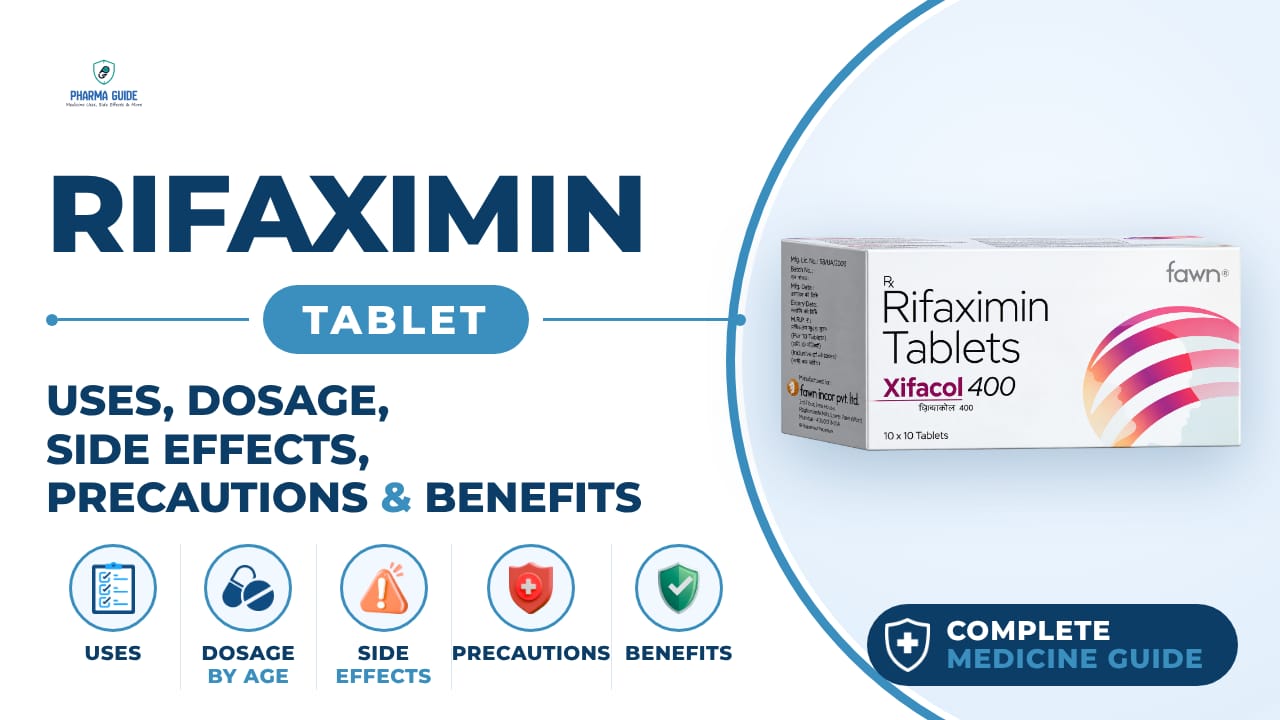
| Generic name | Rifaximin |
|---|---|
| Drug class | Antibiotic (rifamycin-based, non-systemic) |
| Forms | Tablet |
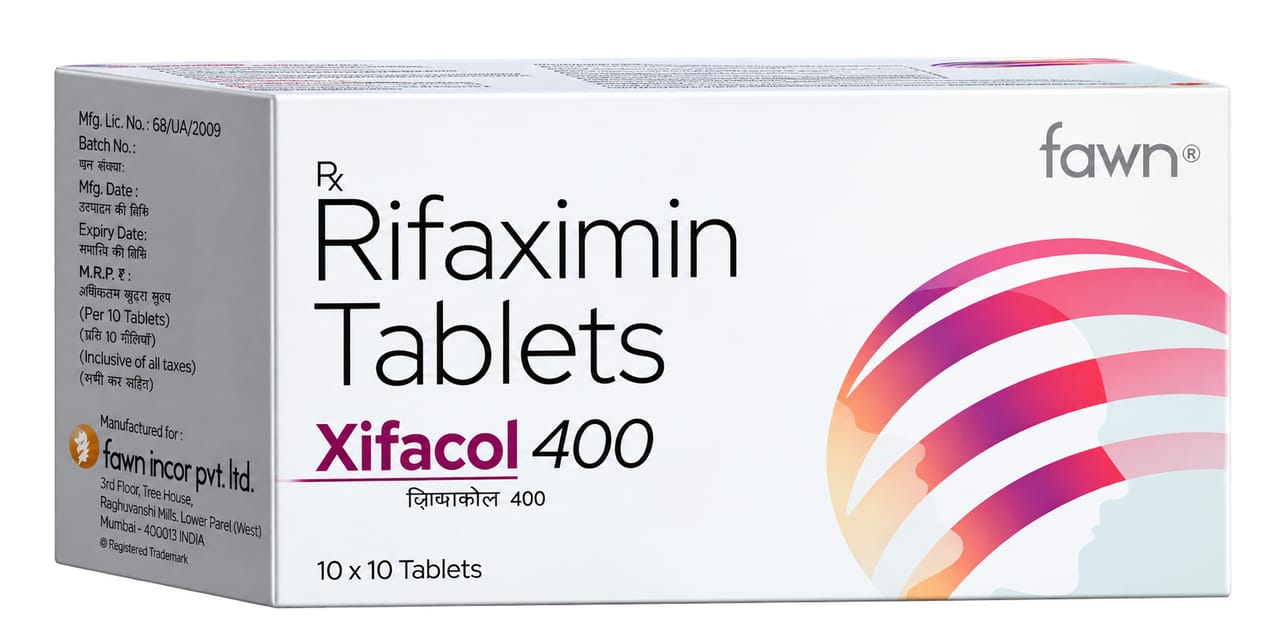
Quick overview
Rifaximin Tablet is a rifamycin-based, non-systemic antibiotic that acts mainly in the gut, with very little absorbed into the bloodstream. It is used to treat traveler's diarrhea caused by certain strains of E. coli, to reduce the risk of recurrent hepatic encephalopathy, and for irritable bowel syndrome with diarrhea and related bacterial overgrowth. It works by blocking an enzyme bacteria need to copy their genetic material, stopping them from making proteins they need to survive.
What is Rifaximin Tablet
Rifaximin is a semisynthetic, rifamycin-based antibiotic that acts mainly in the gut and is not well absorbed into the bloodstream. It is used to treat certain bacterial infections of the intestine.
Rifaximin Tablet uses
- Traveler's diarrhea caused by certain strains of E. coli
- Reducing the risk of recurrent hepatic encephalopathy (a brain problem caused by liver disease)
- Irritable bowel syndrome with diarrhea (IBS-D) and bacterial overgrowth in IBS
Benefits of Rifaximin Tablet
- Very little of the drug passes into the bloodstream, so it mainly works in the gut
- Has a favorable safety profile compared to many other antibiotics
- Can shorten the duration of traveler's diarrhea
- Can reduce the risk of hepatic encephalopathy coming back
How Rifaximin Tablet works
Rifaximin stops bacteria in the gut from making the proteins they need to survive by blocking an enzyme they use to copy their genetic material. This kills a wide range of harmful gut bacteria.
Rifaximin Tablet dosage
Rifaximin can be taken with or without food. Take it around the same times every day, and take the medicine for the full prescribed length of time, even if you start feeling better. If you are taking it to prevent hepatic encephalopathy, do not stop taking it without talking to your doctor. Drink an adequate amount of water while and after taking this medicine, and swallow tablets whole.
| Age group | Dose |
|---|---|
| Under 12 years | Not established |
| 12–17 years | 200 mg 3 times daily for 3 days (for travelers' diarrhea) |
| 18–64 years | 200 mg 3 times daily for 3 days (travelers' diarrhea) |
| 65+ years | 200 mg 3 times daily for 3 days (travelers' diarrhea) |
Available forms and strengths
Rifaximin is available as a tablet.
Side effects of Rifaximin Tablet
Common
- Flatulence
- Headache
- Abdominal pain
- Rectal tenesmus (feeling of needing to pass stool urgently)
- Defecation urgency
- Nausea
- Constipation
- Fever
- Vomiting
- Dizziness; excessive tiredness
- Muscle tightening
- Joint pain
- Dry mouth and lips
- Blurred vision
- Ringing or buzzing in the ears
Serious
- Anaphylaxis (severe allergic reaction)
- Angioneurotic edema (swelling of face, lips, tongue, hands, feet)
- Exfoliative dermatitis (severe skin peeling)
- Watery or bloody diarrhea with stomach cramps and fever, during treatment or for up to 2 months afterward
- Hives, rash, itching; difficulty breathing or swallowing; hoarseness
- Black or tarry stools
- Unusual bleeding or bruising
- Blood in urine
- Mental confusion
Warnings and precautions
- This medicine does not work for diarrhea caused by other bacteria like Campylobacter jejuni or Shigella, and should not be used if diarrhea comes with fever or blood in the stool.
- This medicine can sometimes cause a serious diarrhea caused by a bacteria called Clostridium difficile, which happens when normal gut bacteria are killed off and harmful bacteria produce toxins, leading to worse diarrhea or severe colon inflammation.
- Always finish the full course of this medicine. Stopping early can lead to bacteria that resist this medicine, making future infections harder to treat.
- This medicine should be used carefully in people with moderate to severe liver problems.
- Severe colon inflammation (pseudomembranous colitis) has been reported with nearly all antibiotics, including this one, and can range from mild to life-threatening. Doctors should consider this if diarrhea develops after taking an antibiotic.
- This medicine should be used carefully in people with colitis or other digestive tract diseases, because there is a higher risk the disease could get worse. Stop using it if diarrhea lasts a long time.
- This medicine is not recommended during pregnancy unless it is absolutely necessary and your doctor decides the benefits outweigh the risks. It is classified as Pregnancy category C.
- It is not known whether rifaximin passes into breast milk. Use while breastfeeding is not recommended, and if it becomes necessary, breastfeeding should be stopped.
- How this medicine behaves in people with kidney problems has not been studied.
- People with liver problems may absorb much more of this medicine into their body than people with normal liver function, so it should be used with caution in those with moderate to severe liver impairment.
- It is not known how this medicine interacts with alcohol, so you should ask your doctor before drinking alcohol while taking it.
- This medicine may cause dizziness in some people. Do not drive or use heavy machinery until you know how it affects you.
Storage
- Do not store above 30°C temperature.
- Keep this medication in the container it came in, tightly closed, and out of reach of children. Store it at room temperature and away from excess heat and moisture (not in the bathroom).
- Dispose of unneeded medications in a way so that pets, children, and other people cannot take them. Do not flush this medication down the toilet. Use a medicine take-back program.
When to see a doctor
- Call your doctor if your diarrhea does not go away, gets worse, or if you develop fever or bloody diarrhea.
- Call your doctor right away if you have watery or bloody diarrhea with stomach cramps and fever, either during treatment or for up to two months after finishing it.
- Call your doctor right away if you notice hives, rash, itching, trouble breathing or swallowing, swelling of the face, throat, tongue, lips, eyes, hands, feet, ankles, or lower legs, or hoarseness.
- If you suspect an overdose, contact your doctor immediately. Signs of overdose can include fainting, difficulty breathing, dizziness, headache, nausea and vomiting.
- If someone has collapsed, had a seizure, is having trouble breathing, or cannot be woken up after taking too much of this medicine, call emergency services right away.
Alternatives
- Metronidazole
- Azithromycin
- Vancomycin
Watch the video
FAQs
What is Rifaximin Tablet used for?
It is used to treat traveler's diarrhea caused by certain strains of E. coli, to reduce the risk of recurrent hepatic encephalopathy, and for irritable bowel syndrome with diarrhea (IBS-D) and related bacterial overgrowth.
How does Rifaximin Tablet work?
It blocks an enzyme bacteria need to copy their genetic material, stopping them from making proteins they need to survive, killing a wide range of harmful gut bacteria mainly within the gut.
What is the dosage of Rifaximin Tablet for traveler's diarrhea?
For ages 12 and older, including adults and seniors, the typical dose is 200 mg three times daily for 3 days. Dosage for children under 12 has not been established.
What are the common side effects of Rifaximin Tablet?
Common side effects include flatulence, headache, abdominal pain, rectal tenesmus, defecation urgency, nausea, constipation, fever, vomiting, dizziness, tiredness, muscle tightening, joint pain, dry mouth, blurred vision, and ringing in the ears.
Is Rifaximin Tablet safe during pregnancy?
It is not recommended during pregnancy unless absolutely necessary and the doctor decides the benefits outweigh the risks; it is classified as Pregnancy category C.
General information, not medical advice
Your prescriber and the leaflet in your pack know your situation. This page does not.
- Follow your prescriber and the leaflet
- Don't start, stop, or change a dose on your own
- Doses and warnings differ by country and product
Sources
Video
Related medicines

Injectafer Injection: Uses, Dosage, Side Effects, Precautions and Alternates
Iron products
Injectafer (ferric carboxymaltose) treats iron deficiency anemia and heart failure-related iron deficiency via IV. Learn uses, dosage, side effects, and

Gliclazide Tablet: Uses, Dosage, Side Effects, Precautions and Alternates
Sulfonylurea (hypoglycemic/antidiabetic agent)
Gliclazide Tablet is a sulfonylurea for type 2 diabetes that boosts insulin release. Learn about dosage, side effects, warnings, and precautions.