
Safety
General information, not medical advice
Your prescriber and the leaflet in your pack know your situation. This page does not.
- Follow your prescriber and the leaflet
- Don't start, stop, or change a dose on your own
- Doses and warnings differ by country and product
Rilutek Tablet: Uses, Dosage, Side Effects, Precautions and Alternates
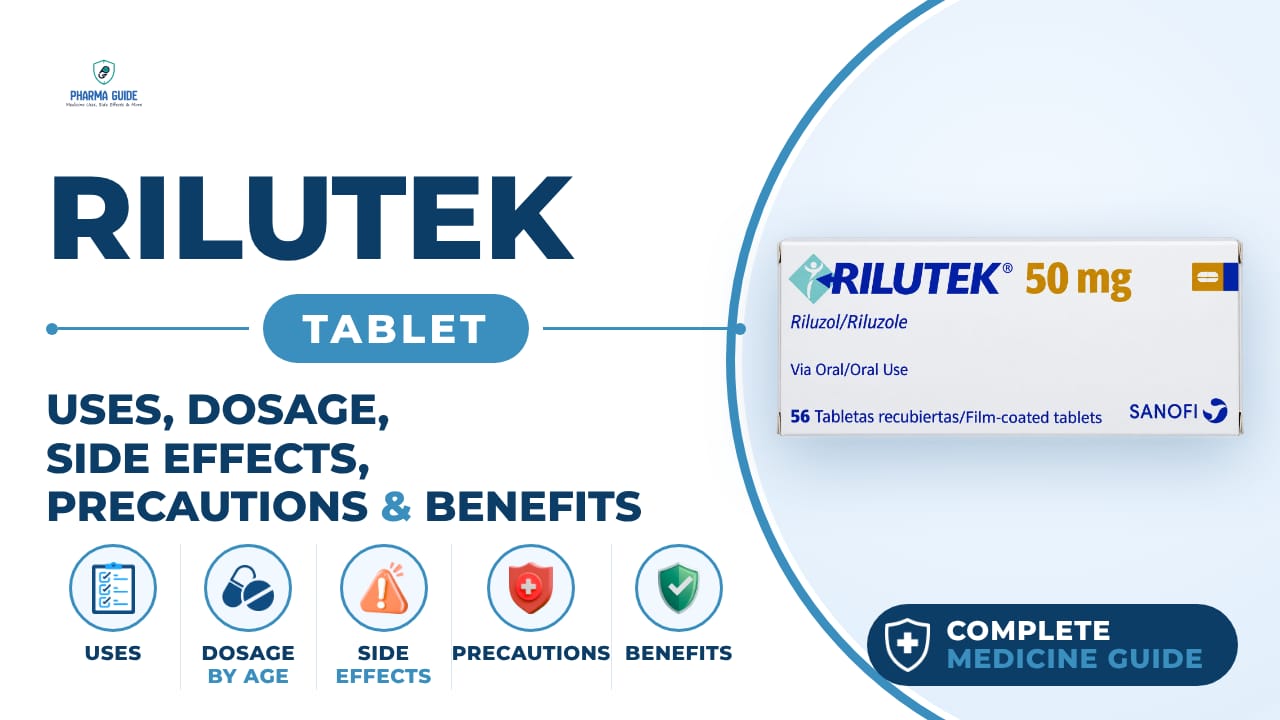
| Generic name | riluzole |
|---|---|
| Drug class | Miscellaneous central nervous system agents (glutamate antagonist) |
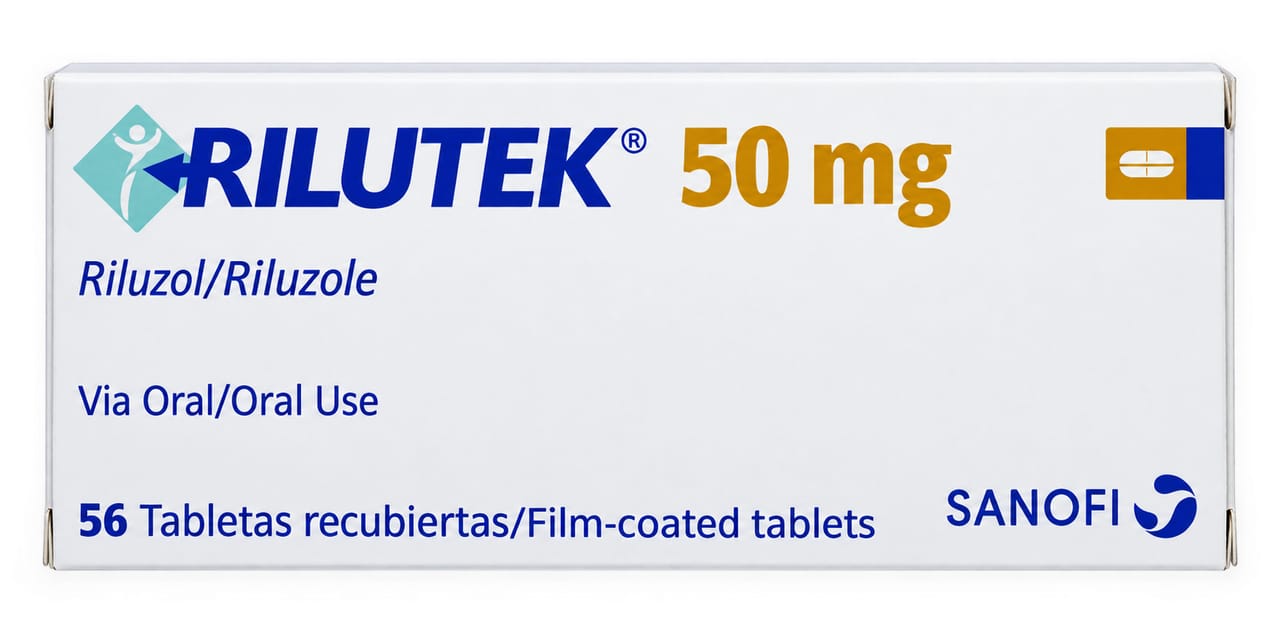
| Forms | Tablet (film-coated, 50 mg), Oral liquid suspension (brand name Tiglutik) |
Quick overview
Rilutek is a prescription tablet containing riluzole, used to treat amyotrophic lateral sclerosis (ALS). It may help slow disease progression, extend survival, and delay the need for mechanical ventilation. The typical adult dose is 50 mg twice a day, and it works by reducing the release of glutamate in the brain and spinal cord.
What is Rilutek Tablet
Rilutek is a prescription tablet containing the active ingredient riluzole. It belongs to the benzothiazole class of medicines and is used to treat amyotrophic lateral sclerosis (ALS).
Rilutek Tablet uses
- Amyotrophic lateral sclerosis (ALS)
- Helps slow the progression of ALS
- May extend survival in ALS patients
- May delay the need for mechanical ventilation
- Helps manage motor neuron disease symptoms
Benefits of Rilutek Tablet
- Treats amyotrophic lateral sclerosis (ALS).
- May extend survival in ALS.
- May delay the need for mechanical ventilation.
- Helps manage ALS disease progression.
- Supports ongoing ALS treatment.
How Rilutek Tablet works
Rilutek is thought to work by reducing the release of glutamate, a chemical messenger in the brain and spinal cord. Too much glutamate may damage the nerve cells involved in ALS, so by lowering glutamate release, the medicine may help protect these nerve cells, though its exact mode of action is not fully understood.
Rilutek Tablet dosage
Take your dose at about the same time each day, such as in the morning and evening. Swallow the tablets whole with a full glass of water; do not chew them. Take on an empty stomach, since Rilutek should not be taken immediately before or after meals, especially meals high in fat, as this may reduce how well it works. If you forget a dose, skip the missed dose and take your next dose at the usual time; do not take a double dose to make up for a missed one. Do not stop taking this medicine or change your dose without checking with your doctor first. Not recommended for use in children or adolescents.
| Age group | Dose |
|---|---|
| Under 18 years | Not recommended |
| 18–64 years | 50 mg, twice/day |
| 65+ years | 50 mg, twice/day |
Available forms and strengths
- Tablet (film-coated, 50 mg)
- Oral liquid suspension (brand name Tiglutik)
Side effects of Rilutek Tablet
Common
- Headache
- Nausea
- Vomiting
- Weakness or loss of strength (asthenia)
- Dizziness
- Sleepiness (somnolence)
- Stomach ache/abdominal pain
- Rash or flaking skin
- Joint stiffness
- Numbness or tingling around the mouth
- Increased blood pressure
- Diarrhea
- Dry mouth
- Fast heartbeat
Serious
- Severe upper stomach pain, often with nausea and vomiting
- Itching or yellowing of the skin or eyes (signs of liver problems)
- Swelling of the hands, feet or legs
- Bruising more easily or unusual bleeding
- Shortness of breath or difficulty breathing
- Dry cough or cough with mucus
- Irregular or fast heartbeat
- Frequent infections, fever, severe chills, sore throat or mouth ulcers (signs of low white blood cell count)
- Signs of an allergic reaction such as hives, difficulty breathing, or swelling of the face, lips, tongue or throat
Warnings and precautions
- Rilutek can cause liver injury, including rare cases of serious hepatitis. Your doctor will do blood tests before and during treatment to check your liver function, and treatment may need to stop if liver enzyme levels rise too high or if jaundice develops.
- Rilutek can rarely cause a serious drop in white blood cells (neutropenia), which increases the risk of infection. Report any fever or signs of infection to your doctor right away.
- Rilutek can rarely cause a serious lung condition called interstitial lung disease. Tell your doctor right away if you develop a dry cough or shortness of breath.
- Smoking cigarettes and drinking caffeine may affect how much Rilutek is in your body, so tell your doctor if you smoke or consume caffeine.
- Rilutek should not be used during pregnancy because it may harm an unborn baby. Tell your doctor right away if you become pregnant while taking this medicine.
- Rilutek should not be used while breastfeeding.
- Rilutek is not recommended for people with impaired kidney function, since studies with repeated doses have not been done in this group.
- Rilutek should be used carefully in people with liver problems, and is not recommended if you have liver disease or certain elevated liver enzyme levels. Your doctor will check your liver function with blood tests before and during treatment.
- It is not known whether alcohol increases the risk of liver damage with Rilutek, so you should avoid drinking excessive amounts of alcohol and tell your doctor if you drink alcohol.
- Rilutek may cause dizziness or drowsiness in some people. Know how this medicine affects you before you drive or use machines.
Storage
- Keep tablets in the blister pack until it is time to take them
- Keep in a cool, dry place, protected from light, where the temperature stays below 25°C
- Keep out of the reach and sight of children
- If you no longer need the medicine or it is out of date, take it to a pharmacy for safe disposal
- Do not use after the expiry date
When to see a doctor
- Get medical help right away if you have signs of a severe allergic reaction, such as hives, trouble breathing, or swelling of the face, lips, tongue or throat.
- Call your doctor or get emergency care right away if you have sudden chest pain, wheezing, or shortness of breath, or a dry cough or cough with mucus.
- Seek medical help right away for signs of low white blood cell count such as fever, mouth sores, skin sores, or sore throat.
- Seek medical help right away for signs of liver problems, such as nausea, loss of appetite, upper right stomach pain, tiredness, itching, dark urine, or yellowing of the skin or eyes.
- If you think you have taken too much Rilutek, seek urgent medical attention immediately, even if you feel fine, by contacting your doctor or going to the nearest hospital emergency department.
Alternatives
- Riluzole generic
- Tofersen
- Edaravone
Watch the video
FAQs
What is Rilutek Tablet used for?
Rilutek is a prescription tablet containing riluzole, used to treat amyotrophic lateral sclerosis (ALS). It may help slow disease progression, extend survival, and delay the need for mechanical ventilation.
How does Rilutek Tablet work?
Rilutek is thought to work by reducing the release of glutamate, a chemical messenger in the brain and spinal cord. Too much glutamate may damage nerve cells involved in ALS, so lowering glutamate release may help protect these cells, though its exact mode of action is not fully understood.
What is the typical dosage of Rilutek Tablet?
The typical adult dose is 50 mg twice a day. Tablets should be swallowed whole with a full glass of water, taken on an empty stomach at about the same time each day, since food, especially high-fat meals, may reduce how well it works.
What are the serious side effects of Rilutek Tablet?
Serious side effects include signs of liver problems such as yellowing of the skin or eyes, swelling of the hands feet or legs, unusual bruising or bleeding, shortness of breath, dry cough, irregular heartbeat, and signs of low white blood cell count like fever, chills, or sore throat.
Can Rilutek Tablet be used during pregnancy?
Rilutek should not be used during pregnancy because it may harm an unborn baby, and it should not be used while breastfeeding.
General information, not medical advice
Your prescriber and the leaflet in your pack know your situation. This page does not.
- Follow your prescriber and the leaflet
- Don't start, stop, or change a dose on your own
- Doses and warnings differ by country and product
Sources
Video
Related medicines

Injectafer Injection: Uses, Dosage, Side Effects, Precautions and Alternates
Iron products
Injectafer (ferric carboxymaltose) treats iron deficiency anemia and heart failure-related iron deficiency via IV. Learn uses, dosage, side effects, and

Gliclazide Tablet: Uses, Dosage, Side Effects, Precautions and Alternates
Sulfonylurea (hypoglycemic/antidiabetic agent)
Gliclazide Tablet is a sulfonylurea for type 2 diabetes that boosts insulin release. Learn about dosage, side effects, warnings, and precautions.