
Safety
General information, not medical advice
Your prescriber and the leaflet in your pack know your situation. This page does not.
- Follow your prescriber and the leaflet
- Don't start, stop, or change a dose on your own
- Doses and warnings differ by country and product
Riomet Liquid: Uses, Dosage, Side Effects, Precautions and Alternates
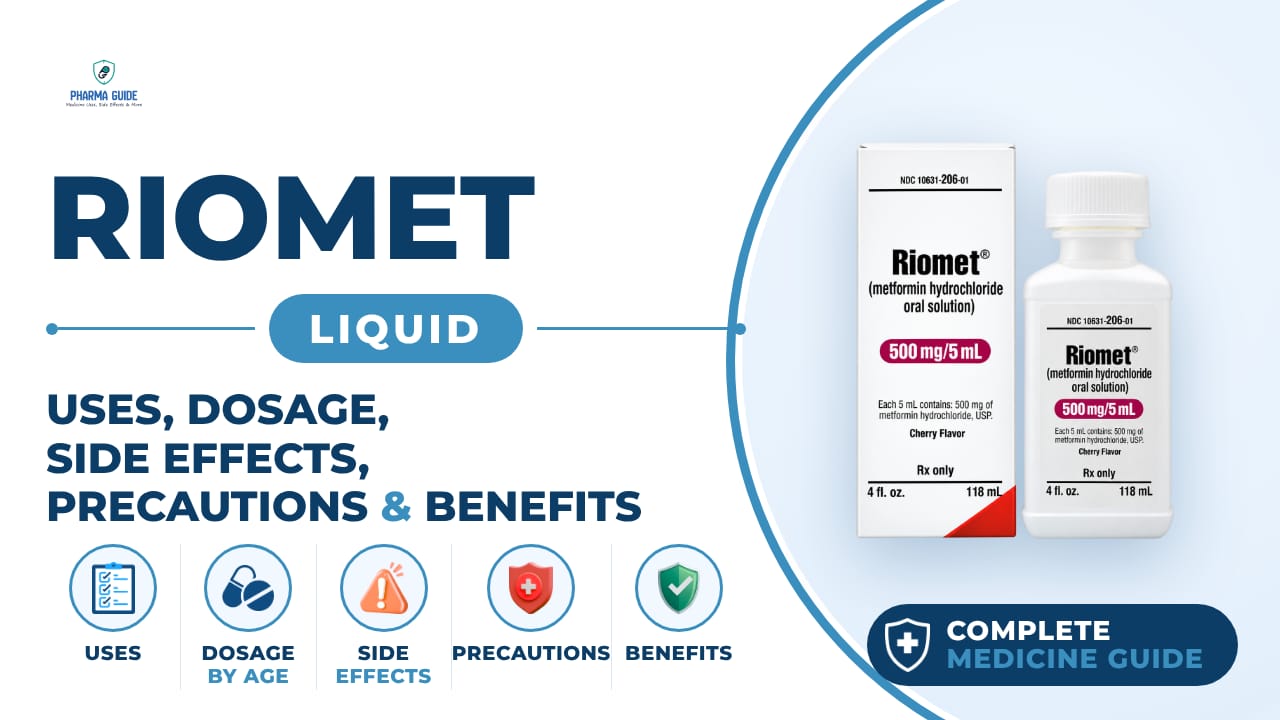
| Generic name | metformin hydrochloride |
|---|---|
| Drug class | Biguanide |
| Forms | Oral solution, Extended-release oral suspension |
Quick overview
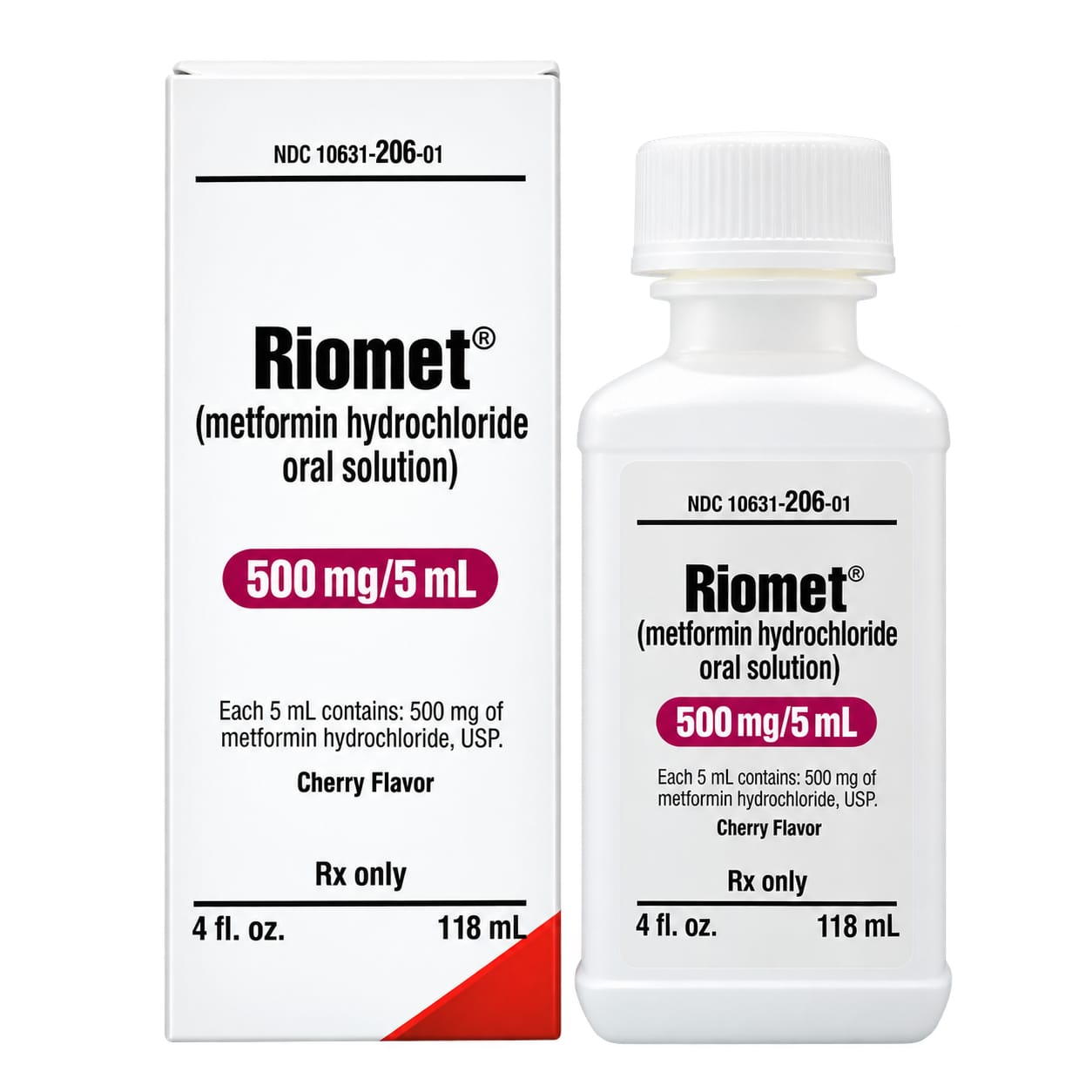
Riomet Liquid is an oral liquid form of metformin hydrochloride, a biguanide medicine used along with diet and exercise to help control blood sugar in adults and children with type 2 diabetes. It works by reducing liver sugar production, lowering sugar absorption from food, and improving the body's response to insulin. Riomet is available as an oral solution and as an extended-release oral suspension.
What is Riomet Liquid
Riomet is an oral liquid medicine that contains metformin hydrochloride. It is used along with diet and exercise to help control blood sugar in people with type 2 diabetes.
Riomet Liquid uses
- Used as an adjunct to diet and exercise to improve blood sugar control in adults and children with type 2 diabetes mellitus
- Treats type 2 diabetes mellitus
- Helps lower fasting blood glucose
- Helps improve HbA1c
- Reduces glucose production by the liver
- Improves the body's response to insulin
Benefits of Riomet Liquid
- Lowers fasting and after-meal blood sugar levels
- May lower blood cholesterol and triglyceride levels when used with or without a sulfonylurea
- Tends to keep body weight stable or help it decrease somewhat, unlike some other diabetes medicines
- Available as a liquid formulation
- Useful for people who have difficulty swallowing tablets
- Helps improve overall blood-glucose control
- Has a low risk of hypoglycemia when used alone
- Can be combined with other diabetes medicines
How Riomet Liquid works
Metformin lowers blood sugar by reducing the amount of sugar the liver makes, decreasing the sugar absorbed from food in the gut, and helping the body's tissues respond better to insulin so they take up and use more glucose.
Riomet Liquid dosage
Take Riomet with meals, generally with the evening meal, to help reduce stomach upset. Measure the oral solution carefully using the dosing syringe or device provided, not a kitchen spoon. Shake the extended-release suspension well before measuring each dose. Doses are usually started low and increased gradually over time to reduce stomach side effects. Stay on your prescribed diet and exercise program while taking this medicine. Tell your doctor if you are sick, having surgery, or under physical stress, since your medicine needs may change. Inform your doctor you are taking this medicine before any surgery or imaging test using injectable contrast dye, since temporary stopping may be needed.
| Age group | Dose |
|---|---|
| Under 10 years | Safety and effectiveness are not established |
| 10–17 years | Common starting dose: 500 mg twice daily with meals; dose may be increased gradually based on glucose control and tolerance |
| 18–64 years | Common starting dose: 500 mg twice daily or 850 mg once daily with meals; increased gradually as needed |
| 65–74 years | Adult dosing may be used, but kidney function should be checked carefully before and during treatment |
Available forms and strengths
- Oral solution
- Extended-release oral suspension
Side effects of Riomet Liquid
Common
- Diarrhea
- Nausea and vomiting
- Gassiness (flatulence)
- Weakness or lack of energy (asthenia)
- Indigestion
- Stomach-area (abdominal) discomfort
- Headache
- Low blood sugar
Serious
- Lactic acidosis (a serious buildup of lactic acid in the blood)
- Low vitamin B12 levels
- Severe low blood sugar (hypoglycemia), especially when combined with insulin or sulfonylurea medicines
- Liver problems, including cholestatic, hepatocellular, and mixed liver injury
Warnings and precautions
- This medicine can cause a rare but serious condition called lactic acidosis, a dangerous buildup of lactic acid in the blood, which can be fatal. People with kidney problems, liver problems, heart failure, heavy alcohol use, certain other conditions, or those 65 and older have a higher risk.
- This medicine should not be used if you have severe kidney impairment, an allergy to metformin, or a condition called metabolic acidosis or diabetic ketoacidosis.
- You may need to temporarily stop this medicine before or during certain x-ray or imaging tests that use injectable contrast dye, because of kidney-related risks.
- This medicine can lower vitamin B12 levels in the blood over time, so periodic blood testing is recommended.
- Taking this medicine together with insulin or certain other diabetes medicines can increase the risk of low blood sugar.
- This medicine is generally not recommended during pregnancy unless clearly needed, because high or uncontrolled blood sugar can cause problems for both mother and baby. Talk with your doctor about the best way to manage your blood sugar if you are pregnant.
- Metformin passes into breast milk. Talk with your healthcare provider about the best way to feed your baby if you are taking this medicine.
- This medicine should not be used if you have severe kidney problems, and your kidney function should be checked before starting and regularly during treatment, since poor kidney function raises the risk of a serious condition called lactic acidosis.
- This medicine should generally be avoided if you have liver disease, because liver problems can raise the risk of lactic acidosis.
- Avoid drinking large amounts of alcohol, either regularly or in binges, while taking this medicine, since alcohol increases the risk of lactic acidosis and can speed up how fast the medicine enters your body.
Storage
- Store at room temperature between 68°F to 77°F (20°C to 25°C)
- Keep the medicine in its original bottle
- Keep out of the reach of children
- Throw away any unused reconstituted suspension in the household trash after 100 days (for the extended-release suspension product)
When to see a doctor
- Stop taking this medicine and call your healthcare provider right away if you feel very weak or tired, have unusual muscle pain, feel cold especially in your arms or legs, have trouble breathing, feel dizzy or lightheaded, have unexplained stomach or intestinal problems with nausea, vomiting or diarrhea, have unusual sleepiness, or have a slow or irregular heartbeat — these can be signs of lactic acidosis, a medical emergency.
- Get emergency medical help if you have signs of an allergic reaction, such as hives, difficulty breathing, or swelling of the face, lips, tongue, or throat.
- If you take too much of this medicine, contact your healthcare provider or go to the nearest hospital emergency room right away.
Alternatives
- Metformin tablets
- Metformin extended-release tablets
- Glucophage
Watch the video
FAQs
What is Riomet Liquid used for?
Riomet Liquid is used along with diet and exercise to help control blood sugar in adults and children with type 2 diabetes. It lowers fasting blood glucose, improves HbA1c, and works by reducing liver sugar production, lowering sugar absorption from food, and improving the body's response to insulin.
How should I take Riomet Liquid?
Take Riomet with meals, generally the evening meal, to reduce stomach upset. Measure the oral solution carefully with the provided dosing syringe or device, not a kitchen spoon, and shake the extended-release suspension well before measuring each dose. Doses usually start low and are increased gradually.
What are the common side effects of Riomet Liquid?
Common side effects include diarrhea, nausea and vomiting, gassiness, weakness or lack of energy, indigestion, stomach-area discomfort, headache, and low blood sugar.
What is the serious risk associated with Riomet Liquid?
Riomet can cause a rare but serious condition called lactic acidosis, a dangerous buildup of lactic acid in the blood that can be fatal. People with kidney problems, liver problems, heart failure, heavy alcohol use, or those 65 and older have a higher risk.
How should Riomet Liquid be stored?
Store at room temperature between 68°F to 77°F (20°C to 25°C), keep it in its original bottle, and keep it out of reach of children. For the extended-release suspension, throw away any unused reconstituted suspension after 100 days.
General information, not medical advice
Your prescriber and the leaflet in your pack know your situation. This page does not.
- Follow your prescriber and the leaflet
- Don't start, stop, or change a dose on your own
- Doses and warnings differ by country and product
Sources
Video
Related medicines

Glycomet Tablet: Uses, Dosage, Side Effects, Precautions and Alternates
Biguanide
Glycomet Tablet (metformin) controls blood sugar in type 2 diabetes. Learn its uses, dosage, side effects, precautions, and alternatives here.

Injectafer Injection: Uses, Dosage, Side Effects, Precautions and Alternates
Iron products
Injectafer (ferric carboxymaltose) treats iron deficiency anemia and heart failure-related iron deficiency via IV. Learn uses, dosage, side effects, and