
Safety
General information, not medical advice
Your prescriber and the leaflet in your pack know your situation. This page does not.
- Follow your prescriber and the leaflet
- Don't start, stop, or change a dose on your own
- Doses and warnings differ by country and product
Rituximab Injection: Uses, Dosage, Side Effects, Precautions and Alternates
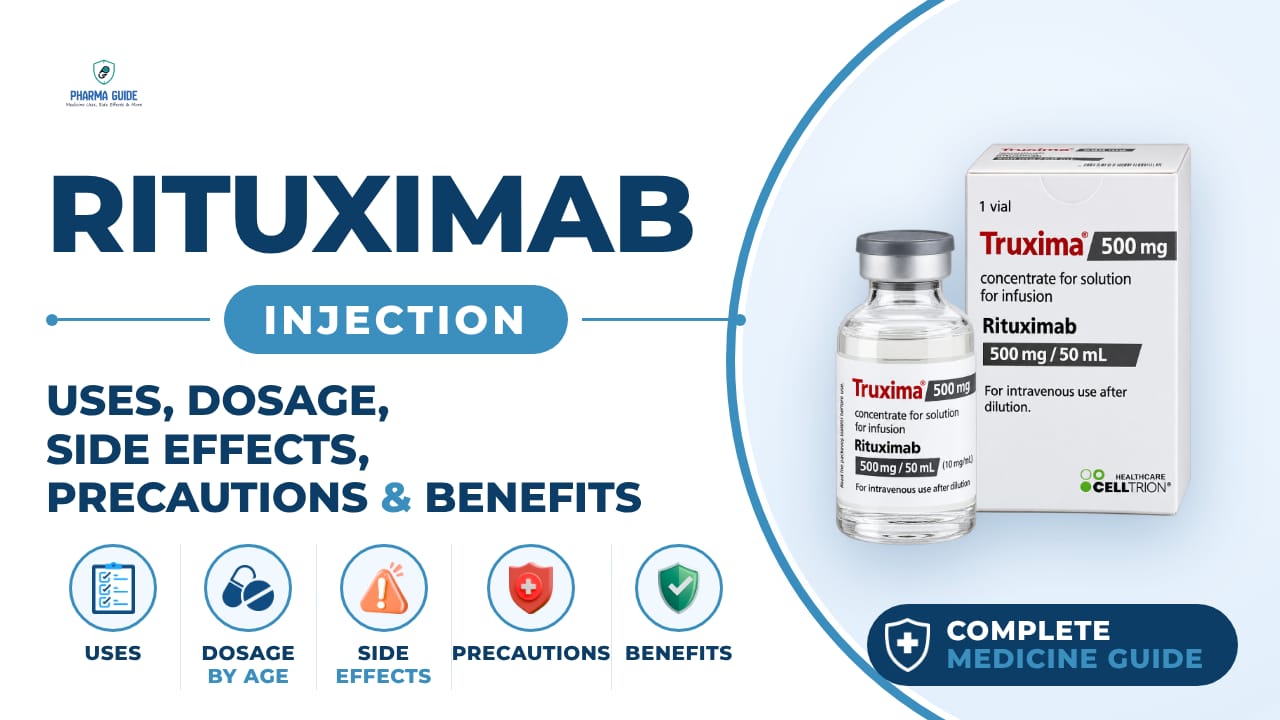
| Generic name | rituximab |
|---|---|
| Drug class | Biologic (monoclonal antibody); biological disease-modifying antirheumatic drug (bDMARD) |
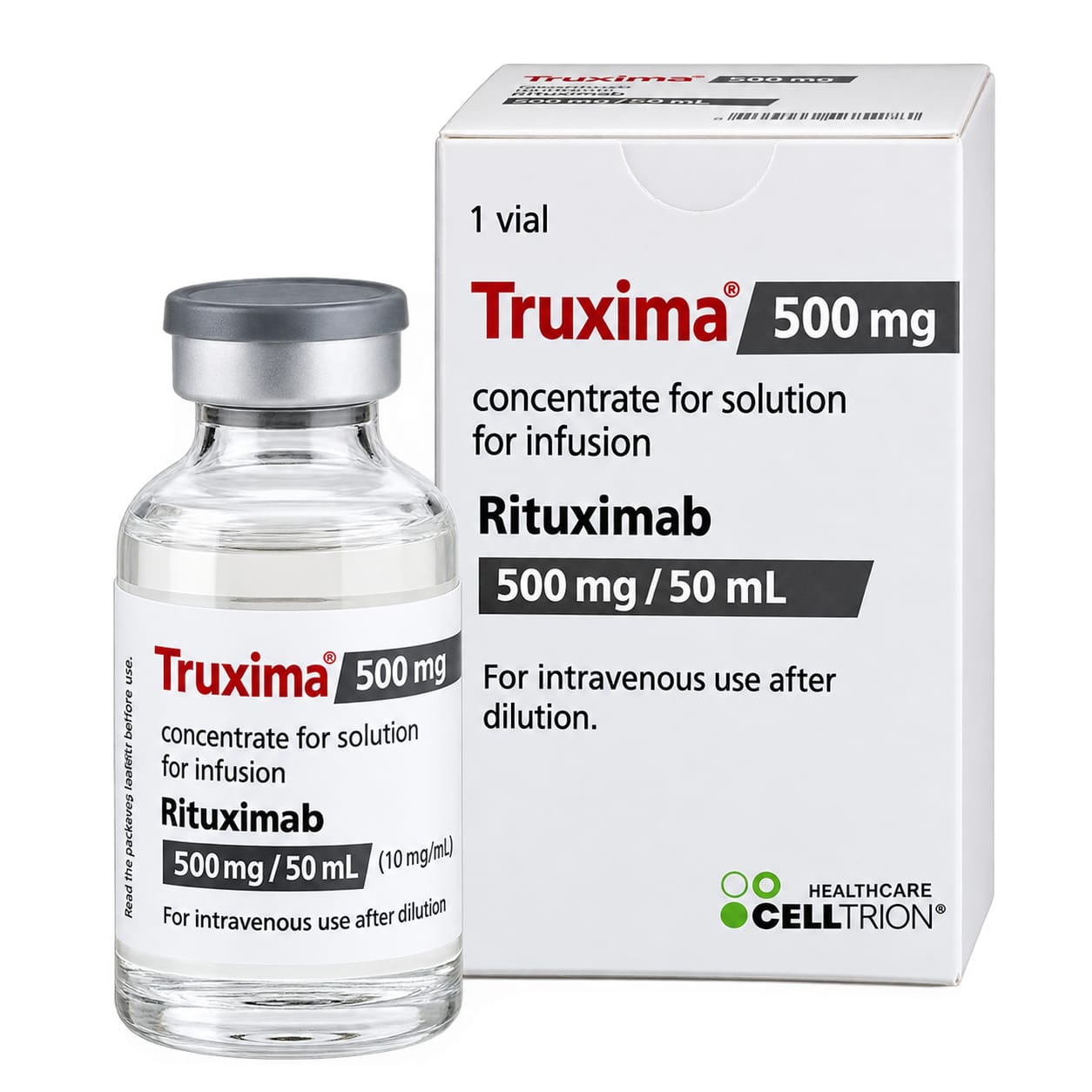
| Forms | Solution for intravenous infusion |
Quick overview
Rituximab Injection (generic name rituximab) is a biologic disease-modifying antirheumatic drug that targets CD20 on B-cells. It is given as an intravenous infusion in a hospital or clinic and is used for conditions such as non-Hodgkin's lymphoma, chronic lymphocytic leukemia, rheumatoid arthritis, certain vasculitis conditions, pemphigus vulgaris, lupus, and myositis. Treatment is closely monitored because reactions can occur during or shortly after the infusion.
What is Rituximab Injection
Rituximab is a biologic medicine made from a monoclonal antibody. It targets a protein called CD20 found on the surface of a type of white blood cell called B-cells. It is given as an intravenous infusion (drip into a vein) in a hospital or clinic setting.
Rituximab Injection uses
- Non-Hodgkin's lymphoma (a cancer of white blood cells)
- Chronic lymphocytic leukemia (CLL)
- Rheumatoid arthritis (RA), used with methotrexate
- Granulomatosis with polyangiitis (GPA) and microscopic polyangiitis (MPA), given with steroids
- Moderate to severe pemphigus vulgaris (an immune disorder causing painful blisters on skin and mucous membranes)
- Lupus (SLE)
- Vasculitis
- Myositis
Benefits of Rituximab Injection
- Many patients with rheumatoid arthritis experience reduced pain, swelling, and stiffness
- Helps slow or stop disease progression and prevent joint damage
- Can enhance mobility and reduce disability
- Rituximab has been shown to have a major benefit for 80% of patients including fewer hospital admissions and improved quality of life
How Rituximab Injection works
Rituximab attaches to B-cells, a type of white blood cell. In some conditions, B-cells produce harmful antibodies that attack the body's own tissues and cause inflammation. By reducing the number of these B-cells, rituximab lowers inflammation and related symptoms like pain, swelling, and joint damage.
Rituximab Injection dosage
Rituximab is given as an infusion into a vein in a hospital or clinic, under the supervision of a doctor or nurse who will monitor you during treatment. The first infusion is given slowly and takes longer than later infusions. You may be given fever medicine, antihistamine, or steroid medicine before the infusion to help prevent reactions. You will need to stay for a period after the infusion is finished so staff can check you don't have side effects. Your doctor may advise you to stop taking blood-pressure–lowering medicines for a short time before the infusion because of the risk of low blood pressure during treatment. If you feel unwell during the infusion, tell the person giving it to you right away so they can slow it down or stop it if needed.
| Age group | Dose |
|---|---|
| Under 18 years | Not fixed |
| 18–60 years | 500–1000 mg, once/day |
| 60+ years | 500–1000 mg, once/day |
Available forms and strengths
Solution for intravenous infusion
Side effects of Rituximab Injection
Common
- Fever
- Chills
- Weakness/tiredness
- Nausea
- Headache
- Itch
- Rash
- Night sweats
- Vomiting
- Low mood
- Constipation
- Cough
- Flushing
- Joint or muscle pain
- Diarrhea
- Back pain
- Mouth sores
Serious
- Severe infusion reactions (fever, wheeziness, rash, drop in blood pressure, trouble breathing, chest pain, fast or irregular heartbeat)
- Serious infections, including reactivation of hepatitis B
- Progressive multifocal leukoencephalopathy (PML), a rare and serious brain infection
- Severe skin and mouth reactions (blistering, peeling skin, mouth sores, Stevens-Johnson syndrome, toxic epidermal necrolysis)
- Tumor lysis syndrome
- Heart problems (chest pain, irregular heartbeat, heart attack)
Warnings and precautions
- Do not have rituximab if you have an active infection, a weak immune system, severe heart failure, or severe uncontrolled heart disease.
- Serious, life-threatening reactions can occur during or within 24 hours after a dose, usually with the first infusion. You will be monitored closely and given medicines beforehand to help prevent this.
- Rituximab can cause severe, life-threatening skin and mouth reactions such as painful sores, blisters, rash, or peeling skin.
- If you have an inactive hepatitis B infection, rituximab can cause it to reactivate and become life-threatening.
- A rare brain infection called PML can occur during or after treatment and usually cannot be treated or cured.
- Do not receive live vaccines while on rituximab without talking to your doctor, and other household members should avoid live vaccines too if possible.
- Rituximab should generally be avoided during pregnancy unless your doctor decides the benefits outweigh the risks to the baby. Effective contraception is needed during and for a period after treatment.
- You should not breastfeed during treatment with rituximab and for some time after your last dose, as it is not known whether the drug passes into breast milk, although it is thought to be very low.
- Rituximab should be used with caution if you have kidney disease, as it may make the condition worse.
- Rituximab can increase the risk of hepatitis B becoming active again, which can cause liver damage. Tell your doctor if you have had hepatitis B or any liver problems.
- You can generally drink alcohol while taking rituximab, but it's recommended to stay within normal guideline limits and avoid heavy drinking in one sitting, especially if you also take methotrexate.
- It is not known whether rituximab affects your ability to drive or use machines.
Storage
- Store at 2–8°C.
- Do not freeze.
- Protect from light.
- Keep in the original carton.
- Do not shake.
When to see a doctor
- Get medical help right away if you develop new vision changes, loss of balance, confusion, difficulty speaking, or weakness, as these could be signs of a rare brain infection.
- Contact your doctor immediately if you develop a rash, as severe skin reactions have been reported up to four months after an infusion.
- Tell your doctor right away if you develop signs of infection such as sore throat, fever, or pain when passing urine.
- See your doctor if you develop chickenpox or shingles, or if you come into contact with someone who has these illnesses, since they can be more severe while on rituximab.
- Call your doctor right away if you have pins and needles, weakness, shaky movements, unsteadiness, loss of vision, speech problems, changes in behaviour or mood, or difficulty with movement of the face, arms, or legs.
- Call your doctor immediately if you develop symptoms of an infusion reaction such as hives, swelling of the lips or throat, difficulty breathing, dizziness, fainting, or a pounding or irregular heartbeat.
Alternatives
- Obinutuzumab
- Ibritumomab
- Ocrelizumab
Watch the video
FAQs
What is Rituximab Injection used for?
It is used to treat non-Hodgkin's lymphoma, chronic lymphocytic leukemia, rheumatoid arthritis (with methotrexate), granulomatosis with polyangiitis, microscopic polyangiitis, pemphigus vulgaris, lupus, vasculitis, and myositis.
How is Rituximab Injection given?
It is given as an intravenous infusion in a hospital or clinic under medical supervision. The first infusion is given slowly and takes longer than later ones, and you may receive fever medicine, antihistamine, or steroids beforehand to help prevent reactions.
What are the common side effects of Rituximab Injection?
Common side effects include fever, chills, weakness or tiredness, nausea, headache, itch, rash, night sweats, vomiting, low mood, constipation, cough, flushing, joint or muscle pain, diarrhea, back pain, and mouth sores.
What are the serious risks of Rituximab Injection?
Serious risks include severe infusion reactions, serious infections including hepatitis B reactivation, progressive multifocal leukoencephalopathy (a rare brain infection), severe skin and mouth reactions, tumor lysis syndrome, and heart problems.
How should Rituximab Injection be stored?
It should be stored at 2–8°C, not frozen, protected from light, kept in its original carton, and not shaken.
General information, not medical advice
Your prescriber and the leaflet in your pack know your situation. This page does not.
- Follow your prescriber and the leaflet
- Don't start, stop, or change a dose on your own
- Doses and warnings differ by country and product
Sources
- https://dermnetnz.org/topics/rituximab
- https://www.versusarthritis.org (Arthritis UK) rituximab page
- https://arthritisaustralia.org.au/living-with-arthritis/treatment-and-care/rituximab/
- Mayo Clinic - Rituximab (intravenous route), Drugs & Supplements
- https://www.uhcw.nhs.uk - Rituximab Patient Information Leaflet, Renal Services
- Evanston Northwestern Healthcare / AHFS Patient Medication Information - Rituximab Injection
Video
Related medicines

Injectafer Injection: Uses, Dosage, Side Effects, Precautions and Alternates
Iron products
Injectafer (ferric carboxymaltose) treats iron deficiency anemia and heart failure-related iron deficiency via IV. Learn uses, dosage, side effects, and

Gliclazide Tablet: Uses, Dosage, Side Effects, Precautions and Alternates
Sulfonylurea (hypoglycemic/antidiabetic agent)
Gliclazide Tablet is a sulfonylurea for type 2 diabetes that boosts insulin release. Learn about dosage, side effects, warnings, and precautions.