
Safety
General information, not medical advice
Your prescriber and the leaflet in your pack know your situation. This page does not.
- Follow your prescriber and the leaflet
- Don't start, stop, or change a dose on your own
- Doses and warnings differ by country and product
Rivaroxaban Tablet: Uses, Dosage, Side Effects, Precautions and Alternates
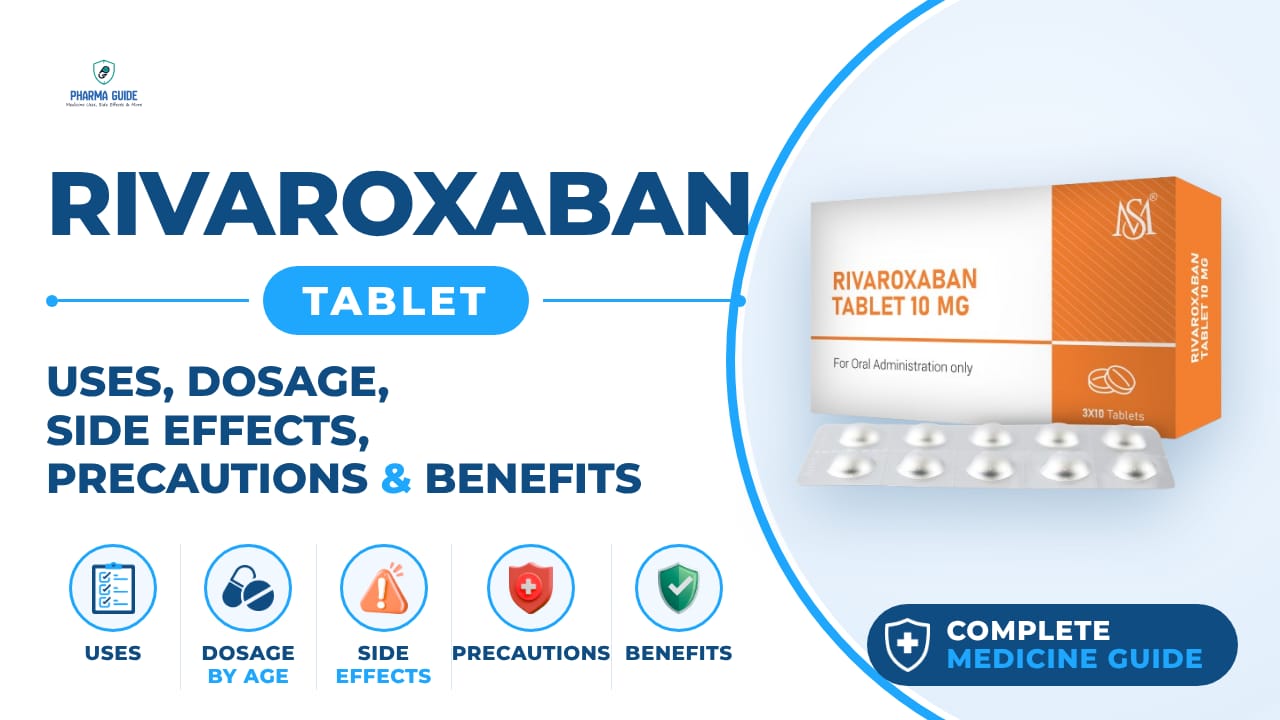
| Generic name | Rivaroxaban |
|---|---|
| Drug class | Factor Xa inhibitor (anticoagulant/blood thinner) |
| Forms | Tablet, Oral suspension (liquid) |
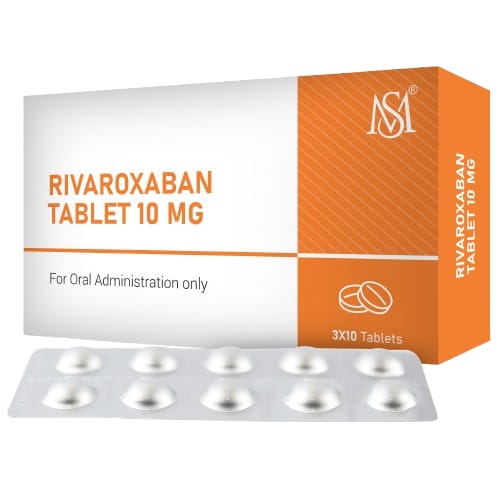
Quick overview
Rivaroxaban Tablet is an anticoagulant, commonly called a blood thinner, that reduces the blood's tendency to form clots. It is used to treat and prevent a number of blood clot conditions, including deep vein thrombosis, pulmonary embolism, and stroke risk in atrial fibrillation. It works by blocking Factor Xa, a substance the body needs to form clots. It is available as a tablet and an oral suspension.
What is Rivaroxaban Tablet
Rivaroxaban is an anticoagulant, commonly called a blood thinner. It reduces the tendency of blood to form clots and is used to treat and prevent a number of blood clot conditions.
Rivaroxaban Tablet uses
- Prevent and treat deep vein thrombosis (DVT; a blood clot) and pulmonary embolism (PE; a blood clot in the lung)
- Lower the risk of a heart attack, stroke, or death in people with coronary artery disease or peripheral arterial disease
- Prevent blood clots after major hip or knee replacement surgery
- Prevent stroke and systemic embolism in people with atrial fibrillation (irregular heart rhythm)
- Treat and prevent blood clots in children and adolescents who weigh 30 kg or more, after initial treatment with an injectable blood thinner
Benefits of Rivaroxaban Tablet
- Helps prevent new blood clots from forming in the legs, arms, or lungs
- Helps lower the risk of stroke in people with atrial fibrillation
- Helps reduce the risk of heart attack, stroke, or death in people with coronary or peripheral artery disease
- Does not require routine blood monitoring like some older blood thinners
How Rivaroxaban Tablet works
Rivaroxaban blocks a substance called Factor Xa that the body needs to form blood clots. By blocking this substance, it stops the chain reaction that leads to clot formation, which lowers the chance of new clots developing.
Rivaroxaban Tablet dosage
Rivaroxaban is taken by mouth once or twice daily as prescribed by your doctor, at the same time each day. Follow the instructions on your prescription label carefully and take exactly as directed; do not take more or less than prescribed. Some strengths should be taken with food, while others may be taken with or without food, depending on the dose and reason for use.
If unable to swallow tablets, they can be crushed and mixed with applesauce and swallowed right after preparing; do not crush, split, or chew tablets for other purposes. Rivaroxaban can also be given through certain feeding tubes if directed by a doctor.
Continue taking rivaroxaban even if you feel well; do not stop without talking to your doctor first. If you vomit or spit up a dose of the oral suspension within 30 minutes of taking it, take another full dose as soon as possible, then resume the normal schedule. Unless your doctor tells you otherwise, continue your normal diet while taking this medicine.
| Age group | Dose |
|---|---|
| Under 18 years | Specialist-directed dosing required; pediatric dosing is weight/indication-specific |
| 18–64 years | 10–20 mg once daily, depending on indication |
| 65 years & older | Same indication-specific dose, with kidney function considered |
| Adults | 10–20 mg once daily for many indications |
Available forms and strengths
- Tablet
- Oral suspension (liquid)
Side effects of Rivaroxaban Tablet
Common
- Muscle spasm or pain in arms or legs
- Vomiting, stomach pain
- Cough
- Nausea, indigestion, or stomach pain
- Constipation, diarrhea
- Decreased general strength and energy, tiredness
- Fever
- Headache
- Fast heart beat
- Pain in the arms or legs
- Mild rash, itchy skin
- Bruising
Serious
- Bloody, black, or tarry stools; pink or brown urine; coughing or vomiting blood or material that looks like coffee grounds; frequent nosebleeds; bleeding gums; heavy menstrual bleeding
- Weakness, tiredness, headache, dizziness or fainting, blurred vision, pain in arm or leg
- Rash, itching, hives; difficulty breathing or swallowing
- Pain or swelling at wound sites
- Urinating less than normal
- Swelling in your legs, feet, or ankles
- Back pain, muscle weakness (especially in legs and feet), numbness or tingling, trouble controlling bowels or bladder, or not being able to move your legs (possible sign of a spinal blood clot)
- Signs of severe allergic reaction: swelling of face, lips, tongue, or throat; wheezing or trouble breathing
- Signs of liver problems: yellowing of the skin or eyes, dark urine, pale stools, abdominal pain, nausea, vomiting, loss of appetite
- Signs of anticoagulant-related kidney damage: blood in urine, reduced urine output, swelling of ankles feet and legs
- Severe skin reactions with blistering and peeling of the skin, mouth, eyes, nose, or genitals, sometimes with fever
- Seizure (loss of consciousness with uncontrollable shaking)
- Signs of bleeding in the brain: sudden severe headache, confusion, nausea and vomiting, seizures, loss of consciousness
Warnings and precautions
- This medicine should not be used during pregnancy, as it may harm an unborn baby. Tell your doctor right away if you become pregnant while taking it.
- This medicine should not be used while breastfeeding, as it may pass into breast milk and could harm a nursing baby.
- People with kidney problems may need a lower dose or closer monitoring, because the kidneys help clear this medicine from the body. It is not recommended for people with very severe kidney impairment.
- This medicine is not recommended for people with moderate to severe liver disease that affects blood clotting, because it can increase the risk of bleeding.
- It is not clearly known how alcohol interacts with this medicine, so it is best to check with your doctor before drinking alcohol while taking it.
- This medicine can sometimes cause dizziness or fainting. Be careful before driving or using machines until you know how this medicine affects you, and avoid these activities if you feel faint or dizzy.
- If you have atrial fibrillation and take this medicine to help prevent strokes or serious blood clots, stopping the medicine puts you at higher risk of stroke. Do not stop taking it without talking to your doctor, and keep taking it even if you feel well.
- If you receive spinal or epidural anesthesia, or a shot in your spine, while taking this blood thinner, you could develop a blood clot near the spine that can cause paralysis. Tell your doctor about any spinal procedures, back surgery, or repeated spinal injections.
- This medicine increases the risk of bleeding, which can be serious or life-threatening, from any part of the body.
- Do not take this medicine together with other blood thinners such as warfarin, heparin, or other anticoagulants, except when directed by your doctor during a medication switch.
- Tell your doctor if you are having any surgery, including dental surgery, because this medicine may need to be stopped temporarily to reduce bleeding risk.
- This medicine is not recommended if you have an artificial heart valve, as its safety has not been established in this situation.
Storage
- Keep this medication in the container it came in, tightly closed, and out of reach of children
- Store it at room temperature and away from excess heat and moisture (not in the bathroom)
- Store tablets at 15°C to 30°C and protect from moisture
- Keep in a safe place out of the reach and sight of children
- Dispose of unneeded medications in a way so that pets, children, and other people cannot take them
- Do not flush this medication down the toilet; use a medicine take-back program
When to see a doctor
- Get medical help right away if you notice back pain, muscle weakness (especially in the legs and feet), numbness or tingling, trouble controlling your bowels or bladder, or being unable to move your legs, as these can be signs of a serious spinal blood clot.
- Get medical help right away for any signs of unusual or serious bleeding, such as bloody, black, or tarry stools, pink or brown urine, coughing or vomiting blood, frequent nosebleeds, bleeding gums, or heavy menstrual bleeding.
- Get medical help right away for signs of a severe allergic reaction, such as rash, itching, hives, or difficulty breathing or swallowing.
- Call your doctor right away if bleeding or bruising seems unusual, since this medicine can make it take longer than normal to stop bleeding after a cut or injury.
- If you think you or someone you are caring for has taken too much of this medicine, get urgent medical help right away, even if there are no symptoms.
- Seek medical help if you develop symptoms of anticoagulant-related kidney damage, such as blood in the urine, reduced urine output, or swelling of the ankles, feet, and legs.
Alternatives
- Xarelto
- Apixaban
- Dabigatran
- Edoxaban
Watch the video
FAQs
What is Rivaroxaban Tablet used for?
It is used to treat and prevent deep vein thrombosis and pulmonary embolism, lower the risk of heart attack, stroke, or death in coronary or peripheral artery disease, prevent blood clots after hip or knee replacement surgery, and prevent stroke in people with atrial fibrillation.
How does Rivaroxaban Tablet work?
It blocks Factor Xa, a substance the body needs to form blood clots, stopping the chain reaction that leads to clot formation and lowering the chance of new clots developing.
What is the dosage of Rivaroxaban Tablet?
It is taken by mouth once or twice daily as prescribed, at the same time each day, with doses typically ranging from 10-20 mg once daily for adults depending on the indication. Some strengths should be taken with food while others may be taken with or without food.
What are the serious side effects of Rivaroxaban Tablet?
Serious side effects include signs of unusual bleeding such as bloody or black stools, pink or brown urine, coughing or vomiting blood, severe allergic reactions, signs of liver problems, kidney damage, spinal blood clots, and signs of bleeding in the brain.
Can Rivaroxaban Tablet be used during pregnancy?
No, this medicine should not be used during pregnancy as it may harm an unborn baby, and you should tell your doctor right away if you become pregnant while taking it.
General information, not medical advice
Your prescriber and the leaflet in your pack know your situation. This page does not.
- Follow your prescriber and the leaflet
- Don't start, stop, or change a dose on your own
- Doses and warnings differ by country and product
Sources
Video
Related medicines

Injectafer Injection: Uses, Dosage, Side Effects, Precautions and Alternates
Iron products
Injectafer (ferric carboxymaltose) treats iron deficiency anemia and heart failure-related iron deficiency via IV. Learn uses, dosage, side effects, and

Gliclazide Tablet: Uses, Dosage, Side Effects, Precautions and Alternates
Sulfonylurea (hypoglycemic/antidiabetic agent)
Gliclazide Tablet is a sulfonylurea for type 2 diabetes that boosts insulin release. Learn about dosage, side effects, warnings, and precautions.