
Safety
General information, not medical advice
Your prescriber and the leaflet in your pack know your situation. This page does not.
- Follow your prescriber and the leaflet
- Don't start, stop, or change a dose on your own
- Doses and warnings differ by country and product
Ropinirole Tablet: Uses, Dosage, Side Effects, Precautions and Alternates
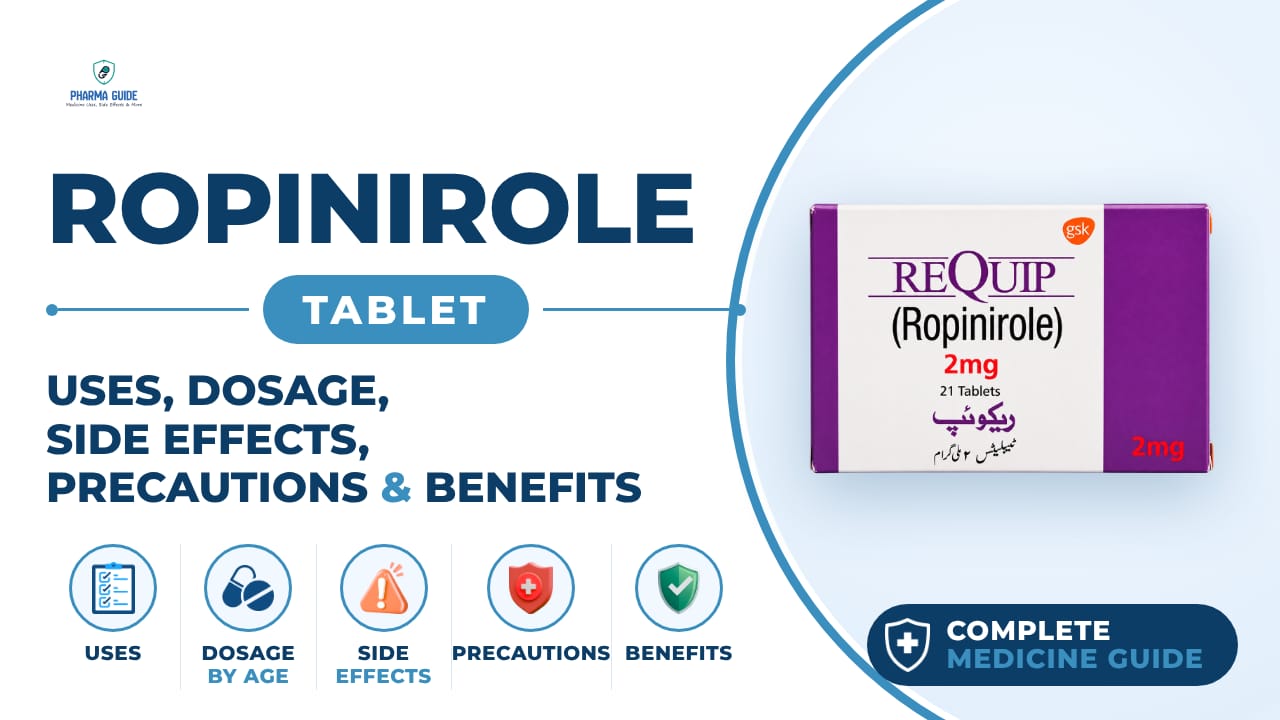
| Generic name | Ropinirole (as ropinirole hydrochloride) |
|---|---|
| Drug class | Dopaminergic antiparkinsonism agent / Dopamine agonist |
| Forms | Oral tablet (immediate-release), Oral tablet, extended-release |
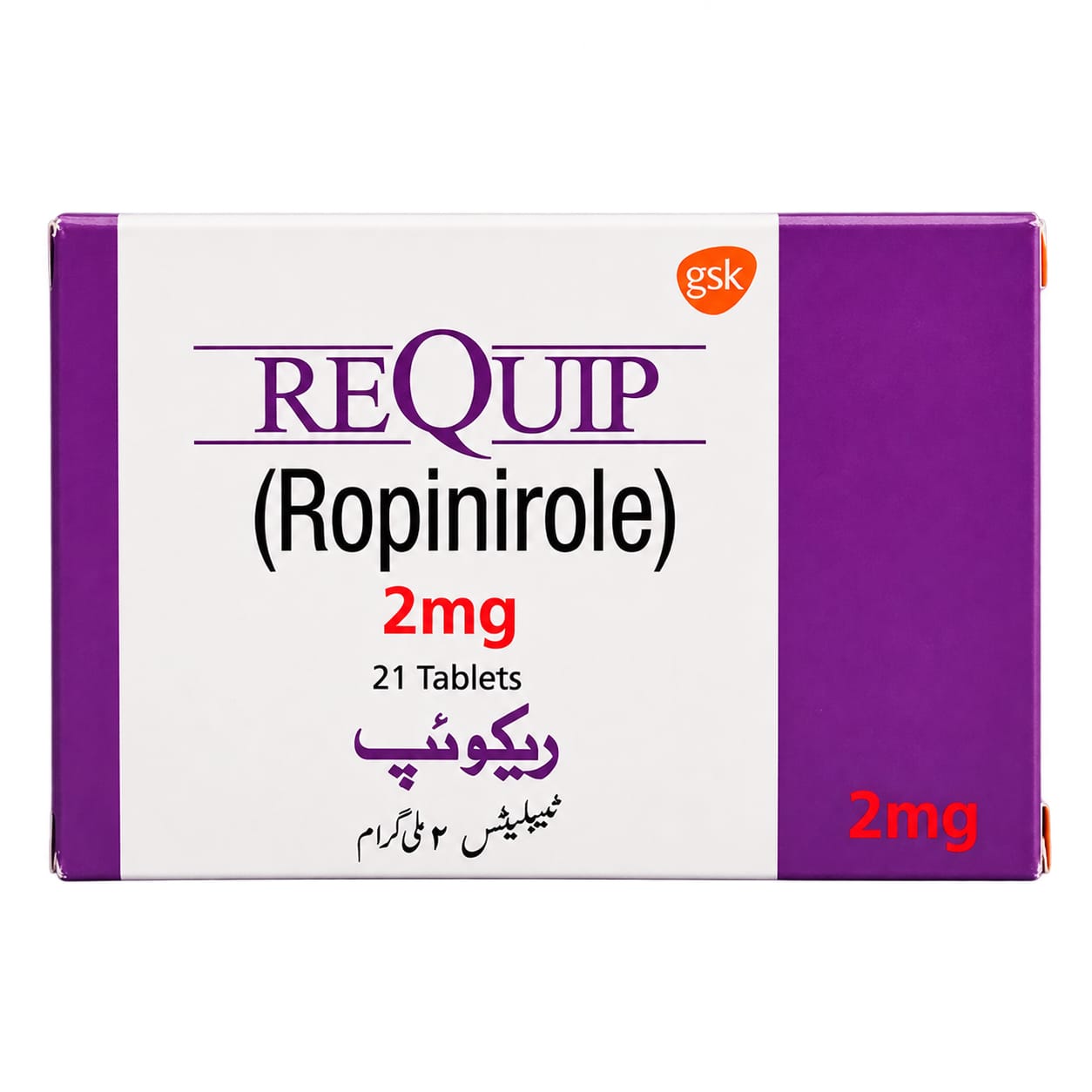
Quick overview
Ropinirole Tablet (ropinirole hydrochloride) is a prescription dopamine agonist used to treat Parkinson's disease and moderate-to-severe primary restless legs syndrome. It works by acting like dopamine, a natural brain chemical needed for movement control. It can be taken with or without food and is also available as a lower-cost generic.
What is Ropinirole Tablet
Ropinirole is a prescription medicine that acts like a natural brain chemical called dopamine. It belongs to the dopaminergic antiparkinsonism, or dopamine agonist, class of medicines. It is used to treat Parkinson's disease and restless legs syndrome.
Ropinirole Tablet uses
- Treats the symptoms of Parkinson's disease, including shaking, stiffness, slowed movements, and problems with balance
- Treats moderate-to-severe primary Restless Legs Syndrome (RLS)
Benefits of Ropinirole Tablet
- Works well to control movement problems
- Can take with or without food
- Available as a lower-cost generic
How Ropinirole Tablet works
Ropinirole acts in place of dopamine, a natural brain chemical needed to control movement. Parkinson's disease and restless legs syndrome are linked to problems in the brain's dopamine system, so this medicine helps improve movement problems by acting like dopamine.
Ropinirole Tablet dosage
Ropinirole can be taken with or without food; taking it with food may help lower the chance of feeling sick to your stomach. For Parkinson's disease, the regular tablet is usually taken three times a day at evenly spaced times. For restless legs syndrome, the regular tablet is usually taken once a day, 1 to 3 hours before bedtime. Take it at around the same time(s) every day, and swallow tablets whole without chewing, crushing, or splitting them.
Do not take more or less than prescribed, or take it more often than directed. If you miss a dose for Parkinson's disease, take it as soon as you remember unless it is almost time for your next dose, in which case skip it. If you miss a dose for restless legs syndrome, skip the missed dose and take your regular dose before your next bedtime; do not double the next dose.
Do not stop taking this medicine suddenly without talking to your doctor, since stopping suddenly can cause withdrawal symptoms. Continue taking this medicine even if you feel well, since it controls symptoms but does not cure the underlying condition. It may take several weeks before the right dose is found that controls your symptoms.
| Age group | Dose |
|---|---|
| Under 18 years | Not established |
| 18 years and older (Parkinson's disease) | 0.25 mg three times daily initially; gradually increased as prescribed |
| 18 years and older (Restless legs syndrome) | 0.25 mg once daily, 1–3 hours before bedtime; gradually increased as prescribed |
Available forms and strengths
- Oral tablet (immediate-release)
- Oral tablet, extended-release
Side effects of Ropinirole Tablet
Common
- Nausea or vomiting
- Headache
- Dizziness
- Drowsiness or sleepiness
- Weakness or fatigue
- Heartburn or gas
- Decreased appetite
- Sweating or flushing
- Confusion
- Swelling of the feet, ankles, or lower legs
Serious
- Falling asleep suddenly during normal activities such as driving
- Fainting, feeling dizzy or light-headed when standing up
- Hallucinations (seeing or hearing things that are not real)
- Unusual urges such as gambling, increased sexual urges, excessive shopping, or binge eating
- Signs of an allergic reaction such as hives, rash, swelling of the face, lips, mouth, tongue, or throat, or difficulty breathing or swallowing
- Worsening or new uncontrolled body movements (dyskinesia)
- Withdrawal symptoms such as fever, severe muscle stiffness, sweating, confusion, and fast or irregular heartbeat if treatment is stopped suddenly
- Aggressive or unfriendly behavior, agitation, unusual suspicion, or strange thoughts or beliefs
- Fibrotic changes (scarring or thickening) in the lungs and heart valves
Warnings and precautions
- You may fall asleep suddenly during normal daily activities like driving, without any warning signs beforehand. This risk is higher if you take other medicines that cause drowsiness.
- This medicine can cause fainting and a drop in blood pressure, especially when starting treatment or increasing the dose. Stand up slowly from sitting or lying down.
- Hallucinations and other unusual thinking or behavior changes can occur, and the risk is higher in older adults, those taking levodopa, or those on higher doses.
- Some people develop intense urges they cannot control, such as gambling, increased sexual urges, shopping, or binge eating.
- Stopping this medicine suddenly can cause withdrawal symptoms like fever, muscle stiffness, sweating, and confusion. Your dose should be lowered gradually under your doctor's guidance.
- People with Parkinson's disease may have a higher chance of developing melanoma, a type of skin cancer. Regular skin checks are recommended.
- It is not known if ropinirole is safe for an unborn baby.
- Tell your doctor if you are pregnant or planning to become pregnant, since this medicine is generally not recommended during pregnancy unless your doctor decides the benefit is greater than the risk.
- It is not known if ropinirole passes into breast milk, but it may lower the amount of breast milk you make. Talk to your doctor about whether you should breastfeed while taking this medicine.
- People with severe kidney problems who are not on regular dialysis should not take this medicine, since it has not been studied in this group. Your dose may need to be adjusted if you are on dialysis.
- This medicine has not been studied in people with liver problems, so it is not recommended for them.
- Drinking alcohol while taking this medicine can increase drowsiness and other side effects such as low blood pressure and dizziness.
- This medicine can make you fall asleep suddenly without warning during normal activities. Do not drive or operate machinery until you know how it affects you.
Storage
- Store ropinirole tablets at room temperature out of direct sunlight
- Keep in the container it came in, tightly closed, and away from excess heat and moisture (not in the bathroom)
- Keep out of the reach and sight of children
- Dispose of unneeded medicine through a medicine take-back program rather than throwing it in household trash or flushing it
When to see a doctor
- Get emergency help right away if you have signs of an allergic reaction, such as hives, trouble breathing, or swelling of your face, lips, tongue, or throat.
- Call your doctor right away if you suddenly fall asleep or feel extremely drowsy during normal activities, even after feeling alert.
- Call your doctor if you faint, feel light-headed, or feel like you might pass out.
- Contact your healthcare provider if you have hallucinations, confusion, unusual suspicion, aggressive behavior, agitation, or strange beliefs.
- Tell your doctor right away if you develop withdrawal symptoms such as fever, confusion, severe muscle stiffness, sweating, insomnia, apathy, depression, or anxiety.
- Seek emergency medical attention or contact a poison control center if you think you or someone else has taken too much of this medicine.
Alternatives
- Pramipexole
- Bromocriptine
- Gabapentin
Watch the video
FAQs
What is Ropinirole Tablet used for?
It is used to treat the symptoms of Parkinson's disease, including shaking, stiffness, slowed movements, and balance problems, as well as moderate-to-severe primary restless legs syndrome.
How does Ropinirole Tablet work?
It acts in place of dopamine, a natural brain chemical needed to control movement. Since Parkinson's disease and restless legs syndrome are linked to problems in the brain's dopamine system, this medicine helps improve movement problems by acting like dopamine.
Can Ropinirole Tablet be taken with food?
Yes, it can be taken with or without food; taking it with food may help lower the chance of feeling sick to your stomach.
What should I do if I miss a dose of Ropinirole Tablet?
For Parkinson's disease, take the missed dose as soon as you remember unless it is almost time for your next dose, in which case skip it. For restless legs syndrome, skip the missed dose and take your regular dose before your next bedtime; do not double the next dose.
What are the serious side effects of Ropinirole Tablet?
Serious side effects include suddenly falling asleep during normal activities, fainting or light-headedness, hallucinations, unusual urges like gambling or binge eating, allergic reactions, worsening uncontrolled movements, withdrawal symptoms if stopped suddenly, and fibrotic changes in the lungs and heart valves.
General information, not medical advice
Your prescriber and the leaflet in your pack know your situation. This page does not.
- Follow your prescriber and the leaflet
- Don't start, stop, or change a dose on your own
- Doses and warnings differ by country and product
Sources
Video
Related medicines

Injectafer Injection: Uses, Dosage, Side Effects, Precautions and Alternates
Iron products
Injectafer (ferric carboxymaltose) treats iron deficiency anemia and heart failure-related iron deficiency via IV. Learn uses, dosage, side effects, and

Gliclazide Tablet: Uses, Dosage, Side Effects, Precautions and Alternates
Sulfonylurea (hypoglycemic/antidiabetic agent)
Gliclazide Tablet is a sulfonylurea for type 2 diabetes that boosts insulin release. Learn about dosage, side effects, warnings, and precautions.