
Safety
General information, not medical advice
Your prescriber and the leaflet in your pack know your situation. This page does not.
- Follow your prescriber and the leaflet
- Don't start, stop, or change a dose on your own
- Doses and warnings differ by country and product
Rosuvastatin Tablet: Uses, Dosage, Side Effects, Precautions and Alternates
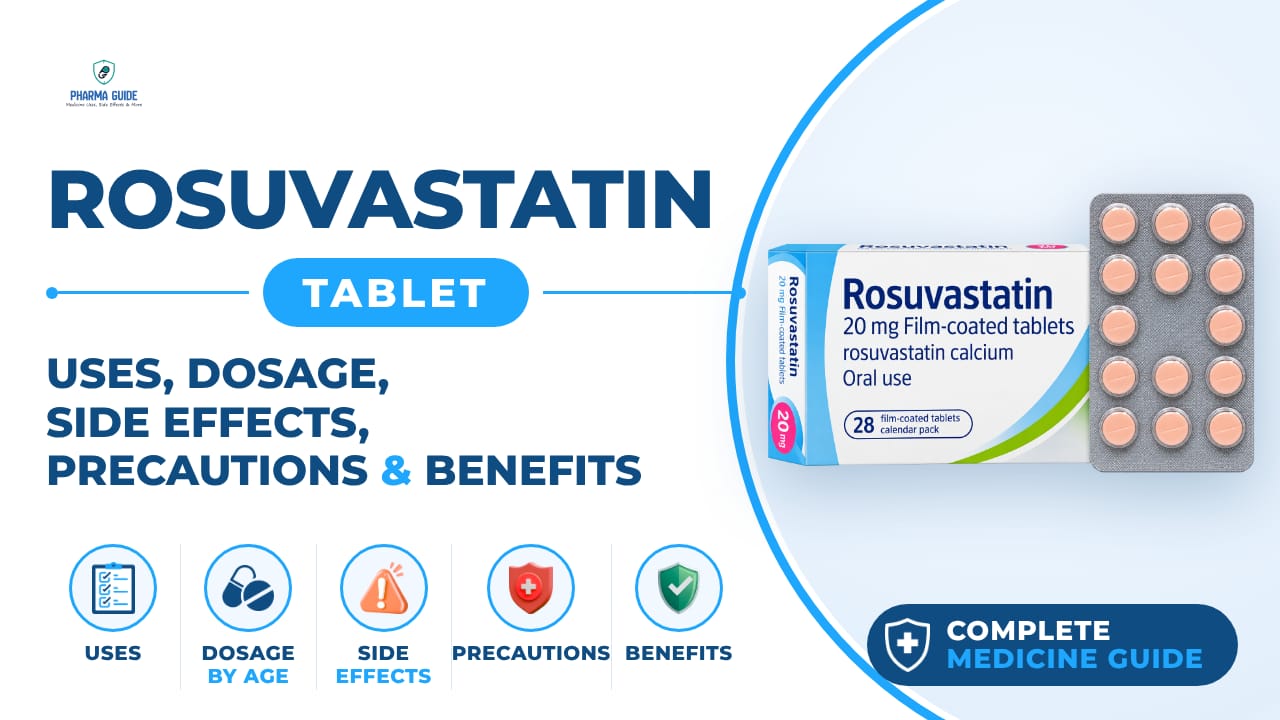
| Generic name | rosuvastatin (rosuvastatin calcium) |
|---|---|
| Drug class | Statin (HMG-CoA reductase inhibitor) / Lipid Metabolism Regulator |
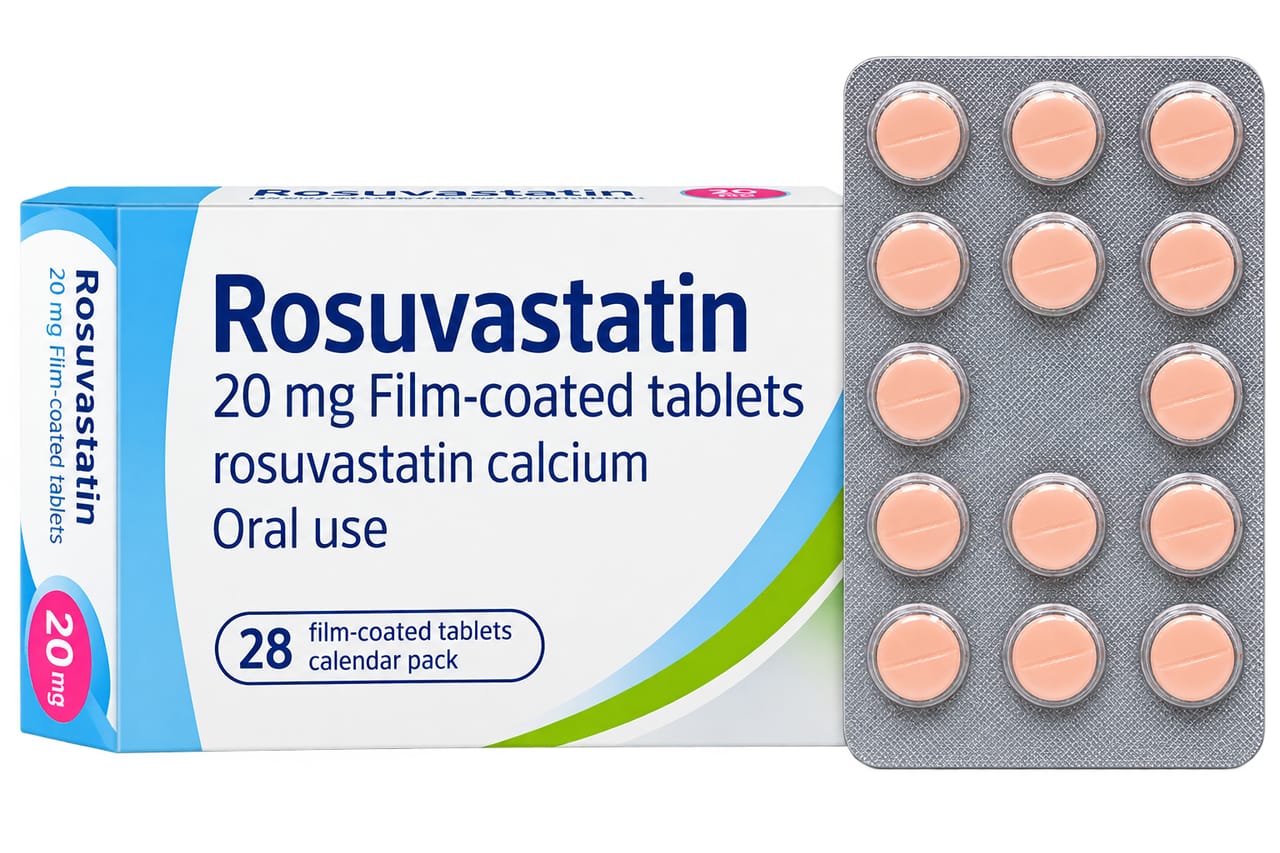
| Forms | Oral tablets (5 mg, 10 mg, 20 mg, 40 mg) |
Quick overview
Rosuvastatin Tablet is a prescription statin medicine used to treat high cholesterol and to reduce the risk of major cardiovascular events such as heart attack and stroke. It works by lowering cholesterol production in the liver and is often used together with diet and exercise changes. It is taken once daily by mouth and is available in several tablet strengths.
What is Rosuvastatin Tablet
Rosuvastatin is a prescription medicine used to treat high cholesterol and to reduce the risk of major cardiovascular events such as heart attack and stroke. It belongs to a group of medicines called statins and is often used together with diet and exercise changes.
Rosuvastatin Tablet uses
- Reduce elevated total cholesterol, LDL cholesterol, and triglycerides, and increase HDL cholesterol in adults with high cholesterol
- Reduce the risk of heart attack, stroke, and the need for procedures to improve blood flow to the heart in adults with risk factors for cardiovascular disease
- Slow the buildup of fatty deposits (plaque) in blood vessel walls
- Treat adults and certain children with inherited high cholesterol conditions (familial hypercholesterolemia)
- Treat adults with high cholesterol and high triglycerides due to rare inherited lipid disorders (dysbetalipoproteinemia, hypertriglyceridemia)
Benefits of Rosuvastatin Tablet
- Lowers LDL (bad) cholesterol and triglycerides
- Raises HDL (good) cholesterol
- Reduces risk of heart attack, stroke, and procedures to restore blood flow to the heart
- Slows progression of plaque buildup in blood vessels
How Rosuvastatin Tablet works
Rosuvastatin blocks an enzyme in the liver called HMG-CoA reductase, which the body needs to make cholesterol. This lowers the amount of cholesterol produced. In response, the liver increases the number of LDL receptors on its surface, which pulls more LDL (bad) cholesterol out of the blood, lowering LDL and total cholesterol levels.
Rosuvastatin Tablet dosage
Take by mouth once daily, with or without food. Swallow the tablet whole; do not crush, split, or chew it. Take it at the same time every day, either in the morning or evening. If it upsets your stomach, taking it with food may help. If you take an antacid containing aluminum and magnesium hydroxide, take it at least 2 hours after your rosuvastatin dose. Keep taking it even if you feel well; do not stop or change the dose without talking to your care team. Follow a cholesterol-lowering diet and exercise plan along with this medicine. This medicine may be prescribed for children as young as 7 to 8 years for certain conditions, under specialist supervision.
| Age group | Dose |
|---|---|
| Under 6 years | Routine tablet dosing not established |
| 6–9 years | 5–10 mg once daily for appropriate familial hypercholesterolemia |
| 10–17 years | 5–20 mg once daily, depending on indication |
| 18–64 years | 5–40 mg once daily |
| 65+ years | Usually start cautiously; individualize according to response and risk factors |
Available forms and strengths
- Oral tablets (5 mg, 10 mg, 20 mg, 40 mg)
Side effects of Rosuvastatin Tablet
Common
- Headache
- Nausea
- Muscle aches and pains (myalgia)
- Weakness
- Constipation
- Abdominal pain
- Fatigue
- Joint pain
- Dizziness
- Insomnia
Serious
- Muscle pain, tenderness, and weakness (myopathy), which can rarely progress to muscle breakdown (rhabdomyolysis) and kidney damage
- Liver problems, including elevated liver enzymes and rare cases of liver failure
- Protein and blood in the urine
- Increase in blood sugar (glucose) levels, which may lead to diabetes
- Allergic reactions, including rash, itching, hives, and swelling of the face, lips, tongue, or throat
- Immune-mediated necrotizing myopathy (a rare autoimmune muscle disease)
- Memory loss and confusion
- Serious skin reactions with blistering, peeling, or loosening of the skin
Warnings and precautions
- Rosuvastatin should not be used during pregnancy because it may harm the unborn baby. It should be stopped as soon as pregnancy is recognized.
- Breastfeeding is not recommended while taking rosuvastatin because the drug can pass into breast milk and may harm the baby.
- People with kidney problems may need a lower dose because rosuvastatin levels can build up in the blood, increasing the risk of muscle problems.
- Rosuvastatin should not be used in people with active liver disease, and liver function should be checked before and during treatment.
- Rosuvastatin should be used with caution in people who drink a lot of alcohol, since both alcohol and the medicine can affect the liver.
- Rosuvastatin can cause muscle problems, including rare but serious muscle breakdown (rhabdomyolysis) that can lead to kidney damage.
- Report any unexplained muscle pain, tenderness, or weakness right away.
- Rosuvastatin can cause liver problems, and doctors may check liver function with blood tests before and during treatment.
- Rosuvastatin may increase blood sugar levels, which can raise the risk of developing diabetes, especially in those already at risk.
- The 40 mg dose should not be used in people of Asian descent or those with risk factors for muscle problems.
- Rosuvastatin should not be taken with cyclosporine or the hepatitis C combination sofosbuvir/velpatasvir/voxilaprevir due to serious drug interactions.
- Statins may rarely cause or worsen myasthenia gravis, a disease causing muscle weakness.
Storage
- Store at room temperature, between 68°F and 77°F (20°C and 25°C)
- Store in a dry place, protected from moisture
- Keep the container tightly closed
- Keep out of the reach of children and pets
- Get rid of any unused or expired medication safely; take it to a medication take-back program if possible, or follow label/package instructions for trash disposal
When to see a doctor
- Get medical help right away if you have signs of an allergic reaction, such as rash, hives, swelling of the face, lips, tongue or throat, or trouble breathing.
- Contact your doctor right away if you notice signs of liver injury, such as upper belly pain, loss of appetite, nausea, light-colored stools, dark urine, or yellowing of the skin or eyes.
- Tell your doctor right away if you have unexplained muscle pain, tenderness, or weakness, especially with fever or unusual tiredness.
- Seek care if you notice symptoms of high blood sugar, such as increased thirst, frequent urination, blurry vision, or unusual weakness.
- If you think you have taken too much of this medicine, contact a poison control center or emergency room right away.
- Get help immediately if you develop signs of a severe skin reaction, such as blistering, peeling, or sores in the mouth.
Alternatives
- Atorvastatin
- Ezetimibe
- Pitavastatin
- Alirocumab
- Fluvastatin
Watch the video
FAQs
What is Rosuvastatin Tablet used for?
It treats high cholesterol and reduces the risk of major cardiovascular events like heart attack and stroke. It also lowers LDL cholesterol and triglycerides, raises HDL cholesterol, slows plaque buildup in blood vessels, and treats certain inherited lipid disorders.
How should I take Rosuvastatin Tablet?
Take it by mouth once daily, with or without food, at the same time each day. Swallow the tablet whole without crushing, splitting, or chewing it. If you take an aluminum/magnesium hydroxide antacid, take it at least 2 hours after your rosuvastatin dose.
What are the common side effects of Rosuvastatin Tablet?
Common side effects include headache, nausea, muscle aches, weakness, constipation, abdominal pain, fatigue, joint pain, dizziness, and insomnia.
What serious side effects should I watch for with Rosuvastatin Tablet?
Serious effects include muscle problems that can progress to rhabdomyolysis and kidney damage, liver problems, increased blood sugar, allergic reactions, immune-mediated necrotizing myopathy, memory loss, and severe skin reactions.
Can Rosuvastatin Tablet be taken during pregnancy?
No, it should not be used during pregnancy because it may harm the unborn baby, and it should be stopped as soon as pregnancy is recognized. Breastfeeding is also not recommended while taking this medicine.
General information, not medical advice
Your prescriber and the leaflet in your pack know your situation. This page does not.
- Follow your prescriber and the leaflet
- Don't start, stop, or change a dose on your own
- Doses and warnings differ by country and product
Sources
Video
Related medicines

Injectafer Injection: Uses, Dosage, Side Effects, Precautions and Alternates
Iron products
Injectafer (ferric carboxymaltose) treats iron deficiency anemia and heart failure-related iron deficiency via IV. Learn uses, dosage, side effects, and

Gliclazide Tablet: Uses, Dosage, Side Effects, Precautions and Alternates
Sulfonylurea (hypoglycemic/antidiabetic agent)
Gliclazide Tablet is a sulfonylurea for type 2 diabetes that boosts insulin release. Learn about dosage, side effects, warnings, and precautions.