
Safety
General information, not medical advice
Your prescriber and the leaflet in your pack know your situation. This page does not.
- Follow your prescriber and the leaflet
- Don't start, stop, or change a dose on your own
- Doses and warnings differ by country and product
Rozith Tablet: Uses, Dosage, Side Effects, Precautions and Alternates
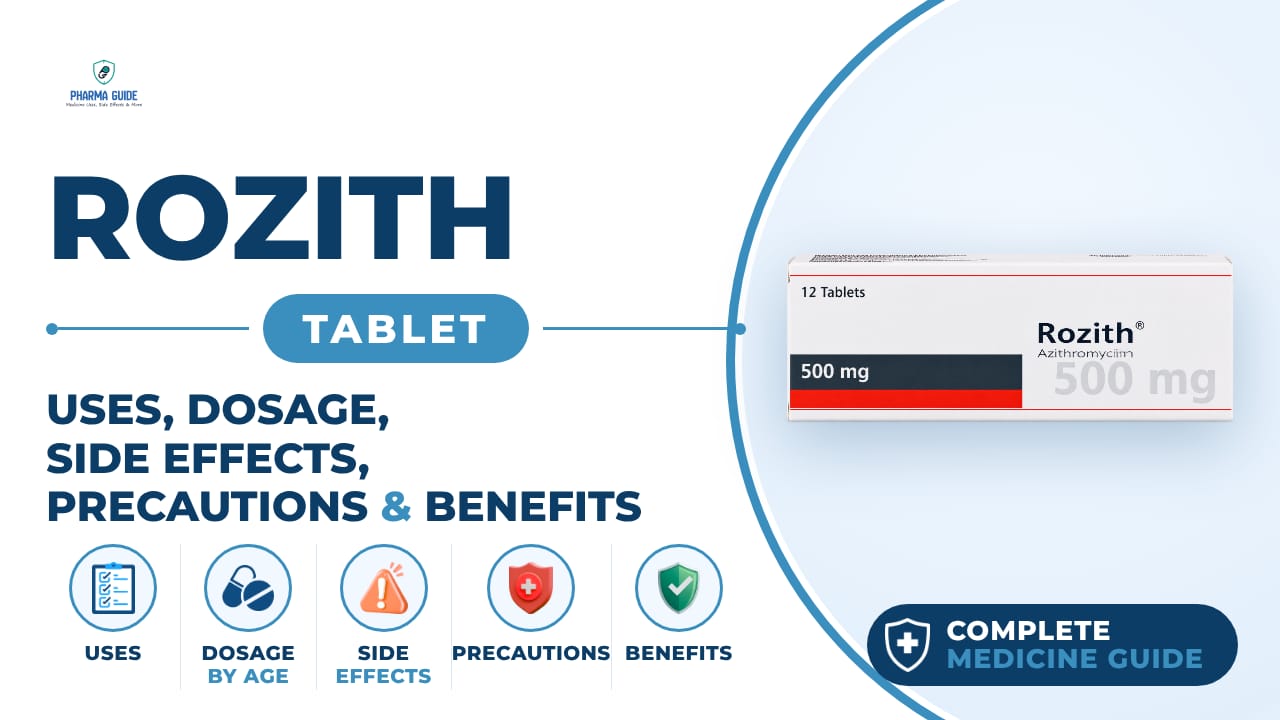
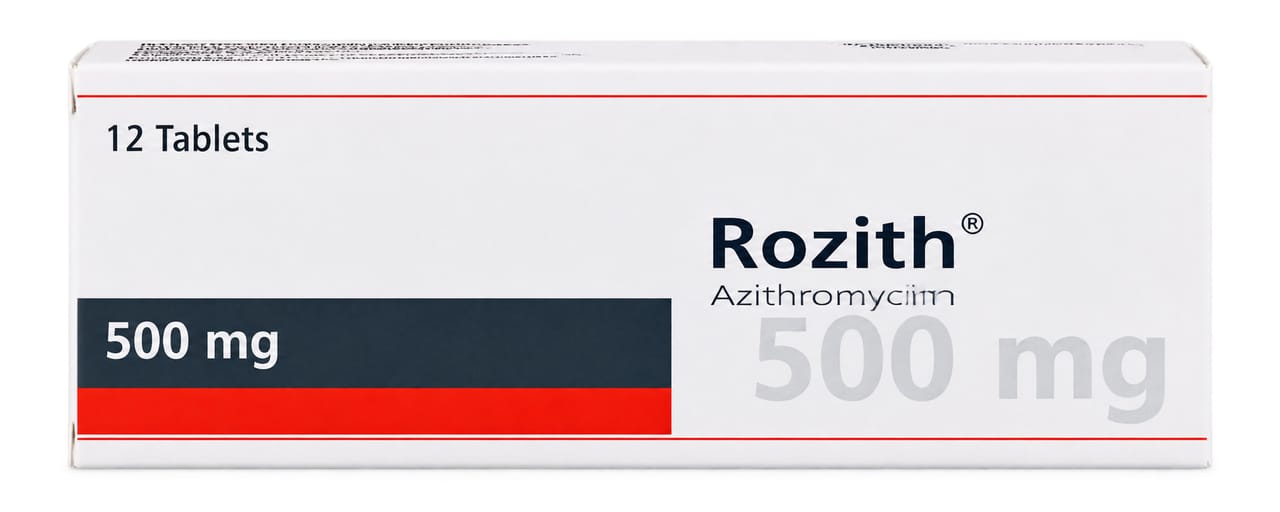
| Generic name | Azithromycin |
|---|---|
| Drug class | Macrolide antibiotic (azalide subclass) |
| Forms | Tablet, Capsule, Oral suspension (powder for reconstitution), Injection (intravenous infusion) |
Quick overview
Rozith Tablet contains azithromycin, a macrolide antibiotic from the azalide subclass. It is used to treat many bacterial infections, including infections of the chest, ears, nose, throat, and skin, as well as some sexually transmitted infections. It works by stopping bacteria from making the proteins they need to grow, and it is generally taken once daily for a set course as directed by a doctor.
What is Rozith Tablet
Rozith is an antibiotic that contains azithromycin, a macrolide-type medicine derived from erythromycin. It is used to treat many different bacterial infections, including infections of the chest, ears, nose, throat, and skin, as well as some sexually transmitted infections.
Rozith Tablet uses
- Bronchitis and pneumonia (lower respiratory tract infections)
- Sinusitis and pharyngitis/tonsillitis (upper respiratory tract infections)
- Ear infections (otitis media)
- Skin and soft tissue infections
- Non-gonococcal urethritis and cervicitis caused by Chlamydia trachomatis
- Chancroid (genital ulcer disease)
- Typhoid (enteric) fever caused by susceptible bacteria
- Gonorrhea (uncomplicated)
- Prevention and treatment of Mycobacterium avium complex (MAC) infections, used with other medicines
Benefits of Rozith Tablet
- Works against many common disease-causing bacteria
- Long-lasting in the body, allowing shorter treatment courses and once-daily dosing
- Generally gentle on the stomach compared to older antibiotics of the same type
How Rozith Tablet works
Rozith stops bacteria from making the proteins they need to grow and multiply, which stops the infection from spreading. It does this by attaching to a part of the bacteria called the ribosome, blocking a step in protein-building.
Rozith Tablet dosage
Swallow the tablet whole with a glass of water; do not chew, crush, or break it. Take the medicine either about an hour before or two hours after a meal, though it can be taken with or without food. Take it at the same time each day, spaced evenly as your doctor advises. Do not take antacids containing aluminum or magnesium within two hours of taking this medicine.
Complete the full course of treatment even if you feel better before it is finished; do not stop, extend, skip doses, or share this medicine with others without medical advice.
If you miss a dose, take it as soon as you remember, unless it is almost time for your next dose — in that case, skip the missed dose. Never take two doses at once.
In children, dosing is based on body weight and should be guided by a physician.
| Age group | Dose |
|---|---|
| Under 6 Months | Use only if prescribed by a healthcare professional |
| 6 Months–17 Years | Dose based on body weight and infection type (commonly 10 mg/kg once daily) |
| Adults (18–64 Years) | Usually 500 mg once daily depending on infection |
| Older Adults (65+ Years) | Usually 500 mg once daily; adjustment may be needed based on health condition |
Available forms and strengths
- Tablet
- Capsule
- Oral suspension (powder for reconstitution)
- Injection (intravenous infusion)
Side effects of Rozith Tablet
Common
- Diarrhea or loose stools
- Nausea
- Abdominal pain or cramps
- Vomiting
- Headache
- Flatulence
- Dizziness
- Skin rashes
Serious
- QT prolongation and abnormal heart rhythm (arrhythmia)
- Liver damage, including cholestatic jaundice
- Severe or persistent diarrhea (possible C. difficile-related colitis)
- Allergic reactions, including rare severe skin reactions and anaphylaxis
- Reversible hearing loss with prolonged high-dose use
- Low white blood cell counts (rare)
Warnings and precautions
- This medicine can affect the heart's rhythm (QT prolongation), which in rare cases can lead to a dangerous heartbeat problem. This risk is higher in people with existing heart rhythm issues, low potassium or magnesium levels, a slow heartbeat, or those taking other medicines that affect heart rhythm.
- Rare but serious liver damage has been reported. Stop taking the medicine and contact a doctor right away if you notice signs of liver problems.
- Severe or ongoing diarrhea can happen during treatment or even weeks after finishing it, and may need medical evaluation.
- People with the muscle condition myasthenia gravis should use this medicine cautiously, as it may worsen symptoms in rare cases.
- This medicine should not be taken by anyone allergic to azithromycin or other macrolide antibiotics, or by those with a past history of liver problems caused by this medicine.
- Always take the full course exactly as prescribed. Do not stop early, change the dose, or share this medicine with others, even if you start to feel better.
- Rozith should only be used in pregnancy if clearly needed, since study data in humans are still limited. Always talk to your doctor before use during pregnancy.
- This medicine passes into breast milk, so it should be used carefully while breastfeeding, and the baby should be watched for stomach upset or rash.
- People with mild to moderate kidney problems usually don't need a dose change, but those with severe kidney disease should use this medicine carefully and only with a doctor's guidance.
- This medicine should be used carefully in people with liver problems, and should not be used at all in anyone who has had liver problems (cholestatic jaundice) from taking it before.
- It's best to avoid alcohol while taking this medicine, since both can affect the liver and may increase side effects like dizziness.
- This medicine can sometimes cause dizziness or blurred vision, which may affect your ability to drive or use machinery. Avoid these activities if you feel affected.
Storage
- Store below 30°C in a cool, dry place, away from light and moisture.
- Keep out of reach of children.
- If using the oral suspension, shake well before each use and discard any unused portion after 10 days.
- Use the medicine before its expiration date.
When to see a doctor
- Get medical help right away if you develop an itchy rash, swelling of the face, throat, or tongue, or difficulty breathing.
- Tell your doctor promptly if you notice a fast or irregular heartbeat.
- Contact your doctor if diarrhea is severe, does not stop, or if you notice blood in your stools.
- If you suspect you have taken too much of this medicine, seek immediate medical attention or contact a poison control center.
- Let your doctor know if your symptoms have not improved or have gotten worse after a few days of treatment.
Alternatives
- Clarithromycin
- Erythromycin
- Doxycycline
Watch the video
FAQs
What is Rozith Tablet used for?
Rozith Tablet is used to treat bacterial infections such as bronchitis, pneumonia, sinusitis, pharyngitis, ear infections, skin infections, certain sexually transmitted infections, chancroid, typhoid fever, gonorrhea, and MAC infections.
How should I take Rozith Tablet?
Swallow the tablet whole with water without chewing or crushing it. Take it about an hour before or two hours after a meal, at the same time each day, and avoid aluminum or magnesium antacids within two hours of dosing.
What are the common side effects of Rozith Tablet?
Common side effects include diarrhea or loose stools, nausea, abdominal pain, vomiting, headache, flatulence, dizziness, and skin rashes.
What precautions should I follow while taking Rozith Tablet?
Avoid it if allergic to azithromycin or other macrolides, use cautiously if you have heart rhythm issues, liver or severe kidney problems, or myasthenia gravis, avoid alcohol, and complete the full prescribed course.
What should I do if I miss a dose of Rozith Tablet?
Take the missed dose as soon as you remember, unless it is almost time for your next dose, in which case skip it. Do not take two doses at once.
General information, not medical advice
Your prescriber and the leaflet in your pack know your situation. This page does not.
- Follow your prescriber and the leaflet
- Don't start, stop, or change a dose on your own
- Doses and warnings differ by country and product
Sources
Video
Related medicines
Azithromycin Tablet: Uses, Dosage, Side Effects, Precautions and Alternates
Macrolide antibiotic (azalide subclass)
Azithromycin Tablet is a macrolide antibiotic used for bacterial infections like Chlamydia and MAC. Learn its uses, dosage, side effects, and precautions.

Injectafer Injection: Uses, Dosage, Side Effects, Precautions and Alternates
Iron products
Injectafer (ferric carboxymaltose) treats iron deficiency anemia and heart failure-related iron deficiency via IV. Learn uses, dosage, side effects, and