
Safety
General information, not medical advice
Your prescriber and the leaflet in your pack know your situation. This page does not.
- Follow your prescriber and the leaflet
- Don't start, stop, or change a dose on your own
- Doses and warnings differ by country and product
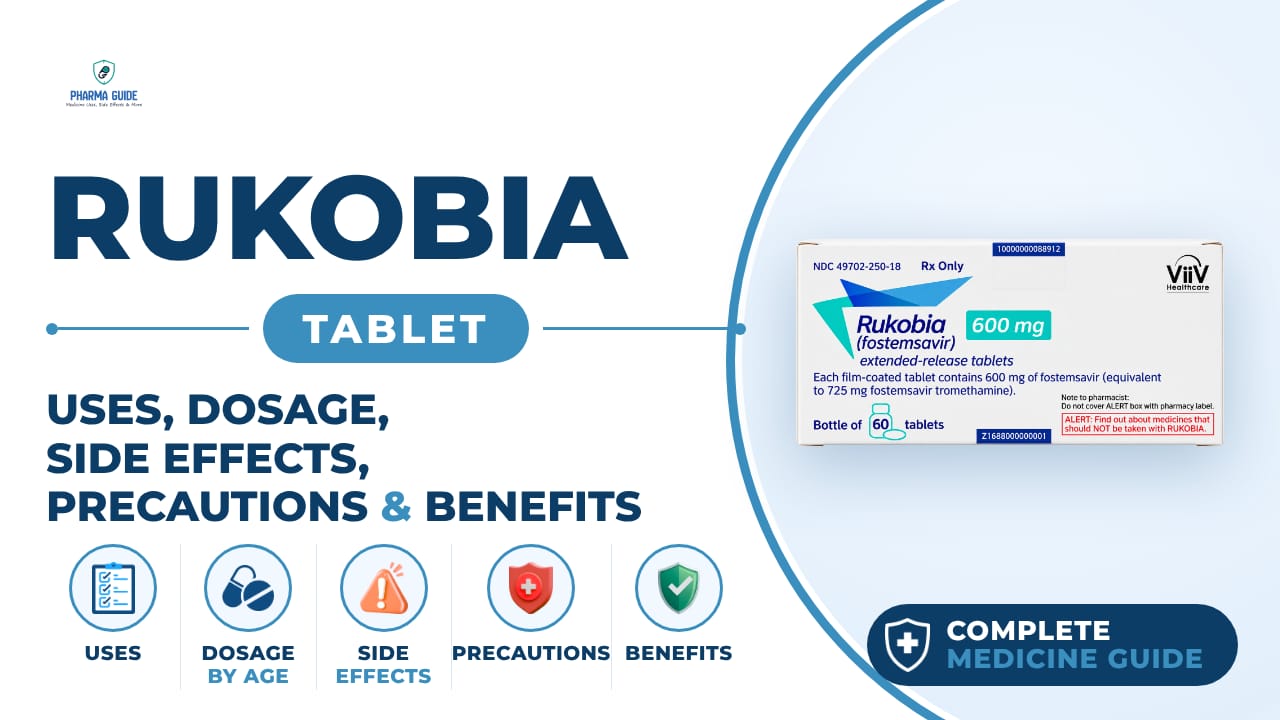
Rukobia Tablet: Uses, Dosage, Side Effects, Precautions and Alternates
| Generic name | fostemsavir |
|---|---|
| Drug class | HIV-1 gp120-directed attachment inhibitor (a type of antiretroviral drug) |
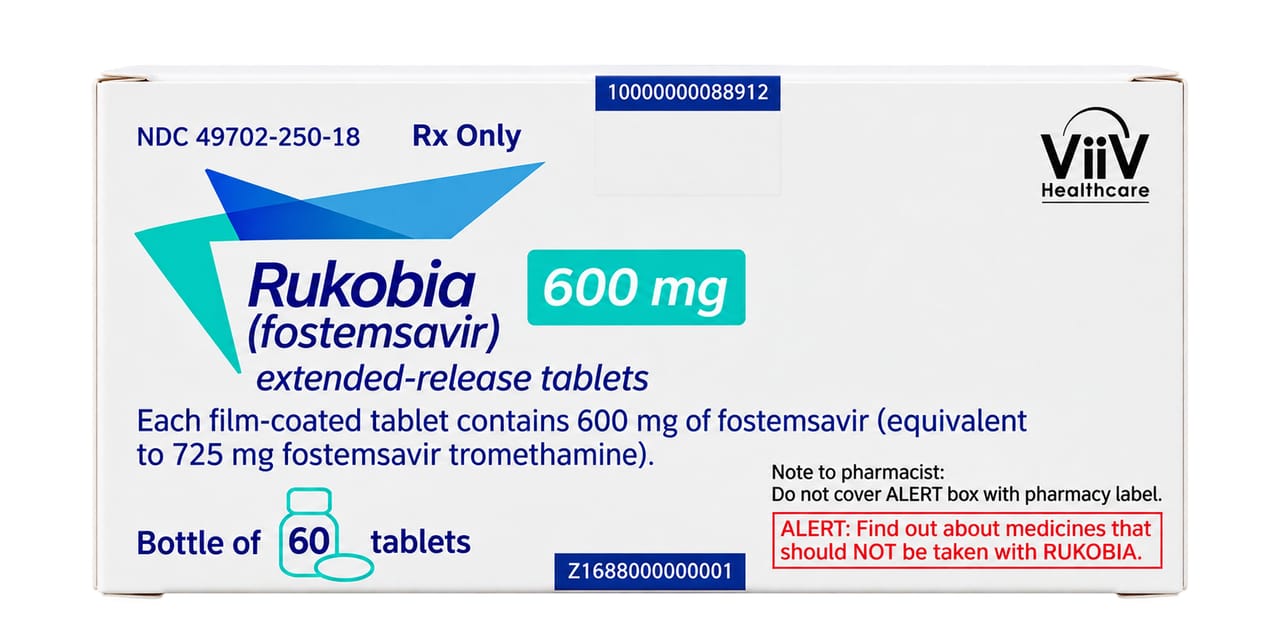
| Forms | Extended-release oral tablet (600 mg) |
Quick overview
Rukobia Tablet contains fostemsavir, an HIV-1 gp120-directed attachment inhibitor, which is a type of antiretroviral drug. It is used together with other HIV medicines to treat HIV-1 infection in adults with multi-drug resistant virus whose current treatment is failing due to resistance, side effects, or safety concerns. Rukobia works by blocking the virus from attaching to and entering immune cells, helping to lower viral load and support immune function. It is not approved for use in children.
What is Rukobia Tablet
Rukobia is a prescription medicine used together with other HIV medicines to treat HIV-1 infection in adults who have already tried several HIV treatments, whose virus has become resistant to many HIV medicines, and whose current treatment is not working, is causing side effects they cannot tolerate, or has other safety concerns.
Rukobia Tablet uses
- Used in combination with other antiretroviral medicines to treat adults with multi-drug resistant HIV-1 who are failing their current treatment due to resistance, side effects, or safety concerns.
- Not approved for use in children.
Benefits of Rukobia Tablet
- Lowers the amount of HIV in the blood (viral load)
- Helps improve or preserve CD4 immune cell counts
- Supports immune system function when other HIV treatments have failed
- Can lower the chance of HIV complications and improve quality of life
How Rukobia Tablet works
Rukobia attaches to a protein on the surface of the HIV-1 virus called gp120. This stops the virus from attaching to and entering the body's immune cells, which helps prevent the virus from spreading in the body.
Rukobia Tablet dosage
Take the tablets exactly as your healthcare provider tells you to. Swallow the tablets whole. Do not chew, crush, or split them before swallowing. You can take the tablets with or without food. Try to take your doses at the same times each day to keep a steady level of medicine in your body. The tablets may have a slight vinegar-like smell — this is normal.
Do not skip doses, and do not run out of medicine, since this can allow the virus to become harder to treat. If you miss a dose, take it as soon as you remember. If it is almost time for your next dose, skip the missed dose and go back to your normal schedule. Do not take two doses at once.
This medicine is meant for long-term treatment alongside other HIV medicines. It is not known if this medicine is safe and effective for children. If you think you have taken too much, contact your healthcare provider or go to the nearest emergency room right away.
| Age group | Dose |
|---|---|
| 18–64 years | 600 mg twice daily |
| 65–74 years | 600 mg twice daily, with individualized monitoring |
| 75 years and older | Usually 600 mg twice daily when clinically appropriate, with closer monitoring |
Available forms and strengths
- Extended-release oral tablet (600 mg)
Side effects of Rukobia Tablet
Common
- Nausea (the most common side effect)
- Diarrhea
- Abdominal pain or indigestion
- Headache and fatigue
- Rash
- Sleep changes such as insomnia, sleepiness, or unusual dreams
- Dizziness
- Muscle pain
- Tingling or numbness sensations
- Itchy skin
- Vomiting
Serious
- Immune reconstitution syndrome — an overactive immune system reacting to hidden infections, which can cause fever, chills, fatigue, or swollen lymph nodes
- QTc prolongation — a heart rhythm problem that can cause dizziness, fainting, gasping during sleep, or heart palpitations
- Changes in liver function test results, especially in people with hepatitis B or C, which can cause abdominal pain, dark urine, or yellowing of skin/eyes (jaundice)
- Allergic reaction, which can range from mild rash to severe swelling or trouble breathing
Warnings and precautions
- Do not take Rukobia with certain medicines, such as enzalutamide, carbamazepine, phenytoin, rifampin, mitotane, or St. John's wort, since these can greatly reduce how well Rukobia works.
- If you stop treating hepatitis B while taking Rukobia, your hepatitis B could become active again.
- Rukobia does not cure HIV and does not prevent you from spreading the virus to others, so continue practicing safe behaviors as advised by your doctor.
- Taking birth control pills containing ethinyl estradiol along with Rukobia can raise the amount of that hormone in your blood, so talk to your provider about which birth control may be right for you.
- It is not known if Rukobia will harm an unborn baby. Tell your healthcare provider if you become pregnant during treatment, and consider taking part in a pregnancy registry that tracks health outcomes.
- Do not breastfeed while taking Rukobia. There is a risk of passing HIV-1 to the baby, and it isn't known if the drug passes into breast milk.
- No routine dose adjustment is generally required solely for renal impairment.
- People with hepatitis B or C may be more likely to develop new or worsening liver test changes during treatment. Stopping hepatitis B treatment while on Rukobia could cause hepatitis B to become active again.
- Alcohol isn't known to directly interact with Rukobia, but your doctor may advise limiting alcohol because heavy, long-term drinking can harm the liver, and Rukobia can also affect liver function tests.
- This medicine may cause drowsiness, and alcohol or marijuana can make this effect stronger. Be careful when driving or operating machinery.
Storage
- Store at room temperature between 68°F to 77°F (20°C to 25°C).
- Store away from light and moisture.
- Do not store in the bathroom.
- Rukobia comes in a child-resistant package.
- Keep all medicines out of the reach of children and pets.
- Do not flush medications down the toilet or pour them into a drain unless instructed to do so.
- Properly discard this product when it is expired or no longer needed; consult your pharmacist or local waste disposal company.
When to see a doctor
- Tell your healthcare provider right away if you develop new symptoms after starting Rukobia, as this could mean your immune system is reacting to a hidden infection.
- Tell your healthcare provider right away if you feel dizzy or lightheaded, notice changes in your heartbeat, or faint, as these can be signs of a heart rhythm problem.
- Seek immediate medical care for severe allergic reaction symptoms such as swelling or trouble breathing.
- If you think you've taken too much Rukobia, contact your healthcare provider or go to the nearest hospital emergency room right away.
Alternatives
- Maraviroc
- Bictegravir-based regimens
- Dolutegravir-based regimens
- Darunavir-based regimens
Watch the video
FAQs
What is Rukobia Tablet used for?
Rukobia is used together with other HIV medicines to treat HIV-1 infection in adults with multi-drug resistant virus whose current treatment is failing due to resistance, side effects, or safety concerns.
How does Rukobia Tablet work?
Rukobia attaches to a protein on the surface of the HIV-1 virus called gp120, stopping the virus from attaching to and entering immune cells, which helps prevent it from spreading in the body.
What is the dosage of Rukobia Tablet?
The typical dose is 600 mg taken twice daily, swallowed whole without chewing, crushing, or splitting, and can be taken with or without food. Older adults may need individualized monitoring.
What are the common side effects of Rukobia Tablet?
Common side effects include nausea, diarrhea, abdominal pain or indigestion, headache, fatigue, rash, sleep changes, dizziness, muscle pain, tingling or numbness, itchy skin, and vomiting.
Can Rukobia Tablet be taken during pregnancy or breastfeeding?
It is not known if Rukobia will harm an unborn baby, so pregnancy should be reported to a healthcare provider. Breastfeeding is not recommended while taking Rukobia due to the risk of passing HIV-1 to the baby.
General information, not medical advice
Your prescriber and the leaflet in your pack know your situation. This page does not.
- Follow your prescriber and the leaflet
- Don't start, stop, or change a dose on your own
- Doses and warnings differ by country and product
Sources
Video
Related medicines

Injectafer Injection: Uses, Dosage, Side Effects, Precautions and Alternates
Iron products
Injectafer (ferric carboxymaltose) treats iron deficiency anemia and heart failure-related iron deficiency via IV. Learn uses, dosage, side effects, and

Gliclazide Tablet: Uses, Dosage, Side Effects, Precautions and Alternates
Sulfonylurea (hypoglycemic/antidiabetic agent)
Gliclazide Tablet is a sulfonylurea for type 2 diabetes that boosts insulin release. Learn about dosage, side effects, warnings, and precautions.