
Safety
General information, not medical advice
Your prescriber and the leaflet in your pack know your situation. This page does not.
- Follow your prescriber and the leaflet
- Don't start, stop, or change a dose on your own
- Doses and warnings differ by country and product
Rythmol Tablet: Uses, Dosage, Side Effects, Precautions and Alternates
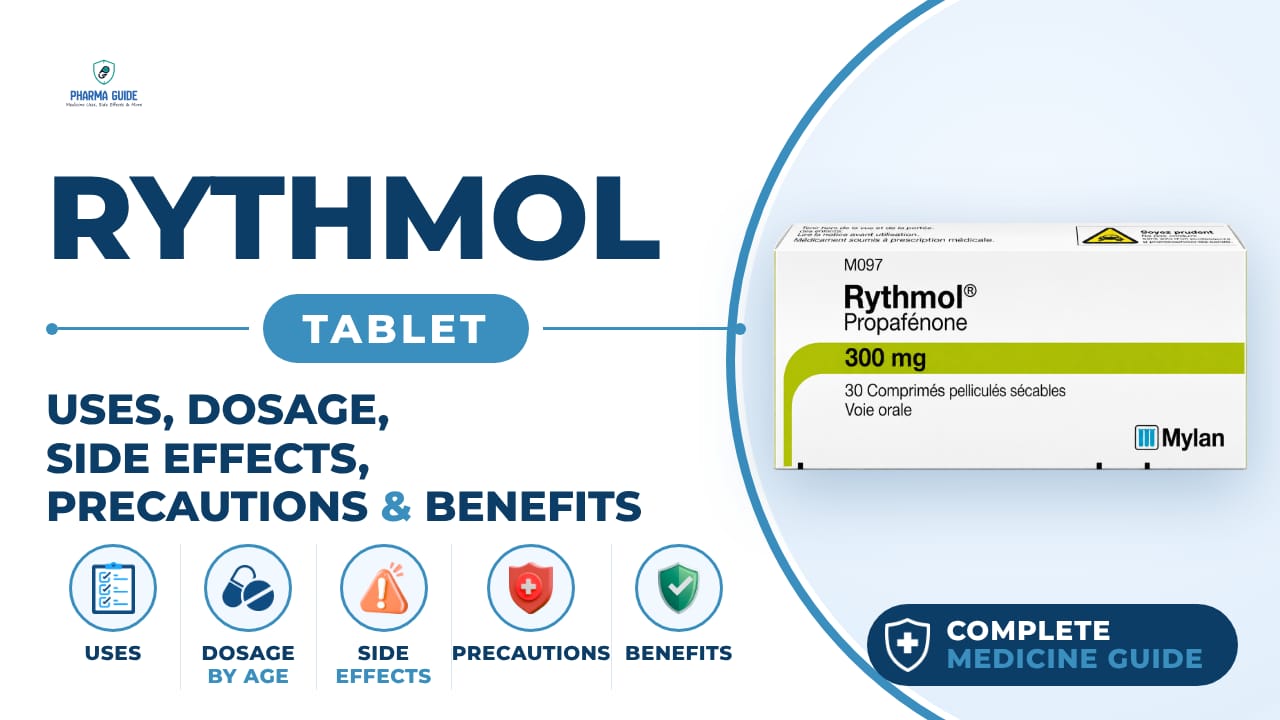
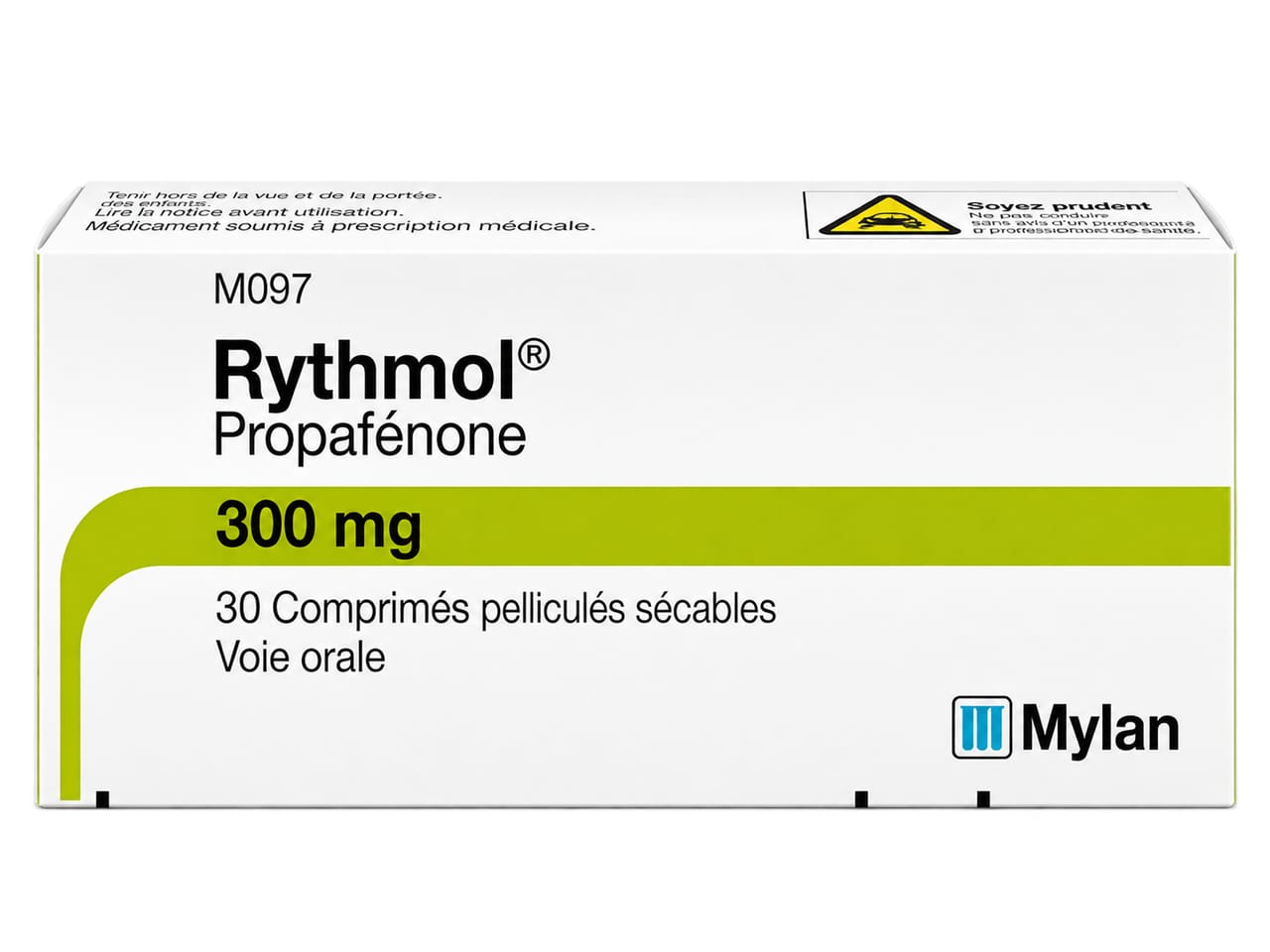
| Generic name | propafenone hydrochloride |
|---|---|
| Drug class | Antiarrhythmic Agent (Group I / Class 1C antiarrhythmic) |
| Forms | film-coated tablets (150 mg and 300 mg) |
Quick overview
Rythmol Tablet contains propafenone hydrochloride, a Class 1C antiarrhythmic medicine used to control certain serious irregular heartbeats. It is a film-coated tablet taken by mouth, available in 150 mg and 300 mg strengths. Rythmol works by stabilizing the electrical activity of heart muscle cells, and it requires regular monitoring by a doctor during treatment.
What is Rythmol Tablet
Rythmol is a prescription heart medicine that helps control certain serious irregular heartbeats (arrhythmias). It belongs to the Antiarrhythmic Agent class (Group I / Class 1C antiarrhythmic). It is a film-coated tablet taken by mouth, available in 150 mg and 300 mg strengths.
Rythmol Tablet uses
- Treatment of documented life-threatening ventricular arrhythmias, such as preventing sustained ventricular tachycardia
- Treatment of patients with documented symptomatic ventricular arrhythmias when symptoms are severe enough to need treatment
- Used to control certain types of irregular heartbeats (arrhythmias)
Benefits of Rythmol Tablet
In clinical trials, Rythmol clinically and statistically reduced the number of ventricular premature beats, paired premature beats, ventricular tachycardia beats, and ventricular tachycardia events compared with placebo.
How Rythmol Tablet works
Rythmol works by acting directly on heart muscle cells to stabilize their electrical activity. It slows down the sodium current involved in heartbeats, which helps block abnormal heart rhythms, and it also has a mild local anesthetic and weak beta-blocking effect.
Rythmol Tablet dosage
Take the tablets with food, as this is recommended. Swallow the film-coated tablets whole without chewing, with liquid, because the drug has a bitter taste and a numbing effect on the mouth. If you forget a dose, take it as soon as you remember unless it is almost time for the next dose — in that case skip the missed dose. Never take a double dose to make up for a missed one. Your doctor may need to re-check your pacemaker or defibrillator settings while you are on this medicine. You may need regular blood tests and heart tracings (ECG) before and during treatment.
| Age group | Dose |
|---|---|
| 18–39 years | 150 mg every 8 hours initially; may be increased to 225–300 mg every 8 hours |
| 40–64 years | 150 mg every 8 hours initially; may be increased to 225–300 mg every 8 hours |
Available forms and strengths
- Film-coated tablets (150 mg and 300 mg)
Side effects of Rythmol Tablet
Common
- Dizziness
- Nausea and/or vomiting
- Unusual or unpleasant taste
- Constipation
- Headache
- Fatigue/tiredness
- Irregular heartbeats
- Palpitations
Serious
- Fast or pounding heartbeats, fluttering in the chest, shortness of breath, sudden dizziness (possible new or worsening arrhythmia)
- Chest pain, lightheadedness, fainting
- Signs of heart failure: shortness of breath, swelling in arms or legs, sudden weight gain
- Liver problems: yellowing of skin or eyes, prolonged vomiting and nausea, or abdominal pain
- Bleeding problems: excessive bruising, easy bleeding
- Signs of infection: fever, chills, sore throat (possible low white blood cell counts)
- Abnormal muscular control (ataxia)
- Convulsions, movement disorders, restlessness
Warnings and precautions
- No antiarrhythmic medicine has been proven to reduce sudden death in people with mild, symptom-free irregular heartbeats. These medicines can themselves cause dangerous heart rhythms, so doctors must weigh the benefits and risks carefully for each patient.
- This medicine can sometimes cause new or worse irregular heartbeats, some of which can be life-threatening and may need emergency treatment.
- This medicine should not be used by people with uncontrolled or severe heart failure, certain serious heart rhythm disorders, very slow heart rate, severe low blood pressure, cardiogenic shock, severe lung disease, myasthenia gravis, or severe liver failure, and must not be combined with the HIV medicine ritonavir.
- This medicine can rarely cause a dangerous drop in white blood cells (agranulocytosis), especially in the first few months of treatment, raising the risk of serious infection.
- Taking this medicine may unmask a hidden heart rhythm condition called Brugada Syndrome, so your doctor should check your heart tracing (ECG) after you start treatment.
- Avoid grapefruit juice and be cautious with St. John's wort while taking this medicine, since they can raise levels of the drug in your blood.
- There isn't enough research to know if this medicine is fully safe during pregnancy. It should only be used if the benefit to the mother clearly outweighs any risk to the baby.
- This medicine passes into breast milk, and because of possible serious side effects in a nursing baby, a different feeding method should be considered if this medicine is needed.
- People with kidney problems should use this medicine carefully, since the drug may build up in the body, and should be monitored closely for signs of toxicity.
- This medicine is broken down mainly by the liver, so people with liver problems need a reduced dose and should be watched closely. It must not be used at all in severe liver failure.
- Alcohol may worsen dizziness or low blood pressure.
- This medicine can cause blurred vision, dizziness, fatigue, and low blood pressure, which may slow your reaction time, so take care when driving or operating machinery.
Storage
- Store RYTHMOL® at controlled room temperature, between 15° to 25°C.
- Do not use beyond the expiry date indicated on the label.
- RYTHMOL® tablets should be stored at 15° to 25°C, protected from light and moisture.
- It is important to keep the RYTHMOL® tablets in the original package.
- Keep RYTHMOL® and all other medicines out of reach and sight of children.
When to see a doctor
- Get emergency help right away if you notice signs of an allergic reaction, such as hives, trouble breathing, or swelling of your face, lips, tongue, or throat.
- Call your doctor immediately if you feel a fast or pounding heartbeat, fluttering in your chest, shortness of breath, or sudden dizziness as if you might pass out.
- Call your doctor right away if you have shortness of breath even with mild activity, swelling in your arms or legs, sudden weight gain, or fever, chills, or sore throat.
- If you think you or someone else may have taken too much of this medicine, contact your doctor or your local poison control center right away, or go to the nearest hospital with the medicine container, even if the overdose seems small.
Alternatives
- Flecainide
- Sotalol
- Amiodarone
Watch the video
FAQs
What is Rythmol Tablet used for?
Rythmol is used to treat documented life-threatening ventricular arrhythmias, such as preventing sustained ventricular tachycardia, and symptomatic ventricular arrhythmias severe enough to need treatment. It helps control certain types of irregular heartbeats.
How does Rythmol Tablet work?
Rythmol acts directly on heart muscle cells to stabilize their electrical activity. It slows the sodium current involved in heartbeats, helping block abnormal heart rhythms, and also has a mild local anesthetic and weak beta-blocking effect.
How should Rythmol Tablet be taken?
Take the tablets with food as recommended, and swallow them whole without chewing, with liquid, since the drug has a bitter taste and a numbing effect on the mouth. If you miss a dose, take it when you remember unless it is almost time for the next dose, in which case skip it—never double up.
What are the common side effects of Rythmol Tablet?
Common side effects include dizziness, nausea and/or vomiting, unusual or unpleasant taste, constipation, headache, fatigue, irregular heartbeats, and palpitations.
What precautions should be taken with Rythmol Tablet?
Rythmol should not be used by people with uncontrolled heart failure, certain serious heart rhythm disorders, very slow heart rate, severe low blood pressure, cardiogenic shock, severe lung disease, myasthenia gravis, or severe liver failure, and must not be combined with ritonavir. It can rarely cause a dangerous drop in white blood cells, may unmask Brugada Syndrome, and interacts with grapefruit juice and St. John's wort.
General information, not medical advice
Your prescriber and the leaflet in your pack know your situation. This page does not.
- Follow your prescriber and the leaflet
- Don't start, stop, or change a dose on your own
- Doses and warnings differ by country and product
Sources
Video
Related medicines

Injectafer Injection: Uses, Dosage, Side Effects, Precautions and Alternates
Iron products
Injectafer (ferric carboxymaltose) treats iron deficiency anemia and heart failure-related iron deficiency via IV. Learn uses, dosage, side effects, and

Gliclazide Tablet: Uses, Dosage, Side Effects, Precautions and Alternates
Sulfonylurea (hypoglycemic/antidiabetic agent)
Gliclazide Tablet is a sulfonylurea for type 2 diabetes that boosts insulin release. Learn about dosage, side effects, warnings, and precautions.