
Safety
General information, not medical advice
Your prescriber and the leaflet in your pack know your situation. This page does not.
- Follow your prescriber and the leaflet
- Don't start, stop, or change a dose on your own
- Doses and warnings differ by country and product
Rytmonorm Tablet: Uses, Dosage, Side Effects, Precautions and Alternates
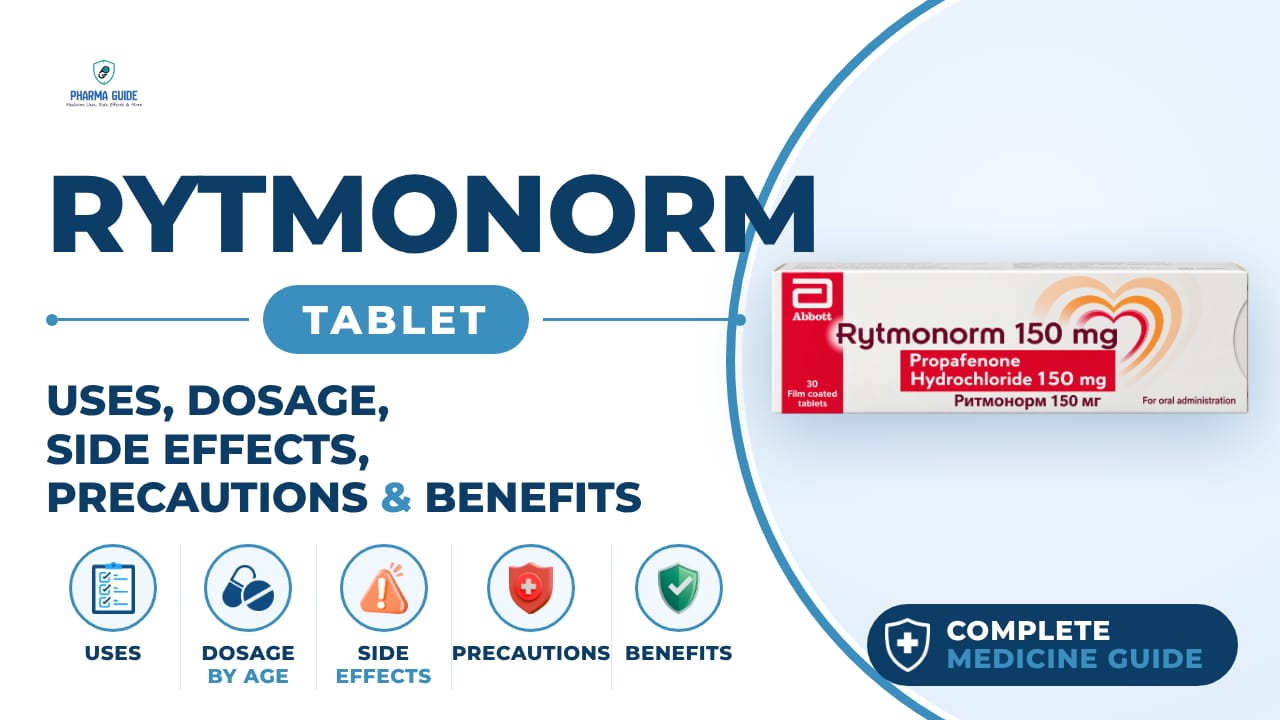
| Generic name | Propafenone hydrochloride |
|---|---|
| Drug class | Class 1c antiarrhythmic agent |
| Forms | Film-coated tablet, Solution for injection |
Quick overview
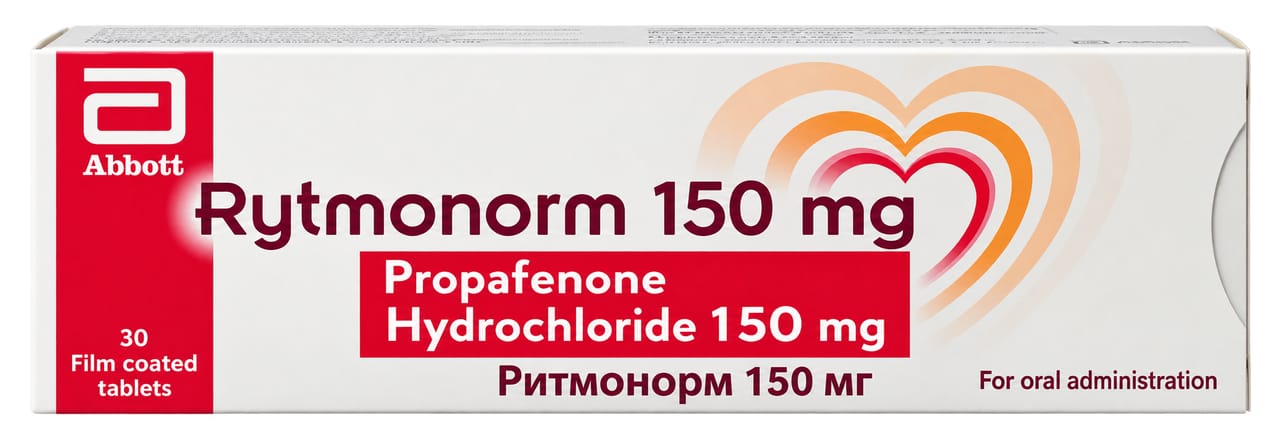
Rytmonorm Tablet contains propafenone hydrochloride, a Class 1c antiarrhythmic agent used to treat abnormal heart rhythms. It works by blocking sodium channels in heart muscle cells to calm unstable electrical activity, with a weak secondary beta-blocking effect. It is a prescription-only medicine and should be taken exactly as directed by a doctor.
What is Rytmonorm Tablet
Rytmonorm is a prescription-only medicine used to treat abnormal heart rhythms (arrhythmias). Its active ingredient is propafenone hydrochloride, which belongs to a group of medicines called anti-arrhythmic agents.
Rytmonorm Tablet uses
- Treating supraventricular extrasystoles and supraventricular tachycardias
- Treating Wolff-Parkinson-White (WPW) syndrome
- Treating life-threatening documented ventricular tachyarrhythmia
- Managing paroxysmal atrial fibrillation and atrial flutter
Benefits of Rytmonorm Tablet
- Heart Rhythm Control: Helps treat certain abnormal heart rhythms.
- Atrial Fibrillation Support: May help maintain normal rhythm in selected patients.
- Atrial Flutter Support: Can help control certain atrial arrhythmias.
- Rhythm Stabilization: Slows abnormal electrical signals in the heart.
- Palpitation Reduction: May reduce symptoms caused by certain arrhythmias.
How Rytmonorm Tablet works
The medicine blocks sodium channels in heart muscle cells, which slows the electrical signals that cause the heartbeat. This calms unstable electrical activity in the heart. It also has a weak, secondary effect of blocking beta-adrenergic receptors, which reduces the heart's response to adrenaline.
Rytmonorm Tablet dosage
Swallow the tablets whole with a full glass of water. Do not take with grapefruit juice. Take your medicine at about the same time each day for the best effect. If you forget a dose, skip the missed dose and take your next dose as scheduled; do not take a double dose. Keep taking your medicine for as long as your doctor tells you, even if you feel well. You may need a lower dose if you are elderly, have kidney or liver problems, or have a low body weight.
| Age group | Dose |
|---|---|
| Under 18 Years | Use only under specialist supervision |
| 18–64 Years | 150 mg every 8 hours initially; adjusted according to heart rhythm and response |
| Older Adults (65+ Years) | 150 mg every 8–12 hours initially, with specialist monitoring |
Available forms and strengths
- Film-coated tablet
- Solution for injection
Side effects of Rytmonorm Tablet
Common
- Dizziness
- Palpitations
- Cardiac conduction disorders
- Nausea and vomiting
- Headache
- Anxiety
- Sleep disorders
- Constipation
- Fatigue
- Taste or smell disturbances
- Dry mouth
- Abdominal pain
- Diarrhea
Serious
- Syncope (fainting)
- Blurred vision
- Hypotension (low blood pressure)
- Agranulocytosis
- Lupus-like syndrome
- Severe proarrhythmia (new or worsened heart rhythm problems, including ventricular fibrillation)
- Signs of liver problems (yellowing of skin/eyes, pale stools, dark urine)
- Unusual bleeding or bruising
- Signs of infection (sore throat, chills, fever)
- Convulsions, seizures, or fits
- Difficulty breathing
- Coma
- Chest pain
Warnings and precautions
- This medicine can cause new or worsened irregular heart rhythms, including potentially fatal ones like ventricular fibrillation. This risk is highest when starting treatment or increasing the dose.
- Do not take this medicine if you have Brugada syndrome, significant structural heart disease, uncontrolled heart failure, a recent heart attack (within 3 months), severe low blood pressure, severe asthma or breathing disorders, electrolyte imbalances, myasthenia gravis, or if you are taking ritonavir.
- Avoid grapefruit juice while taking this medicine, as it can increase the amount of drug in your blood.
- If you have a pacemaker, it needs to be checked and may need reprogramming during treatment, since this medicine can change how the pacemaker senses and paces the heart.
- Report any unexplained fever, sore throat, or chills to your doctor promptly, as these could be signs of a serious blood disorder.
- There is not enough research on using this medicine during pregnancy. It should only be used if your doctor decides the benefits outweigh the possible risks to the baby.
- This medicine may pass into breast milk, so it should be used with caution while breastfeeding. Talk to your doctor about the risks and benefits.
- If you have kidney problems, this medicine should be used carefully, since it may build up in your body and needs close monitoring.
- If you have liver problems, your dose will likely need to be much lower, because the medicine can build up in your body.
- Alcohol can add to the central nervous system effects of this medicine, such as drowsiness or dizziness.
- This medicine can cause blurred vision, dizziness, tiredness, and low blood pressure, which can affect your ability to drive or use machines safely. Be careful until you know how it affects you.
Storage
- Keep your tablets in the pack until it is time to take them
- Keep your tablets in a cool, dry place where the temperature stays below 25°C
- Do not store in the bathroom or near a sink, and do not leave it on a window sill or in the car
- Keep it where children cannot reach it, such as a locked cupboard at least one-and-a-half metres above the ground
- Do not take this medicine after the expiry date, or if the packaging is torn or shows signs of tampering
- If the medicine has expired or any is left over, ask your pharmacist what to do with it
When to see a doctor
- Get emergency help right away if you or someone else may have taken too much of this medicine, even if there are no symptoms yet.
- Seek urgent medical help if you notice signs of an allergic reaction such as rash, itching, swelling of the lips, face or tongue, hives, or trouble breathing.
- Seek urgent medical help for yellowing of the skin or eyes, pale stools, or dark urine, as these may signal liver problems.
- Get emergency help for convulsions, seizures, fits, difficulty breathing, coma, an unusually slow, fast, or irregular heartbeat, or chest pain.
- Call emergency services immediately if the person collapses, has a seizure, has trouble breathing, or cannot be woken up, since no specific antidote exists for an overdose of this medicine.
Alternatives
- Amiodarone
- Sotalol
- Flecainide
Watch the video
FAQs
What is Rytmonorm Tablet used for?
Rytmonorm Tablet is used to treat supraventricular extrasystoles and tachycardias, Wolff-Parkinson-White syndrome, life-threatening ventricular tachyarrhythmia, and to manage paroxysmal atrial fibrillation and atrial flutter.
How does Rytmonorm Tablet work?
It blocks sodium channels in heart muscle cells, slowing the electrical signals that cause the heartbeat and calming unstable electrical activity. It also has a weak secondary beta-blocking effect that reduces the heart's response to adrenaline.
What is the dosage of Rytmonorm Tablet for adults?
For adults aged 18-64, the initial dose is 150 mg every 8 hours, adjusted according to heart rhythm and response. Older adults may start at 150 mg every 8-12 hours with specialist monitoring.
Can I drink grapefruit juice while taking Rytmonorm Tablet?
No, grapefruit juice should be avoided while taking this medicine, as it can increase the amount of drug in your blood.
What are the serious side effects of Rytmonorm Tablet?
Serious side effects include syncope, blurred vision, hypotension, agranulocytosis, lupus-like syndrome, severe proarrhythmia including ventricular fibrillation, liver problems, unusual bleeding or bruising, signs of infection, convulsions, difficulty breathing, coma, and chest pain.
General information, not medical advice
Your prescriber and the leaflet in your pack know your situation. This page does not.
- Follow your prescriber and the leaflet
- Don't start, stop, or change a dose on your own
- Doses and warnings differ by country and product
Sources
Video
Related medicines

Injectafer Injection: Uses, Dosage, Side Effects, Precautions and Alternates
Iron products
Injectafer (ferric carboxymaltose) treats iron deficiency anemia and heart failure-related iron deficiency via IV. Learn uses, dosage, side effects, and

Gliclazide Tablet: Uses, Dosage, Side Effects, Precautions and Alternates
Sulfonylurea (hypoglycemic/antidiabetic agent)
Gliclazide Tablet is a sulfonylurea for type 2 diabetes that boosts insulin release. Learn about dosage, side effects, warnings, and precautions.