
Safety
General information, not medical advice
Your prescriber and the leaflet in your pack know your situation. This page does not.
- Follow your prescriber and the leaflet
- Don't start, stop, or change a dose on your own
- Doses and warnings differ by country and product
Safinamide Tablet: Uses, Dosage, Side Effects, Precautions and Alternates

| Generic name | safinamide |
|---|---|
| Drug class | Dopaminergic antiparkinsonism agents |
| Forms | Tablet |

Quick overview
Safinamide Tablet (generic name: safinamide) is a prescription oral tablet used together with levodopa and carbidopa to treat adults with Parkinson's disease. It belongs to the dopaminergic antiparkinsonism drug class and works as a MAO-B inhibitor. It is used as an add-on treatment to help manage 'off' episodes and improve movement symptoms. This medicine must always be used together with levodopa and carbidopa, as it does not work on its own.
What is Safinamide Tablet
Safinamide is a prescription oral tablet used together with levodopa and carbidopa to treat adults with Parkinson's disease. It is a type of medicine called a MAO-B inhibitor.
Safinamide Tablet uses
- Add-on treatment with levodopa and carbidopa for adults with Parkinson's disease who have 'off' episodes (times when muscle stiffness, tremors, or movement problems return as their regular medicine wears off)
- Treats Parkinson's disease as an adjunct to levodopa/carbidopa
- Helps manage OFF episodes associated with Parkinson's disease
- Reduces periods of decreased mobility between levodopa doses
- Helps improve slowness of movement (bradykinesia)
Benefits of Safinamide Tablet
- Extends the effect of levodopa and reduces daily 'off' time, helping smooth out movement changes
- May also help some non-motor symptoms such as mood and chronic pain
- Reversible action that usually does not require strict tyramine diet limits at standard doses, though caution is still advised
How Safinamide Tablet works
Safinamide blocks an enzyme called MAO-B that normally breaks down dopamine. By blocking this enzyme, it helps keep dopamine active longer in the brain, which is helpful because Parkinson's disease involves low dopamine levels. It may also reduce the release of a substance called glutamate, which may play a role in movement fluctuations.
Safinamide Tablet dosage
Take this medicine only as directed by your doctor; do not take more, more often, or for longer than prescribed. Swallow the tablet whole; do not crush, break, or chew it. You may take it with or without food. Take it at the same time each day. This medicine must be used together with levodopa and carbidopa; it does not work on its own.
If you miss a dose, skip it and go back to your regular schedule the next day; do not double up. Your blood pressure will need to be checked often. Do not stop taking this medicine without first checking with your doctor, who may want you to lower the dose gradually before stopping.
| Age group | Dose |
|---|---|
| 18–39 years | Starting dose: 50 mg once daily; maximum 100 mg once daily |
| 40–64 years | Starting dose: 50 mg once daily; maximum 100 mg once daily |
| 65–74 years | Starting dose: 50 mg once daily; maximum 100 mg once daily, with closer monitoring |
| 75 years and older | Starting dose: 50 mg once daily; maximum 100 mg once daily, with careful monitoring |
Available forms and strengths
- Tablet
Side effects of Safinamide Tablet
Common
- Involuntary or uncontrolled muscle movements (dyskinesia)
- Falls
- Nausea, indigestion, or upset stomach
- Trouble falling or staying asleep (insomnia)
- Dizziness, lightheadedness, or daytime sleepiness
- Blurred vision
- Headache
- Nervousness
- Pounding in the ears
- Slow or fast heartbeat
- Twitching, twisting, or uncontrolled repetitive movements of the tongue, lips, face, arms, or legs
- Chills, cold sweats, confusion
- Acid or sour stomach, belching, cough, heartburn, stomach discomfort
Serious
- Serotonin syndrome: high fever, severe muscle stiffness, confusion, sweating, shivering, or rapid heart rate
- Severe blood pressure spikes: severe headache, blurred vision, or pounding in the neck and ears
- Hallucinations or extreme confusion, agitation, or unusual thoughts/behavior
- Vision changes, eye pain, or other retinal concerns
- Sudden sleep attacks during normal daily activities
- Unusual increases in gambling, sexual urges, or other intense impulse-control behaviors
- Signs of allergic reaction: hives, difficult breathing, swelling of face, lips, tongue, or throat
- Seizure
- Increased liver enzymes (possible liver problems)
Warnings and precautions
- Do not take this medicine with certain other drugs including amphetamines, cyclobenzaprine, dextromethorphan cough medicine, methylphenidate, St. John's wort, other MAO inhibitors, narcotic pain medicines, or many antidepressants, because combining them can cause serious, even life-threatening, reactions
- This medicine must be used together with levodopa and carbidopa; it does not work by itself to treat Parkinson's disease
- Avoid foods and drinks high in tyramine, such as aged cheese, cured or smoked meats, pickled foods, sauerkraut, and soy sauce, because this can cause a dangerous rise in blood pressure
- This medicine should not be used by people with severe liver disease
- Do not stop taking this medicine suddenly without talking to your doctor first, since the dose may need to be lowered gradually
- It is not known whether safinamide could harm an unborn baby. Tell your doctor if you are pregnant or planning to become pregnant.
- It is not known whether safinamide passes into breast milk or could harm a nursing baby. You should not breastfeed while using this medicine.
- No routine dosage adjustment is required for renal impairment, including severe renal impairment.
- Use with caution if you have moderate liver disease, since the medicine may stay in your body longer. This medicine should not be used if you have severe liver disease.
- Avoid alcohol, especially aged or fermented types, because combining it with this medicine can raise blood pressure to dangerous levels due to tyramine content.
- This medicine may make you drowsy and could cause you to fall asleep without warning while driving, talking, or eating. Do not drive or do anything dangerous until you know how it affects you.
Storage
- Store the medicine in a closed container at room temperature, away from heat, moisture, and direct light
- Keep from freezing
- Keep out of the reach of children
- Do not keep outdated medicine or medicine no longer needed
- Ask your healthcare professional how you should dispose of any medicine you do not use
When to see a doctor
- Get emergency help right away if you have signs of an allergic reaction, such as hives, trouble breathing, or swelling of your face, lips, tongue, or throat
- Call your doctor right away if you notice symptoms of serotonin syndrome, such as anxiety, restlessness, fast heartbeat, fever, sweating, muscle spasms, twitching, nausea, vomiting, diarrhea, or seeing or hearing things that are not there
- Seek medical attention for signs of a severe blood pressure spike, such as severe headache, blurred vision, or pounding in the neck and ears
- Talk to your doctor if you notice vision changes, eye pain, hallucinations, extreme confusion, or unusual urges such as increased gambling or sexual behavior
- If you think you have taken too much of this medicine, get emergency medical help right away
Alternatives
- Tolcapone
- Entacapone
- Selegiline
- Rasagiline
Watch the video
FAQs
What is Safinamide Tablet used for?
It is used as an add-on treatment with levodopa and carbidopa for adults with Parkinson's disease, helping manage 'off' episodes and improve movement symptoms like bradykinesia.
Can Safinamide Tablet be used alone?
No, this medicine must always be used together with levodopa and carbidopa, as it does not work on its own to treat Parkinson's disease.
What foods should be avoided while taking Safinamide Tablet?
You should avoid foods and drinks high in tyramine, such as aged cheese, cured or smoked meats, pickled foods, sauerkraut, and soy sauce, because this can cause a dangerous rise in blood pressure.
What are common side effects of Safinamide Tablet?
Common side effects include dyskinesia, falls, nausea, indigestion, insomnia, dizziness, daytime sleepiness, blurred vision, headache, and nervousness.
What is the dosage of Safinamide Tablet?
The starting dose is 50 mg once daily, with a maximum of 100 mg once daily, for adults across all age groups, with closer monitoring recommended for older patients.
General information, not medical advice
Your prescriber and the leaflet in your pack know your situation. This page does not.
- Follow your prescriber and the leaflet
- Don't start, stop, or change a dose on your own
- Doses and warnings differ by country and product
Sources
Video
Related medicines
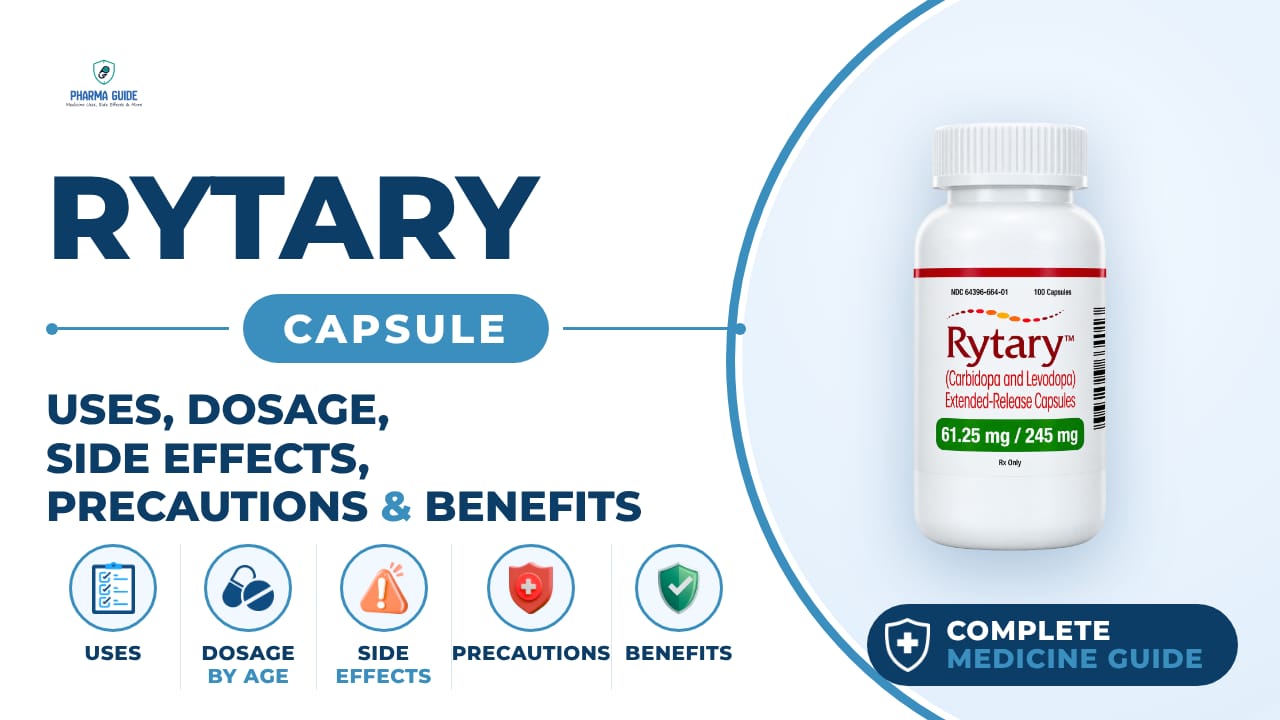
Rytary Capsule: Uses, Dosage, Side Effects, Precautions and Alternates
Dopaminergic antiparkinsonism agents
Rytary Capsule is an extended-release carbidopa-levodopa medicine for Parkinson's disease and parkinsonism. Learn about dosage, side effects, and warnings.
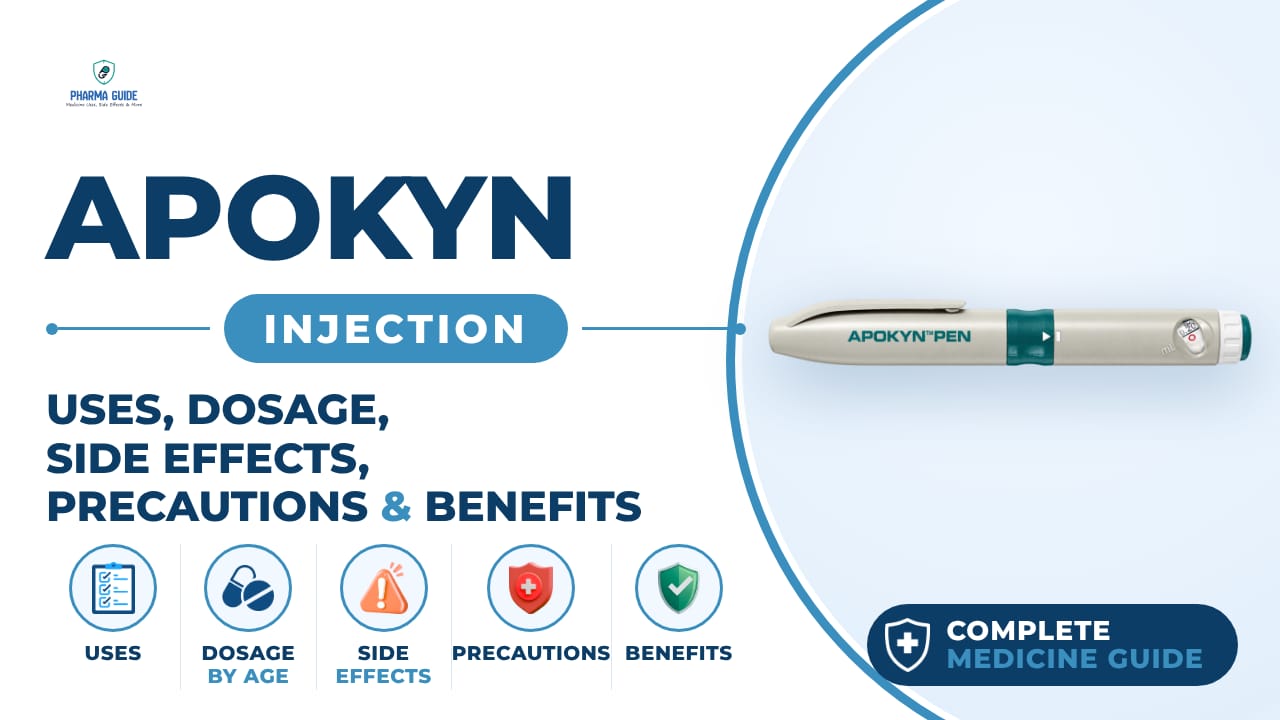
Apokyn Injection: Uses, Dosage, Side Effects, Precautions and Alternates
Dopaminergic antiparkinsonism agents
Apokyn Injection is a fast-acting subcutaneous rescue treatment for sudden off episodes in advanced Parkinson's disease, used alongside regular oral