
Safety
General information, not medical advice
Your prescriber and the leaflet in your pack know your situation. This page does not.
- Follow your prescriber and the leaflet
- Don't start, stop, or change a dose on your own
- Doses and warnings differ by country and product
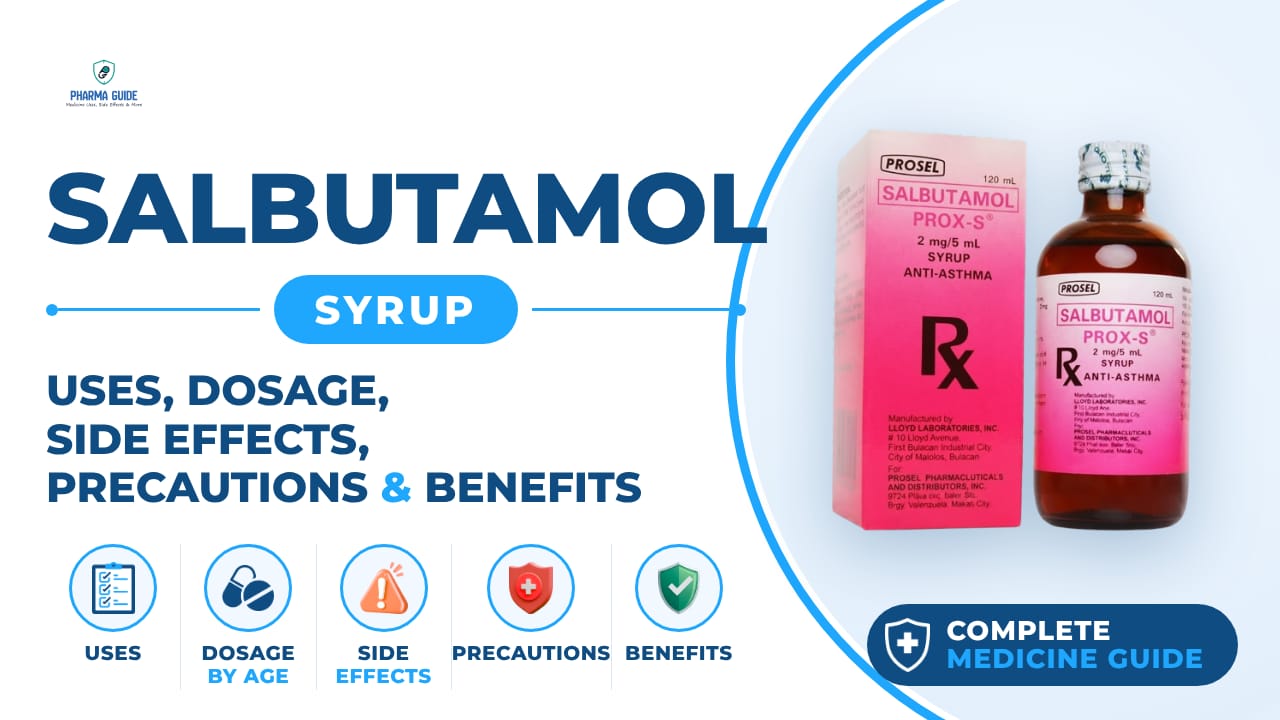
Salbutamol Syrup: Uses, Dosage, Side Effects, Precautions and Alternates
| Generic name | Salbutamol |
|---|---|
| Drug class | Short-acting beta-2 adrenergic agonist (SABA), a type of bronchodilator |
| Forms | oral syrup, oral tablet, metered-dose aerosol inhaler, inhalation powder (dry powder inhaler), solution for inhalation (nebulizer), intravenous injection, intramuscular injection, subcutaneous injection |
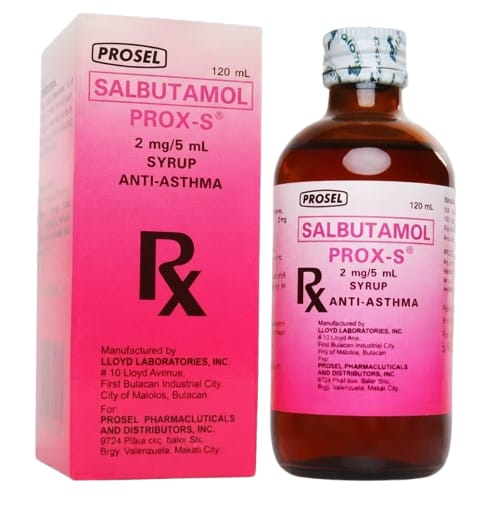
Quick overview
Salbutamol Syrup is a fast-acting bronchodilator that relaxes and opens the airways in the lungs. It is used to relieve wheezing, coughing, chest tightness and breathlessness caused by asthma and other breathing conditions like COPD. It belongs to a class of medicines called short-acting beta-2 adrenergic agonists (SABAs). It works within minutes and its effects can last several hours.
What is Salbutamol Syrup
Salbutamol Syrup is a fast-acting bronchodilator medicine that relaxes and opens up the airways in the lungs. It is used to relieve wheezing, coughing, chest tightness and breathlessness caused by asthma and other breathing conditions like COPD. Its generic name is Salbutamol, and it belongs to the drug class known as short-acting beta-2 adrenergic agonists (SABA), a type of bronchodilator.
Salbutamol Syrup uses
- Acute severe asthma
- Severe bronchospasm (sudden tightening of the airway muscles)
- Relief of asthma or bronchospasm symptoms such as wheezing, coughing, chest tightness and shortness of breath
- Chronic obstructive pulmonary disease (COPD), including chronic bronchitis and emphysema
- Preventing asthma symptoms triggered by exercise or exposure to allergens like pollen, dust or animal fur
Benefits of Salbutamol Syrup
- Relieves wheezing, coughing, chest tightness and breathlessness quickly
- Starts working within minutes and effects can last several hours
- Helps prevent breathing symptoms triggered by exercise or allergens when taken beforehand
How Salbutamol Syrup works
Salbutamol works by stimulating specific receptors (beta-2 adrenoceptors) in the muscles lining your airways, causing them to relax and widen. This makes it easier to breathe for a few hours.
Salbutamol Syrup dosage
Shake the bottle before use. Use the oral syringe or measuring device that comes with your medication to measure your dose accurately. It can be swallowed with or without food, though tablets and syrup should ideally be taken on an empty stomach, about 1 hour before or 2 hours after meals, according to some sources. It is usually taken 3 to 4 times a day, with doses spaced evenly throughout the day. If you forget a dose, take it as soon as you remember, but skip it if it is nearly time for your next dose — do not double up.
| Age group | Dose |
|---|---|
| Under 2 Years | Use only if prescribed by a doctor |
| 2–6 Years | Usually 1–2.5 mL, 3–4 times daily (depending on syrup strength and doctor's advice) |
| 6–12 Years | Usually 2.5–5 mL, 3–4 times daily (depending on syrup strength and doctor's advice) |
| 12+ Years (Adults & Teens) | Usually 5–10 mL, 3–4 times daily (depending on syrup strength and doctor's advice) |
| 65+ Years | Dose may require adjustment based on health condition and response |
Available forms and strengths
- Oral syrup
- Oral tablet
- Metered-dose aerosol inhaler
- Inhalation powder (dry powder inhaler)
- Solution for inhalation (nebulizer)
- Intravenous injection
- Intramuscular injection
- Subcutaneous injection
Side effects of Salbutamol Syrup
Common
- Feeling shaky or trembling
- Faster or stronger heartbeat (palpitations) that usually improves with time
- Headache
- Muscle cramps
- Nervousness
- Dizziness
Serious
- Allergic reaction, including swelling of the face, lips, mouth, tongue or throat, itchy rash, feeling faint or light-headed, and collapse
- Irregular or fast heartbeat that does not get better
- Low potassium levels in the blood, which can cause muscle weakness, cramps or a noticeable heartbeat
- Chest pain due to heart problems such as angina
- New or worsening breathlessness
- Lactic acidosis (reported rarely with intravenous and nebulized use)
- Pulmonary edema (fluid in the lungs, reported uncommonly with injections and infusions)
- Paradoxical bronchospasm (sudden worsening of breathing directly after use)
Warnings and precautions
- If your breathing suddenly gets worse after using salbutamol, contact your doctor right away. Needing to use this medicine more often than usual can mean your breathing condition is getting worse — follow your asthma action plan or contact your doctor for advice rather than using more on your own.
- Do not stop using this medicine unless your doctor tells you to, even if you notice your heart beating faster or stronger than usual, as this is usually harmless but should be discussed with your doctor.
- Taking too much salbutamol can be dangerous and can be fatal, so never take more than the recommended dose.
- Talk to your doctor before using salbutamol if you are pregnant, think you might be pregnant, or are planning to become pregnant, as your doctor will decide whether it is appropriate for you.
- Tell your doctor if you are breastfeeding or planning to breastfeed, as salbutamol is not usually recommended while breastfeeding unless your doctor decides the benefits outweigh the risks, since it isn't known if it can affect a nursing baby.
- Tell your doctor if you have kidney problems before using this medicine, as it may need to be used with caution. Tell your doctor if you have liver problems before using this medicine, as it may need to be used with caution. It is not clearly known how salbutamol interacts with alcohol, so it's best to ask your doctor before drinking alcohol while taking this medicine.
Storage
- Store below 77-86°F (25-30°C) or as recommended
- Keep out of sight and reach of children
- Store at room temperature (below 30°C), away from light and moisture
- Do not refrigerate or freeze
When to see a doctor
- Get emergency medical help right away if you take too much salbutamol, even if you feel fine — an overdose can be serious
- Seek emergency care immediately for signs of a serious allergic reaction, such as sudden swelling of the lips, mouth, throat or tongue, severe difficulty breathing, tightness in the throat, skin turning blue, grey or pale, sudden confusion or drowsiness, or fainting
- Get emergency help immediately if you have new or worsening breathlessness or chest pain
- Contact a doctor right away if you have muscle pain, weakness, cramps, or a noticeable irregular heartbeat, as this can signal low potassium levels, or if you have a fast irregular heartbeat that doesn't improve, or very bad dizziness or light-headedness
Alternatives
- Salbutamol Inhaler
- Theophylline Tablet
- Montelukast Tablet
Watch the video
FAQs
What is Salbutamol Syrup used for?
It is used to relieve wheezing, coughing, chest tightness and breathlessness caused by asthma and other breathing conditions like COPD, and to prevent symptoms triggered by exercise or allergens.
How fast does Salbutamol Syrup work?
It works within minutes and its effects can last several hours.
How should Salbutamol Syrup be taken?
Shake the bottle before use and measure the dose with the oral syringe or measuring device provided. It can be taken with or without food, though it is ideally taken on an empty stomach, and is usually given 3 to 4 times a day.
What are the common side effects of Salbutamol Syrup?
Common side effects include feeling shaky or trembling, faster or stronger heartbeat, headache, muscle cramps, nervousness and dizziness.
Is Salbutamol Syrup safe during pregnancy or breastfeeding?
You should talk to your doctor before using it if pregnant or planning pregnancy, and it is not usually recommended while breastfeeding unless your doctor decides the benefits outweigh the risks.
General information, not medical advice
Your prescriber and the leaflet in your pack know your situation. This page does not.
- Follow your prescriber and the leaflet
- Don't start, stop, or change a dose on your own
- Doses and warnings differ by country and product
Sources
- Drugs.com - Salbutamol (https://www.drugs.com/salbutamol.html)
- DIMS - Salbutamol Syrup product page
- NHS - Side effects of salbutamol inhalers
- Healthify NZ - Salbutamol
- Practo - Salbutamol Medicine Info
- Phlo Digital Pharmacy - Salbutamol: uses, side effects and cautions
- International Journal of Molecular Sciences - Salbutamol in the Management of Asthma: A Review (PMC9696300)
- MedEasy - Salbutamol Syrup product page
Video
Related medicines

Injectafer Injection: Uses, Dosage, Side Effects, Precautions and Alternates
Iron products
Injectafer (ferric carboxymaltose) treats iron deficiency anemia and heart failure-related iron deficiency via IV. Learn uses, dosage, side effects, and

Gliclazide Tablet: Uses, Dosage, Side Effects, Precautions and Alternates
Sulfonylurea (hypoglycemic/antidiabetic agent)
Gliclazide Tablet is a sulfonylurea for type 2 diabetes that boosts insulin release. Learn about dosage, side effects, warnings, and precautions.