
Safety
General information, not medical advice
Your prescriber and the leaflet in your pack know your situation. This page does not.
- Follow your prescriber and the leaflet
- Don't start, stop, or change a dose on your own
- Doses and warnings differ by country and product
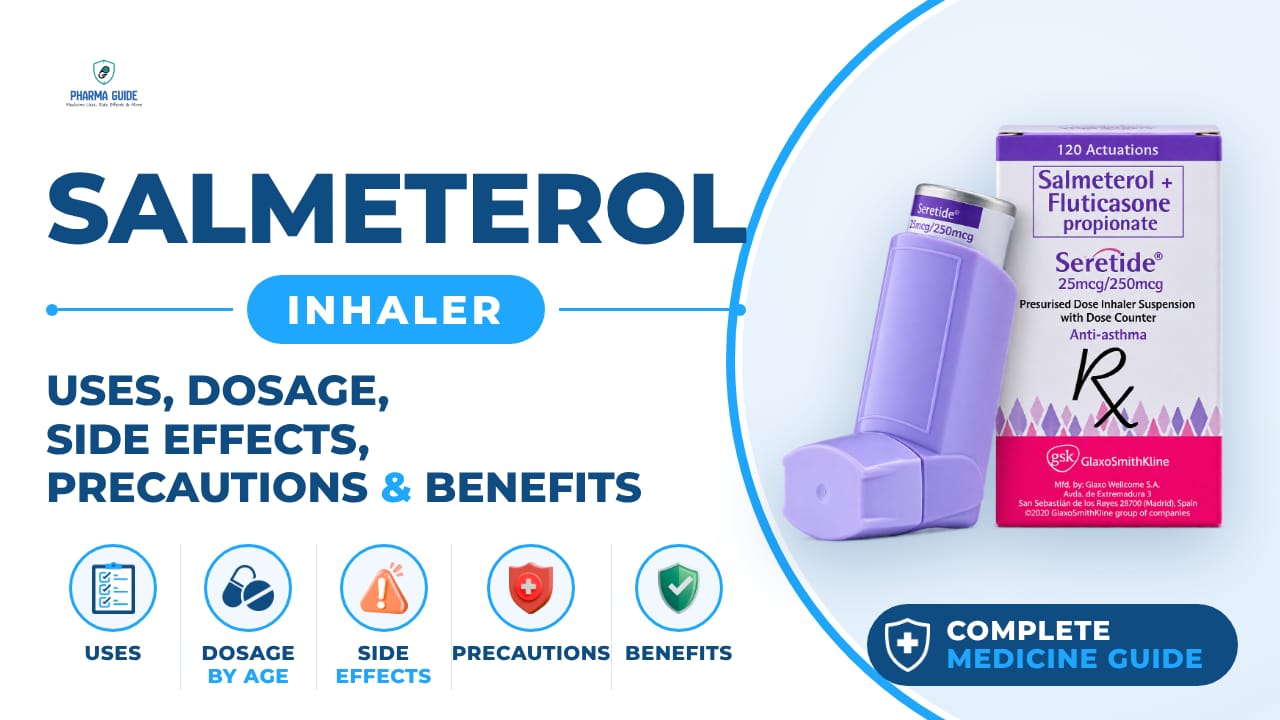
Salmeterol Inhaler: Uses, Dosage, Side Effects, Precautions and Alternates
| Generic name | salmeterol |
|---|---|
| Drug class | Adrenergic bronchodilator (long-acting beta-2 agonist) |
| Forms | Inhalation powder (dry powder inhaler, 50 mcg per inhalation) |
Quick overview
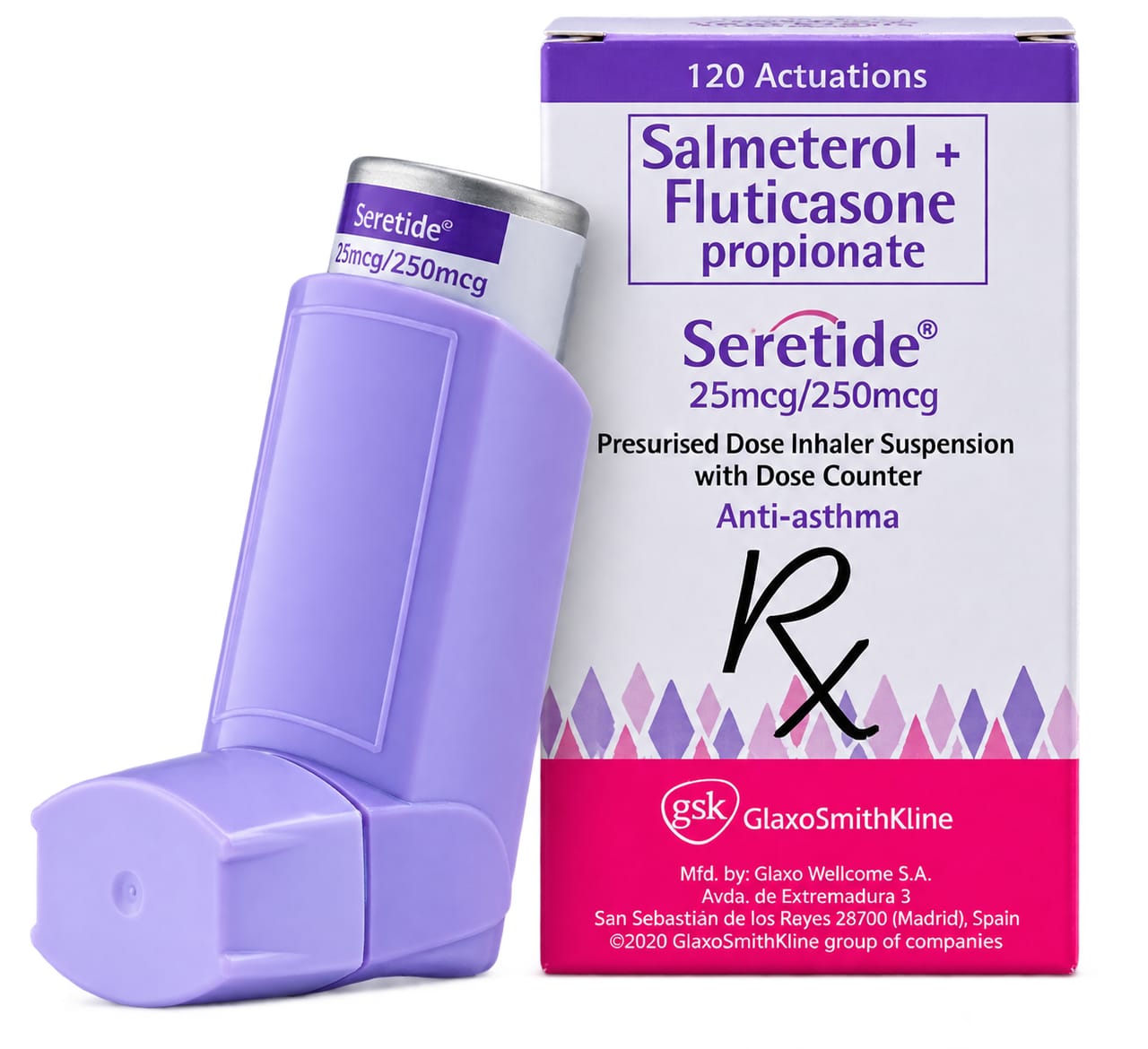
Salmeterol Inhaler (generic name: salmeterol) is an adrenergic bronchodilator, specifically a long-acting beta-2 agonist. It is used to prevent asthma attacks and exercise-induced bronchospasm, and to treat chronic obstructive pulmonary disease (COPD), including emphysema and chronic bronchitis. It works by relaxing the muscles around the airways, opening the air passages for about 12 hours at a time. It is not a rescue inhaler and must not be used to treat a sudden asthma attack that has already started.
What is Salmeterol Inhaler
Salmeterol inhalation is a bronchodilator used to prevent asthma attacks or exercise-induced bronchospasm. It is also used to treat chronic obstructive pulmonary disease (COPD), including emphysema and chronic bronchitis.
Salmeterol Inhaler uses
- Preventing asthma attacks (used together with an inhaled steroid)
- Preventing exercise-induced bronchospasm
- Treating chronic obstructive pulmonary disease (COPD), including emphysema and chronic bronchitis
- Controlling wheezing, shortness of breath, coughing, and chest tightness in COPD and, with a steroid, in asthma
Benefits of Salmeterol Inhaler
- Relaxes and opens the air passages in the lungs, making it easier to breathe
- Provides bronchodilation lasting about 12 hours
- Helps control long-term wheezing, shortness of breath, coughing, and chest tightness
How Salmeterol Inhaler works
Salmeterol relaxes the muscles around the airways in the lungs, which opens the air passages and makes breathing easier. This effect can last about 12 hours.
Salmeterol Inhaler dosage
Follow all directions on your prescription label and read any medication guides or instruction sheets provided. This medicine is usually used twice a day, about 12 hours apart, at the same times each day.
When used to prevent exercise-related breathing problems, it is usually used before exercise, but not more than once every 12 hours. If you already use it twice daily on a regular basis, do not use an extra dose before exercising.
Do not use this inhaler to treat a sudden asthma or breathing attack that has already started; use a fast-acting rescue inhaler instead. If used for asthma, it must be used together with an inhaled steroid medicine for long-term control.
Do not change your dose or stop using it without talking to your doctor first, since symptoms can worsen if you stop suddenly. Call your doctor if your symptoms do not improve after about a week of regular use.
Do not exhale or blow into the device, take it apart, or let it get wet. Do not use the inhaler with a spacer. Rinse your mouth with water and spit it out after use to help prevent mouth or throat irritation.
It does not matter if you take this medicine before or after food. Continue your normal diet unless your doctor tells you otherwise. Do not give this medication to a child younger than 4 years old.
| Age group | Dose |
|---|---|
| Under 4 Years | Use only if prescribed by a doctor |
| 4–11 Years | 50 mcg twice daily (as prescribed) |
| 12 Years and Above | 50 mcg twice daily |
| Adults (18–64 Years) | 50 mcg twice daily |
| Older Adults (65+ years) | 50 mcg twice daily; dose adjusted based on medical condition |
Available forms and strengths
- Inhalation powder (dry powder inhaler, 50 mcg per inhalation)
Side effects of Salmeterol Inhaler
Common
- Headache
- Flu-like symptoms
- Joint or muscle pain
- Throat irritation or soreness, cough
- Stuffy or runny nose
- Dizziness
- Nausea
- Heartburn
- Tooth pain
- Dry mouth
- Sores or white patches in the mouth
- Red or irritated eyes
- Trouble falling or staying asleep
- Burning or tingling in hands or feet
- Shaking of a body part that you cannot control
- Ear pain
- Hoarseness
Serious
- Signs of an allergic reaction: hives, difficulty breathing, swelling of face, lips, tongue, or throat
- Worsening asthma symptoms or other breathing problems after using the inhaler
- Severe headache, blurred vision, pounding in the neck or ears
- Chest pain, fast or irregular heartbeats
- Tremors or nervousness
- High blood sugar symptoms: increased thirst, increased urination, dry mouth, fruity breath odor
- Low potassium symptoms: leg cramps, constipation, irregular heartbeats, fluttering in the chest, increased thirst or urination, numbness or tingling, muscle weakness
- Wheezing or difficulty breathing right after using the inhaler
- Hoarseness, choking, or difficulty swallowing
- Loud, high-pitched breathing
Warnings and precautions
- Do not use this inhaler to treat an asthma attack that has already begun; it is not a rescue medicine.
- This medicine may increase the risk of asthma-related death. Use only the prescribed dose and do not use it longer than your doctor recommends.
- If used for asthma, it must always be used together with an inhaled steroid medicine for long-term control; never use it alone for asthma.
- This medicine can increase the risk of asthma-related hospitalization in children and teenagers, so it must be used with another long-term asthma control medication in this age group.
- Do not give this medication to a child younger than 4 years old.
- Do not use a second form of salmeterol or a similar long-acting inhaled bronchodilator unless your doctor tells you to.
- Do not stop using this medicine suddenly without talking to your doctor, as symptoms may worsen.
- Use only as prescribed; it is not a rescue inhaler for sudden asthma attacks. Do not use more frequently or at higher doses than recommended.
- Inform your doctor if you have heart disease, high blood pressure, irregular heartbeat, or thyroid problems.
- Tell your doctor if you have liver disease before using this medicine.
- Use with caution if you have diabetes, seizures, or low potassium levels.
- Tell your doctor about all medicines you are taking, especially other bronchodilators or stimulant medications.
- It is not known whether this medicine will harm an unborn baby. Tell your doctor if you are pregnant or plan to become pregnant.
- It may not be safe to breastfeed while using this medicine. Ask your doctor about any risk.
- This medicine is not expected to affect your ability to drive a car or operate machinery, but be careful until you know how it affects you.
Storage
- Store at room temperature away from moisture, heat, and sunlight (not in the bathroom).
- Keep the medication in the container it came in, tightly closed, and out of reach of children.
- Throw away the device 6 weeks after you take it out of the foil pouch, or when the dose counter shows zero, whichever comes first.
- Dispose of unneeded medication in a way that pets, children, and other people cannot take it. Do not flush it down the toilet; use a medicine take-back program if available.
- Store below 25°C, away from sinks, windowsills, or the car, since heat and dampness can destroy the medicine.
- Keep it where children cannot reach it, ideally in a locked cupboard well above ground level.
When to see a doctor
- Get emergency medical help if you have signs of an allergic reaction, such as hives, difficult breathing, or swelling of your face, lips, tongue, or throat.
- Call your doctor right away if you have worsening asthma symptoms or other breathing problems after using this medicine.
- Call your doctor at once for severe headache, blurred vision, or pounding in your neck or ears.
- Call your doctor at once for chest pain or fast or irregular heartbeats.
- Seek medical attention if your breathing problems get worse quickly or if you think your asthma medications are not working as well as before.
- Call your doctor immediately if your breathing gets worse, your rescue inhaler doesn't work as well, you need it more often, or your symptoms don't improve after a week of regular use of this medicine.
- If you experience wheezing or difficulty breathing right after using the inhaler, stop using it and tell your doctor as soon as possible, and do not use it again unless your doctor says you should.
- Seek emergency medical attention if you think you have taken too much of this medicine.
Alternatives
- Formoterol
- Indacaterol
- Albuterol
Watch the video
FAQs
What is Salmeterol Inhaler used for?
It is used to prevent asthma attacks and exercise-induced bronchospasm, and to treat COPD, including emphysema and chronic bronchitis, by relaxing airway muscles for about 12 hours.
Can Salmeterol Inhaler be used to treat a sudden asthma attack?
No, it is not a rescue inhaler and must not be used to treat a sudden asthma attack that has already started; a fast-acting rescue inhaler should be used instead.
What is the usual dosage of Salmeterol Inhaler?
It is usually used twice a day, about 12 hours apart, at the same times each day, with a standard dose of 50 mcg twice daily for most age groups 4 years and older.
What are the common side effects of Salmeterol Inhaler?
Common side effects include headache, flu-like symptoms, joint or muscle pain, throat irritation, stuffy or runny nose, dizziness, nausea, heartburn, and dry mouth.
How should Salmeterol Inhaler be stored?
Store at room temperature below 25°C away from moisture, heat, and sunlight, and throw away the device 6 weeks after removing it from the foil pouch or when the dose counter shows zero, whichever comes first.
General information, not medical advice
Your prescriber and the leaflet in your pack know your situation. This page does not.
- Follow your prescriber and the leaflet
- Don't start, stop, or change a dose on your own
- Doses and warnings differ by country and product
Sources
Video
Related medicines

Injectafer Injection: Uses, Dosage, Side Effects, Precautions and Alternates
Iron products
Injectafer (ferric carboxymaltose) treats iron deficiency anemia and heart failure-related iron deficiency via IV. Learn uses, dosage, side effects, and

Gliclazide Tablet: Uses, Dosage, Side Effects, Precautions and Alternates
Sulfonylurea (hypoglycemic/antidiabetic agent)
Gliclazide Tablet is a sulfonylurea for type 2 diabetes that boosts insulin release. Learn about dosage, side effects, warnings, and precautions.