
Safety
General information, not medical advice
Your prescriber and the leaflet in your pack know your situation. This page does not.
- Follow your prescriber and the leaflet
- Don't start, stop, or change a dose on your own
- Doses and warnings differ by country and product
Sandostatin Injection: Uses, Dosage, Side Effects, Precautions and Alternates
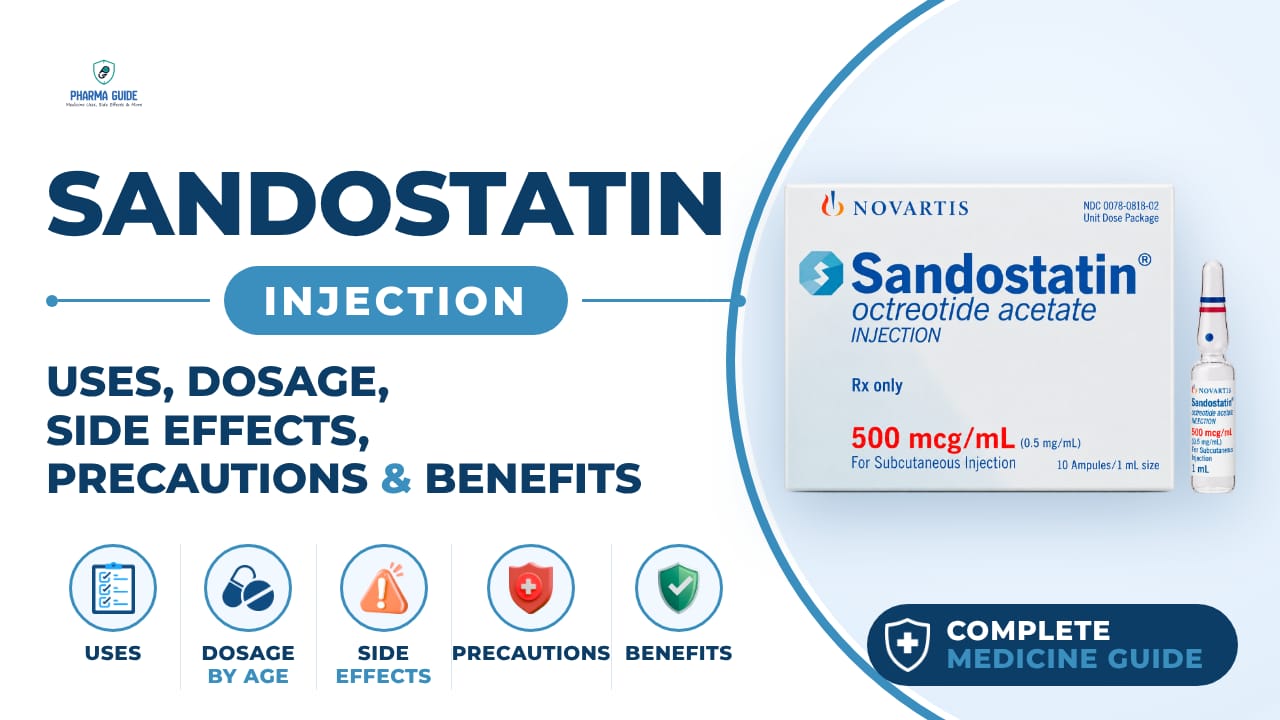
| Generic name | Octreotide acetate |
|---|---|
| Drug class | Somatostatin analogue (somatostatin and somatostatin analogs) |
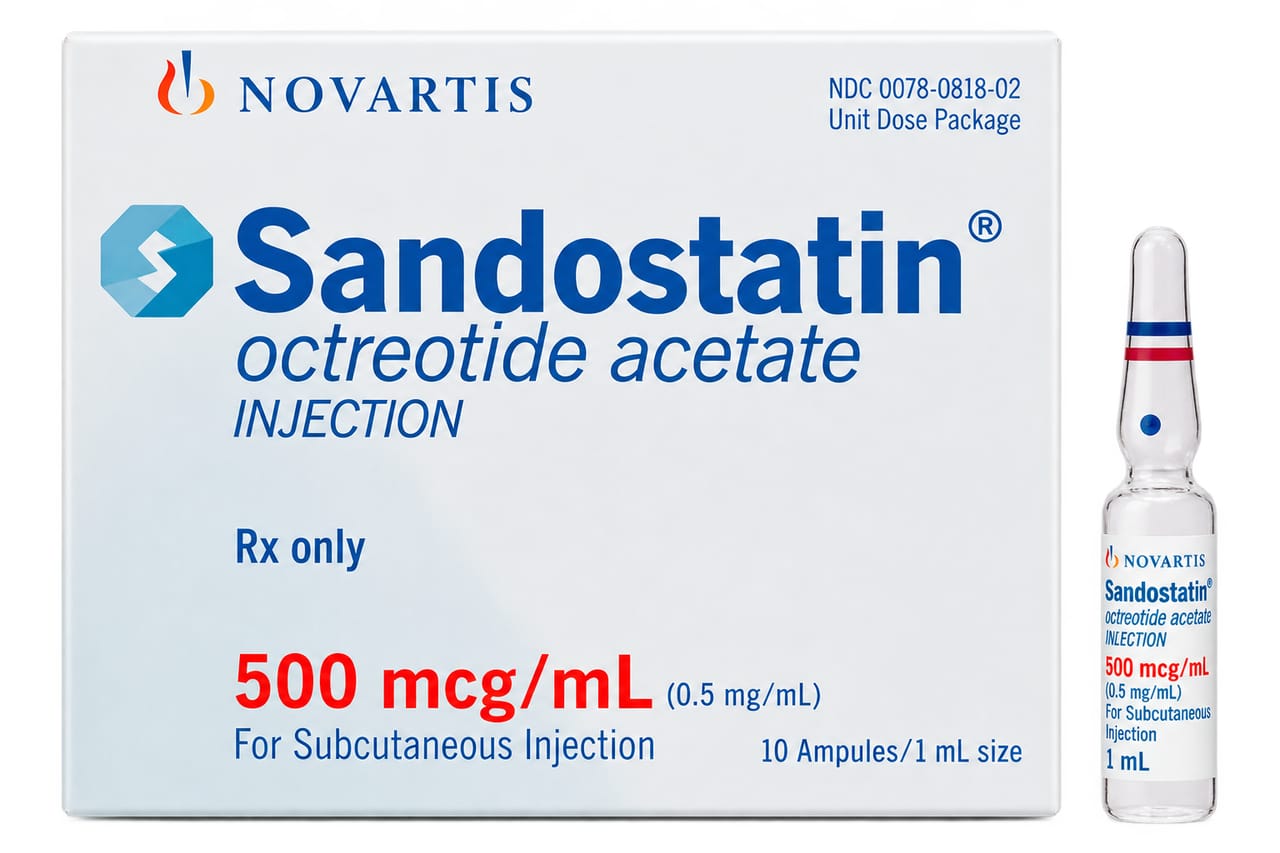
| Forms | Injectable suspension (Sandostatin LAR Depot) in single-dose vials of 10 mg, 20 mg, or 30 mg for intramuscular use, Liquid solution (immediate-release Sandostatin) for subcutaneous, intravenous, or infusion use |
Quick overview
Sandostatin Injection contains octreotide acetate, a somatostatin analogue used for the long-term treatment of acromegaly, carcinoid tumor symptoms, and VIPoma-related diarrhea. It is available as a short-acting injection and a long-acting monthly depot injection. It works by lowering hormones such as growth hormone, insulin, and glucagon, helping control symptoms of these conditions.
What is Sandostatin Injection
Sandostatin is an injectable medicine containing octreotide acetate, a man-made version of a natural hormone called somatostatin. It comes in a short-acting injection (Sandostatin) and a long-acting monthly injection (Sandostatin LAR Depot). It works by lowering several hormones in the body, including growth hormone, insulin, and glucagon.
Sandostatin Injection uses
- Long-term treatment of acromegaly (a condition caused by too much growth hormone) in patients who have had an inadequate response to surgery and/or radiotherapy, or for whom these are not an option
- Long-term treatment of severe diarrhea and flushing episodes associated with metastatic carcinoid tumors
- Long-term treatment of profuse watery diarrhea associated with VIP-secreting tumors (VIPomas)
Benefits of Sandostatin Injection
- Can reduce growth hormone and IGF-1 levels toward normal in people with acromegaly
- Can reduce the number of daily stools and flushing episodes in people with carcinoid syndrome
- Can control the severe watery diarrhea caused by VIPomas, improving quality of life
- May help improve fertility in women with acromegaly whose growth hormone levels are lowered by treatment
How Sandostatin Injection works
Octreotide acts like the body's natural hormone somatostatin, but is stronger and lasts longer. It blocks the release of growth hormone and several other hormones and substances involved in digestion, which helps control the symptoms of acromegaly, carcinoid tumors, and VIPomas.
Sandostatin Injection dosage
The short-acting injection (Sandostatin) can be given under the skin, into a vein, or as a vein infusion; it is usually given multiple times a day at evenly spaced intervals. The long-acting injection (Sandostatin LAR Depot) must be given only into the muscle of the buttock by a trained healthcare provider, and never into a vein or under the skin.
Injection sites should be rotated in a systematic way to avoid irritation, and injections into the shoulder (deltoid) area should be avoided because they cause more discomfort. When starting the long-acting depot form, patients usually continue the short-acting injections for a couple of weeks to keep symptoms controlled while the long-acting form reaches effective levels.
The long-acting depot suspension must be used right after it is mixed and should not be injected without being properly prepared first. Patients switching to the long-acting depot should closely keep their scheduled appointments for re-injection to avoid symptoms coming back.
| Age group | Dose |
|---|---|
| Under 18 years | Safety and effectiveness for the labeled indications are not established; pediatric treatment is specialist-directed |
| 18–75 years | 100–600 mcg/day, divided into 2–4 doses initially |
Available forms and strengths
- Injectable suspension (Sandostatin LAR Depot) in single-dose vials of 10 mg, 20 mg, or 30 mg for intramuscular use
- Liquid solution (immediate-release Sandostatin) for subcutaneous, intravenous, or infusion use
Side effects of Sandostatin Injection
Common
- Diarrhea
- Abdominal pain
- Nausea
- Vomiting
- Constipation
- Flatulence (gas)
- Headache
- Dizziness
- Fatigue
- Back pain
- Pain at the injection site
- Gallstones (cholelithiasis)
Serious
- Gallbladder problems such as cholecystitis, cholangitis, or pancreatitis requiring medical attention
- High or low blood sugar (hyperglycemia or hypoglycemia)
- Underactive thyroid (hypothyroidism)
- Slow heart rate, irregular heartbeat, or other heart rhythm problems
- Severe allergic reaction (anaphylaxis) with swelling, rash, or trouble breathing
- Liver inflammation (hepatitis) with yellowing of skin or eyes
Warnings and precautions
- This medicine can affect the gallbladder, causing gallstones or sludge; patients should be monitored regularly, and the medicine should be stopped if complications of gallstones are suspected.
- This medicine can cause high or low blood sugar; blood sugar should be monitored and diabetes medicines may need adjusting.
- This medicine can affect thyroid function and cause an underactive thyroid; thyroid levels should be checked periodically.
- This medicine can cause slow heart rate, irregular heartbeat, or conduction problems, especially in people who already have heart conditions; caution is needed with other heart-rate-lowering drugs.
- This medicine should be discontinued at least 4 weeks before each dose of lutetium Lu 177 dotatate because it may interfere with that treatment's effectiveness.
- This medicine is not approved for use in children, and serious events including low oxygen, severe bowel injury, and death have been reported in children, most often in those under 2 years old.
- It is not known if this medicine is safe during pregnancy. As a precaution, it should only be used in pregnancy if clearly needed, and women who could become pregnant should use effective contraception because treatment may restore fertility.
- It is not known whether this medicine passes into human breast milk. Patients should not breastfeed while using it.
- Patients with kidney failure who need dialysis should start on a lower dose of the long-acting injection. Other patients with kidney problems can usually start at the normal dose.
- Patients with established liver cirrhosis should start on a lower dose of the long-acting injection, with dose adjustments based on response.
- There are no known interactions between this medicine and alcohol, but drinking alcohol can cause flushing, which may worsen flushing symptoms related to carcinoid tumors.
- This medicine has little or no effect on the ability to drive or use machines, but side effects like dizziness, tiredness, or headache may affect your ability to do so safely.
Storage
- For prolonged storage, keep refrigerated at 2°C to 8°C (36°F to 46°F) and protect from light until the time of use
- Let the drug product kit sit at room temperature for 30 to 60 minutes before preparing the suspension
- After preparation, the drug suspension must be given right away
- Keep out of the sight and reach of children
- Do not throw away any medicines via wastewater or household waste; ask your pharmacist how to dispose of medicines you no longer use
When to see a doctor
- Contact your healthcare provider if you notice signs of gallstones or gallbladder problems, such as sudden back or upper stomach pain, fever, nausea, vomiting, or yellowing of the skin or eyes.
- Get emergency help right away if you have signs of a severe allergic reaction, such as hives, difficulty breathing, or swelling of the face, lips, tongue, or throat.
- Call your doctor right away if you have severe constipation, a slow or uneven heartbeat, signs of gallstones, signs of high or low blood sugar, or signs of an underactive thyroid.
- If you think you have taken too much of this medicine, contact your doctor or your local poison control center right away, or seek emergency medical attention if symptoms are severe.
Alternatives
- Lanreotide
- Signifor
- Pegvisomant
Watch the video
FAQs
What is Sandostatin Injection used for?
It is used for long-term treatment of acromegaly, severe diarrhea and flushing from metastatic carcinoid tumors, and profuse watery diarrhea from VIP-secreting tumors (VIPomas).
How does Sandostatin Injection work?
It contains octreotide acetate, which acts like the natural hormone somatostatin but is stronger and longer-lasting. It blocks release of growth hormone and other hormones and substances involved in digestion, helping control symptoms of acromegaly, carcinoid tumors, and VIPomas.
What are the forms of Sandostatin Injection?
It comes as a short-acting liquid solution (Sandostatin) given subcutaneously, intravenously, or by infusion, and a long-acting monthly depot suspension (Sandostatin LAR Depot) in 10 mg, 20 mg, or 30 mg vials given only into the buttock muscle.
What are the common side effects of Sandostatin Injection?
Common side effects include diarrhea, abdominal pain, nausea, vomiting, constipation, gas, headache, dizziness, fatigue, back pain, pain at the injection site, and gallstones.
Can Sandostatin Injection be used during pregnancy?
It is not known if it is safe during pregnancy, so it should only be used if clearly needed, and women who could become pregnant should use effective contraception since treatment may restore fertility.
General information, not medical advice
Your prescriber and the leaflet in your pack know your situation. This page does not.
- Follow your prescriber and the leaflet
- Don't start, stop, or change a dose on your own
- Doses and warnings differ by country and product
Sources
Video
Related medicines

Injectafer Injection: Uses, Dosage, Side Effects, Precautions and Alternates
Iron products
Injectafer (ferric carboxymaltose) treats iron deficiency anemia and heart failure-related iron deficiency via IV. Learn uses, dosage, side effects, and

Gliclazide Tablet: Uses, Dosage, Side Effects, Precautions and Alternates
Sulfonylurea (hypoglycemic/antidiabetic agent)
Gliclazide Tablet is a sulfonylurea for type 2 diabetes that boosts insulin release. Learn about dosage, side effects, warnings, and precautions.