
Safety
General information, not medical advice
Your prescriber and the leaflet in your pack know your situation. This page does not.
- Follow your prescriber and the leaflet
- Don't start, stop, or change a dose on your own
- Doses and warnings differ by country and product
Saphnelo Injection: Uses, Dosage, Side Effects, Precautions and Alternates
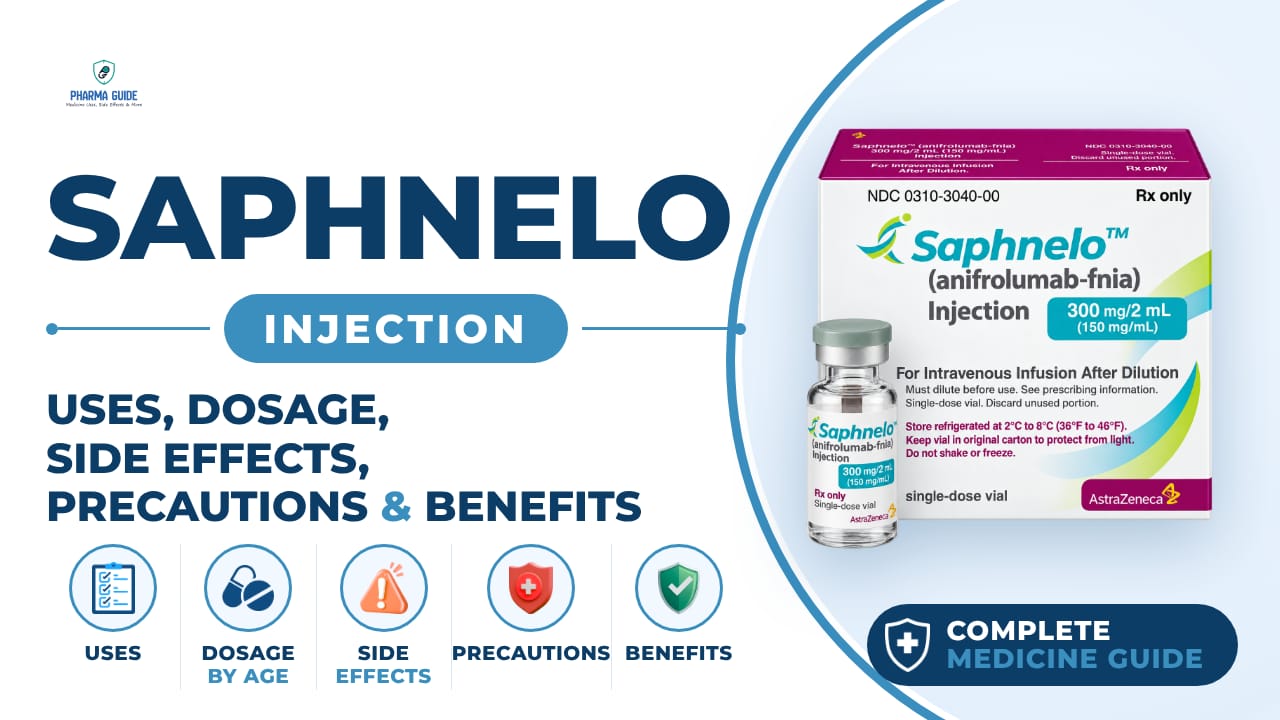
| Generic name | anifrolumab-fnia |
|---|---|
| Drug class | interferon antagonist, monoclonal antibody |
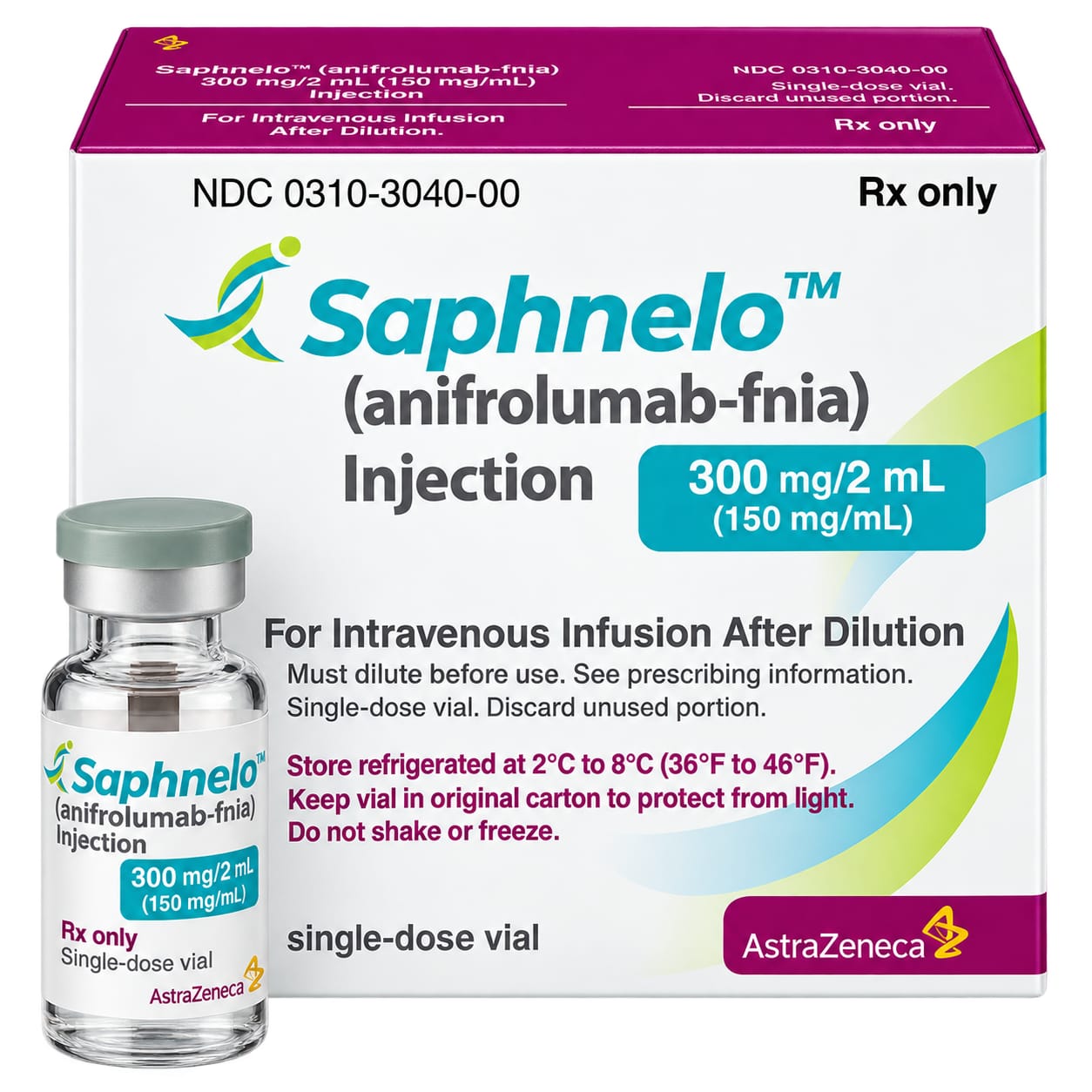
| Forms | Injection: 300 mg/2 mL (150 mg/mL) in a single-dose vial for intravenous infusion, Injection: 120 mg/0.8 mL in a single-dose prefilled syringe for subcutaneous injection |
Quick overview
Saphnelo Injection (anifrolumab-fnia) is a prescription monoclonal antibody used to treat adults with moderate to severe systemic lupus erythematosus (SLE) who are also taking other lupus medicines. It is given as an infusion into a vein or as an injection under the skin. Saphnelo works by blocking type I interferon activity to help calm an over-active immune system. It may help reduce lupus disease activity when used together with standard lupus therapy.
What is Saphnelo Injection
Saphnelo is a prescription medicine used to treat adults with moderate to severe systemic lupus erythematosus (SLE or lupus) who are also taking other lupus medicines. It is given as an infusion into a vein or as an injection under the skin. Its generic name is anifrolumab-fnia, and it belongs to the drug class of interferon antagonist, monoclonal antibody.
Saphnelo Injection uses
- Treatment of adult patients with moderate to severe systemic lupus erythematosus (SLE), who are receiving standard therapy.
Benefits of Saphnelo Injection
- When given together with other medicines for lupus, Saphnelo may help to reduce your lupus disease activity more than other lupus medicines alone.
- Treats moderate-to-severe systemic lupus erythematosus.
- Helps reduce lupus disease activity.
How Saphnelo Injection works
Type I interferon is a substance in the body that over-activates the immune system in lupus, causing inflammation and symptoms. Saphnelo is a monoclonal antibody that blocks the activity of type I interferon, which helps calm the immune system and reduce lupus symptoms.
Saphnelo Injection dosage
Saphnelo is intended for use under your healthcare provider's care and may be given as an intravenous infusion or as a subcutaneous injection. When given into a vein, it takes about 30 minutes to give the full dose, usually once every 4 weeks. When given under the skin, it is injected into the stomach (abdomen), thigh, or upper arm (upper arm injection only if a caregiver gives it), once every week. Before using the under-the-skin injection at home, you or your caregiver will be trained by your healthcare provider on how to give the injection.
If you miss an infusion appointment, call your healthcare provider as soon as possible to reschedule. If you miss a weekly under-the-skin dose, inject it as soon as you remember, then continue weekly injections on the new schedule, or return to your usual day as long as there are at least 3 days between doses.
Let the prefilled syringe or autoinjector reach room temperature for 60 minutes before injecting. Do not shake the medicine. Use a new injection site at least 1 inch (3 cm) away from the last injection site, and avoid the area around the navel, scarred or damaged skin, or skin that is red, tender, bruised, or hard.
Safety and effectiveness in children have not been established. Use in older adults (65 and over) has not shown different effects than in younger adults, based on limited data.
| Age group | Dose |
|---|---|
| Under 18 years | Safety and effectiveness have not been established |
| 18–64 years | 300 mg IV once every 4 weeks |
Available forms and strengths
- Injection: 300 mg/2 mL (150 mg/mL) in a single-dose vial for intravenous infusion
- Injection: 120 mg/0.8 mL in a single-dose prefilled syringe for subcutaneous injection
Side effects of Saphnelo Injection
Common
- Upper respiratory tract infection (nasopharyngitis, pharyngitis, common cold symptoms, sore throat)
- Bronchitis
- Infusion-related reactions (headache, nausea, vomiting, fatigue, dizziness)
- Herpes zoster (shingles)
- Cough
Serious
- Serious and sometimes fatal infections, including COVID-19, respiratory infections, and herpes zoster
- Serious hypersensitivity reactions including anaphylaxis and angioedema
- Increased risk of malignancy (cancer)
- Arthralgia (joint pain) reported after approval
Warnings and precautions
- Serious and sometimes fatal infections have occurred in patients taking Saphnelo. It increases the risk of respiratory infections and shingles (herpes zoster). Treatment should not be started during an active infection, and may need to be paused if a new infection develops.
- Serious allergic reactions, including severe whole-body allergic reactions (anaphylaxis) and swelling (angioedema), have happened with Saphnelo.
- Saphnelo should not be used in people with a history of severe allergic reaction (anaphylaxis) to anifrolumab-fnia.
- Medicines that affect the immune system, including Saphnelo, may raise the risk of certain cancers. Your doctor should weigh the risks and benefits if you have known risk factors for cancer.
- Do not receive live or live-attenuated vaccines while being treated with Saphnelo.
- Saphnelo has not been studied together with other biologic medicines and is not recommended to be used in combination with them.
- Saphnelo is not recommended for people with severe active lupus affecting the kidneys (lupus nephritis) or the central nervous system, because its effectiveness has not been studied in these situations.
- It is not known if Saphnelo will harm an unborn baby. Tell your healthcare provider if you are, might be, or plan to become pregnant during treatment. A pregnancy registry tracks outcomes for women exposed to Saphnelo during pregnancy.
- It is not known if Saphnelo passes into breast milk or affects a nursing baby. Talk to your healthcare provider about the best way to feed your baby if you are breastfeeding.
- Saphnelo clearance from the body was similar in people with mild to moderate kidney function decrease compared to those with normal kidney function; it is not cleared by the kidneys.
- Changes in liver function are not expected to affect how the body clears Saphnelo, based on available data.
- It is not known if drinking alcohol affects Saphnelo.
- Saphnelo usually does not directly impair driving; avoid driving if dizziness or infusion-related symptoms occur.
Storage
- Store Saphnelo prefilled syringe and autoinjector in a refrigerator between 36°F to 46°F (2°C to 8°C) in the original carton to protect from light.
- If needed, the Saphnelo prefilled syringe or autoinjector (Saphnelo Pen) can be stored at room temperature between 68°F to 77°F (20°C to 25°C) for up to 7 days protected from light. After the Saphnelo prefilled syringe or autoinjector has reached room temperature, do not return to the refrigerator. Throw away Saphnelo prefilled syringe or autoinjector if not used within 7 days at room temperature storage.
- Do not shake Saphnelo.
- Do not freeze Saphnelo.
- Do not expose Saphnelo to heat.
- Do not use Saphnelo past the expiration date.
- Keep Saphnelo and all medicines out of the reach of children.
- Put your used Saphnelo prefilled syringe or Saphnelo Pen in an FDA-cleared sharps disposal container right away after use. Do not throw away (dispose of) in your household trash.
When to see a doctor
- Tell your healthcare provider right away if you have signs of an infection, such as fever, sweating or chills, muscle aches, cough, shortness of breath, burning or frequent urination, diarrhea or stomach pain, or warm, red, or painful skin or sores.
- Get emergency help right away if you have symptoms of a serious allergic reaction, such as swelling of the face, mouth, or tongue, trouble breathing, fainting, dizziness, or feeling lightheaded.
- If you think you or someone else has used too much Saphnelo, get medical help right away or contact a poison control center.
Alternatives
- Belimumab
- Hydroxychloroquine
- Azathioprine
Watch the video
FAQs
What is Saphnelo Injection used for?
Saphnelo is used to treat adult patients with moderate to severe systemic lupus erythematosus (SLE) who are also receiving standard lupus therapy.
How is Saphnelo given?
Saphnelo is given either as an intravenous infusion once every 4 weeks (taking about 30 minutes) or as a subcutaneous injection into the stomach, thigh, or upper arm once every week.
How does Saphnelo work?
Saphnelo is a monoclonal antibody that blocks the activity of type I interferon, a substance that over-activates the immune system in lupus, helping to calm the immune system and reduce symptoms.
What are the serious side effects of Saphnelo?
Serious side effects include serious and sometimes fatal infections such as COVID-19, respiratory infections, and shingles, serious hypersensitivity reactions including anaphylaxis and angioedema, increased risk of cancer, and arthralgia.
What should I do if I miss a Saphnelo dose?
If you miss an infusion appointment, call your healthcare provider to reschedule. If you miss a weekly under-the-skin dose, inject it as soon as you remember, then continue weekly on the new schedule or return to your usual day as long as there are at least 3 days between doses.
General information, not medical advice
Your prescriber and the leaflet in your pack know your situation. This page does not.
- Follow your prescriber and the leaflet
- Don't start, stop, or change a dose on your own
- Doses and warnings differ by country and product
Sources
Video
Related medicines

Injectafer Injection: Uses, Dosage, Side Effects, Precautions and Alternates
Iron products
Injectafer (ferric carboxymaltose) treats iron deficiency anemia and heart failure-related iron deficiency via IV. Learn uses, dosage, side effects, and

Gliclazide Tablet: Uses, Dosage, Side Effects, Precautions and Alternates
Sulfonylurea (hypoglycemic/antidiabetic agent)
Gliclazide Tablet is a sulfonylurea for type 2 diabetes that boosts insulin release. Learn about dosage, side effects, warnings, and precautions.