
Safety
General information, not medical advice
Your prescriber and the leaflet in your pack know your situation. This page does not.
- Follow your prescriber and the leaflet
- Don't start, stop, or change a dose on your own
- Doses and warnings differ by country and product
Saphris Sublingual Tablet: Uses, Dosage, Side Effects, Precautions and Alternates
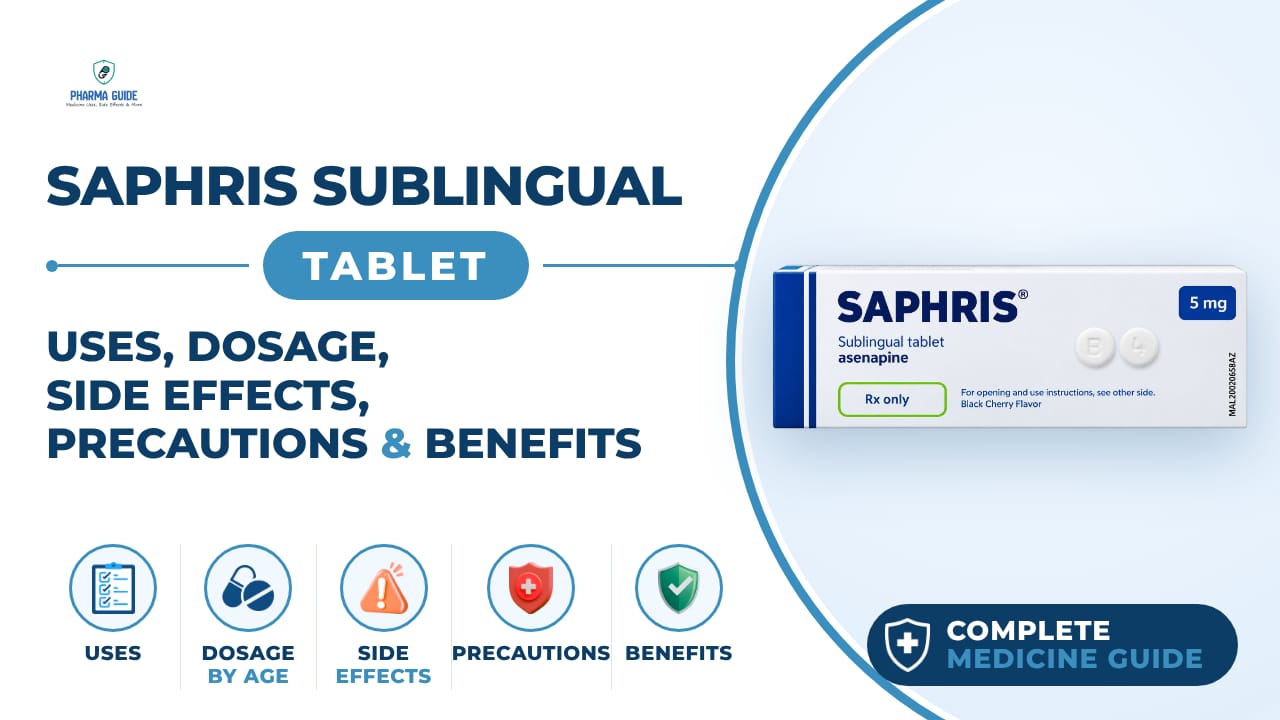
| Generic name | Asenapine |
|---|---|
| Drug class | Atypical antipsychotic |
| Forms | Tablet |
Quick overview
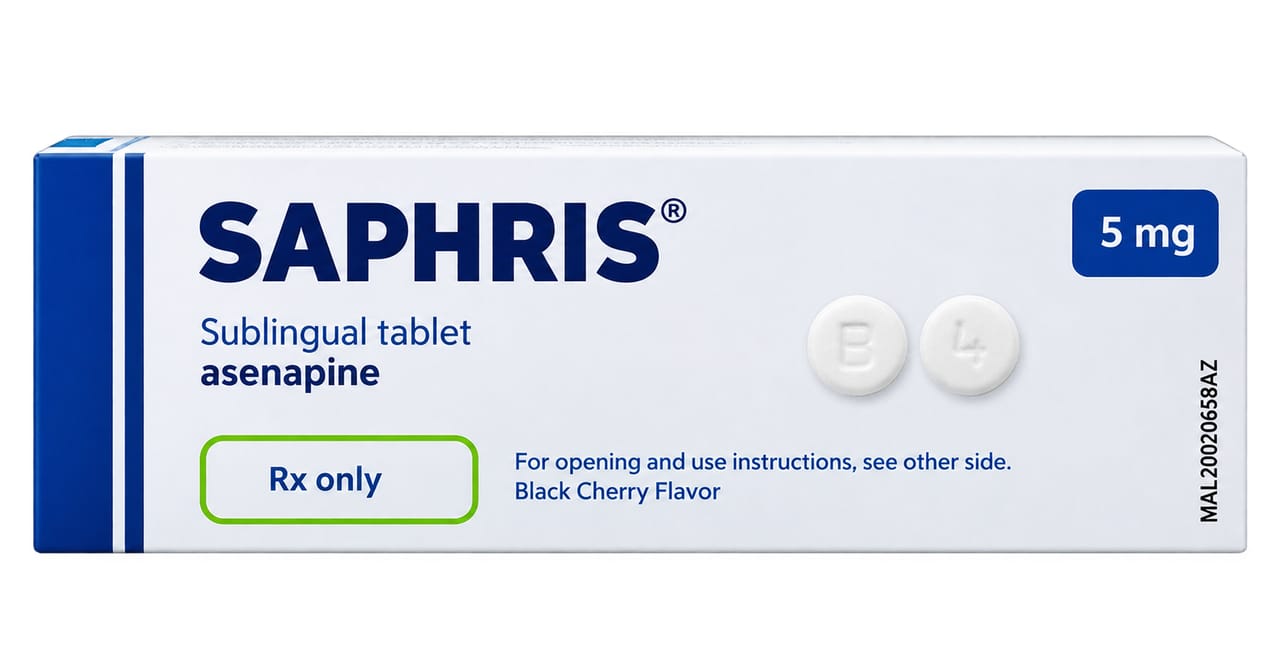
Saphris Sublingual Tablet contains asenapine, an atypical antipsychotic medicine that dissolves under the tongue. It is used to treat schizophrenia in adults and manic or mixed episodes of bipolar I disorder in adults and in children and teens aged 10 to 17 years. It is not addictive and does not cure the underlying condition, but it helps control symptoms.
What is Saphris Sublingual Tablet
Saphris is an atypical antipsychotic medicine that dissolves under the tongue. It helps correct chemical imbalances in the brain that may cause certain mental illnesses. It is not addictive and does not cure the underlying condition, but it helps control symptoms.
Saphris Sublingual Tablet uses
- Schizophrenia in adults
- Bipolar I disorder (manic or mixed episodes) in adults, used alone or together with lithium or valproate
- Bipolar I disorder in children and teens aged 10 to 17 years, used alone
Benefits of Saphris Sublingual Tablet
- Treats schizophrenia in adults
- Helps reduce hallucinations
- Helps reduce delusions
- Treats manic episodes associated with bipolar I disorder
- Helps manage symptoms and prevent relapse
How Saphris Sublingual Tablet works
Saphris is thought to work by blocking certain dopamine and serotonin receptors in the brain, which helps correct chemical imbalances that may cause schizophrenia and bipolar disorder.
Saphris Sublingual Tablet dosage
Place the tablet under the tongue and let it dissolve completely; do not chew, crush, split, or swallow it. Use dry hands when handling the tablet and do not remove it from the blister pack until you are ready to take it. Do not eat or drink anything for 10 minutes after taking the tablet, otherwise it may not be absorbed properly and may not work as well.
If taking other oral medicines at the same time, take Saphris last, after swallowing your other medication and any liquids. Take the medicine regularly at the same time each day, and continue taking it every day for as long as your doctor tells you, even if you feel better, unless your doctor tells you to stop.
In children and teenagers, the dose is usually started low and increased gradually over about a week because younger patients may be more sensitive to certain muscle-related side effects if the dose is increased too quickly.
| Age group | Dose |
|---|---|
| Under 18 years | Not recommended |
| 18–64 years | 5 mg, twice/day |
| 65+ years | 5 mg, twice/day |
Available forms and strengths
- Tablet
Side effects of Saphris Sublingual Tablet
Common
- Nausea
- Dry mouth
- Constipation
- Tiredness
- Sleepiness/drowsiness
- Dizziness
- Weight increase/increased appetite
- Restlessness, agitation or anxiety
- Change in taste
- Numbness or tingling in or around the mouth
- Headache
- Increased saliva (drooling)
- Muscle stiffness or jerky muscle movements
Serious
- Signs of frequent infections such as fever, chills, sore throat or mouth ulcers
- Extremely high body temperature
- Worm-like or other uncontrolled movements of the tongue, mouth, cheeks or jaw, which may spread to the arms and legs
- Sudden uncontrollable muscle spasms affecting the eyes, head, neck and body
- Fainting
- Convulsions, fits or seizures
- Severe spasms in the muscles of the shoulders, neck and upper body
- Sudden increase in body temperature with sweating, fast heartbeat, muscle stiffness and changing blood pressure, which may lead to coma (Neuroleptic Malignant Syndrome)
- Abnormal heart rhythm changes (prolonged QT interval)
- Signs of a serious allergic reaction such as skin rash, itching or hives, swelling of the face, lips, tongue or throat, shortness of breath, wheezing or difficulty breathing
- Thoughts of self-harm or suicide
Warnings and precautions
- Elderly patients with dementia-related psychosis who take antipsychotic medicines like Saphris have an increased risk of death. Saphris is not approved for treating dementia-related psychosis.
- Serious allergic reactions, including some that occurred after the very first dose, have been reported with this medicine.
- This medicine can cause a potentially fatal condition called Neuroleptic Malignant Syndrome, with high fever, muscle stiffness, confusion and unstable heart rate or blood pressure.
- Long-term use may cause a movement disorder (tardive dyskinesia) involving uncontrollable movements of the face and body, which may not go away even after stopping the medicine.
- This medicine can cause high blood sugar and diabetes, or make existing diabetes worse. Blood sugar should be checked before and during treatment.
- Saphris can cause low blood pressure when standing up, which may lead to dizziness, fainting or falls, especially early in treatment.
- This medicine can lower white blood cell counts, increasing the risk of infection, particularly in people who already have low counts.
- Do not stop taking this medicine suddenly or change your dose without talking to your doctor, as this could make your condition worse or increase side effects.
- Do not take Saphris during pregnancy unless your doctor says you should, as its safety in pregnancy is not fully known. Babies born to mothers who used it late in pregnancy may have symptoms like shaking, muscle stiffness, sleepiness or feeding problems after birth.
- It is recommended that you do not breastfeed while taking Saphris.
- No dose adjustment is generally needed based on kidney function, but tell your doctor if you have kidney problems.
- Saphris should not be used if you have severe liver disease. Tell your doctor if you have any liver problems, as this medicine is processed by the liver.
- Be careful when drinking alcohol while taking Saphris, as the combination can make you more sleepy or dizzy. Your doctor may suggest avoiding alcohol altogether.
- Be careful driving or using machinery until you know how Saphris affects you, since it can cause dizziness and tiredness in some people.
Storage
- Keep the tablets in their original packaging until it is time to take them, to protect from light and moisture
- Store in a cool dry place away from moisture, heat or sunlight, with the temperature kept below 30°C
- Do not store in the bathroom, near a sink, in the car, or on window sills
- Keep out of reach and sight of children
- Do not use after the expiry date
- Ask your pharmacist what to do with any leftover tablets if treatment is stopped or the tablets have expired
When to see a doctor
- Get emergency help right away if you notice signs of a serious allergic reaction, such as difficulty breathing, swelling of the face, lips, tongue or throat, rash, itching, hives, or feeling faint.
- Contact your doctor or go to the nearest hospital right away if you or someone you know has thoughts or talk of suicide or self-harm, any recent attempts at self-harm, increased aggression, irritability or agitation, or worsening depression.
- Seek urgent medical attention if you notice uncontrolled worm-like movements of the tongue, mouth or face, sudden muscle spasms, convulsions or seizures, fainting, or a sudden high fever with sweating, fast heartbeat and muscle stiffness.
- If you think you or someone else has taken too much Saphris, seek urgent medical attention even if there are no signs of discomfort, by contacting your doctor, going to a hospital emergency department, or calling your local poison control center.
- Tell your doctor straight away if you become pregnant while taking this medicine.
Alternatives
- Aripiprazole
- Risperidone
- Iloperidone
Watch the video
FAQs
What is Saphris Sublingual Tablet used for?
It is used to treat schizophrenia in adults and manic or mixed episodes of bipolar I disorder in adults and in children and teens aged 10 to 17 years.
How should Saphris Sublingual Tablet be taken?
Place the tablet under the tongue and let it dissolve completely without chewing, crushing, splitting or swallowing it. Avoid eating or drinking for 10 minutes afterward, and if taking other oral medicines, take Saphris last.
What are the common side effects of Saphris Sublingual Tablet?
Common side effects include nausea, dry mouth, constipation, tiredness, sleepiness, dizziness, weight increase, restlessness or anxiety, change in taste, numbness around the mouth, headache, increased saliva, and muscle stiffness or jerky movements.
Is Saphris Sublingual Tablet safe during pregnancy?
It should not be taken during pregnancy unless a doctor advises it, as its safety in pregnancy is not fully known, and babies born to mothers who used it late in pregnancy may have symptoms like shaking, muscle stiffness, sleepiness or feeding problems.
What are the serious risks associated with Saphris Sublingual Tablet?
Serious risks include Neuroleptic Malignant Syndrome, tardive dyskinesia, high blood sugar or diabetes, low blood pressure on standing, lowered white blood cell counts, allergic reactions, and increased risk of death in elderly patients with dementia-related psychosis.
General information, not medical advice
Your prescriber and the leaflet in your pack know your situation. This page does not.
- Follow your prescriber and the leaflet
- Don't start, stop, or change a dose on your own
- Doses and warnings differ by country and product
Sources
Video
Related medicines
Latuda Tablet: Uses, Dosage, Side Effects, Precautions and Alternates
atypical antipsychotic
Latuda Tablet (lurasidone) treats bipolar depression and schizophrenia. Learn about dosage, benefits, side effects, warnings, and precautions before use.
Seroquel XR Tablet: Uses, Dosage, Side Effects, Precautions and Alternates
Atypical antipsychotic
Seroquel XR Tablet (quetiapine) treats schizophrenia, bipolar disorder, and depression. Learn about dosage, benefits, side effects, and key safety warnings.