
Safety
General information, not medical advice
Your prescriber and the leaflet in your pack know your situation. This page does not.
- Follow your prescriber and the leaflet
- Don't start, stop, or change a dose on your own
- Doses and warnings differ by country and product
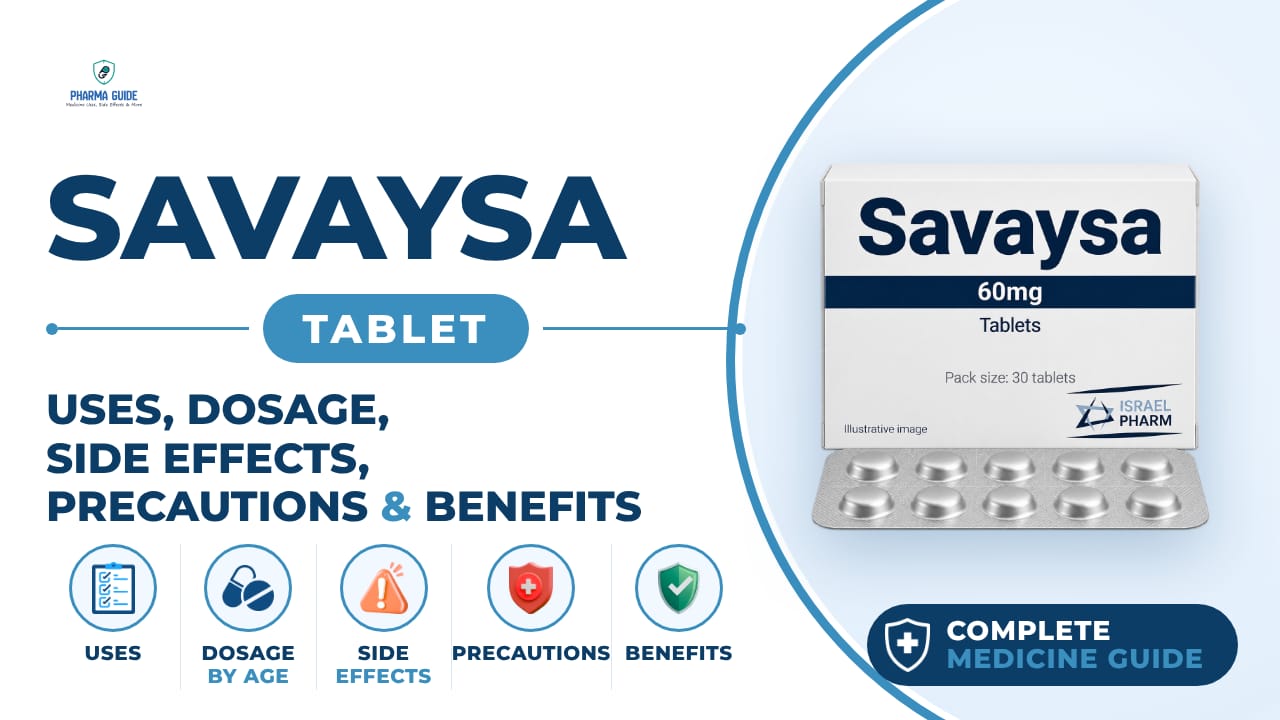
Savaysa Tablet: Uses, Dosage, Side Effects, Precautions and Alternates
| Generic name | edoxaban |
|---|---|
| Drug class | Factor Xa Inhibitor |
| Forms | Tablets |
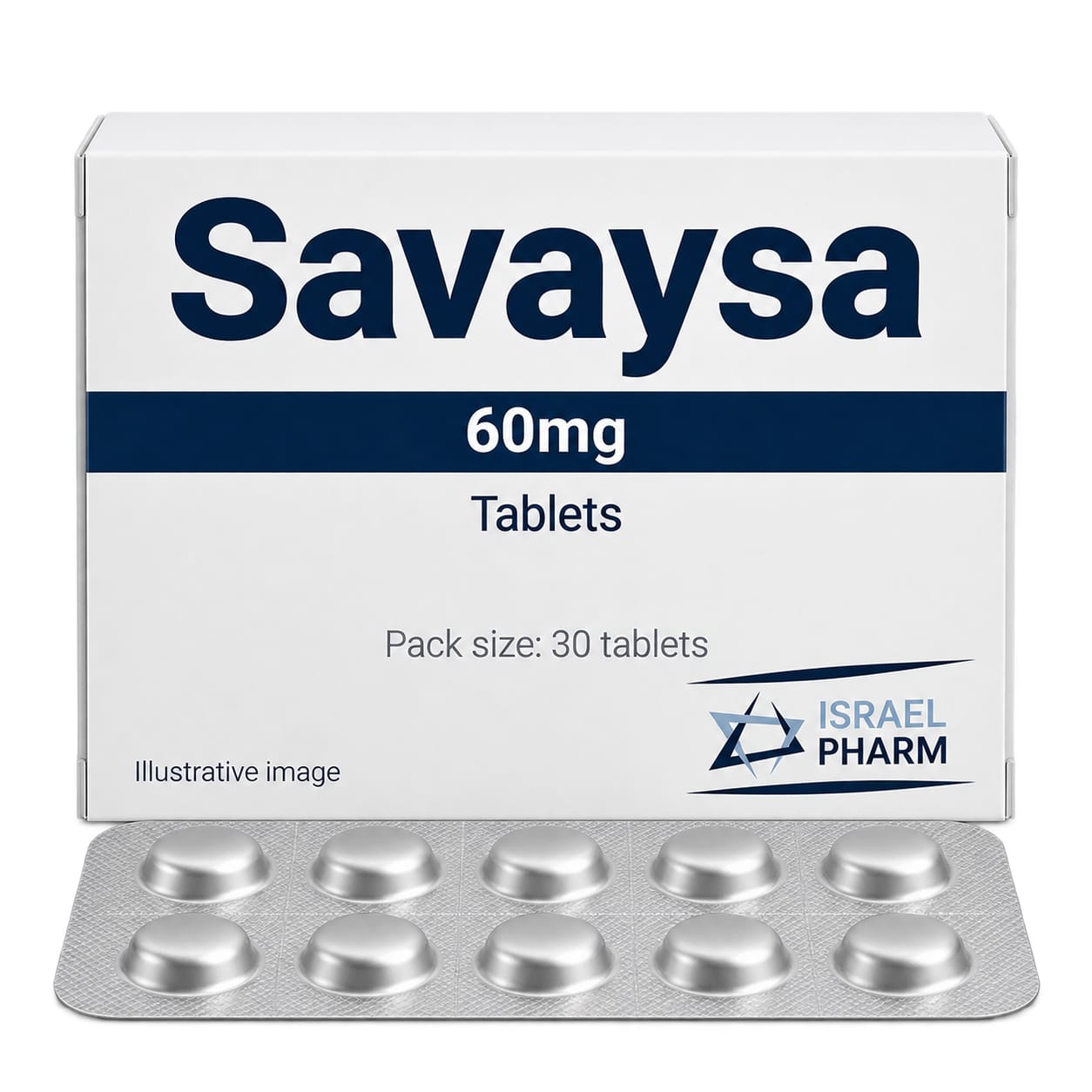
Quick overview
Savaysa (edoxaban) is a prescription blood thinner that belongs to the Factor Xa Inhibitor class of medicines. It is used to lower the risk of stroke in people with a certain type of irregular heartbeat and to treat blood clots in the legs or lungs. It works by blocking a clotting protein called factor Xa, which reduces the body's ability to form clots. It is available as a tablet and should be used exactly as prescribed, with doses based on age and other factors.
What is Savaysa Tablet
Savaysa is a prescription medicine that thins the blood. It is used to lower the risk of stroke in people with a certain type of irregular heartbeat, and to treat blood clots in the legs or lungs.
Savaysa Tablet uses
- Reduce the risk of stroke and blood clots (systemic embolism) in people with nonvalvular atrial fibrillation (an irregular heartbeat not caused by a heart valve problem)
- Treat deep vein thrombosis (DVT), a blood clot in the leg veins, after 5 to 10 days of treatment with an injectable blood thinner
- Treat pulmonary embolism (PE), a blood clot in the lungs, after 5 to 10 days of treatment with an injectable blood thinner
Benefits of Savaysa Tablet
- Blood Clot Prevention: Helps prevent harmful blood clots.
- Stroke Prevention: Reduces the risk of stroke and systemic embolism in eligible patients with non-valvular atrial fibrillation.
- DVT Treatment: Used to treat deep-vein thrombosis in appropriate patients.
- Pulmonary Embolism Treatment: Helps treat pulmonary embolism.
- Factor Xa Inhibition: Prevents clot formation by blocking Factor Xa.
How Savaysa Tablet works
Savaysa blocks a clotting protein called factor Xa. By blocking this protein, it reduces the body's ability to form thrombin, which lowers the formation of blood clots.
Savaysa Tablet dosage
Take exactly as prescribed by your healthcare provider. It can be taken with or without food. Do not change your dose or stop taking this medicine unless your healthcare provider tells you to, since stopping it may increase your risk of stroke. If you have trouble swallowing the tablet whole, talk to your healthcare provider about other ways to take it. If you miss a dose, take it as soon as you remember on the same day, then go back to your normal schedule the next day — do not take two doses at once to make up for a missed one. Do not let your supply run out; refill your prescription before you run out. Tell all your doctors and dentists that you are taking this medicine before any surgery or procedure.
| Age group | Dose |
|---|---|
| Under 18 Years | Use only under specialist supervision; dosing is indication-specific |
| 18–64 Years | 60 mg once daily for certain approved indications |
| Older Adults (65+ Years) | 60 mg once daily when appropriate; dose may be reduced based on kidney function and other factors |
Available forms and strengths
- Tablets
Side effects of Savaysa Tablet
Common
- Bleeding
- Easy bruising
- Nosebleeds
- Rash
- Abnormal liver function tests
- Low red blood cell count (anemia)
Serious
- Hives, difficulty breathing, swelling of face, lips, tongue, or throat
- Back pain, numbness or muscle weakness in the lower body
- Loss of bladder or bowel control
- Unusual or uncontrolled bleeding (nosebleeds, bleeding gums, heavy menstrual bleeding)
- Pain, swelling, or drainage from a wound or injection site
- Headaches, dizziness, or lightheadedness
- Urine that looks red, pink, or brown
- Bloody or tarry stools
- Coughing up blood
- Vomit that looks like coffee grounds
- Sudden vision loss, blurred vision, eye pain or swelling
- Fast, irregular, or pounding heartbeats, fluttering in the chest, shortness of breath, sudden dizziness or passing out
- Severe headache, confusion, slurred speech, arm or leg weakness, trouble walking, loss of coordination, very stiff muscles, high fever, profuse sweating, or tremors
Warnings and precautions
- This medicine should not be used in people with nonvalvular atrial fibrillation whose kidneys work too well (creatinine clearance greater than 95 mL/min), because it raises the risk of stroke compared to warfarin.
- Stopping this medicine early without starting another blood thinner raises the risk of stroke or other clot-related problems.
- People getting spinal injections or spinal taps while on this medicine have a risk of a blood clot forming around the spine, which can cause long-term or permanent paralysis.
- This medicine can cause serious bleeding that can sometimes be fatal. There is no specific agent to reverse its blood-thinning effect.
- This medicine should not be used in people with mechanical heart valves or moderate to severe narrowing of the mitral valve.
- This medicine is not recommended for people with antiphospholipid syndrome, especially those with a history of blood clots and positive triple antibody testing.
- Taking this medicine with other blood thinners, aspirin, NSAIDs, or certain antidepressants (SSRIs/SNRIs) can increase your risk of bleeding.
- It is not known if this medicine will harm an unborn baby. Tell your healthcare provider right away if you become pregnant while taking this medicine.
- It is not known if this medicine passes into breast milk. You should not breastfeed while taking this medicine.
- Your kidney function should be checked before starting this medicine, and your dose may need to be adjusted. People with very good kidney function should not take this medicine because it may not prevent stroke as well.
- Tell your doctor if you have liver problems before starting this medicine.
Storage
- Store at room temperature between 68°F to 77°F (20°C to 25°C)
- Keep out of the reach of children
When to see a doctor
- Get medical help right away if you have severe bleeding, such as coughing up or vomiting blood, or any bleeding that will not stop.
- Tell your healthcare provider right away if you have back pain, tingling, numbness (especially in your legs and feet), muscle weakness, or loss of control of the bowels or bladder — these can be signs of a spinal blood clot.
- Call your healthcare provider right away if you fall or injure yourself, especially if you hit your head, since you may need to be checked for internal bleeding.
- If you take too much of this medicine, go to the nearest hospital emergency room or contact your healthcare provider right away.
Alternatives
- Apixaban
- Rivaroxaban
- Dabigatran
Watch the video
FAQs
What is Savaysa Tablet used for?
Savaysa is used to lower the risk of stroke and systemic embolism in people with nonvalvular atrial fibrillation, and to treat deep vein thrombosis (DVT) and pulmonary embolism (PE) after initial treatment with an injectable blood thinner.
How does Savaysa work?
Savaysa blocks a clotting protein called factor Xa, which reduces the body's ability to form thrombin, lowering the formation of blood clots.
What is the dosage of Savaysa for adults?
For adults aged 18-64, the dose is typically 60 mg once daily for certain approved indications. Older adults (65+) may also take 60 mg once daily when appropriate, though the dose may be reduced based on kidney function and other factors.
What are the common side effects of Savaysa?
Common side effects include bleeding, easy bruising, nosebleeds, rash, abnormal liver function tests, and low red blood cell count (anemia).
Who should not take Savaysa?
Savaysa should not be used in people with nonvalvular atrial fibrillation whose kidneys work too well (creatinine clearance greater than 95 mL/min), in people with mechanical heart valves or moderate to severe narrowing of the mitral valve, and is not recommended for people with antiphospholipid syndrome, especially those with a history of blood clots and positive triple antibody testing.
General information, not medical advice
Your prescriber and the leaflet in your pack know your situation. This page does not.
- Follow your prescriber and the leaflet
- Don't start, stop, or change a dose on your own
- Doses and warnings differ by country and product
Sources
Video
Related medicines
Xarelto Tablet: Uses, Dosage, Side Effects, Precautions and Alternates
Factor Xa inhibitor
Xarelto (rivaroxaban) is a blood thinner used to treat and prevent blood clots, DVT, PE, and stroke risk. Learn uses, dosage, and side effects.

Injectafer Injection: Uses, Dosage, Side Effects, Precautions and Alternates
Iron products
Injectafer (ferric carboxymaltose) treats iron deficiency anemia and heart failure-related iron deficiency via IV. Learn uses, dosage, side effects, and